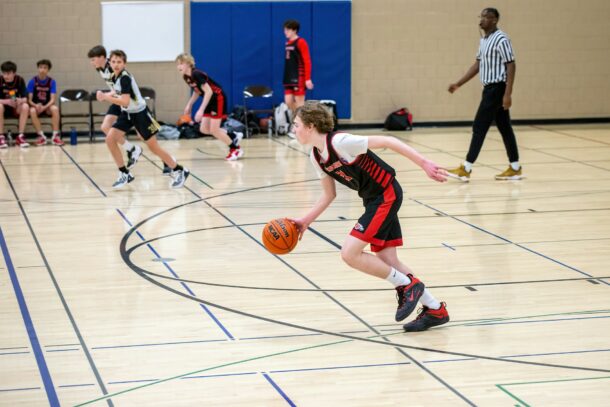
Some basketball practice mistakes are easy to spot. Long lines, extended lectures and constant whistles can drain the pace from a session before players get much useful work done. Other problems can hide inside normal coaching habits. A coach may think frequent instruction helps players improve, but too much talking and correcting can cut into the repetitions players need to develop.
Why basketball practice mistakes can cost players valuable reps
Gym time is limited, especially for youth basketball teams. Coaches may get only a couple of practices each week, so wasted minutes add up quickly.
A useful question is simple: How much of practice are players actually practicing? If they spend too much time watching, waiting or listening, a 90-minute session may contain far less basketball than the schedule suggests.
Coach Steve Collins points to three common issues coaches can address right away. Players need more repetitions, coaches need to talk less, and drills need enough uninterrupted time to develop a rhythm.
1. Players aren’t getting enough repetitions
Skill development depends on repetition. Players improve when they perform a movement often enough to become more comfortable, more consistent and eventually more automatic.
Collins compares the process to learning multiplication tables. A student won’t improve much by watching someone else solve 30 problems, and a basketball player won’t improve a skill by standing in line while teammates take most of the reps.
Consider the difference between a shooting drill with one long line and one with several baskets or stations. The first setup may give a player only a handful of shots, while the second can create far more opportunities in the same amount of time.
Coaches still need to teach during skill work. The key is making sure instruction leads quickly into enough repetitions for players to apply what they just heard.
Cut down standing during skill development
Some waiting is unavoidable during team drills. A scrimmage, transition drill or five-on-five segment may naturally leave a few players off the floor for short stretches.
Skill work should create more activity. When the goal is improving dribbling, passing, shooting or footwork, coaches should look for ways to keep as many players working as possible.
A few adjustments can help:
- Use multiple baskets when they’re available.
- Break a large team into smaller groups.
- Create stations instead of one long line.
- Give waiting players a basketball whenever possible.
- Use partner activities that keep two players involved at once.
- Pay attention to how many repetitions players actually receive.
Young players also tend to lose concentration when they stand around for too long. More reps can improve skill development while cutting down the idle time that often leads to distractions.

2. Coaches talk too much during practice
Talking too much is one of the easiest basketball practice mistakes to make. Coaches know what they want players to learn, so they sometimes keep explaining long after the players are ready to move.
Coach Collins recalled watching a coach begin practice by talking to his team for about 20 minutes. Even useful instruction loses value when it takes away a large chunk of practice time.
Coaches still need to communicate clearly. The challenge is deciding how much players need to hear before they can start learning through action.
Track how much you’re talking
Spend a week paying attention to how often your voice controls practice. Compare that time with how much players spend moving, communicating and making decisions.
You don’t need to track every second. Instead, look for explanations that can be shortened and teaching points that can wait until players have taken a few reps.
Ask yourself:
- Can I explain this in less time?
- Do players need every detail before starting?
- Could I add the next teaching point after a few repetitions?
- Am I answering something players could figure out themselves?
- Are players communicating, or am I doing most of the talking?
Shorter teaching segments can help players stay engaged. Give them the key point, let them work and add more instruction when the drill creates a reason for it.
3. Coaches stop drills too often
Frequent stoppages can turn a useful drill into a series of interruptions. A player makes a mistake, the whistle blows, everyone stops, and several players lose a repetition because one person needed a correction.
Coach Collins identifies this as one of the hardest habits for coaches to change. Coaches naturally want to fix mistakes when they see them, but not every problem needs a full-team interruption.
Know when a mistake requires a full stop
Some mistakes deserve an immediate pause. If several players repeat the same error or the entire drill starts breaking down, stopping the group can prevent the team from reinforcing a bad habit.
Coach Collins describes this as a critical stop. The correction matters enough to several players that interrupting the drill becomes worthwhile.
A mistake involving one player usually calls for a different response. If one athlete has the wrong angle or poor footwork while the rest of the group is performing correctly, stopping everyone can cost more than it helps.
Instead, a coach can:
- Speak briefly to the player during a natural break.
- Substitute the player out for one repetition.
- Have an assistant coach make the correction.
- Give the player a short cue while the drill continues.
- Save a minor correction until the next pause.
The player still gets feedback, while teammates keep working. Practice stays active instead of restarting every time one detail needs attention.
Let players work through some mistakes
Young athletes need chances to solve problems on their own. If a coach supplies the answer every time something goes wrong, players can start depending on instructions instead of reading the situation.
Coaches still need to watch closely and correct poor habits. The difference comes from choosing the right moment instead of reacting to every mistake with an immediate stoppage.
Sometimes the next repetition gives the player the feedback he or she needs. Other times, a quick individual cue works better than stopping nine other players who are already doing the drill correctly.
Use assistant coaches without slowing practice
Assistant coaches can make a major difference during faster drills. Instead of having every coach focus on the same action, divide responsibilities and let assistants watch for specific details.
One coach can run the drill while another handles individual corrections. If a player needs help with footwork, positioning or an angle, an assistant can pull that athlete aside briefly and send a replacement into the next rep.
This keeps the drill moving and gives players more personal instruction. It can also make correction feel less public, which may help younger athletes respond better.
How to fix basketball practice mistakes tomorrow
Improving practice doesn’t require rebuilding your entire coaching philosophy. Start by watching how players spend their time and identifying the moments when practice slows down.
Focus on three practical changes:
- Create more repetitions by reducing long lines and unnecessary waiting.
- Shorten explanations so players can get back to moving sooner.
- Save full-team stoppages for mistakes that affect more than one player.
Those adjustments can change the feel of practice quickly. Players spend more time working, while coaches spend less time restarting drills and repeating the same instructions.
Make players the busiest people in the gym
A productive basketball practice should keep players active for most of the session. They should spend their time dribbling, passing, shooting, defending, communicating and making decisions instead of standing around waiting for the next instruction.
Coaches still guide the process, but they don’t need to control every second with their voice. Give players clear direction, create enough repetitions and step in when a correction truly helps the group or the individual.
Avoiding these basketball practice mistakes can make sessions more efficient and easier to manage. More importantly, players get more chances to practice the skills they’re there to improve.

Latest Posts
- 3 basketball practice mistakes that hurt player development
- Basketball practice plan: 7 ways to keep young players focused
- Basketball Practice Games work better when every player has a role
- Basketball individual workout: Build a quicker pull-up against pressure
- How to become a Great Rebounder: 5 rules every basketball player should know