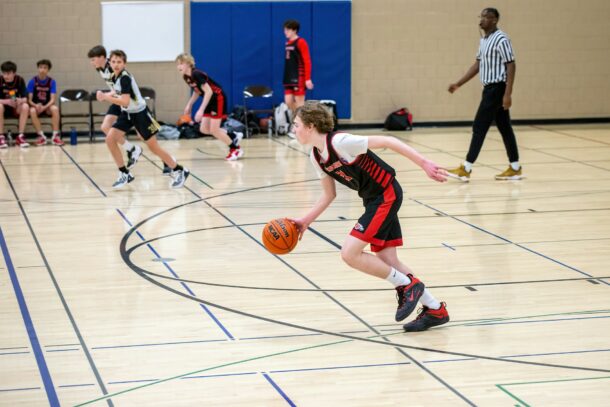
If you want to punish aggressive defenses and create easy scoring opportunities, the back door cut drill needs to be a staple in your practice plan. This simple but powerful concept teaches players how to read defenders, time their cuts, and finish at the rim, skills that translate directly into game situations.
Let’s break down how to teach it effectively and get the most out of your players.
Why the Back Door Cut Drill Matters
The back door cut drill is all about reading defensive pressure. When a defender overplays the passing lane, your offensive player must react instantly, cutting hard to the basket for a high-percentage shot. This drill develops:
- Court awareness and basketball IQ
- Timing between passer and cutter
- Explosive first steps and decisive movement
- Finishing ability at the rim
In short, it turns defensive pressure into offensive advantage.
How to Set Up the Back Door Cut Drill
Start simple and emphasize spacing and communication.
Basic Setup:
- One passer at the top or wing
- One offensive player on the wing
- A defender applying pressure (optional at first)
Execution:
- The offensive player begins on the wing.
- The defender slightly overplays the passing lane.
- The offensive player “pins” or steps toward the ball to sell the pass.
- Once the defender commits, the player cuts backdoor hard.
- The passer delivers a quick, accurate pass “down the line.”
- The cutter finishes at the rim.

Key Teaching Points from the Drill
Here are several coaching cues that are critical to success:
1. Read the Overplay
Players must recognize when the defender is denying the pass. That’s the trigger.
“She reads the overplay… she goes backdoor.”
Train your players to react, not think, when they see that pressure.
2. Timing Is Everything
One of the biggest mistakes is cutting too early.
“Too soon, too soon… that’s okay.”
Reinforce patience. The cut should happen after the defender commits.
3. Sell the Initial Action
Players should step toward the ball before cutting.
“You’re getting in the teeth… she’s going slightly up the cut line…”
This small movement forces the defender to lean, creating the backdoor opportunity.
4. Pass on a Line
The passer must deliver the ball quickly and directly.
“You are gonna pass it right down the line.”
No lobs. No hesitation. The pass should lead the cutter to the basket.
5. Cut Hard—No Jogging
Effort matters. Lazy cuts kill the drill.
“You guys gotta cut harder… my grandmother’s guarding that!”
Demand game-speed cuts every rep.
6. Finish with Purpose
Encourage players to finish strong, using either hand when appropriate.
“Drop it off to the left hand…”
This adds realism and builds finishing versatility.
Common Mistakes to Watch For
Even experienced players struggle with this drill if details slip. Watch for:
- Cutting too early before the defender commits
- Floating passes instead of sharp, direct feeds
- Slow or rounded cuts instead of straight-line attacks
- Poor spacing that clogs the lane
Correct these immediately to keep the drill sharp and effective.
Progressions to Level Up the Drill
Once your team understands the basics, increase the challenge:
- Add live defenders to force real reads
- Incorporate a dribble drive before the pass
- Add a help defender to simulate game pressure
- Track finishes to build accountability
These progressions turn a simple drill into a game-ready skill builder.
Final Thoughts
The back door cut drill is one of the most efficient ways to teach players how to exploit defensive pressure. When executed correctly, it builds chemistry, improves decision-making, and creates easy buckets.
If your team struggles against aggressive defenses, start here. Drill it consistently, demand precision, and you’ll see the results show up on game night.

Latest Posts
- Free Throw Drill: Build Game-Winning Confidence in Just 30 Seconds
- Mastering the Back Door Cut Drill for Game-Changing Offense
- Youth Basketball Coaching Tips: Why Great Coaches Teach More Than X’s and O’s
- 5 Ways to Manage Social Media Impact on Youth Basketball
- 4 Tips on Setting Expectations in Youth Basketball