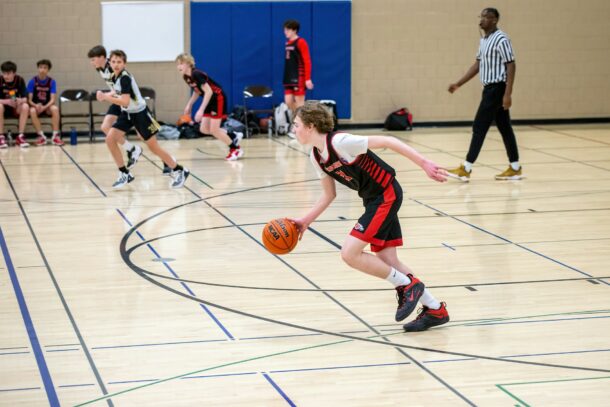
Basketball practice games can sharpen decision-making, build confidence and prepare players for pressure. However, they work best when every player understands his job and knows what the coaching staff expects from him.
One of the toughest conversations in basketball often starts with, “Coach, I thought I was going to start.” Sometimes that expectation exists because nobody ever defined the role clearly in the first place. When coaches leave roles vague, players fill in the blanks themselves. Clear communication helps prevent confusion before it turns into frustration.
Keep every role simple
A player should be able to explain his job in one sentence. If the role takes several minutes to describe, the message probably needs to be simplified. Good role language is specific:
- Pressure the opponent’s best scorer.
- Sprint the floor and create early offense.
- Attack closeouts instead of settling.
- Protect the paint and finish possessions with rebounds.
Simple language gives players something they can carry into practice and games. It also makes corrections easier because everyone understands the standard.
Give players a job instead of a number
Calling someone the “eighth man” explains his place on the depth chart, but it doesn’t explain why he matters. Telling him, “You come in and guard their best scorer,” gives him an identity.
Players can accept smaller roles when those roles have purpose. Defensive energy, rebounding, ball pressure, screening and pace can all become meaningful responsibilities when coaches explain how they help the team.
Use basketball practice games to reinforce decisions
Basketball practice games are a great place to teach roles because players have to make decisions at game speed. Instead of defining someone only as a guard, wing or post, explain what he should do when the action starts. For example:
- Attack the closeout.
- Make the extra pass.
- Sprint the lane in transition.
- Get off the ball early against pressure.
- Turn down a contested shot for a better one.
Coaches can build competitive games around those decisions. Reward paint touches, extra passes, defensive stops or successful ball-screen coverage so players practice the habits their roles require.
Define roles by decisions
Position labels can help organize a lineup, but they don’t always tell players how to play. Saying someone is a “four” gives him a position, while telling him to attack closeouts and make the next pass gives him a job.
When players know which decisions matter, they can evaluate themselves during practice instead of guessing what the staff wants.
Show players how they can earn more
“Work harder” doesn’t give a player much direction. If someone wants a bigger role, explain what improvement will create that opportunity. A coach might say:
- “When you defend the ball screen without getting split, I can keep you on the floor.”
- “When you make that corner shot consistently in live reps, I trust you late.”
- “When you stop forcing shots and create the next advantage, your role grows.”
Specific targets give players something useful to train toward. A clear goal usually produces better practice habits than frustration ever will.

Build roles gradually
Younger players may need fewer responsibilities at first. Give them one decision to master, then add another when they’re ready.
Basketball practice games make this progression easier because coaches can repeatedly put players into the situations connected to their roles. A young guard might first focus on handling pressure, then add pick-and-roll reads or transition decisions later. This keeps players from becoming overloaded while still giving them a clear path forward.
Coach your best players, too
Stars need defined roles just like everyone else. Your leading scorer may need to move the ball sooner, your point guard may need to stop hunting pull-ups, or your best player may need to set the defensive standard.
Tell them directly and coach them consistently. When the best players receive clear feedback, role accountability becomes part of the team culture.
Revisit roles during the season
Roles change as players improve, injuries happen and rotations shift. A quick check-in can keep players from wondering where they stand.
Even a short comment such as, “You’re still our defensive stopper, and I noticed that closeout Tuesday,” can reinforce a player’s value. Small conversations often prevent bigger problems later.
Clarity builds trust
Most players already have a sense of where they stand. What wears them down is having to guess. They watch substitutions, study reactions and try to read every lineup change. Direct communication removes much of that uncertainty.
Players may not love every role, but they can respect a coach who explains expectations and gives them a path toward more.
Give every player one sentence
Before the first practice, write one sentence describing every player’s job. Use basketball language and focus on decisions instead of labels. Then ask yourself:
- Does the player know what his role requires?
- Can I show him how that role appears in practice?
- Does he know what he must improve to earn more?
If you can’t explain the role clearly, the player probably can’t either. Once roles are defined, basketball practice games become more useful because every possession gives players another chance to practice the decisions their team needs. Clear roles won’t eliminate every difficult conversation, but they can make a season run much more smoothly.

Latest Posts
- Basketball coaching for different age groups: What changes?
- Preseason parent meeting: 7 things basketball coaches should cover
- Offensive spacing in youth basketball: 5 rules players can actually remember
- How to give effective feedback during basketball practice
- Basketball press break: A simple alignment that beats full court pressure