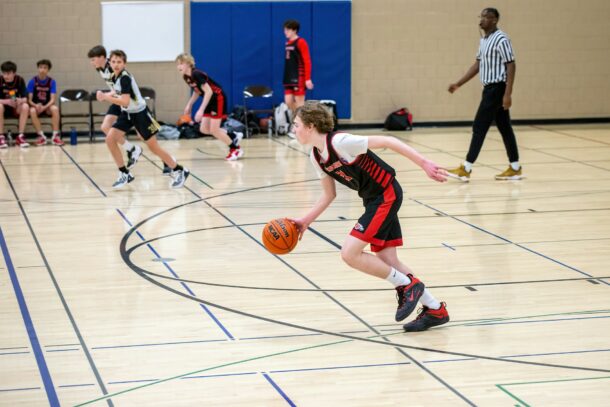
The best basketball workout examples don’t always need cones, complicated drills or an hour in the gym. Sometimes a short, focused workout can help players build good habits while also teaching them how to measure their progress. This simple shooting workout gives players a starting point with mid-range shots, free throws and three-pointers while introducing one of the most important habits in player development: tracking makes and attempts.
For players who are just beginning to organize their individual workouts, the goal isn’t to make things complicated. Start with a few basic shooting categories, work with purpose and record the results. Over time, those numbers can help players and coaches see where improvement is happening and where more work may be needed.
Why Players Should Track Their Basketball Workouts
Players often remember whether they felt like they shot well, but feelings don’t provide much useful information over several weeks or months. Tracking results creates a record players can actually use.
For example, instead of saying, “I shot pretty well today,” a player can record:
- How many mid-range shots they attempted
- How many mid-range shots they made
- How many free throws they attempted and made
- How many three-pointers they attempted and made
Those numbers provide a baseline. Then, as players repeat similar workouts, they can compare one session with another. A spreadsheet or printable workout sheet works well because it keeps everything in one place. Players can also share their results with a coach, giving both sides something specific to discuss.
Basketball Workout Examples for a Quick Shooting Session
This workout takes only about four minutes of active shooting, but players should work at a strong pace throughout each segment. They’ll get their own rebounds, reset quickly and continue shooting until the minute ends.
1. Mid-Range Shooting: 1 Minute
Start with one minute of mid-range shots. Players should move around the floor rather than repeatedly shooting from the exact same spot. After every shot:
- Get the rebound.
- Move into the next shooting position.
- Get balanced.
- Shoot again.
Keep track of both makes and attempts. Players can also use this portion of the workout to reinforce footwork. Pay attention to how the feet are positioned before the shot and whether the body is balanced when the ball is released.
2. Free Throws: 1 Minute
Next, shoot free throws for one minute. Free throws provide a different challenge because the player isn’t moving from spot to spot. Instead, the focus shifts to consistency.
Players should use the same routine before every attempt and record both their makes and total attempts. As the workout continues over several days or weeks, free-throw percentage becomes an easy number to monitor.

3. Three-Point Shooting: 1 Minute
The third portion of the workout is one minute of three-pointers. Players who are comfortable from behind the three-point line should shoot from several locations while retrieving their own rebounds. Players who don’t yet have consistent three-point range should move closer to the basket.
There’s no benefit to forcing shots from a distance that causes poor mechanics. Choose a range where the player can shoot with proper balance and technique, then gradually work farther away as strength and skill improve.
Footwork matters here too. Players can practice stepping into shots, squaring their shoulders and preparing their feet before the ball arrives.
4. Finish With Free Throws: 1 Minute
End the workout with another minute of free throws. Shooting free throws after several minutes of movement creates a useful challenge. The player may be breathing harder or feeling some fatigue, which makes maintaining a consistent routine even more important.
Again, record makes and attempts. Players can then compare their first free-throw round with the final one.
Sample Basketball Workout Tracking Sheet
A simple workout log might look like this:
| Drill | Time | Makes | Attempts |
|---|---|---|---|
| Mid-range shots | 1 minute | ___ | ___ |
| Free throws | 1 minute | ___ | ___ |
| Three-pointers | 1 minute | ___ | ___ |
| Free throws | 1 minute | ___ | ___ |
Players don’t need complicated statistics at first. Recording makes and attempts is enough to begin building the habit. Later, coaches can expand the spreadsheet with shooting percentage, different locations, workout dates or additional drills.
Why Simple Basketball Workout Examples Work
Short workouts are useful because they’re easy to repeat. A player may not always have time for a 45-minute individual session, but finding four or five focused minutes is much more manageable. More importantly, the workout has structure.
Instead of walking into the gym and randomly shooting, the player knows exactly what to do:
- Shoot with a purpose.
- Work for a set amount of time.
- Track makes and attempts.
- Record the results.
- Repeat the workout later.
The routine creates accountability while giving the player a clear way to measure improvement.
Focus on Quality Before Adding More Drills
As players become more comfortable tracking their workouts, the sessions can become longer and more detailed. Coaches might eventually add timed shooting, specific numbers of makes, ball-handling combinations, game-speed footwork or shooting from designated spots. However, there’s no need to rush.
Players should first learn how to complete a basic workout correctly and record what they did. Once the process becomes familiar, adding another drill or another five minutes is simple. For younger players especially, consistency usually matters more than creating the most complicated workout possible.
Turn Your Workout Into Useful Information
Basketball workout examples like this one provide more than a few minutes of shooting practice. They teach players how to approach individual development with a plan. Shoot the mid-range shots. Track the results. Shoot the free throws. Record them. Do the same from farther out, then finish at the line.
Over time, the spreadsheet begins telling a story. Players can see whether they’re making more shots, improving their percentages or becoming more consistent from workout to workout.
If you want to become a better basketball player, don’t just work. Keep track of the work you’re doing. A simple four-minute workout is an easy place to start.

Latest Posts
- Basketball coaching for different age groups: What changes?
- Preseason parent meeting: 7 things basketball coaches should cover
- Offensive spacing in youth basketball: 5 rules players can actually remember
- How to give effective feedback during basketball practice
- Basketball press break: A simple alignment that beats full court pressure