A good basketball practice plan has to accomplish more than fitting drills into a 60- or 90-minute window. Youth coaches also need to keep players moving, listening and learning before wandering attention turns practice into crowd control.
Anyone who has coached younger players knows how quickly focus can disappear. A long line forms, the coach spends too much time explaining a drill, and suddenly one kid is bouncing the ball while another is bothering a teammate. Building more activity into practice can prevent many of those problems before they start.
Why focus can disappear during youth basketball practice
Some teams present a bigger challenge than others. On the Coaching Youth Hoops podcast, Coach Steve Collins recalled coaching a talented boys team that struggled badly with concentration and discipline despite having enough ability to win plenty of games. Keeping several of those players attentive became one of the most frustrating challenges he’d faced in 20 years of coaching.
Coaches may first think about consequences, conditioning or reduced playing time. Those options can have a place, but youth leagues sometimes require equal playing time, and punishment alone doesn’t solve a poorly structured practice. Coaches Collins and Bill Flitter kept returning to another solution: give players less time to get distracted in the first place.
1. Build your basketball practice plan around activity
Standing around creates opportunities for young players to lose focus. Collins pointed out that when kids spend too long without doing anything, especially energetic younger players, they’ll often start pulling on jerseys, poking teammates or finding some other way to entertain themselves.
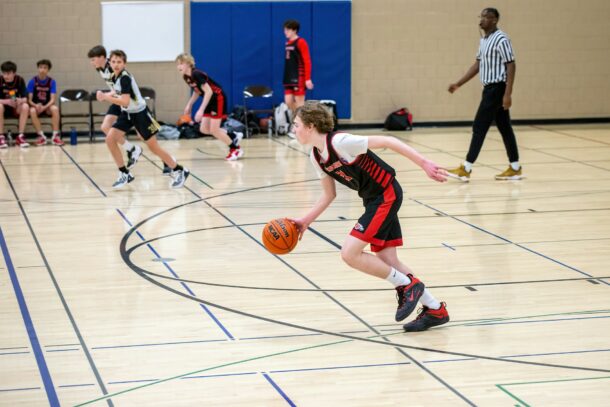
So, look at your basketball practice plan from the players’ perspective. Try to keep as many athletes active as possible instead of creating long lines where eight kids watch one player get a repetition.
Before practice, consider a few simple questions:
- How many players participate in this drill at the same time?
- How long will players wait between repetitions?
- Can I use two baskets instead of one?
- Can I divide the team into smaller groups?
- What can players do while they’re waiting?
- Do I have another activity ready if this drill finishes early?
More movement also means more touches, shots, passes and decisions. As a result, improving concentration can also improve the amount of basketball development you squeeze into limited gym time.
2. Cut down the dead time
Youth coaches don’t have the luxury of working with players all day. As the podcast points out, many coaches see their teams only a couple of times each week, often for roughly an hour and a half at a time.
Every wasted minute matters. Coaches still need to stop practice and teach, but transitions shouldn’t drag, lines shouldn’t stretch across the court and players shouldn’t spend several minutes waiting while equipment gets organized.
A tighter practice rhythm can look like this:
- Explain the drill quickly.
- Get players into position.
- Start the activity.
- Make short corrections as needed.
- Move into the next segment without a long break.
Smooth transitions take some preparation. However, once players learn the routine, coaches can spend less time organizing the group and more time teaching the game.
3. Keep instruction short
Stopping practice to explain a new concept can become one of the toughest moments with an easily distracted team. Collins and Flitter suggest condensing instruction into small pieces rather than trying to deliver a long basketball lesson while players stand and listen.
Give players enough information to begin the activity, then let them try it. Once they’ve worked through the first piece, bring them back for another short teaching point and send them out again.
For example, a coach installing a new action might:
- Draw the first movement on the whiteboard.
- Explain the players’ starting positions.
- Run the action several times.
- Stop and correct the biggest issue.
- Introduce the next part of the play.
Coach Collins described using this approach when teaching from a whiteboard. Even when higher-IQ players asked what happened next, he’d keep the group on the first step before adding another layer.

4. Put energetic players to work
Some players struggle most when the team stops moving. Instead of leaving the most restless kid at the back of the group during an explanation, give that player something useful to do.
Coach Collins said he’d often choose his most hyperactive players as demonstrators. The approach keeps those players involved while also giving teammates a visual example of what the coach wants.
Coaches can use the same idea in several ways:
- Have a player demonstrate footwork.
- Ask two players to show the next drill.
- Let a player help set up cones.
- Assign someone to lead a line or station.
- Use players to demonstrate offensive or defensive positioning.
Responsibility can redirect some of the energy that causes disruptions. Meanwhile, the coach gets another way to teach without delivering another long explanation.
5. Set clear rules for listening
Players should know what you expect when practice stops. If the coach has to ask everyone to stop dribbling five times during every huddle, the team needs a clearer routine.
Coach Flitter suggested setting consequences for behaviors such as continuing to dribble while a coach talks. A player might receive a warning first, followed by a predetermined consequence if the behavior continues.
Keep the expectations simple enough for players to remember. For example:
- Hold the ball when a coach is speaking.
- Look toward the coach during a huddle.
- Stop on the whistle.
- Listen before asking questions.
- Be ready to start when the explanation ends.
Then apply those standards consistently. Players are more likely to adjust when they understand both the rule and what follows when they ignore it.
6. Prepare more than you expect to use
A basketball practice plan rarely unfolds exactly as expected. Some drills take longer than planned, while others fall apart quickly or simply don’t connect with a particular group.
Coach Collins offered a useful rule of thumb on the podcast: if you’ve scheduled a 90-minute practice, have far more material prepared than you think you’ll need. His point wasn’t to cram several hours of work into one session. Instead, coaches should avoid reaching the last 15 minutes with nothing left for the team to do.
Keep a few backup activities ready for those situations. They might include:
- Ball-handling work
- Passing competitions
- Finishing drills
- Shooting games
- Small-sided games
- Short competitive drills
You don’t have to use every drill on the plan. Extra options simply give you somewhere to go when an activity finishes early or isn’t working with your players.
7. Teach players how to pay attention
A player can lose focus without disrupting anybody. Coaches may notice an athlete staring across the gym during a huddle, avoiding eye contact or missing instructions even though the player remains quiet.
Coach Flitter described pausing when he noticed a player’s attention wandering. If the player still wasn’t engaged, he might ask the athlete to repeat the instruction he’d just given.
Young athletes are still learning verbal and nonverbal cues, so coaches may need to teach those habits directly. Knowing when to stop, look up, listen and respond becomes another part of player development.
Adjust the basketball practice plan to your team
No single practice format works for every age or every roster. A group of eighth graders may handle a longer explanation, while younger players could lose focus before the coach reaches the second teaching point.
The same differences can appear among teams of the same age. If your players struggle whenever an explanation goes beyond 30 seconds, shorten it and teach in pieces. If long lines create problems, build stations or smaller groups into your basketball practice plan.
Watch how your team reacts and make adjustments as the season continues. Coaches who recognize when attention starts to slip can often change the structure before frustration takes over.
Better practices make focus easier
Coaches will never eliminate every distraction from youth basketball practice. Kids bring different personalities, energy levels and attention spans into the gym, so managing focus will always be part of coaching.
A strong basketball practice plan can make the job much easier, though. Keep players active, remove unnecessary downtime, teach in short bursts, establish clear expectations and bring more material than you expect to use. When practice has pace and purpose, players have fewer chances to drift and more chances to play basketball.

Latest Posts
- 3 basketball practice mistakes that hurt player development
- Basketball practice plan: 7 ways to keep young players focused
- Basketball Practice Games work better when every player has a role
- Basketball individual workout: Build a quicker pull-up against pressure
- How to become a Great Rebounder: 5 rules every basketball player should know