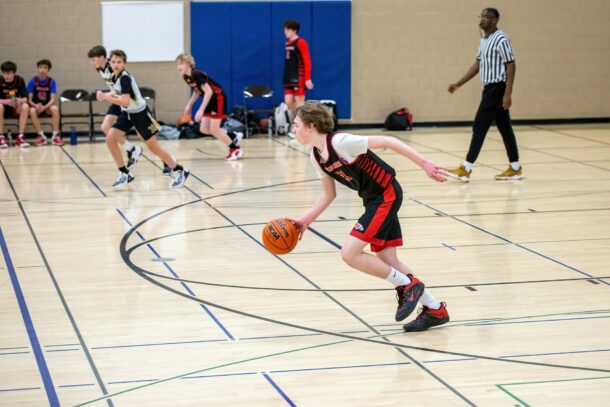
The week before the first game, every coach is wrestling with the same question. Who plays, and how much? That’s the basketball rotation question. It’s one of the biggest decisions you make all preseason and one of the touchiest. It affects chemistry, confidence, your relationship with parents and, yes, whether you win.
A basketball rotation isn’t just your five best players written on a clipboard. It’s a plan for how minutes get split, which groups play well together, when subs happen and how you explain all of it to your kids. The more of that you figure out now, the better your decisions are in the middle of a tight game. Here’s how I approached it.
If you’re working on this right now, these will help too: playing time conversations, coaching your first game and evaluating your team after a few games. Check the NFHS rules and your state association’s guidelines on substitutions and roster limits before your first game.
Use what you saw in practice
You’ve had weeks of practice. Use them. Go back through scrimmages, drills, effort and decision making. Pay attention to who makes good things happen, not just who looks the most talented.
Some kids look great in drills and disappear when it’s live. Others look ordinary in drills and somehow always end up on the winning side of the scrimmage. Live play is the best predictor of games I’ve ever found, so I leaned on it heavily.
- Who makes winning plays in scrimmages?
- Who guards every possession?
- Who takes care of the ball?
- Who talks and lifts teammates?
- Who takes coaching well?
Figure out roles before minutes
Decide what your team actually needs before you start handing out minutes. You need scorers, sure. You also need defenders, rebounders, ball handlers and somebody to bring energy off the bench.
Think about what each kid does best. A player who can’t score much but can guard their best guard is worth a lot. A kid who rebounds and runs the floor can change a game. When roles are clear, players stop measuring themselves only by points and minutes.
Build your basketball rotation in fives
The game is played five at a time, so think in lineups. Your five best individuals aren’t always your best five together. You need enough ball handling, shooting, size and defense on the floor at once.
Use the last week of the preseason to try combinations in scrimmages and keep track. Which groups score? Which ones get stops? Sometimes you’ll find a second unit that plays really well together, and that’s a great thing to have in your back pocket.
Build a sub pattern into your basketball rotation
A lot of coaches go into games without a substitution plan and end up subbing on gut feel. A simple pattern helps you manage minutes, keeps kids fresh and gives everybody in the rotation a rhythm.
Something like this: first sub around the four minute mark of the first quarter, another at the end of the quarter, then a chunk of second unit time in the second. When kids know roughly when they’re going in, they stay ready.
Keep it manageable
Most high school coaches play eight or nine in a close game. Youth teams often play more for development. Decide how many you’ll really use and be honest with the team about it.
Stay flexible
A plan is a starting point. Fouls, matchups, injuries and who’s playing well that night will all change things. The plan just makes those changes intentional instead of panicked.
Tell them where they stand
Players handle roles much better when they understand them. Before the first game, sit down with each kid, or small groups. Tell them what you need, why they’re in that role and what they can do to earn more.
Be honest without crushing them. A kid who isn’t going to be in the regular rotation should hear that from you directly, along with what he can work on and how he still helps the team. In my experience kids respect honesty a lot more than a vague promise.
- Be specific about the role
- Tell them how to grow it
- Point out how they help the team
- Remind them roles can change
Revisit your basketball rotation in a couple weeks
Your opening night rotation won’t last all year. Kids get better, kids get hurt, team needs change. Every couple of weeks, look at film, numbers and practice and adjust.
When you do make a change, tell the player before it happens in a game. A kid losing his starting spot deserves to hear it from you first. That’s how you keep his trust.
A basketball rotation is about trust
Setting your basketball rotation is about more than the first game. It shapes how kids see their roles, how hard they compete in practice and whether they trust you. Base it on what you see, build good lineups, plan your subs and be honest. Kids will know where they stand and what they need to do.
If you want help with game management, evaluating players or building your team, we have courses, practice plans and coaching tools at TeachHoops.com.