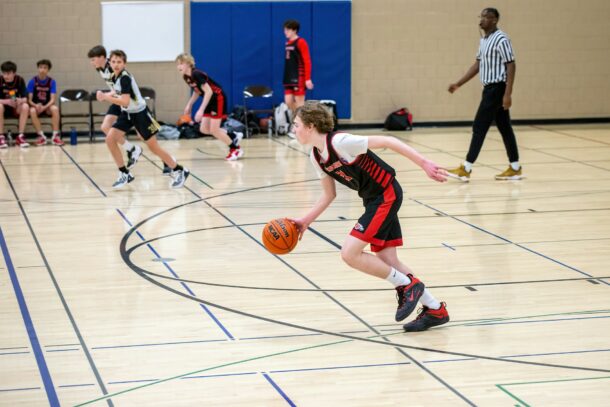
When youth coaches talk defense, the conversation usually turns into man versus zone. But there’s another option that often gets overlooked or misunderstood: combination defenses for youth basketball. Used correctly, they can be an effective change-up that disrupts opponents, protects young players, and teaches valuable defensive concepts without overwhelming kids.
The key is understanding when and why to use them, not just copying what you see at higher levels.
Start With Your Mission as a Coach
Before choosing any defense, youth coaches need to be clear about their mission. Are you coaching to win every weekend tournament, or are you focused on long-term player development?
That answer matters. Coaches who prioritize development should lean heavily on man-to-man principles early. Man defense teaches on-ball positioning, help-side awareness, communication, and recovery. Those skills transfer to every level of basketball.
Zone defenses and combination defenses still have value, but they work best as tools rather than foundations.
Why Man-to-Man Should Come First
If a youth coach could only pick one defense, man-to-man should be the choice. The principles of man defense translate cleanly into zone concepts later. The reverse is not always true.
Man defense teaches:
- On-ball containment and stance
- Help line positioning
- Communication on screens and cutters
- Defensive footwork and balance
Once players understand those ideas, zones and combinations become easier to teach and more effective when used.
Where Combination Defenses Fit In
Combination defenses blend man and zone principles. Common examples include:
The goal is simple: take away the opponent’s best player or two and force others to beat you.
At the youth level, this can be extremely effective in short stretches. Many teams rely heavily on one dominant scorer, often due to size, strength, or skill mismatches. A well-timed combination defense can frustrate that player, disrupt rhythm, and shift momentum.
The key is moderation. Combination defenses are most effective in spurts, not as a full-game solution.
Join the TeachHoops Community
Building Better Basketball Coaches
- College Coaches: Elevate your knowledge with advanced strategies and insider tips.
- High School Coaches: Expand your playbook and get an exclusive look behind the scenes of a nationally recognized program.
- Youth Coaches: Master the fundamentals and teach the game with confidence.
Teaching Coaches Since 2011 | 14-Day Money-Back Guarantee
Join Now and Step into Enhanced Coaching
When Combination Defenses Work Best
Combination defenses for youth basketball tend to work best when:
- One player is clearly dominating the game
- The opposing team struggles to adjust or space the floor
- You need to change tempo or rhythm
- You want to protect players from constant post mismatches
Switching defensive looks forces young players to think, communicate, and adapt. Even a short delay while the offense figures things out can swing a game.
Changing Defenses to Control Rhythm
One underrated benefit of combination defenses is how they slow opponents down. Most teams spend far more practice time preparing for man defense than for zones or hybrids.
Changing defenses mid-game forces the offense to pause, identify matchups, and reorganize. That hesitation alone can lead to rushed shots, poor spacing, or turnovers.
Many coaches use a simple rule like switching defenses after every third score. The goal isn’t confusion for confusion’s sake, but rhythm disruption.
Keep the Teaching Simple
Youth players thrive on clarity. Successful defensive programs rely on simple rules, visual cues, and trigger words. Instead of complex terminology, many coaches use:
- Visual spacing rules for help defense
- Simple numbers or phrases to reinforce positioning
- Clear trapping zones or no-trap areas
This approach keeps players confident and engaged while still executing advanced concepts.
Zone vs. Man Is the Wrong Debate
The real question isn’t man or zone. It’s timing and purpose. Man defense builds habits. Zone and combination defenses provide solutions. When coaches understand both, they can adjust based on opponents, game flow, and player needs.
Combination defenses are not shortcuts. They are tools. When used intentionally and taught clearly, they can help young teams compete while still developing the skills players need long-term.
Final Takeaway
Are combination defenses effective in youth basketball? Yes, when used in the right moments and built on a foundation of man-to-man principles.
Teach man first. Add zone concepts next. Sprinkle in combination defenses when the situation calls for it. That balance gives youth players the best chance to grow, compete, and understand the game at a deeper level.
For coaches looking to explore structured defensive systems, TeachHoops.com offers detailed resources, including proven defensive frameworks designed specifically for youth and high school players.

Latest Posts
- Basketball Practice Planning: A Simple System for Youth and High School Coaches
- Basketball Coaching Culture: What Great Coaches Teach Beyond the Playbook
- A Quick Passing Warm-Up Drill to Emphasize Communication and Movement
- Does the 5-Man Weave Drill Still Have a Place in Youth Basketball?
- When Culture Meets Competence: What Indiana Football’s Turnaround Teaches Every Coach