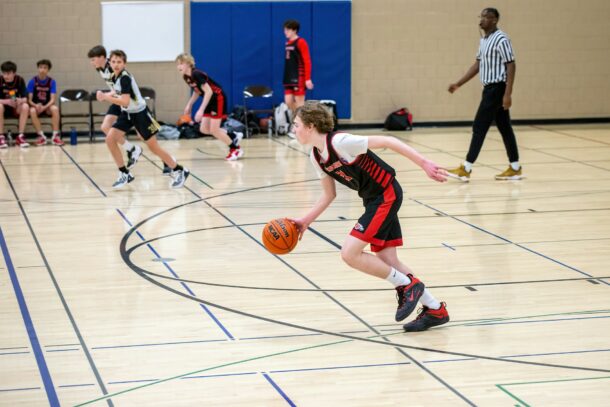
The first week of youth basketball practice sets the tone for the entire season. This is when players learn what you value, how hard they’re expected to compete, and what standards matter most. It’s also when coaches have the best opportunity to evaluate skill, effort, and basketball IQ before habits are formed.
Rather than cramming in plays or running long scrimmages, the most effective first week of youth basketball practice focuses on structure, defense, and small-sided games that reveal who can really help your team.
Start With a Plan, Not Just Drills
Before the season begins, map out your calendar. Know how many practices you have before the first game and what absolutely must be introduced early. In youth basketball practice, organization matters just as much as energy, so develop a practice plan. Label each practice and decide:
- When defensive concepts will be emphasized
- When offensive ideas will be introduced
- When special situations like press breaks or out-of-bounds plays will appear
Even if everything isn’t perfect by the first game, players should at least be familiar with what’s coming.
Emphasize Defense Early in Youth Basketball Practice
During the first week, defense should be the priority. Offense will show itself naturally in games, but defense must be taught, emphasized, and reinforced. In early youth basketball practice sessions, limit offensive instruction and focus on:
- Keeping the ball in front
- Proper closeouts
- Physicality without fouling
- Communication and help defense
This allows you to see which players compete, listen, and adjust.
Warm Up With Purpose
Keep warm-ups simple and efficient. Use this time to get players moving while you handle quick logistics. The faster you can get into meaningful basketball actions, the more you’ll learn.
The goal of the first week of youth basketball practice isn’t conditioning. It’s evaluation and teaching.
Join the TeachHoops Community
Building Better Basketball Coaches
- College Coaches: Elevate your knowledge with advanced strategies and insider tips.
- High School Coaches: Expand your playbook and get an exclusive look behind the scenes of a nationally recognized program.
- Youth Coaches: Master the fundamentals and teach the game with confidence.
Teaching Coaches Since 2011 | 14-Day Money-Back Guarantee
Join Now and Step into Enhanced Coaching
Closeouts and Containment Come First
One of the best ways to start practice is with closeout drills. Use short, high-rep segments:
- Three-line closeouts to emphasize urgency
- Two-line closeouts that add one or two dribbles
Focus on balance, bent knees, active hands, and taking away open threes. These habits carry over immediately into games.
From there, move into ball containment drills that force defenders to stay in front and communicate when help is needed. This is one of the clearest ways to separate players who understand team defense from those who don’t.
Use One-on-One With Constraints
One-on-one play is essential in youth basketball practice, but it needs structure. Change the advantage:
- Defense starts ahead
- Even positioning
- Offense starts with the edge
Limit dribbles and rotate matchups often. This shows who can score efficiently, who can defend without fouling, and who adapts when conditions change.
Build With Small-Sided Games
Small-sided games are the backbone of an effective first week of youth basketball practice. Progress through:
- 2-on-2 with no dribbles to emphasize movement
- Add limited dribbles to test decision-making
- 3-on-3 with constraints
- 4-on-3 to evaluate spacing and help defense
These games expose strengths and weaknesses quickly. Players can’t hide, and coaches get clear answers.
Don’t Avoid Contact
Include post play and physical matchups, even at the youth level. Controlled contact teaches toughness, balance, and positioning. Simple one-on-one post drills show:
- Who fights for position
- Who handles contact well
- Who stays engaged when tired
These moments matter more than made shots.
Finish With 5-on-5, But Keep Perspective
End practice with short 5-on-5 segments for flow and confidence, but don’t overvalue them. Most evaluation should already be done through small-sided games and defensive work.
In the first week of youth basketball practice, the goal isn’t perfection. It’s clarity.
Why This Approach Works
A well-structured first week of youth basketball practice:
- Establishes defensive habits
- Encourages communication
- Maximizes repetitions
- Gives coaches real evaluation data
When you shrink the game, raise the intensity, and emphasize fundamentals, players improve faster and teams come together sooner.
If you want more drills, practice ideas, or one-on-one support, or if you need help installing a shooting workout with your team, explore everything on TeachHoops.com. With a 14-day free trial, one-on-one mentoring, and a library of proven practice tools, it’s one of the best places for coaches who want to take the next step.
Latest Posts
- Basketball Practice Planning: A Simple System for Youth and High School Coaches
- Basketball Coaching Culture: What Great Coaches Teach Beyond the Playbook
- A Quick Passing Warm-Up Drill to Emphasize Communication and Movement
- Does the 5-Man Weave Drill Still Have a Place in Youth Basketball?
- When Culture Meets Competence: What Indiana Football’s Turnaround Teaches Every Coach