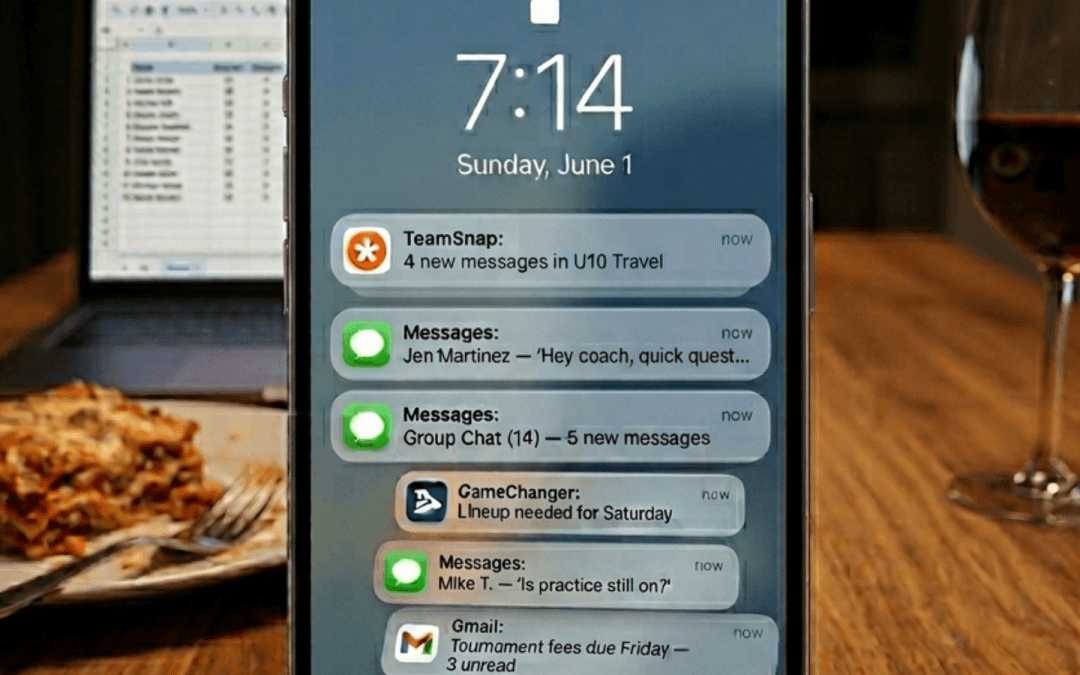
Youth sports families know the feeling. Soccer is in TeamSnap. Basketball is in GameChanger. Another coach sends updates through SportsEngine. A tournament schedule changes late Friday night, a field gets moved Saturday morning and suddenly the whole family calendar is wrong.
Sammi is built for that exact kind of sports-parent scramble. Based on the preview from heysammi.com, Sammi is a sports family scheduling assistant designed to pull information from multiple team apps, make sense of the chaos and keep one family calendar updated.
For parents juggling practices, games, tournaments, carpools and weather changes, this could become one of the most useful youth sports tools heading into 2026.
What Is Sammi?
Sammi is a scheduling tool for busy sports parents and coaches. The main pitch is simple: no new app, no new calendar and no more manual entry.
Instead of asking parents to copy every practice and game into Google Calendar, Outlook or iCal by hand, Sammi works with the calendar parents already use. Parents share their sports app calendar links, then Sammi monitors those schedules and updates the family calendar when things change.
The site explains it with a clean line: “Soccer’s in one app. Basketball’s in another. Sammi brings it all together.”
For families with multiple kids in multiple sports, that hits home fast.
Why Sports Parents Need a Better Calendar System
Most youth sports parents are not struggling because they are disorganized. They are struggling because the system is scattered.
A typical family might have:
TeamSnap for one child’s soccer team
GameChanger for baseball or softball
SportsEngine for hockey, volleyball or basketball
LeagueApps or Sports Connect for rec leagues
Text threads from coaches
Email updates from tournament directors
A family calendar that still needs to be updated manually
Sammi is aimed at the parent who is tired of checking five places to manage one Saturday.
The screenshots from the site focus on three common pain points: too many apps, manual entry every time and things slipping through the cracks. Those are real issues for parents, especially during tournament weekends or overlapping seasons.
How Sammi Works
Sammi’s process appears to be built around a simple three-step setup.
1. Share Your Sports App Calendar Links
Parents send Sammi the calendar feed links from the apps their teams use. The site mentions TeamSnap, GameChanger, SportsEngine and other youth sports platforms.
2. Text Sammi
Sammi asks a few quick questions about the kids, their sports and the family calendar. The site says the conversation takes about two minutes.
3. Let Sammi Sync the Calendar
Once connected, Sammi handles schedule changes, conflicts and updates. The family calendar stays synced while parents stay in the loop.
The key benefit is that parents do not have to switch calendars or download another app. Sammi works with Google Calendar, Outlook and iCal.
What Sammi Does for Busy Sports Families
The most parent-friendly part of Sammi is that it focuses on the small details that create the most stress.
1. Morning Briefs
Sammi sends a daily text with the plan for the day. The example on the site includes weather, practice times, game locations, drive times, what to pack and when to leave.
That matters because youth sports mornings usually fall apart over small things. Cleats are missing. Water bottles are empty. A game is farther away than expected. A field changed overnight.
One clear text can save a lot of sideline stress.
2. Automatic Schedule Changes
Sammi monitors updates from connected sports apps. If a coach moves practice from one field to another or changes the time, Sammi catches the update and pushes it to the family calendar.
That feature could be especially useful for tournament weekends when schedules shift after pool play, weather delays or bracket changes.
3. Conflict Spotting
Sammi also flags conflicts. The site gives an example of two games at the same time in different towns, then suggests a possible fix such as texting another family about a ride.
For parents managing multiple kids, this is a major selling point. It is one thing to know there is a conflict. It is another to catch it early enough to solve it.
4. Calendar Syncing
Sammi syncs schedules into the calendar parents already use. That includes Google Calendar, Outlook and iCal.
This is important because many families already have a shared calendar system. They do not need another place to check. They need the existing calendar to stay accurate.
Which Sports Apps Does Sammi Support?
According to the screenshots, Sammi supports several major youth sports platforms, including:
TeamSnap
GameChanger
SportsEngine
LeagueApps
Sports Connect
Playmetrics
The FAQ says more apps are being added every month. If a family’s team app is not supported yet, parents can add it to the waitlist form. Sammi says it prioritizes new integrations based on demand, with most apps added within a few weeks of being requested.
When Does Sammi Launch?
Sammi is listed as launching in summer 2026.
The site says waitlist members will get early access before the public launch. Founding waitlist members also lock in special pricing for life.
Can Coaches Use Sammi Too?
Yes. The site includes a coach option on the waitlist form and has a line that says, “Are you a coach? Hey Sammi works for you too.”
For coaches, the value could be different but still useful. A coach managing team calendars, practice changes, game updates and parent communication could use Sammi to reduce the number of repeated questions.
Still, the strongest fit appears to be sports parents managing multiple kids, multiple teams and multiple calendars.
Why Sammi Could Help Youth Basketball Families
Basketball families often deal with packed weekends, late schedule updates and tournament changes. One child might have a Saturday morning rec game while another has a travel tournament across town. Add in practices, private training, school events and family plans, and the calendar gets crowded quickly.
Sammi could help basketball parents by:
Keeping tournament schedules synced
Catching court or time changes
Sending morning reminders with game times and locations
Flagging conflicts between siblings’ games
Helping families plan rides and carpools earlier
For TeachHoops parents, this is not just about convenience. Better organization can help players arrive calmer, earlier and more prepared. That helps coaches too.
Sammi Looks Like a Smart Tool for Sports Parents
Sammi is not trying to replace TeamSnap, GameChanger, SportsEngine or a family calendar. It is trying to connect them.
That is the part parents will appreciate. Most families do not need another app to check. They need fewer tabs, fewer texts and fewer last-minute surprises.
If Sammi delivers on the features shown in the preview, it could become a helpful calendar assistant for families managing youth basketball, soccer, baseball, softball, hockey, volleyball and more.
For now, parents can join the waitlist ahead of the summer 2026 launch. For families already juggling three kids, two sports each and one crowded calendar, Sammi may be worth watching.
If you coach long enough, you see the same tension show up again and again. A player dreams big. A parent wants the best. A coach wants to encourage growth without creating false hope. That is why setting expectations in youth basketball matters so much. When expectations are healthy, players develop confidence, discipline, and perspective. When expectations get out of line, the game can start to feel like pressure instead of joy.
In a recent Coaching Youth Hoops episode, Coach Bill Flitter talked with Cameron Korab of Made Hoops and the Youth Sports Business Report about the current youth sports landscape. One of the most useful takeaways for basketball coaches was simple: kids need guidance that is honest, patient, and grounded in long-term development.
Why Setting Expectations in Youth Basketball Matters
Too many players grow up hearing mixed messages. A coach may be trying to teach patience and fundamentals. Meanwhile, outside voices may be telling that same player they are already on a Division I path or destined for something bigger. That disconnect can create frustration fast.
Coach Korab made an important point during the conversation. Most kids are not going to become professional athletes, and even college opportunities are limited. That does not mean young players should stop dreaming, but that adults need to frame those dreams the right way. For coaches, that starts with helping players understand that success is built in steps:
Make the next team
Improve your role
Build stronger habits
Learn how to compete
Become a reliable teammate
Fall in love with the work
Those goals are real, useful, and motivating. They also keep players focused on progress they can control.
The Problem with Skipping Steps
One of the biggest mistakes in youth basketball is talking about the finish line before a player has learned how to run the race. Middle school players do not need constant conversations about scholarships, rankings, and exposure. They need skill work, confidence, consistency, and a reason to keep showing up. When adults jump too far ahead, players can start measuring themselves against outcomes they are not ready to chase yet.
That can lead to a few common problems:
Burnout
Frustration over playing time
Poor response to coaching
Unrealistic parent expectations
Loss of joy in the game
A better approach is to break development into smaller wins. For one player, that may mean improving footwork and defense. For another, it may mean earning trust as the first guard off the bench. For another, it may simply mean becoming more mentally prepared every day. That is real growth. And real growth lasts.
4 Tips on Setting Expectations in Youth Basketball for Players and Parents
Coaches often have one tough job that nobody talks about enough. They are not only coaching players. They are also helping shape the expectations around those players. That can be difficult when parents, trainers, social media, and highlight culture are all influencing how a kid sees themselves.
The best coaches handle this by being clear, calm, and consistent. Here are a few strong ways to approach those conversations:
1. Start with the truth, but do not crush belief
A young player should never be told to stop dreaming. But they do need to understand that dreams require work, time, and growth. You do not have to tell a seventh grader what they cannot become. You do need to show them what they need to do next.
2. Focus on the next milestone
Instead of jumping to varsity, college, or beyond, help players focus on the next realistic benchmark. That might be making the freshman team, earning late-game minutes, or becoming a stronger defender.
3. Tie expectations to habits
Korab pointed to discipline and mental readiness as traits that separate serious players. Coaches can use that idea right away. Expectations should be tied to effort, attitude, preparation, and consistency, not hype.
4. Remind families that development is not always linear
Some players grow early. Some grow late. Some dominate young and stall out. Some look average at 12 and become special at 17. Coaches should leave room for growth while still being honest about the present.
The Habits that Matter Most
One of the strongest parts of the discussion was the focus on habits. Talent matters, but habits often determine whether a player gets the most out of that talent. For youth basketball players, that can look like:
Showing up ready to practice
Listening and applying coaching
Repeating fundamentals daily
Competing with energy
Handling mistakes without shutting down
Being coachable even when frustrated
Those habits help players in basketball, but they also help them outside the game. That is one reason youth sports still matter so much. A player may not remember every score or stat line, but they will carry discipline, resilience, and teamwork with them for years.
Don’t let Social Media Set the Standard
One of the most interesting points from the episode was how much technology and social media have changed youth sports. Players now see clips, rankings, and highlight reels constantly. That can distort what development is supposed to look like.
A young athlete sees another kid dunking, getting posted online, or picking up attention from big platforms and starts to think that is the standard. It’s not. The standard should still be growth, effort, and love for the game.
Coaches have to keep reminding players that a highlight is not a career. A viral moment is not the same as daily improvement. The best thing a coach can do is create an environment where players care more about getting better than getting noticed.
Joy still has to be Part of the Process
Coach Bill shared a story in the episode about a young player making a beautiful rebounding and outlet play in one fluid motion, then running by the bench with a huge smile because she knew she had done it right. That moment says everything. That is youth basketball at its best.
Not pressure. Not branding. Not future projections. Just a kid working on something, executing it, helping the team, and feeling real joy. Coaches should protect more moments like that.
Yes, players need accountability. Yes, they need standards. Yes, they need honest feedback. But they also need room to enjoy the game with their teammates and feel proud of their improvement. That balance is what keeps kids playing.
What Coaches Can Do:
If you want to improve how you handle expectations with your team, start here:
Talk to players about goals they can reach this season
Praise habits, not just results
Be honest with parents without being harsh
Keep skill development ahead of status talk
Make sure players still have fun competing together
That approach does more than build better athletes. It builds healthier team culture.
Final Thoughts
The conversation between Coach Bill Flitter and Cameron Korab was a good reminder that youth basketball works best when adults keep the big picture in mind. Setting expectations in youth basketball is not about limiting kids. It is about giving them a healthier path to grow.
Players need dreams. They also need honesty, patience, and adults who care more about development than image. If coaches can provide that, the game stays what it should be: challenging, rewarding, competitive, and fun.
One of the most important and most overlooked skills in youth hoops is team play. Scoring is flashy and fun, but passing, spacing, and unselfishness are what separate a group of kids from an actual team. If you’re coaching young players, especially at the 10U level, you’ve probably seen kids try to dribble through traffic instead of passing to an open teammate. That’s where teaching team play in youth basketball becomes essential.
This post breaks down how to build a team-first mentality with simple strategies, drills, and real-life coaching examples.
Why Teaching Team Play in Youth Basketball Matters
It’s easy for young players to equate “good basketball” with “scoring points.” Parents may unknowingly feed that idea by offering rewards based on how many points their child scores. But basketball is a team game, and if we don’t actively teach and celebrate the right behaviors, like making the extra pass or hitting a cutter in stride, we can’t expect kids to pick them up naturally.
At the youth level, teaching team play in youth basketball isn’t just a tactical choice; it’s a developmental must.
1. Recognize the Role of Age and Maturity
Younger kids often hold onto the ball not because they’re selfish, but because they don’t know any better. Coaches at the 10U and 8U levels should expect these habits and patiently coach through them. As players mature into 12U and beyond, their decision-making improves, and they’re more likely to trust teammates, if it’s been reinforced.
The key: Understand that ball dominance early on isn’t malicious. It’s just undeveloped awareness.
2. Coach Behavior with Clear and Consistent Feedback
In one great example from the TeachHoops team, a coach worked with a strong-willed, talented player who kept trying to go coast-to-coast. The coach calmly pulled her aside during multiple games, talked through her decisions, and gave her opportunities to reflect. Eventually, she made a beautiful assist in transition and the bench erupted. That celebration helped reframe her mindset.
The takeaway? When teaching team play in youth basketball, how you respond to unselfish moments matters. Kids notice. Make a big deal out of the right behaviors.
Join the TeachHoops Community
TeachHoops.com offers a unique platform for coaches to share experiences and gain new insights. Learn from others who have navigated similar challenges. It’s an invaluable resource for those looking to:
Another great tip: Communicate your emphasis on teamwork with parents early. Send a text or email letting them know your goal is to build unselfish habits and that there may be growing pains along the way.
When parents understand your coaching approach, they’re less likely to push for points and more likely to reinforce the team message.
4. Practice Strategies That Emphasize Passing
You are what you emphasize and your practices should reflect your values. Use these simple drills to reinforce team-first habits:
3-on-3 No Dribble: Forces players to move without the ball, cut with purpose, and make quick passes.
5-on-5 No Dribble: Great for older or more advanced teams. Helps build trust and timing.
Full Court “Never Touch the Ground”: Try to score in transition without a single dribble or bounce pass.
Drills like these create muscle memory for team play. They also help players experience the joy of moving the ball and seeing their teammates score.
5. Celebrate the Right Things
Scoreboards are loud, but celebrations can be louder. Make it a habit to celebrate assists just as much as buckets. Whether it’s a bench cheer, a clap from the coach, or a shoutout in postgame huddles, that recognition goes a long way.
Teaching team play in youth basketball won’t happen overnight. It takes reps, reminders, and a whole lot of patience. But if you stay consistent, communicate with parents, and celebrate progress, you’ll start to see it click.
And once it does, the game becomes more fun, not just for you, but for every kid on your roster.
Want More Coaching Support? Check out TeachHoops.com for mentoring, resources, office hours, and a proven coaching roadmap. You can also sign up for our upcoming AI film breakdown webinar to learn how technology can help you analyze and improve your team’s play.
One of the most overlooked but essential aspects of coaching young players is teaching them how to talk to each other on the court. Building a culture of constructive communication in basketball helps reduce conflict, boosts performance, and teaches life skills that carry far beyond the gym.
If you want your team to thrive together, it starts with how they speak to one another.
Why Constructive Communication Matters
In youth basketball, communication is often limited to basic instructions like “switch,” “screen,” or “box out.” But when players learn how to give helpful feedback to teammates, it strengthens trust and accountability.
Constructive communication in basketball improves chemistry and reduces finger-pointing after mistakes.
Use Mistakes as Teaching Moments
A common problem with youth players is reacting after something goes wrong. For example, a player might miss a box-out, and a teammate yells in frustration. Instead, teach your players to speak up before the play.
A quick reminder like, “Get low on this one, he likes to spin,” can be the difference between a rebound and a second chance bucket.
Tone and Timing Make All the Difference
Players must understand that how they say something matters as much as what they say. Two players can give the same correction, but one can come off as supportive while the other sounds like an attack.
Emphasize calm, clear, and respectful tone. This helps avoid miscommunication and builds a stronger locker room.
Train It Like a Skill
Communication is not automatic for most kids, especially in today’s screen-heavy world. You have to teach it intentionally. One way to build constructive communication in basketball is to give players role-play scenarios. Use note cards with examples like: “Your teammate didn’t hustle back on defense.”
Have them practice giving feedback that is direct but supportive.
Join the TeachHoops Community
TeachHoops.com offers a unique platform for coaches to share experiences and gain new insights. Learn from others who have navigated similar challenges. It’s an invaluable resource for those looking to:
Being coachable should apply to feedback from both coaches and peers. Ask players to reflect on how it feels when someone offers advice in a helpful way. When they understand the value of peer input, they become more open to growth.
This builds leaders, not just followers.
Reinforce the Right Way to React
Even with the best intentions, mistakes will happen. Help players understand how to respond when they’re on the receiving end of feedback. A calm nod or quick “got it” goes a long way.
Role modeling positive reactions is just as important as teaching corrections.
Don’t Silence Vocal Players, Guide Them
The goal is not to quiet the players who speak up, but to help them do it better. If a player is holding teammates accountable in a harsh way, coach them through it. Let them know their voice matters.
Then, help them learn how to use it in a way that uplifts rather than tears down.
Keep the Gym Loud and Positive
Encourage constant chatter on the court. Callouts like “screen left” or “I’ve got help” are vital. A team that talks well plays well. A team that talks constructively builds something even more important: trust.
Final Thought
Teaching constructive communication in basketball does not happen overnight. It takes reps, reminders, and reinforcement. But once it’s in place, your team will not just play better, they’ll be better. As we always say, a loud gym is a winning gym.