Running a youth basketball practice that keeps players focused, motivated, and excited to return the next day can be a challenge. Too much repetition feels boring, while an overload of competition can burn kids out. The secret lies in finding the balance, blending skill development with fun, competitive games that simulate real basketball situations. In this post, we’ll break down proven strategies on how to make every youth basketball practice engaging so your players leave the gym both better and eager for more.
The Balance Between Fun and Competition
Youth athletes thrive when practices are structured but not rigid. Coaches should aim for a mix that challenges players to improve while making sure they actually enjoy the process.
Think of practice like a theme park: you want kids to leave while they still want more, not when they’re exhausted or frustrated.
A practical approach:
Not 100% fun, not 100% competitive. Adjust the ratio based on age and skill level.
End on a high note. Kids remember the last thing they do (“peak end”), so finish practice with something fun, like a scrimmage or a favorite drill.
Listen to your players. Ask them which drills they enjoy and build those into your plan. Giving them ownership increases buy-in and motivation.
Gamify the Drills
The fastest way to transform dull reps into engaging challenges is to turn drills into games with clear rules, scoring, and consequences. For example:
Shooting Drills: Instead of lining up for free throws, play “Beat the Pro” or “Knockout.” Every shot matters, and players feel the pressure of competition.
Defensive Drills: Track defensive stops, award points for charges, or time closeout contests. Suddenly, effort skyrockets.
Conditioning: Rather than running suicides, set up team races or relay competitions. Players push harder when winning is on the line.
This approach taps into kids’ natural competitive spirit. They’ll work harder without realizing they’re building essential skills.
Join the TeachHoops Community
TeachHoops.com offers a unique platform for coaches to share experiences and gain new insights. Learn from others who have navigated similar challenges. It’s an invaluable resource for those looking to:
Full-court 5-on-5 scrimmages have their place, but smaller formats, like 2-on-2, 3-on-3, or 4-on-4, maximize touches and decision-making. These games:
Force players to handle the ball more often.
Create constant decision-making in tight spaces.
Naturally build communication and teamwork.
Kids think they’re just “playing,” but you’re sneaking in skill development under the radar, like hiding vegetables in mashed potatoes.
Add Accountability
Competition means little without stakes. That doesn’t mean punishment, it means accountability. Try these tweaks:
Losers run a short sprint or do push-ups.
Keep running scores across the whole practice to crown a daily winner.
Track progress week to week so players see growth.
When kids know something is on the line, their focus, effort, and intensity immediately increase.
Final Thoughts
Learning how to make every youth basketball practice engaging isn’t about reinventing the wheel. It’s about blending fundamentals with competition in a way that feels like play while still demanding effort. Usesmall-sided games, gamify your drills, keep score, and end with fun.
Do this consistently, and you’ll create a culture where kids attack every practice with the same energy they bring to game day.
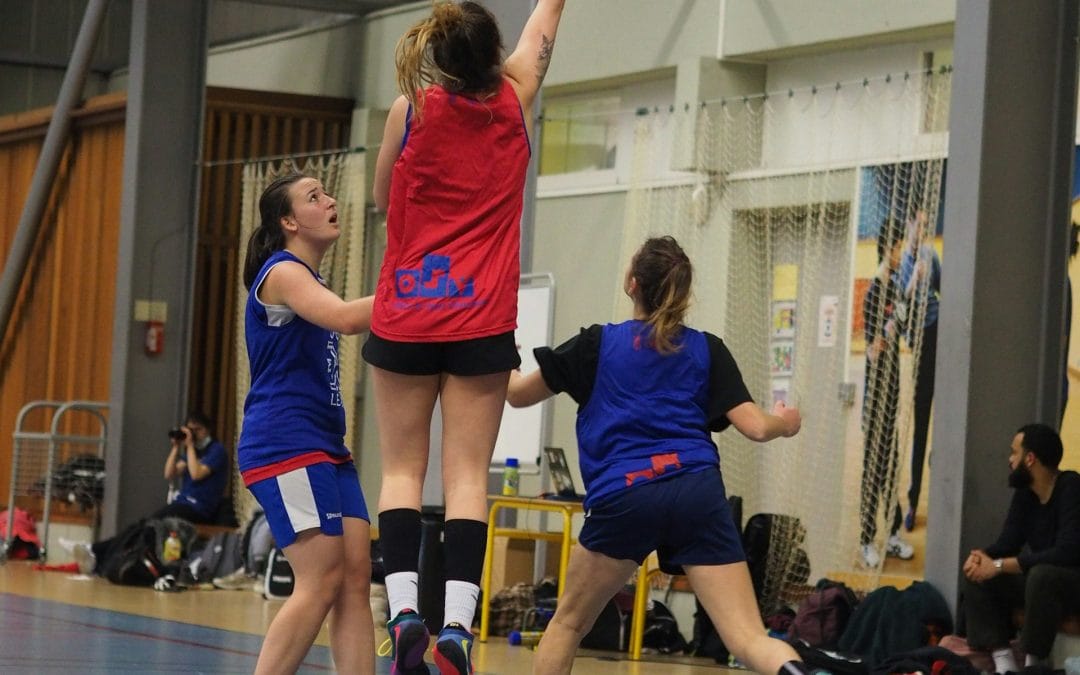
Short on players doesn’t mean short on progress. This guide gives you basketball drills for small groups that turn low-number practices into high-impact skill sessions. Whether only two, three, or four athletes show, you’ll have simple, repeatable plans for ball handling, shooting, finishing, and small-sided games that teach real reads and keep every rep purposeful.
Why this happens and how to handle it
Low turnout is normal in youth hoops. Schedules collide, rides fall through, and injuries pop up. The fix is simple: arrive with multiple versions of your plan so you can pivot fast.
Bring a “full team” plan, a “small group” plan, and a “skills only” plan.
Over-plan the clock. For a 2-hour slot, prep 2.5 to 3 hours of activities so you never hit dead time.
Treat low numbers as a chance for high-impact reps and individual coaching.
Your small-group practice menu
Focus on ball handling, shooting form, footwork, finishing, and simple reads. You can also micro-teach team concepts in tight spaces.
3 player basketball drills
2-on-1 to 1-on-2 Attack two vs. one, then the defender outlets to trigger a quick 1-on-2 return. Cues: Wide spacing, one hard paint touch, finish through contact.
Triangle passing with screen action Corner, wing, top. Pass, follow to set a down screen, catch, and shoot or drive. Cues: Set feet before catch, screen angle at the defender’s hip.
3-man pick-and-roll series Ball handler, screener, spacer. Rep roll, short roll, and slip. Cues: Set up defender, change pace, hit the pocket pass early.
Closeout and help 2v1 shell One on the ball, one in gap, one as passer. Rotate after each rep. Cues: Choppy feet on closeout, high hand, see ball and man.
Shooting circuit Form shooting, one-dribble pull-ups, spot-up threes, finishing package. Cues: Hold follow-through, land on balance, finish outside hand off one foot and two.
2 player basketball drills
1-on-1 constraints Start from wing, slot, or post. Limit dribbles or require a paint touch before the shot. Cues: First step wins, protect the ball, finish on the far side.
Partner passing and shooting 30-second blocks: snap passes, relocation, catch-and-shoot, dribble-handoff into pull-up. Cues: Hit target hand, show hands early, shoot on the hop.
Screen and slip mini-series Set, show, and slip when defender jumps the screen. Cues: Sprint into screen, wide base, slip on contact.
Finishing ladder Power layups, inside-hand, reverse, floater, euro, pro-hop. Cues: Eyes on backboard markers, protect with body.
1 player workouts (when it’s just you and an athlete)
Form shooting tree Knee/waist/shoulder range, 25 makes each, swish or redo.
Ball-handling lane Stationary pound series, cross/inside-out, then cone slalom to a finish.
Mikan variations Standard, reverse, power finishes, no-backboard touch for soft hands.
Chair reads Use chairs as defenders for straight-line drives and stop-on-two jumpers.
Join the TeachHoops Community
TeachHoops.com offers a unique platform for coaches to share experiences and gain new insights. Learn from others who have navigated similar challenges. It’s an invaluable resource for those looking to:
You can still build “team basketball” with three players.
Half-court pick-and-roll reads Ball handler, screener, and spacer. Rep: roll, pop, short roll to dotted line, baseline drift kick. Progression: Call out a read before each rep to lock in decisions.
Quarter-court offense breakdown Run only the first action of your motion or continuity. Emphasize spacing and timing.
Small-sided games that scale
1v1 to advantage: Winner stays, losers do quick skill reps.
2v2 “first to 5 stops”: Defense scores by getting stops. Teaches pride and positioning.
3v3 half-court: Call a rule each game (must post touch, paint touch before three, only weak-hand finishes).
Two plug-and-play practice plans
Plan A: 60 minutes, 3 players
00:00–05: Dynamic warm-up and ball-handling lane
05:00–15: Form shooting tree and close-range finishes
15:00–30: Triangle passing with screen action
30:00–45: 2-on-1 to 1-on-2 transition game
45:00–55: PnR reads (roll, pop, short roll)
55:00–60: Free throws under fatigue (make 10 as a group)
Plan B: 75 minutes, 4 players
00:00–10: Partner passing into catch-and-shoot
10:00–25: 2v2 advantage games (no ball screens, touch paint before three)
25:00–40: Screen and slip mini-series, two pairs alternating
40:00–60: 3v1 closeout and help rotations, then 3v2 build-up
60:00–75: Finishing ladder and pressure free throws
Quick cues that raise the ceiling
“First step wins” on every drive.
Show target hands and talk early on D.
Land on two after catches and in the lane for balance.
Keep a running rep or make count to create urgency.
Roster and staffing tips
Target 10 players for youth teams. Eight is great for reps, but 10 gives you a buffer. Twelve gets tricky for minutes.
Ask an assistant, parent, or responsible sibling to be your “extra body” when needed.
Build attendance buy-in with clear roles, fun competitive segments, and fast transitions.
Mini-templates:
If 3 or fewer show: ball handling, form shooting, finishing, PnR reads.
If 4–6 show: small-sided games, screening actions, defensive rotations.
If 7–10 show: add team sets, special situations, and full-court segments.
If you’re looking to make your practices more efficient, engaging, and effective, small-sided basketball games for youth coaches are one of the best tools you can add to your playbook. Whether you’re working with beginners or experienced players, this approach keeps kids moving, learning, and competing, all while developing the skills they’ll need at higher levels.
Why Small-Sided Games Work So Well
In real basketball, the game often breaks down into smaller situations. Think 3-on-3 on one side of the floor or a 2-on-2 action out of a pick-and-roll. By focusing on these formats in practice, you:
Give players more touches on the ball.
Improve spacing and decision-making.
Create realistic, game-like situations without overcrowding the court.
The beauty of small-sided games is that you don’t have to constantly teach new drills. Instead, you can use the same game format and change the constraints to target specific skills.
Adding Constraints for Skill Development
Once you have your base game, say, 3-on-3 half court, you can modify it with a variety of rules to work on different fundamentals:
Limit dribbles: no dribble, one dribble, or two dribbles max.
Shot location: only in the paint, only three-pointers, or must have a post-up before a shot.
Passing rules: must screen away after a pass or set an on-ball screen.
Defensive objectives: double-team in specific areas or force baseline drives.
These constraints not only keep the drill fresh but also push players to think, adapt, and execute under different conditions.
Join the TeachHoops Community
TeachHoops.com offers a unique platform for coaches to share experiences and gain new insights. Learn from others who have navigated similar challenges. It’s an invaluable resource for those looking to:
While 5-on-5 scrimmages are valuable, most game action happens in smaller combinations. That’s why many experienced coaches lean heavily on 2-on-2 and 3-on-3 work. These setups:
Encourage players to read and react without getting lost in the crowd.
Allow more opportunities for each player to touch the ball.
Simplify spacing, making it easier for young players to learn movement principles.
If you want players to succeed in full 5-on-5, they need to first master these smaller formats.
Keeping It Competitive
Competition is the fuel that keeps players engaged. When running small-sided games:
Keep score to create urgency.
Add time limits for quick decision-making.
Reward execution, not just scoring. For example, give points for good screens or defensive stops.
When kids feel like they’re “scrimmaging” while actually working on targeted skills, practice becomes both productive and fun.
Final Thoughts
Small-sided basketball games for youth coaches aren’t just a trend, they’re a proven way to build fundamentals, maximize limited practice time, and keep players motivated. By starting with a simple format like 3-on-3 and layering in creative constraints, you can address multiple skills in a single session.
For ready-made practice plans that use these methods and build skills progressively throughout the season, visit CoachingYouthHoops.com. You’ll save time, keep practices focused, and help your players grow one small-sided game at a time.