If you found this useful, don’t forget to check out additional blog posts at TeachHoops.com. Also, check out TeachHoops on Facebook, Twitter, Instagram and YouTube.

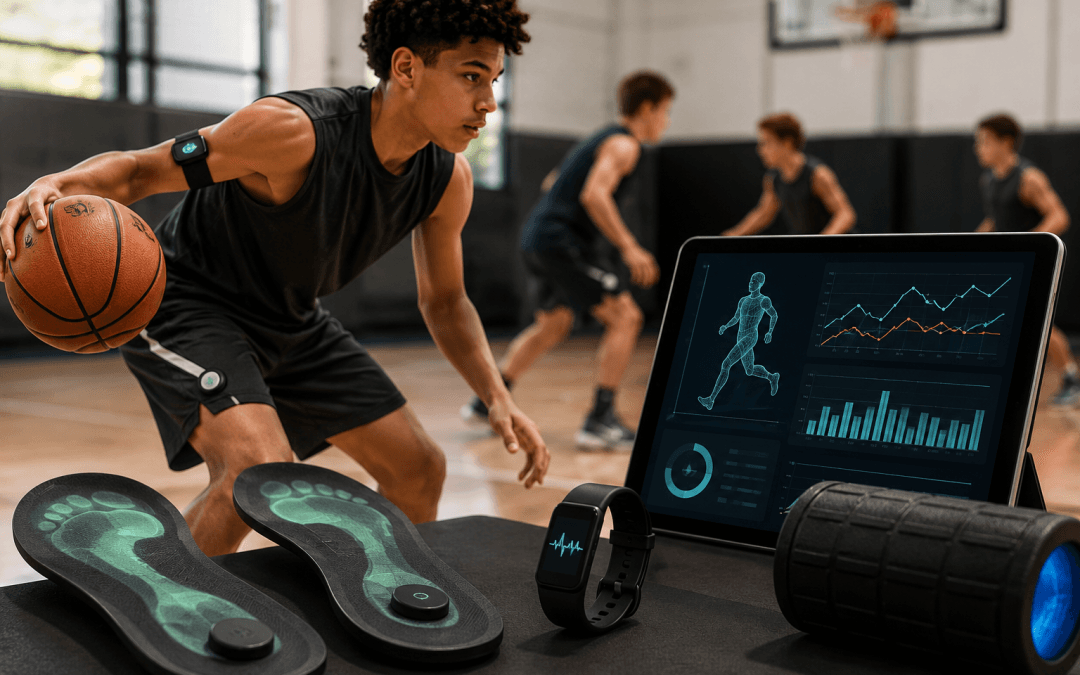
Technology is changing basketball at every level. NBA teams track player movement, monitor fatigue, study sleep patterns, and use advanced analytics to reduce injuries and improve performance. College programs continue to invest heavily in wearable tech, recovery systems, and AI-powered training tools. Technology in youth sports is beginning to follow the same path.
During a recent episode of Coaching Youth Hoops, sports technology expert Julian Valentin shared insights on how professional-level sports tech is slowly making its way into high school basketball and AAU programs. Many coaches wonder where this is all heading. Can technology actually help young athletes stay healthy? Will AI eventually replace coaches? How much tracking is too much?
Plenty of important questions came up during the conversation.
Youth basketball has changed dramatically over the last decade. Many players now participate in:
Some athletes end up playing 60 to 80 games per year before they even reach college. Heavy workloads can create problems:
Professional teams spend millions trying to manage those issues. Youth coaches usually don’t have NBA budgets, but affordable tools are becoming more available every year.
Julian explained that most professional teams rely on a core group of technologies rather than flashy gadgets. Several of those tools are becoming realistic options for youth programs.
GPS systems track how much players run during practices and games. Coaches can monitor:
Load management has become a major topic in basketball because sudden increases in activity often lead to injuries.
A young athlete might practice with a school team, attend AAU practice later that night, and still squeeze in private workouts. Tracking overall workload can help coaches recognize when players are approaching dangerous levels of fatigue.
Force plates measure jumping, landing, balance, and force production. Programs use them to:
ACL injuries, especially among female athletes, remain a growing concern. Technology that spots asymmetries before an injury happens could become a major asset for coaches and parents.
One of the more fascinating topics from the discussion involved smart insoles. These devices can track pressure distribution on an athlete’s feet and identify compensation patterns after injuries.
Professional teams already use this type of technology to study:
Wearables continue evolving as well. Modern devices can monitor:
Still, raw data alone doesn’t solve problems.
One of the best points Julian made centered around a simple question: “So what?” Collecting data is easy now. Understanding what to actually do with that data remains the hard part.
A wearable might tell a coach:
Useful coaching decisions still require interpretation. Human intuition matters. Great coaches understand context. Players have emotions, personalities, motivation levels, and competitive instincts that numbers alone can’t fully explain.
Technology can support decision-making. Coaching experience still drives it.
AI continues making headlines across sports. Some companies already use computer vision systems that analyze basketball film and generate feedback automatically. Other platforms attempt to predict injuries before they happen.
Despite all the hype, Julian believes AI will enhance coaches rather than replace them. Several limitations still exist:
One example from the podcast stood out. A soccer club tested an AI system designed to predict injuries. The system flagged 12 players as potential injury risks before a match. The problem was simple: The coach still needed to field a team.
Technology can identify trends, but coaches still make the final decisions.
One surprising takeaway had nothing to do with wearables or AI. Julian said some professional organizations now focus heavily on leadership development and team culture because those areas drive long-term success more than any gadget ever will.
Championship programs consistently build:
Technology helps support performance, but culture sustains winning. Youth coaches should remember that before chasing every new app or wearable device.
Sports technology brings benefits, but it also creates new concerns.
Who owns player data? Professional leagues already debate how wearable information can be used in contract negotiations. Similar concerns could eventually trickle down into youth sports.
Young athletes already face enormous pressure from social media, rankings, recruiting, and comparison culture. Constant performance tracking could increase anxiety if handled poorly.
Basketball still requires:
Numbers cannot fully measure leadership, toughness, or basketball IQ.
Most youth coaches don’t have massive budgets. Good news is that useful tools exist at lower price points. Programs looking to start small could consider:
Even simple tracking can help coaches spot workload issues before injuries happen.
Sports technology in youth sports will continue growing quickly over the next decade. More high school and AAU programs are already using:
Smart coaches will use those tools as support systems rather than replacements for relationships and intuition. Players still need encouragement. Parents still need communication. Coaches still need leadership.
Basketball remains a human game. Technology can help protect athletes, improve recovery, and support development. Strong culture, smart coaching, and genuine connection will always matter most.
For more coaching conversations and basketball development resources, visit TeachHoops.com.

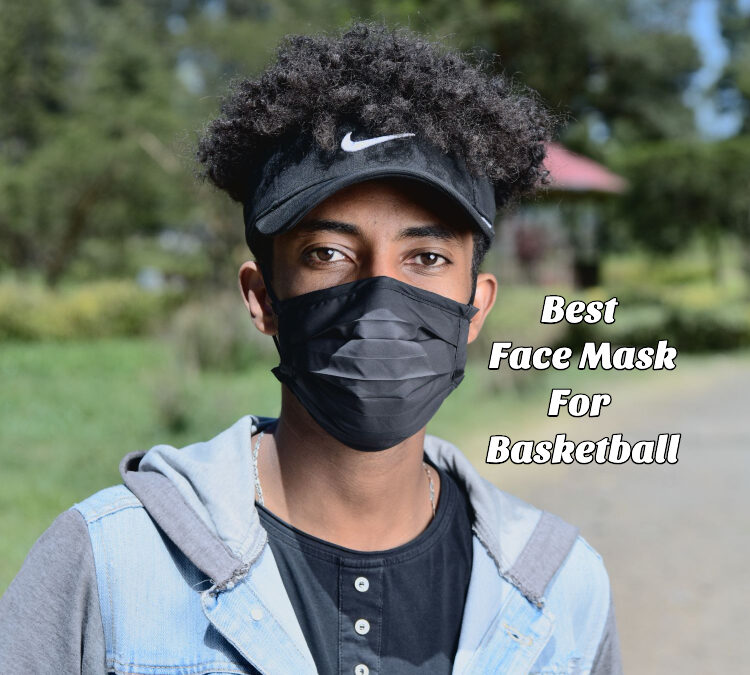
I wrote this article about the best face mask for basketball a month ago in the hopes that the entire country would be playing basketball in person. I know there is a huge group of athletes that are playing basketball and other sports while wearing a mask so I hope this is useful article.
Disclaimer: Everyone should try to social distance and this article is being written for when we can safely return to play.
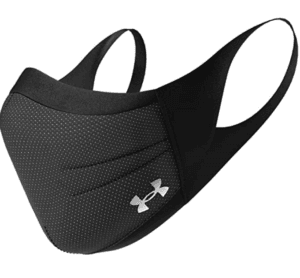
100% Polyester and drys well; Water-resistant outer shell
Pull On closure that makes it easy to pull on and off
Machine Washable and Fits all faces
Made with UA materials and what I love it is designed to be worn all day when you are playing sports or just walking around
It uses the UA Iso-Chill fabric that feels great next to the skin for face comfort
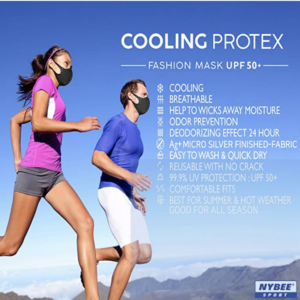
This is very washable and breadthable
Takes a beating and keeps on ticking
It has a very iInnovative stretchy nano polyester blend
Works in all season
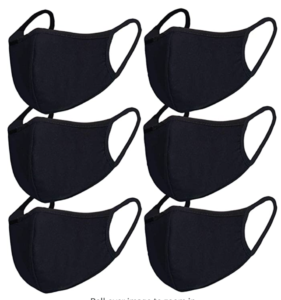
This is a great fit and made of a breathable pure cotton face mask.
Great fit for when you are trying to outfit your entire team on a budget
Washable and reusable
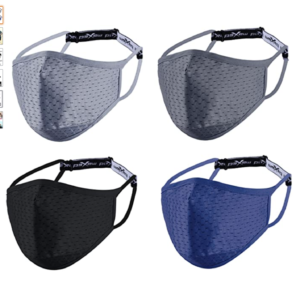
Great adjustable face mask for sports
Normal Size for Adult; Freely adjustable strap
Multi-Layer Design; breathable outer layer; provides coverage for your all face and chin
Premium Quality; good permeability and comfortable fabric; Machine washable.
Wear comfortable for indoor and outdoor, used in walking, skiing, motorcycling, running, biking, trekking, mountain climbing, snowboarding, hunting, cycling and other activities, working out at the gym, running, school, grocery shopping, work, daily use, or when you need.
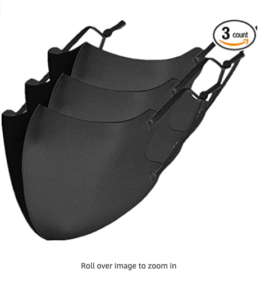
Made of cotton cloth, Washable & Reusable & Durable.
Adjustable stoppers for ear loops: Adjustable ear loops size meet most people’s face types.
3D design: Ergonomic nose cutting, more Space for Breathing When Wearing a Mask.
Wide applications: The cloth face mask for outdoor usages, pollution, pollens, anti dust & wind protection, traveling, on airplanes, and more.
Easy to carry:3 x Resealable Bags,put it inside your pocket and bring it anywhere.
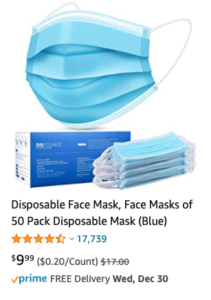
A lot of my players like these. They are easier to breadth and can just be thrown out at halftime or the end of the game
If you found this useful, don’t forget to check out additional blog posts at TeachHoops.com. Also, check out TeachHoops on Facebook, Twitter, Instagram and YouTube.
Enter your email address to gain access to our FREE video series.