If you found this useful, don’t forget to check out additional blog posts at TeachHoops.com. Also, check out TeachHoops on Facebook, Twitter, Instagram and YouTube.

AI is quickly becoming a powerful tool in coaching, but most of us still aren’t using it to its full potential. When it comes to AI practice planning for youth basketball, many coaches make the mistake of treating it like a quick Google search instead of the game-changing mentor it can be.
In this post, we’ll explore how basketball coaches can use AI effectively, not just for drills and practice plans, but for real, strategic growth.
Hey Coach, listen up. There’s a habit most of us have, and it’s holding us back from unlocking AI’s full potential in our basketball programs.
For decades, we’ve been trained by Google. Need an answer? Type in a few short keywords.
Google spits out a page of links, and it’s on us to dig through each one, decide which random “coach” to trust, and then piece together what might work in our next practice plan.
We’ve been doing this for so long that we bring the same “quick-hitter” mindset to AI.
But that’s like using your best player as a decoy.
Think about it: You wouldn’t walk up to a mentor coach you respect and just say, “zone offense.”
No! You’d give them the full picture:
“Hey Coach, I’m prepping for our rival. They run an aggressive 2-3 zone that extends high. My guards are quick but small, and my best shooter is my 4-man, who struggles to get open on the wing. We run a basic 4-out motion. What specific actions or quick-hitters can we install this week to get my 4-man open looks from the high post or short corner?”
See the difference? You’re giving context, your opponent, your personnel, and your goal.
Your mentor gives you a strategy. Google gives you a list.
AI is your new mentor coach. Start treating it like one.
Building Better Basketball Coaches
Teaching Coaches Since 2011 | 14-Day Money-Back Guarantee
If you want AI to give you coaching-level insight, you have to talk to it like a coach.
Instead of typing, “Man-to-man defensive drills,” try this:
“I’m an AI coach. My team is struggling with on-ball defense and late help-side rotations. We keep getting beat off the dribble, and our closeouts are sloppy. I have 90 minutes for practice tomorrow. Can you build me a 25-minute practice block with a 3-drill progression that focuses on 1) containing the ball-handler, 2) proper closeout technique, and 3) the first help rotation? Give me the key teaching points and coaching cues for each drill.”
That’s the foundation of AI practice planning for youth basketball, giving the system enough detail to act like an experienced assistant, not just a search engine.
The same idea applies to culture building. Don’t just type, “How to build team culture.”
Try this instead:
“I’m an AI coach. I’m taking over a high school program that won 5 games last year. The players seem unmotivated, and the parents are negative. I need to establish a new culture of accountability and ‘next play’ mentality. Give me a 30-day plan for the off-season that includes 3 specific activities I can do with the team, a theme for the month, and a sample letter I can send to parents outlining my philosophy and expectations.”
When you give AI context, you’ll get a response that’s:
That’s how basketball coaches can use AI effectively: by treating it like a coaching partner who knows your system, your players, and your goals.
The next time you sit down to plan a practice or prep for a big game, break the “Google habit.” Don’t toss in a few keywords and hope for the best.
Treat AI like your mentor coach. Give it the full scouting report: your team, your opponent, your time constraints, and your objective. You’ll be amazed at how much faster, and better, it works for you.
Any questions about this or anything else you’re working on AI-wise? I’m an email away.
The truth is simple: every coach wants to spend less time grinding and more time coaching. With AI, that’s not a fantasy, it’s the future. If you’ve ever wished for an extra assistant, this is your chance to create one.
Join The Coaching AI Masterclass and learn how to build your own AI basketball coaching system, the one that organizes, plans, and communicates so you can just coach.
If you’d like to explore further, also check out theAIsportscoach.com, a free community for coaches to share prompts, strategies, and ways AI is helping them win both on and off the court.
Coach Collins sits down with Coach Patrick O’Neill of Ulster University to discuss developing basketball culture and practice planning. Coming from Ireland, O’Neill needed to developing his program’s culture largely from scratch.
O’Neill says their team culture is comprised of three essential pillars: values, attitudes, and goals. He calls values the standards of behavior, often a judgment of what is important in life. Attitudes are defined as the way a player thinks and feels about something. O’Neill defines goals as “the object of a person’s ambition or effort.” Also, “an aim or desired result.”
O’Neill leaned on four keys during his coaching career. He says honest communication stands as one of the most important elements within his program. He also said he realized he needed to up his coaching game, focusing on preparation. The other two keys he relied upon were balance and understanding.
He empowered his players to take ownership of their own development, and he understood the individual circumstances for his players. O’Neill made it a point to make himself available and approachable to the players as well.
But O’Neill admits it wasn’t all perfect. He learned very quickly “shoehorning” a player into his philosophy could be counter productive. Good coaches adapt their approach for each new collection of players they come across. He also admitted being totally positive, especially in the face of defeat, did not work.
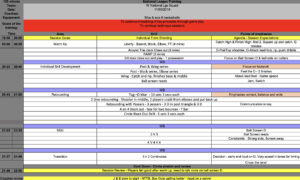 Coach O’Neill went on to discuss his approach to practice planning.
O’Neill approaches each session with a detailed plan of attack. He portions off practice segments with specific focuses. Some of the sections include warm up, skill development, and team-wide work.
Within each section, O’Neill’s practice plan lists the specific drill that will be conducted. In addition, he adds the points of emphasis during the segments and drills.
This level of organization allows O’Neill to maximize practice time and move seamlessly between focuses.
Check out the fascinating interview with Coach O’Neill below from the Teach Hoops YouTube Channel.
Click to view Developing Basketball Culture PowerPoint

If you found this useful, don’t forget to check out additional blog posts at TeachHoops.com. Also, check out TeachHoops on Facebook, Twitter, Instagram and YouTube.
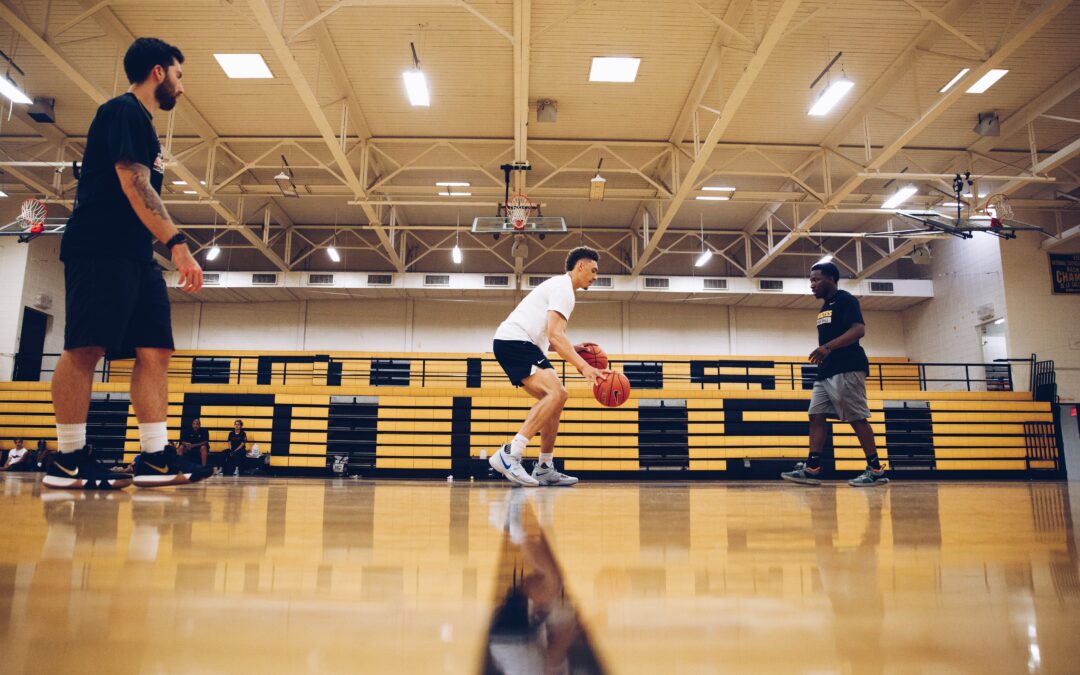
Planning any program’s basketball practice remains one of the most important aspects of coaching. No matter if it’s a preseason workout, in-season session, or postseason shoot around, a well-organized practice produces meaningful results.
Coach Collins sat down recently with veteran basketball coach Sean Doherty to discuss his approach practice planning. Coach Doherty currently serves as the head boys coach at Hamden Hall Country Day. Doherty sports more than 20 years experience coaching basketball, including stops as a former Division-1 assistant at Holy Cross, Western Kentucky and Quinnipiac. In addition to those duties, Doherty also served as a top assistant at Division II powerhouse Assumption College, as well as being the former head coach at Salem State.
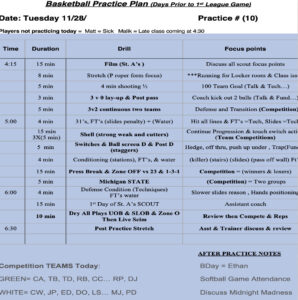 Coach Doherty urges all other basketball coaches to be organized. He suggests meeting with staff to discuss daily and weekly practice plans. If coaching without a staff, he still recommends detailed planning, including a written plan for players to see such as a “Daily Improvement Sheet.”
He calls it integral that coaches have a firm understanding of plays/drills need to be cover during season heading into their first practice.
Doherty also recommends a weekly plan for the team, which includes off the court events. He likens this to lessons plans for classroom teachers.
Doherty says: “Practice is where we create our winning culture.” He calls for accountability should be in all segments. He also recommends tracking Effort Stats. Part of the culture development includes teaching “great teammate” elements, such as: run to guys who fall/take charge, make a huge hustle play, bench up and down, high fives, emotion at right time, etc.
Check out the full interview with Coach Doherty from the Teach Hoops YouTube Channel below.
PDF Handouts: EFFORT STAT SHEET
If you found this useful, don’t forget to check out additional blog posts at TeachHoops.com. Also, check out TeachHoops on Facebook, Twitter, Instagram and YouTube.
Enter your email address to gain access to our FREE video series.