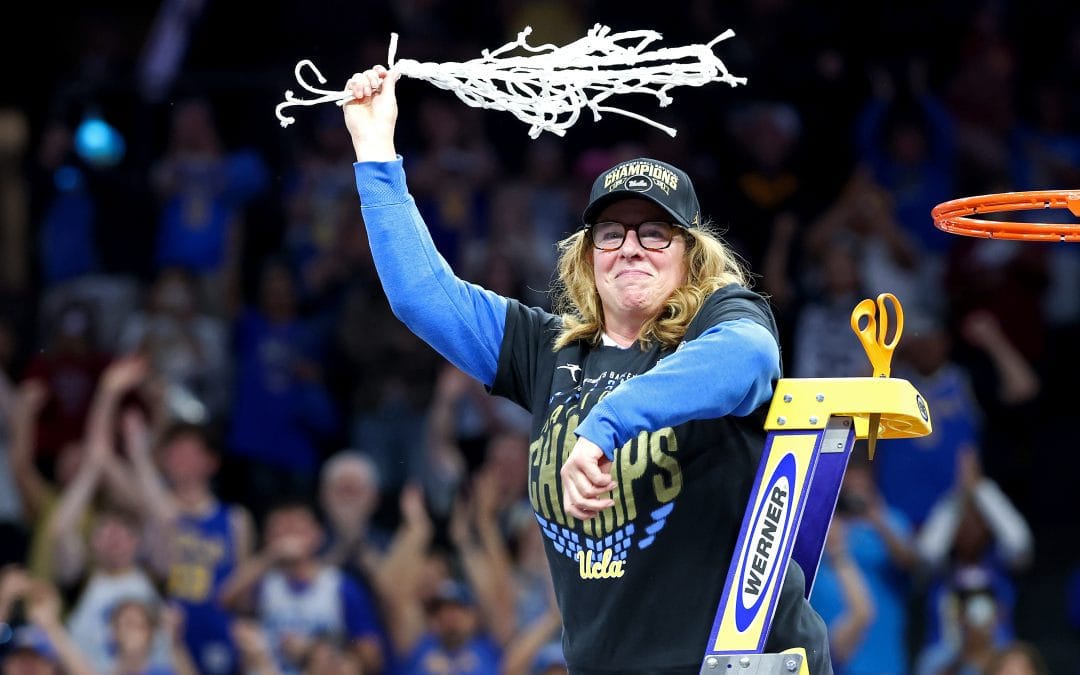
The rise of UCLA Bruins women’s basketball under Cori Close offers one of the clearest models of UCLA basketball coaching done right. This was not a quick turnaround. It was a steady shift built on culture, player development, and a clear approach to leadership that led to a National Championship in 2025–26, thanks to the 79-51 victory over South Carolina last Sunday.
For youth coaches, there is a lot here that translates directly to your gym.
Culture Drives UCLA Basketball Coaching
Close built her program around daily habits and personal responsibility. Two simple objects sit in her office: a broom and a shovel. They represent how the program operates.
The broom is about accountability. Players are expected to own mistakes and handle the small details without excuses. The shovel represents the work required to build something real. It reminds players that progress comes from consistent effort, even when it is not visible on the scoreboard.
This approach shows up in what Close calls the “Mind Gym.” Players are trained to reset quickly after mistakes. Missed shots, turnovers, and bad possessions do not linger. The focus shifts immediately to the next play. Over time, that habit becomes part of the team’s identity.
Youth coaches can apply this by building reset habits into practice. After mistakes, require a quick verbal or physical reset. Track body language the same way you track performance. When players learn how to respond, everything else becomes easier to teach.
Recruiting and Development in UCLA Basketball Coaching
Another defining piece of UCLA basketball coaching is how Close handles talent. She recruits at a high level, but development is what separates the program. Instead of easing young players into small roles, Close gives them real minutes early. Her freshman classes have played more than most programs in the country. That experience speeds up growth and prepares players for high-pressure moments later.
The addition of Lauren Betts gave UCLA a dominant interior presence. That helped the Bruins control the glass and protect the rim at an elite level. But the impact goes beyond one player. The system allows talent to develop quickly and fit into a larger structure.
For youth coaches, the lesson is simple: Development happens through reps. Players improve when they are trusted with meaningful minutes, even if mistakes come with it. Holding players back can slow growth more than it helps.
Mentorship and the John Wooden Influence
Close’s connection to John Wooden shaped how she leads. She adapted his principles for today’s players without losing the core message.
One of her key ideas is shifting language from obligation to opportunity. Players are encouraged to see practice and competition as something they get to do, not something they have to do. That small change can affect energy and focus right away.
She also emphasizes identity beyond performance. Players are not defined by stats or outcomes. They are defined by who they are as people. That reduces pressure in big moments and helps players stay grounded during the season.
At the youth level, this can change how players approach the game. When they feel secure in who they are, they compete with more freedom and confidence.
The Strategic Shift That Elevated UCLA Basketball Coaching
The biggest leap in Close’s tenure came when she evaluated her own approach. Around 2022, she sought feedback from people who would challenge her thinking. That led to adjustments in offensive strategy and a stronger focus on recovery and sports science.
These changes mattered during the transition to the Big Ten, where travel and physical demands increased. The program adapted instead of staying static.
This is a reminder that growth as a coach requires honest evaluation. Improvement often starts with recognizing what is not working.
What Youth Coaches Can Take From UCLA Basketball Coaching
Cori Close built a championship program by focusing on habits, mindset, and development over time. The lessons carry over at any level.
Teach accountability every day.
Create a standard for effort that players understand.
Train players to reset quickly after mistakes.
Give young players opportunities to grow through real minutes.
Keep the focus on the person, not just the player.
UCLA basketball coaching shows that sustained success comes from clarity and consistency. When those pieces are in place, results follow.
John Wooden, the Wizard of Westwood, is the coach by whom modern-day coaches are measured. Winning ten of twelve NCAA Championships has immortalized his place in basketball history. History, on the other hand, has not been as kind to another basketball wizard. Ernest Blood, who dominated his peers to an even greater degree a few generations earlier in New Jersey, was called the Grey Thatched Wizard.
Few basketball purists in California are aware of this first wizard of the hardwood. “Prof” was a shortened version of Professor. It was the name his players and students called him, but they spoke it reverently. Passaic High School’s Grey Thatched Wizard was known for his all-around coaching acumen. His teams enjoyed six undefeated seasons, and during another season, his team lost one game. His truncated stay at Passaic High School was a nonpareil 188-1. Furthermore, his teams would have undoubtedly won many more if jealous administrators and school board members hadn’t interfered.
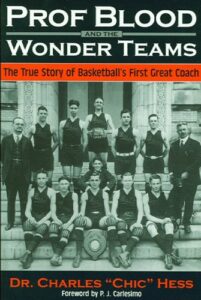
A recently published book investigates the life of Prof Blood from his precocious athletic youth to the development of his avant-garde system of coaching. In Prof Blood and the Wonder Teams: The True Story of Basketball’s First Great Coach, California coaches learn how and why this man was a generation ahead of his peers. His methods and philosophies, which are not always followed today, are still very much worth learning and implementing.
Winning streaks followed these two coaching wizards. Wooden’s UCLA teams once compiled 88 consecutive victories. While a couple of generations earlier, Blood’s boys went five seasons in a row without a loss, 159 straight, topping the latter-day wizard’s mark by 71 games. Besides the length of their winning steaks, these two coaching wizards had much in common.
Basketball Lifers: Blood & John Wooden
For starters, Blood and Wooden were astrological Libras. Their birth dates were October 5, 1872, and October 14, 1910, respectively. If self-confidence is an essential ingredient to be a successful coach, then that explains the reason for their success. And their confidence was reflected in their teams’ demeanor.
Other similarities of these two Naismith Memorial Hall of Famers include:
Excellent, accomplished athletes—one of Wooden’s two inductions into the hall of fame was for his accomplishments as a player
Great free throw shooters–Wooden once made 134 straight in professional game competition with the Kautsky Athletic Club, while Blood at age seventy-four, calmly sank 484 out of 500 after a practice session
Physical conditioning enthusiasts. With Wooden, it was an obsession
Adherence to clean living was a must
Adamantly stressed the importance of teamwork
Recognized the importance of speed and quickness as essentials
Strange eating habits
Proponents of a controlled offense, fastbreak, and full court pressing defense. Blood pioneered these innovations and referred to his full court defense as “offensive defense”
Shy in social situations
Honest to a fault
Far ahead of their time as basketball tacticians
The only enemies they had were people who were jealous of their success
Neither believed in charging a team up before a game. They wanted a calm assurance in the dressing room and in the pre-game warm-ups.
Prof Blood often said: “I train boys for the game of life—not to win basketball games. If I succeed in that, I have accomplished something worthwhile.” In Prof’s way of thinking, winning remained incidental.
The Story of Basketball’s First Great Coach: Ernest Blood
Before little John Wooden was a twinkle in Joshua Hugh Wooden’s eye, Prof was equating basketball to the more important game of life. While reading John Wooden’s book They Call Me Coach, you could insert Blood’s name for Wooden’s. You would be accurately describing Blood’s philosophy as well.
The major differences between the two behemoths of the game were their eras of dominance (’20s and ’60s) and their arenas (high school and college). They had their priorities straight; they were teachers of the game of life. The differences between the two lay in society’s memory. Wooden has become a household name synonymous with basketball coaching excellence while Blood’s story has never accurately been told until now. His accomplishments, contributions to the game and tribulations that have been lost in the annals of basketball have been resurrected in Prof Blood and the Wonder Teams: The Story of Basketball’s First Great Coach.
There isn’t a basketball coach who knows an X from an O who wouldn’t benefit from becoming more familiar with basketball’s first great coach. Prof’s biography should be required reading for all high school coaches and fans.
***
Chic Hess, Ed. D. is the author of Prof Blood and the Wonder Teams: The True Story of Basketball’s First Great Coach, available at www.profblood.com. Hess is a former NAIA College District and NABC-Kodak National Junior College Coach of the Year.
John Wooden was born in Martinsville, IN, one of four sons. He started playing basketball in elementary school. His coach was also his school principal, a man of stern but warm character. Each day before practice (their court was outside, beneath tall maple and oak trees) Wooden and the other players had to pick up sticks and rocks, to clear the court for play. The basketball they used was a large rubber bladder which barely fit inside a leather shell, such that after a few minutes of use the players had to take out the bladder, blow it back up with their own lungs, then squeeze it back inside the leather.
Ironically, this led to the team utilizing an uptempo practice, for the secret was to get the bladder in the ball and use it in as many repetitions as possible, before the ball would empty again. Whoever held it at the time had to blow it up–hence, the need to make quick passes to others.
When Wooden was later inducted into the Basketball Hall of Fame (he was the first person to be inducted into the HOF 2-X, first as player, then as coach), Wooden said his remarkable ballhandling skills were in part due to the fact he had a learn how to dribble an oblong-shaped ball that lost air on rocks, sticks and in the holes of his outside court in elementary school.
The first lesson Wooden learned in basketball happened at this same elementary school. He never forgot it; in fact, it became a cornerstone of his own coaching years later, at UCLA, when his teams won an astonishing 10 National Championships.
Wooden was the star of his elementary school basketball team. One day he forgot to bring his uniform to school when he left his farmhouse in the morning. Then, after school, he decided he would not walk home to get it. Instead, he would play dumb when it came time to play that evening’s basketball game. As the game neared, Wooden fessed to his coach that he did not have his uniform. Expecting that the coach would feel some sort of sympathy for him as the star, or at least have a strong desire to win that night’s game with him at the helm, Wooden was pleased when his coach asked the worst kid on the team, “Do you have your uniform for tonight’s game?” When that kid answered yes, Wooden expected his coach to tell him to let Wooden wear his unform that night. Instead, Wooden received the shock of his young life, when the coach said, instead: “Good, because you will play for Johnny tonight.”
Wooden’s face fell. He took off sprinting to his house, and back, arriving in uniform just seconds before the game started. But his teachable moment was not over. His coach said to him, “I am sure you are tired, so sit down.” Wooden sat there, watching his team lose the game, knowing it was his fault.
The 2 lessons he learned that day, are these: 1) The player is not above the team. 2) As a coach, the bench is your friend.
Terry Boesch is a teacher in Martinsville, IN (home of John Wooden), and also coaches girls basketball. Feel free to email him at [email protected], or call/text at 317-643-6042
For Free Basketball drills, videos, practice plans and much more CLICK HERE
John Wooden, the Wizard of Westwood, is the coach by whom modern-day coaches are measured. Winning ten of twelve NCAA Championships has immortalized his place in basketball history. History, on the other hand, has not been as kind to another basketball wizard. Ernest Blood, who dominated his peers to an even greater degree a few generations earlier in New Jersey, was called the Grey Thatched Wizard. Few basketball purists in California are aware of this first wizard of the hardwood. “Prof” was a shortened version of Professor, and it was the name his players and students called him, but they spoke it reverently. Passaic High School’s Grey Thatched Wizard was known for his all-around coaching acumen. His teams enjoyed six undefeated seasons, and during another season, his team lost one game. His truncated stay at Passaic High School was a nonpareil 188-1, and his teams would have undoubtedly won many more if jealous administrators and school board members hadn’t interfered. A recently published book investigates the life of Prof Blood from his precocious athletic youth to the development of his avant-garde system of coaching. In Prof Blood and the Wonder Teams: The True Story of Basketball’s First Great Coach, California coaches can learn how and why this man was a generation ahead of his peers. Unfortunately his methods and philosophies, which are not always followed today, are still very much worth learning and implementing. Winning streaks followed these two coaching wizards. Wooden’s UCLA teams once compiled 88 consecutive victories, while a couple of generations earlier, Blood’s boys went five seasons in-a-row in-route to 159 straight, topping the latter-day wizard’s mark by 71 games. Besides the length of their winning steaks, these two coaching wizards had much in common. For starters, Blood and Wooden were astrological Libras. Their birth dates were October 5, 1872, and October 14, 1910, respectively. If self-confidence is an essential ingredient to be a successful coach, then that explains the reason for their success, and their confidence was reflected in their teams’ demeanor. Other similarities of these two Naismith Memorial Hall of Famers include: Excellent, accomplished athletes—one of Wooden’s two inductions into the hall of fame was for his accomplishments as a player. Great free throw shooters–Wooden once made 134 straight in professional game competition with the Kautsky Athletic Club, while Blood at age seventy-four, calmly sank 484 out of 500 after a practice session. Physical conditioning enthusiasts. With Wooden, it was an obsession. Adherence to clean living was a must. Adamantly stressed the importance of teamwork. Recognized the importance of speed and quickness as essentials. Strange eating habits. Proponents of a controlled offense, fastbreak, and full court pressing defense. Blood pioneered these innovations and referred to his full court defense as “offensive defense.” Shy in social situations. Honest to a fault. Far ahead of their time as basketball tacticians. The only enemies they had were people who were jealous of their success. Neither believed in charging a team up before a game. They wanted a calm assurance in the dressing room and in the pre-game warm-ups.
Prof Blood was often quoted saying that “I train boys for the game of life—not to win basketball games. If I succeed in that, I have accomplished something worthwhile.” In Prof’s way of thinking, winning was incidental. Before little John Wooden was a twinkle in Joshua Hugh Wooden’s eye, Prof was equating basketball to the more important game of life. While reading John Wooden’s book They Call Me Coach, you could insert Blood’s name for Wooden’s, and you would be accurately describing Blood’s philosophy as well. The major differences between the two behemoths of the game were their eras of dominance (20s and 60s) and their arenas (high school and college). They had their priorities straight; they were teachers of the game of life. The differences between the two lay in society’s memory. Wooden has become a household name synonymous with basketball coaching excellence while Blood’s story has never accurately been told until now. His accomplishments, contributions to the game and tribulations that have been lost in the annals of basketball have been resurrected in Prof Blood and the Wonder Teams: The Story of Basketball’s First Great Coach. There isn’t a basketball coach who knows an X from an O who wouldn’t benefit from becoming more familiar with basketball’s first great coach. Prof’s biography should be required reading for all high school coaches and fans.
For Free Basketball drills, videos, practice plans and much more CLICK HERE
Chic Hess, Ed. D. is the author of Prof Blood and the Wonder Teams: The True Story of Basketball’s First Great Coach, available at www.profblood.com . Hess is a former NAIA College District and NABC-Kodak National Junior College Coach of the Year.



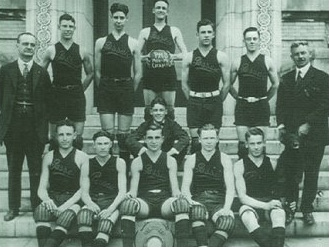
 Few basketball purists in California are aware of this first wizard of the hardwood. “Prof” was a shortened version of Professor. It was the name his players and students called him, but they spoke it reverently. Passaic High School’s Grey Thatched Wizard was known for his all-around coaching acumen. His teams enjoyed six undefeated seasons, and during another season, his team lost one game. His truncated stay at Passaic High School was a nonpareil 188-1. Furthermore, his teams would have undoubtedly won many more if jealous administrators and school board members hadn’t interfered.