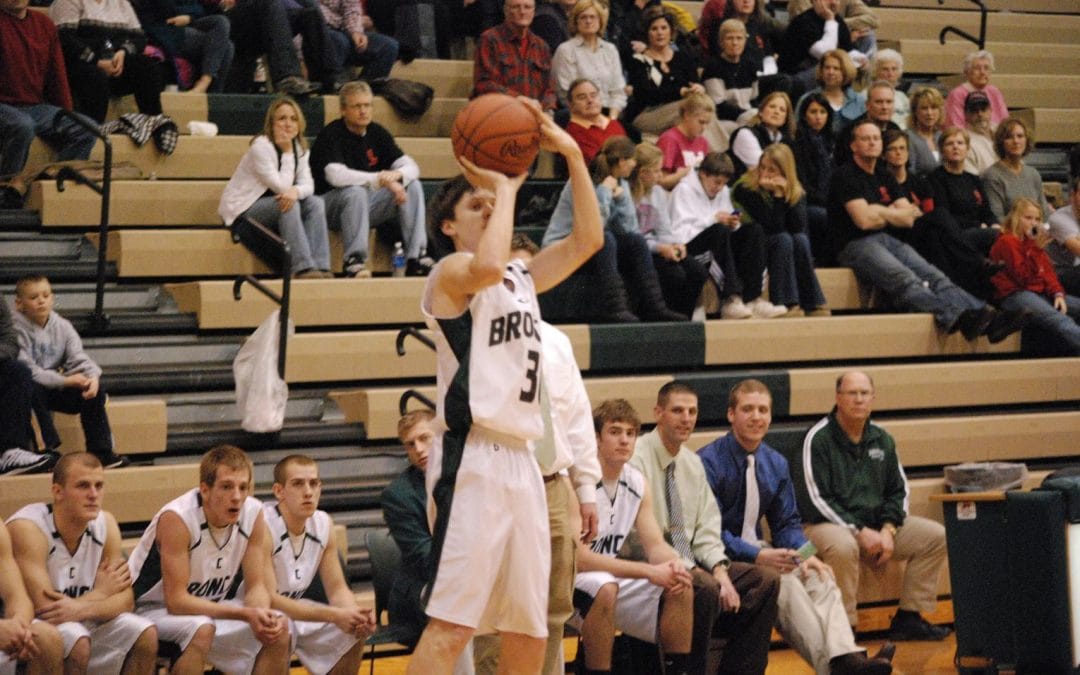
If you want your players to grow into confident, versatile scorers, your practice time has to be intentional. The best basketball practice skill work keeps energy high, touches frequent, and corrections simple. This session highlights how to layer shooting, footwork, ball handling, and finishing into a fast-paced practice that builds real game habits.
This workout models how to develop every player on your roster, whether they’re a guard learning to attack off the bounce or a six-foot post who still needs to shoot from the perimeter to compete at the next level.
Quick-Hop Shooting Series
Practice opens with a jump-turn series built around clean footwork and quick decisions. Everything is off the hop, and players must keep “sticky fingers” as they get into their shot.
Key points include:
Hold the follow-through until the ball returns.
Keep the pace high; players shoot for a number (seven makes), and they run if they miss the target.
This sequence produces a lot of reps in a short window, which is the heart of efficient basketball practice skill work.
One-Step Power Finishes
The practice moves next into a classic drill. Players take one step, power up, keep the ball high off the shoulder, and rebound their own miss. Details matter here:
Eyes stay on the rim or backboard.
Every rep is explosive.
No wasted movement or talking. The pace drives the development.
This segment reinforces strong finishing habits for players of every position.
Inside-Foot Layup Series
Every player must be able to score with both hands, so this drill pushes left-hand and right-hand finishing from the inside foot. Coaches cue pace and physicality. Players lean the shoulder, stay tight to their line, and finish with strength.
This is where you build the layup consistency your team needs when games get tight.
A quick timeout in practice teaches players how to sweep the ball, load the hips, and attack without hesitation. The rip-and-go drill is essential because most players are never explicitly taught the footwork required to beat the first defender.
Points of emphasis:
Low hips and shoulders
Big first step
Cover ground in one bounce
Power hop when finishing
Ball Handling: Inside-Out and Push Dribble
To prepare for pressure, players learn two key moves: the inside-out dribble and the push dribble.
What the drill reinforces:
Get low and shift the defender.
Push the ball out with purpose.
Make your move at the chair (defender) with speed.
Even bigs handle the ball; everyone must be press-ready.
Three-Point Work: Olympic Shooting
“Olympic shooting” is the team’s core perimeter drill. Players communicate, locate perimeter shooters, and chase rebounds with urgency. The group shoots for a target (eight makes in a minute).
Why it works:
Game-like spacing
Game-like tempo
Constant communication
Players learn to relocate and catch ready
Tall players shoot here too. The goal is to develop basketball players, not just positional specialists.
Post Development: Seal-In Series
To balance perimeter skill work, players shift to the block for a one-minute seal-in circuit. The drill includes four post moves:
Jump hook
Up-and-under
High-low option
Strong seal to the target hand
Guards and posts rotate through because toughness, footwork, and leverage matter across the roster.
Competitive One-on-One: Yale Hand Box
Every practice needs live competition. The Yale Hand Box drill forces players to attack, rebound, and block out while the clock runs. The defender can keep scoring until the rebounder secures the ball, so players must fight on every rep.
This is where effort, accountability, and competitive spirit surface. The drill shows coaches exactly what their players are made of.
Fast-Break System: Three-Trips and 21-Second Work
The practice closes with the team’s fast-break system, built on the rule of getting a shot within seven seconds. Players flow into three-trips action:
First option: rack attack
Second option: inside-out
Third option: wing three
If players fail to crash the boards or slow the pace, coaches correct instantly. The standard stays high.
Final Thoughts
This practice is designed for pace, accountability, and repetition. The session offers dozens of touches, lots of “read it and do it” coaching, and clear expectations for how each skill translates to real competition. When your basketball practice skill work is intentional, players learn to play faster, stronger, and smarter.
If you want more drills, practice ideas, or one-on-one support, or if you need help installing a shooting workout with your team, explore everything on TeachHoops.com. With a 14-day free trial, one-on-one mentoring, and a library of proven practice tools, it’s one of the best places for coaches who want to take the next step.
Every coach wants players who can score in multiple ways. Training a true 3-level scorer in youth basketball takes a focused plan, clear teaching points, and consistent reps. This simple progression gives players a chance to build confidence from the three-point line, the mid-range, and the paint while working at a pace that mirrors real game action.
The 3-Level Scoring Progression
This drill guides players through five key shooting spots: corner, wing, top of the key, opposite wing, and opposite corner. At each spot, the player completes three scoring actions that help shape a complete offensive skill set.
At every station, the sequence is the same:
Catch-and-shoot three: The passer delivers the ball to the corner. The player catches cleanly and shoots in rhythm to stretch the defense.
One-dribble pull-up: The second pass triggers a rip-through and a controlled one-dribble mid-range jumper.
Two-dribble floater: The third pass sends the player downhill into the lane for a soft two-dribble floater over an imaginary defender.
Once the player finishes all three shots, they rotate to the next spot and continue around the arc. The pattern builds repetition, rhythm, and shot versatility in a way young players understand.
Becoming a 3-level scorer in youth basketball is about more than making shots. This drill teaches players how to create space, stay balanced, and score in different situations. The catch-and-shoot builds range. The pull-up teaches pace. The floater gives players a way to finish over length without forcing contact.
Coaches appreciate how efficient the drill is and how easy it is to repeat throughout the season. It fits neatly into a short practice segment while still delivering high-value skill work.
Final Thoughts for Coaches
There is nothing better than watching a young player grow into a confident, versatile scorer. If you want more drills, practice ideas, or one-on-one support, or if you need help installing a shooting workout with your team, explore everything on TeachHoops.com. With a 14-day free trial, one-on-one mentoring, and a library of proven practice tools, it’s one of the best places for coaches who want to take the next step.
If you’re looking for a quick, structured way to help your players build confidence from multiple spots on the floor, this five-spot shooting workout is a great place to start. It gives athletes a repeatable routine that works catch-and-shoot threes, off-the-dribble footwork, pull-ups, and free throws in one sequence. You can run it in individual workouts, small-group sessions, or even as a warm-up during practice.
This drill uses five locations: both corners, both wings, and the top of the key. At each spot, the player takes the same five-shot progression before moving on.
The Five-Spot Shooting Workout Sequence
Players attempt five shots in this order:
Catch-and-shoot three The passer feeds the corner and the player steps into a clean catch-and-shoot three.
Escape dribble left into a three On the next pass, the player takes a quick escape dribble left to create space and fires again from deep.
Shot fake, escape dribble right into a three The player sells the shot fake, dribbles right, and hits a three off the bounce.
Pull-up jumper going left Now the player attacks with a one-dribble pull-up moving left for a mid-range shot.
Pull-up jumper going right Finish the sequence with the same pull-up going to the right.
After finishing the fifth shot, the player rotates to the next spot on the floor and repeats the progression.
Once all five locations are complete, the player heads to the line for five free throws. This adds a pressure element and reinforces good habits after fatigue sets in.
Scoring System
If you want to add competition or track improvement over time, score it this way:
Three-point makes: 3 points each
Pull-up jumpers: 2 points each
Free throws: 1 point each
A perfect workout totals 70 points.
Why This Drill Works
This routine mixes game-realistic shot types with movement in both directions, forcing players to develop balanced footwork and consistent mechanics. It also teaches them to shoot out of common actions they’ll see in games: catch-and-shoot, escape dribbles, shot fakes, and quick mid-range counters.
It’s efficient, it scales for all levels, and it gives coaches an easy way to track progress.
If you want more breakdowns like this, or if you need help installing a shooting workout with your team, explore everything on TeachHoops.com. With a 14-day free trial, one-on-one mentoring, and a library of proven practice tools, it’s one of the best places for coaches who want to take the next step.
If your players struggle to get meaningful reps on their own, a 20-minute basketball workout can be a game-changer. This routine comes straight from Coach Collins’ gym and shows how much skill work you can pack into a focused, high-energy session. It works for players of all ages and is perfect for anyone training without a rebounder.
Below is the full breakdown, along with teaching points you can use in practice or send home with your athletes.
https://youtu.be/XDGZIcGA-ts?si=UUFdu2w4SX8QUnqF
1. Form Warm-Up: Perfect Shots (1 minute)
The workout starts with feel and rhythm.
Shoot close-range form shots.
Aim for “no rim” makes.
Gradually move back as consistency improves.
This works like a putting green in golf—just settling into touch before things ramp up.
2. Mid-Range Baseline Series (1 minute)
Players shoot from 8–10 feet on both sides.
Never stay on one side for more than two shots.
Encourage purposeful footwork and soft finishes.
This is especially helpful when working solo because the ball naturally rebounds to the opposite side.
3. Bank Shot Work (1.5 minutes)
Start at 3–4 feet and hit consistent bank shots on both sides.
Why it matters:
It’s a shot players rarely practice.
Angles stay consistent regardless of gym.
It reinforces touch, balance, and vision.
4. Elbow Jumpers (30 seconds)
Quick catch-and-shoot footwork at both elbows.
5. Runners and Floaters (1.5 minutes)
Start at the college arc and attack the lane.
Players should:
Use both hands.
Work off both feet.
Experiment with different angles.
If players make every shot, they aren’t going fast enough. This part should push them outside their comfort zone.
This builds game-speed decision making while limiting unnecessary dribbling.
7. Block Work: Right and Left (1 minute each)
Even guards need this skill set.
Players practice:
Cross-step finishes
Up-and-unders
Fadeaways
Basic post moves using either hand
It also gives players a breather in the middle of the workout when fatigue starts to set in.
8. Baby Hooks (1 minute)
Soft hooks across both blocks.
Not every guard will use this in games, but adding it increases versatility and finishing confidence.
9. One-Dribble Pull-Ups Around the Key (2 minutes)
No fancy moves here—just pure scoring footwork.
This section turns into a conditioning drill as players chase their own rebounds and keep moving.
10. Creative One-Dribble Attacks (1.5 minutes)
Players choose their moves:
Spin jumpers
Hesitations
Crossovers
Fake crossovers
This is the “sandbox” portion of the workout where players experiment without overthinking.
11. Three-Point Shooting (2 minutes)
Shoot at the appropriate line for your level (HS, college, NBA).
The key teaching point: Shoot threes when tired. This simulates real late-game conditions.
12. One-Dribble Stepbacks (1.5 minutes)
Mid-range or deep—player’s choice.
Stepbacks help open the rest of a player’s scoring package because defenders must respect the space created.
13. Pick-and-Roll Simulation (1.5 minutes)
Use a chair, cone, or imaginary screen.
Players should vary:
Angle of attack
Number of dribbles
Finishes
This is where two-dribble attacks show up organically.
14. Deep Three-Pointers (1.5 minutes)
Shoot within your actual range.
If deep threes aren’t realistic, move in.
If they are, challenge yourself when fatigued.
This segment builds both confidence and shot tolerance.
15. Free-Throw Cooldown (goal-based)
Finish with made free throws, not minutes.
Examples:
Make 10 in a row
Make 8 of 10 twice
Make 20 total
Players should shoot them tired. That’s the whole point.
Why This 20-Minute Basketball Workout Works
This routine fits everything a player needs into one tight session: shooting touch, finishing, footwork, ball handling, and conditioning. It’s doable at the park, in an empty gym, or even during off-hours at practice. Players improve fastest when they can work consistently, and this workout makes that easy. Oo rebounder required.
Encourage your athletes to hit this daily, track their makes, and take pride in pushing through fatigue. Over time, you’ll see sharper decision-making, better balance, and more confidence in pressure moments.
If you want more breakdowns like this, or if you need help installing a full court press with your team, explore everything on TeachHoops.com. With a 14-day free trial, one-on-one mentoring, and a library of proven practice tools, it’s one of the best places for coaches who want to take the next step.
If your team struggles to apply ball pressure, rotate with purpose, or protect the paint against quick guards, working in full court press defense drills can transform your defensive identity. Pressing isn’t just about speed. It’s about angles, teamwork, and early help. That’s why the drill in this video breakdown is such a valuable teaching tool for youth and high school coaches.
Before we get to the drill, remember to subscribe to the TeachHoops YouTube channel and explore everything on TeachHoops.com. You’ll get one-on-one mentoring, office hours, and a 14-day free trial that helps coaches level up for less than a dollar a day.
Building the Foundation: Why the Gap Matters in a Full Court Press
Press defenses succeed when players understand help positioning, not just the first on-ball defender. Coach’s demonstration starts with a simple 2-on-2 alignment on the baseline, which reinforces the same rotations you need when teaching how to run a full court press in youth basketball.
Players learn two off-ball concepts:
Denial – jumping into passing lanes to disrupt quick guards
Gap defense – sagging into a support position to stop penetration
Most youth teams don’t have the quickness to deny everything. That’s where gap defense becomes essential. The goal is to force the offense to beat multiple defenders, not just the first one. In a press, this mentality keeps the ball on a string and buys time for the next line of help.
The 2-on-2 Gap Drill
This drill gives players a clear picture of how help defense works under pressure. It’s simple, repeatable, and fits perfectly into a full court press progression.
Setup:
Two offensive players start on the baseline.
Two defenders match up directly.
One defender pressures the ball.
The off-ball defender slides into the “gap,” staying between their man and the ball.
Execution:
The ball handler dribbles from the baseline toward midcourt.
The ball defender applies steady pressure without reaching.
The gap defender sees both man and ball, sliding into support whenever penetration occurs.
If the ball is passed, the gap defender closes out under control, then jumps back into the gap as the action continues.
The emphasis is simple: Be early with help. Stay connected to both players. Make ball pressure feel like a two-on-one.
This mirrors the support responsibility in every full court press. When the first defender is beaten, the next help must already be there.
This drill is the simplest way to train those habits. It teaches players to close out, slide into the gap, and support their teammate before the ball crosses half court. Once they master this, you can add a third defender to simulate trapping, stunts, and run-and-jump rotations.
Bringing It All Together
The gap drill is a great way to teach the early stages of how to run a full court press in youth basketball. It builds confidence, develops communication, and shows players that great team defense starts with great support.
If you want more breakdowns like this, or if you need help installing a full court press with your team, explore everything on TeachHoops.com. With a 14-day free trial, one-on-one mentoring, and a library of proven practice tools, it’s one of the best places for coaches who want to take the next step.
If you’re looking for a clean, game-ready way to build shooting confidence and teach players how to flow into modern offensive actions, this dribble handoff drill from Coach Tony Miller is a great place to start. It works for youth teams, high school programs, and small-group workouts, and it helps players develop skills they’ll use in nearly every offense.
Before we get into the breakdown, remember to subscribe to the TeachHoops YouTube channel and explore everything on TeachHoops.com. You’ll find one-on-one mentoring, office hours, a 14-day free trial, and affordable tools coaches use to win more games.
Two-In-A-Row Shooting: A Competitive Warm-Up
Coach Miller starts with a simple but effective shooting progression called “Two in a Row.” It’s a great warm-up drill that keeps players locked in and moving with purpose.
How it works:
A coach stands at the free-throw line and receives passes from the shooting machine.
The player begins in the corner and shoots from five spots: corner, wing, top, wing, corner.
The player must make two shots in a row before moving to the next spot.
Once they’ve finished all five spots, their score or time is recorded.
This turns a standard shooting routine into a competitive challenge. Players can chase personal bests or compete against teammates, which boosts focus and tempo right away.
Dribble Handoff Drill: Teaching Movement Into Shots
After the warm-up, Coach Miller walks through a dribble handoff drill that builds footwork, timing, and shot preparationbehind a handoff. Since handoffs are a staple in today’s offenses, this action translates directly to games.
How the drill is set up:
The player starts at the top of the key and receives a pass.
They take two hard dribbles toward a teammate standing near the wing.
As they approach, they deliver a clean handoff.
The receiving player catches behind the handoff and shoots a three.
Players swap roles and repeat.
This drill teaches players to flow smoothly into handoffs, read angles, and shoot on the move. It’s ideal for guards, but wings and forwards benefit from practicing both sides of the action.
Final Thoughts
Coach Miller’s combination of competitive shooting and a focused dribble handoff drill gives players real offensive reps that improve game performance. These drills fit easily into practice plans, pre-game warmups, or individual workouts. If you want to build better shooters and smarter movers, add both to your weekly routine.
Looking for a youth basketball shooting drill that challenges players to improve accuracy, pace, and endurance? The M Drill and 5-Spot Shooting Progression are two simple, high-intensity workouts that turn any empty gym into a game-ready training session. Featured on the TeachHoops YouTube channel, these drills combine conditioning and repetition, helping players compete against the clock while sharpening their form and confidence.
Drill 1: The M Drill Shooting Challenge
The M Drill teaches players to move with purpose, hit from all five key shooting spots, and track their own progress. It’s ideal for solo workouts or warm-ups at team practice.
Setup:
One basketball
Stopwatch or timer
Five shooting spots: both corners, both wings, top of the key
How it works:
Start the timer for one minute.
The player must make one shot from each of the five spots.
Record the total time to complete all five makes.
On the next round, try to beat that time.
Progressions:
Round 2: Two makes per spot (1:00)
Round 3: Three makes per spot (1:45)
Round 4: Four makes per spot (2:00)
If there’s no rebounder, allow a little extra time to chase down rebounds.
Coaching points:
Keep feet active between shots.
Focus on balance and form even under fatigue.
Encourage players to compete against themselves or teammates.
This drill builds rhythm, stamina, and confidence in game-speed situations.
Once players have mastered the M Drill, the 5-Spot Shooting Progression takes things to the next level. It uses the same five spots but increases total makes, footwork variety, and movement patterns.
Setup:
Same five shooting spots
Partner or rebounder (optional)
Stopwatch or scoreboard timer
How it works:
Players aim to make a set number of shots (for example, 10 or 15) cycling through all five spots.
Emphasize continuous motion—no pauses between makes.
Mix in pivots, jab steps, or pump fakes to simulate live play.
Record total makes and time to track improvement week-to-week.
Why it works:
Builds conditioning through constant movement.
Reinforces consistent mechanics from multiple angles.
Helps players transfer shooting fundamentals to game flow.
Why Coaches Love These Drills
Together, the M Drill and 5-Spot Progression form a complete shooting workout, efficient, competitive, and scalable for all levels. They train muscle memory, self-accountability, and stamina without needing fancy equipment or full-court setups.
Whether you’re coaching youth players or high school athletes, these drills teach players to stay focused, move with intent, and build confidence with every rep.
Bonus: Smarter Tournament Planning
If you’re coaching club ball or running weekend tournaments, organization is half the battle. Between travel logistics, gate fees, and scheduling headaches, it can be overwhelming.
That’s why platforms like SidelineSavings.com are emerging, helping tournament operators, coaches, and parents streamline entry, scheduling, and payment systems so everyone can focus on basketball, not spreadsheets.
Every great ball-handler starts with a clear plan. A well-structured youth basketball dribbling progression gives players the foundation they need to handle pressure, build confidence, and move with purpose. Whether you’re coaching beginners or helping older players polish their form, this four-part dribbling progression develops rhythm, control, and game-ready movement from the ground up.
1. Pound Dribble (Progression One)
Purpose: Build strength, rhythm, and ball control as the foundation of your dribbling progression.
Setup:
Players spread out facing the coach or mirror.
Each holds a basketball in their right hand to start.
How to Run It:
Pound the ball hard below the knee.
Keep the back straight and eyes up.
Switch to the left hand after 5–10 seconds.
Coaching Points:
Emphasize control, not just speed.
Stay balanced with knees bent and feet shoulder-width apart.
Dribble with fingertips, not palms.
Variation: Add verbal or visual cues (colors, numbers, or commands) to train reaction and focus while maintaining ball control.
2. Crossover Dribble (Progression Two)
Purpose: Teach tight, controlled crossovers as the next step in the youth basketball dribbling progression.
Setup:
Players stay low in a wide stance.
How to Run It:
Cross from right to left hand in short, tight movements.
Keep the dribble below the knees.
Maintain a steady rhythm for 10–15 seconds.
Coaching Points:
Keep the chest up and eyes forward.
Push the ball quickly through the crossover pocket.
Avoid wide, looping movements.
Variation: Call out numbers (1 = pound, 2 = crossover) to mix progressions and test quick reactions.
Advanced Players: Combine all four while reacting to your verbal calls (1–4).
This keeps players engaged, reinforces muscle memory, and builds the court awareness they’ll need during games.
Wrap-Up
Mastering a structured youth basketball dribbling progression helps players develop consistent ball-handling habits and confidence under pressure. As Coach Collins reminds us, “By the end of the season, your players should know the progression by heart.” Once they do, you’ll see tighter handles, smarter spacing, and more control across every level of your program.
Bonus: Smarter Tournament Planning
If you’re coaching club ball or running weekend tournaments, organization is half the battle. Between travel logistics, gate fees, and scheduling headaches, it can be overwhelming.
That’s why platforms like SidelineSavings.com are emerging, helping tournament operators, coaches, and parents streamline entry, scheduling, and payment systems so everyone can focus on basketball, not spreadsheets.
Ready to Build Your Coaching Machine?
The truth is simple: every coach wants to spend less time grinding and more time coaching. With AI, that’s not a fantasy, it’s the future. If you’ve ever wished for an extra assistant, this is your chance to create one.
Join The Coaching AI Masterclass and learn how to build your own AI basketball coaching system, the one that organizes, plans, and communicates so you can just coach.
If you’d like to explore further, also check out theAIsportscoach.com, a free community for coaches to share prompts, strategies, and ways AI is helping them win both on and off the court.
Every youth basketball coach has been there: tracking every rebound, turnover, and deflection only to realize the numbers didn’t actually help you win. The truth is, most of what youth coaches track doesn’t matter. What does matter are three simple stats that tell you whether your team is improving and how you can help them play smarter.
This isn’t about analytics for analytics’ sake. It’s about coaching clarity.
1. Shot Quality
Forget total points or field-goal percentage. What you really need to measure is shot quality. Are your players taking the right shots?
A good shot for one player isn’t a good shot for another. Youth coaches should focus on where the shot came from, how it was created, and whether it was the best available look. Tracking shot quality means grading each attempt:
A-shots are rhythm, open-look, in-range shots.
B-shots are rushed or contested but within a player’s comfort zone.
C-shots are poor-decision attempts.
You don’t need a fancy system, just note after each game the ratio of A-shots to C-shots. If that number improves week by week, your offense is improving too.
2. Turnover Rate
Turnovers tell the story of composure. You can chart points, but if your team can’t protect the ball, none of it matters.
Instead of raw totals, track turnovers per possession (or roughly per trip down the floor). If you’re under 20 percent, you’re giving your team a chance to win.
Most youth teams lose not because they can’t score but because they give away too many possessions. Make ball security part of your culture, reward teams that get a shot on goal every time down, even if it misses. That habit alone wins more games than any play you draw up on a whiteboard.
The third stat doesn’t live on a scoresheet, it lives in your culture. Track effort plays.
Effort plays include:
Taking a charge
Diving for a loose ball
Sprinting back on defense
Setting a great screen
Boxing out
Keep a running tally of these moments. Post them in your team chat or shout them out at practice. When you measure effort, players understand that hustle counts as much as highlights. Over time, this becomes the identity of your program.
Why Less Data Means Better Coaching
When coaches obsess over stats, they often lose sight of what matters most: teaching the game. The right three stats: shot quality, turnover rate, and effort plays, give you everything you need to evaluate performance without drowning in numbers.
It’s the same principle that drives tools like TeachHoops: keep the game simple, teach what matters, and help players grow.
Bonus Tip: Smarter Tournament Planning
If you’re coaching club ball or running weekend tournaments, organization is half the battle. Between travel logistics, gate fees, and scheduling headaches, it can be overwhelming.
That’s why platforms like SidelineSavings.com are emerging, helping tournament operators, coaches, and parents streamline entry, scheduling, and payment systems so everyone can focus on basketball, not spreadsheets.
Ready to Build Your Coaching Machine?
The truth is simple: every coach wants to spend less time grinding and more time coaching. With AI, that’s not a fantasy, it’s the future. If you’ve ever wished for an extra assistant, this is your chance to create one.
Join The Coaching AI Masterclass and learn how to build your own AI basketball coaching system, the one that organizes, plans, and communicates so you can just coach.
If you’d like to explore further, also check out theAIsportscoach.com, a free community for coaches to share prompts, strategies, and ways AI is helping them win both on and off the court.
If you’re wondering how to coach first-time players, start with one simple goal: help them fall in love with basketball. New players need structure, patience, and encouragement. They don’t need complicated plays or endless lectures. Your job as a youth coach is to teach fundamentals, make practice enjoyable, and give every player a reason to return next season.
Build a Foundation Through Fundamentals
When players are just starting out, focus on the basics. Fundamentals form the building blocks of every skill they’ll need later. Keep drills short, energetic, and positive.
One coach shared how his fifth-grade developmental team improved dramatically over six months by working only on a simple “pass, cut, fill” offense and defensive movement. By season’s end, the players understood spacing, teamwork, and court awareness.
Make Practice Fun and Leave Players Wanting More
At the youth level, enjoyment matters more than results. Kids who have fun at practice will want to keep playing and improving.
When players leave smiling and energized, they build confidence and motivation. The next time practice rolls around, they’ll be excited to get back on the court.
Young athletes are still learning how to move, think, and react in new ways. Progress takes time, and every player develops at a different pace.
What to focus on as a coach:
Reinforce simple concepts before adding new ones
Keep expectations realistic
Repeat drills consistently
Encourage every small step forward
If you stay patient and model a positive attitude, your players will do the same. The goal isn’t perfection; it’s growth and enjoyment.
Final Thoughts
When you focus on fundamentals, fun, and patience, you’re doing more than coaching basketball. You’re creating a positive first experience that keeps players in the game for years to come.
Bonus: Smarter Tournament Planning
If you’re coaching club ball or running weekend tournaments, organization is half the battle. Between travel logistics, gate fees, and scheduling headaches, it can be overwhelming.
That’s why platforms like SidelineSavings.com are emerging, helping tournament operators, coaches, and parents streamline entry, scheduling, and payment systems so everyone can focus on basketball, not spreadsheets.
Ready to Build Your Coaching Machine?
The truth is simple: every coach wants to spend less time grinding and more time coaching. With AI, that’s not a fantasy, it’s the future. If you’ve ever wished for an extra assistant, this is your chance to create one.
Join The Coaching AI Masterclass and learn how to build your own AI basketball coaching system, the one that organizes, plans, and communicates so you can just coach.
If you’d like to explore further, also check out theAIsportscoach.com, a free community for coaches to share prompts, strategies, and ways AI is helping them win both on and off the court.
When it comes to developing strong ball-handlers, few exercises are as effective as two-ball dribbling drills. This classic workout builds rhythm, control, and hand-eye coordination, three fundamentals that separate good guards from great ones. Whether you’re coaching elementary players or fine-tuning varsity athletes, this two-part drill series can elevate your players’ confidence with the basketball.
Drill 1: The Two-Ball Stationary Drill
This is a high-difficulty ball-handling drill, especially for younger players. Start simple and progress gradually.
How to Run It:
Each player starts with a basketball in each hand.
Have them dribble both balls simultaneously, pounding them hard into the floor.
Emphasize power. The key to control is hitting the ball hard enough that it bounces back quickly.
After players get comfortable, add variations: dribble inside the knees, outside the knees, or alternate heights.
To increase the challenge, have them slam one ball down to the floor until it stops, while maintaining control of the other ball.
Once the stationary ball settles, restart both and repeat.
Coaching Tip: Encourage players to use their dominant hand to stop and start the stationary ball while their weak hand keeps pounding. This forces their off-hand to stay active and controlled under pressure, a must for breaking presses or driving through traffic.
Common Mistake: Players who dribble softly lose control more often. Remind them: “Pound the ball hard. Control comes from confidence.”
This version adds decision-making and reaction training to the mix, helping players keep their heads up and process the game around them.
How to Run It:
Player A (the dribbler) starts by dribbling two balls low and hard below the knees.
Player B (the partner) stands a few feet away and throws a bounce pass toward Player A.
Player A catches with one hand, either left or right, and quickly returns a bounce or chest pass.
Repeat several times, alternating which hand catches and passes.
Coaching Tip: The goal isn’t perfect passing, it’s awareness and multitasking. The dribbler should keep their eyes up, never looking down at the basketballs. This helps build comfort handling the ball while scanning the court.
Progression: As players improve, shorten the distance between partners or increase the speed of the passes to simulate game pressure.
Why These Two-Ball Dribbling Drills Work
These two-ball dribbling drills develop much more than coordination. They teach rhythm, focus, and confidence, all while building the muscle memory players need to handle full-court pressure. Even the pros do it!
For youth players, it’s a fun way to stay engaged while improving balance and reaction time.
Start slow, keep the standards high, and emphasize power and focus in every rep. The best ball-handlers aren’t born, they’re built one pound dribble at a time.
Ready to Build Your Coaching Machine?
The truth is simple: every coach wants to spend less time grinding and more time coaching. With AI, that’s not a fantasy, it’s the future. If you’ve ever wished for an extra assistant, this is your chance to create one.
Join The Coaching AI Masterclass and learn how to build your own AI basketball coaching system, the one that organizes, plans, and communicates so you can just coach.
If you’d like to explore further, also check out theAIsportscoach.com, a free community for coaches to share prompts, strategies, and ways AI is helping them win both on and off the court.
AI is quickly becoming a powerful tool in coaching, but most of us still aren’t using it to its full potential. When it comes to AI practice planning for youth basketball, many coaches make the mistake of treating it like a quick Google search instead of the game-changing mentor it can be.
In this post, we’ll explore how basketball coaches can use AI effectively, not just for drills and practice plans, but for real, strategic growth.
The Bad Habit That’s Holding Coaches Back
Hey Coach, listen up. There’s a habit most of us have, and it’s holding us back from unlocking AI’s full potential in our basketball programs.
For decades, we’ve been trained by Google. Need an answer? Type in a few short keywords.
Google spits out a page of links, and it’s on us to dig through each one, decide which random “coach” to trust, and then piece together what might work in our next practice plan.
We’ve been doing this for so long that we bring the same “quick-hitter” mindset to AI.
But that’s like using your best player as a decoy.
From “Google Searcher” to “Coach in Conversation”
Think about it: You wouldn’t walk up to a mentor coach you respect and just say, “zone offense.”
No! You’d give them the full picture:
“Hey Coach, I’m prepping for our rival. They run an aggressive 2-3 zone that extends high. My guards are quick but small, and my best shooter is my 4-man, who struggles to get open on the wing. We run a basic 4-out motion. What specific actions or quick-hitters can we install this week to get my 4-man open looks from the high post or short corner?”
See the difference? You’re giving context, your opponent, your personnel, and your goal.
Your mentor gives you a strategy. Google gives you a list.
AI is your new mentor coach. Start treating it like one.
“I’m an AI coach. My team is struggling with on-ball defense and late help-side rotations. We keep getting beat off the dribble, and our closeouts are sloppy. I have 90 minutes for practice tomorrow. Can you build me a 25-minute practice block with a 3-drill progression that focuses on 1) containing the ball-handler, 2) proper closeout technique, and 3) the first help rotation? Give me the key teaching points and coaching cues for each drill.”
That’s the foundation of AI practice planning for youth basketball, giving the system enough detail to act like an experienced assistant, not just a search engine.
The same idea applies to culture building. Don’t just type, “How to build team culture.” Try this instead:
“I’m an AI coach. I’m taking over a high school program that won 5 games last year. The players seem unmotivated, and the parents are negative. I need to establish a new culture of accountability and ‘next play’ mentality. Give me a 30-day plan for the off-season that includes 3 specific activities I can do with the team, a theme for the month, and a sample letter I can send to parents outlining my philosophy and expectations.”
Why This Works
When you give AI context, you’ll get a response that’s:
Immediately Actionable: You’re not just getting a list of random ideas. You’re getting a real game plan you can take straight to the court.
Strategic: You can think critically about the plan, confirm your instincts, or spot a new angle you hadn’t considered.
Efficient: You’ll walk away with a full script: a practice plan, a culture blueprint, a parent letter, ready to share with your assistants or AD.
That’s how basketball coaches can use AI effectively: by treating it like a coaching partner who knows your system, your players, and your goals.
The Takeaway: Give AI the Scouting Report
The next time you sit down to plan a practice or prep for a big game, break the “Google habit.” Don’t toss in a few keywords and hope for the best.
Treat AI like your mentor coach. Give it the full scouting report: your team, your opponent, your time constraints, and your objective. You’ll be amazed at how much faster, and better, it works for you.
Any questions about this or anything else you’re working on AI-wise? I’m an email away.
Ready to Build Your Coaching Machine?
The truth is simple: every coach wants to spend less time grinding and more time coaching. With AI, that’s not a fantasy, it’s the future. If you’ve ever wished for an extra assistant, this is your chance to create one.
Join The Coaching AI Masterclass and learn how to build your own AI basketball coaching system, the one that organizes, plans, and communicates so you can just coach.
If you’d like to explore further, also check out theAIsportscoach.com, a free community for coaches to share prompts, strategies, and ways AI is helping them win both on and off the court.
The season is won in the offseason. True improvement happens when you’re willing to put in the work on your own, away from the lights and fans. If you’re serious about elevating your game, you need a structured plan, not just random shots or half-speed reps. What follows is a complete offseason basketball workout built to sharpen every facet of your offensive game, whether you’re in an empty gym or on the driveway hoop at home.
This workout is simple, structured, and easy to follow, perfect for the gym or even your driveway hoop.
Why You Need Structure
Too many players waste time by shooting without purpose. A complete plan:
Gives you a clear roadmap for improvement
Makes every rep count
Keeps you focused and efficient
Builds game-ready skills
Workout Breakdown
Here’s how to structure your session into key areas:
1. Ball Handling
Work both hands equally
Use quick, controlled dribbles
Focus on inside footwork and attacking pace
2. Form Shooting (Line Drill)
Elbow in, ball aligned
Hold your follow-through until you get the rebound
Stay close to the basket and groove mechanics
3. Wall Shooting
Use a wall if no hoop is available
Quick hop into every shot
Aim for rhythm and speed over makes
4. Jump Turn Shooting
Add footwork and balance to your shot
Shoot off quick hops
Challenge: hit 7 in a row or run
5. Finishing Drills
One-step power-up finishes
Ball high, shoulder strong
Practice both left and right hands
6. Game-Specific Shooting
Mix in catch-and-shoot jumpers
Add off-the-dribble shots
Every rep at game speed
Join the TeachHoops Community
TeachHoops.com offers a unique platform for coaches to share experiences and gain new insights. Learn from others who have navigated similar challenges. It’s an invaluable resource for those looking to:
The backbone of this complete offseason basketball workout is urgency. Every drill is timed, every rep is purposeful. There’s no walking, no wasted words, and no shortcuts. The expectation is to train harder than you play, so when the season arrives, the game feels easier.
Develop both hands, build shooting confidence, and refine your finishing package. If you commit to this structure, your offseason becomes a launchpad for in-season success.
Keys to Success
Time everything. Keep the pace up, no wasted minutes.
Train harder than you play. Practice at game speed.
Use both hands. Become a threat going either direction.
Stay consistent. Improvement comes from showing up daily.
Final Word
A complete offseason basketball workout isn’t about gimmicks. It’s about mastering fundamentals, pushing pace, and holding yourself accountable to the same standards great players follow. Use this routine as your blueprint. Bring energy, bring focus, and bring consistency.
When next season tips off, you’ll step onto the court not just as another player, but as a more skilled, confident, and dominant threat.
When you’re working with young players, one of the first skills you need to build is solid passing. Good ball movement not only creates scoring opportunities but also teaches teamwork and decision-making. As a veteran coach, I’ve learned that the best way to build confident passers is by starting with simple, structured drills and then adding layers of difficulty. Below, I’ll walk you through some of the best youth basketball passing drills that you can use with any age group. These drills are simple, game-like, and can be adjusted based on your players’ skill level.
Why These Are the Best Youth Basketball Passing Drills
The common theme in all of these drills is progression. Start simple, then add movement, pressure, or game-like obstacles. Young players need to feel success before you challenge them with more complexity.
By incorporating these drills into every practice, your team will develop better passing habits, cut down on turnovers, and build confidence with the ball.
1. Cone Passing Drill (Progression Style)
This drill builds ball control, accuracy, and the ability to pass under pressure.
How it works:
Place cones in a straight line on the court.
Have your player slide left or right, making a pass with the corresponding hand.
The coach (or partner) passes the ball back each time.
Progressions:
Start with one ball, simple passes through the cones.
Add a second ball for quicker touches.
Finish with “knockdowns,” where players bounce-pass to knock over cones.
Coaching tip: Move cones closer together or create curves to increase difficulty and mimic real defensive traffic.
2. Two-Person Passing on the Move
Passing while standing still is easy. Passing on the move is game-like.
How it works:
Pair players in lanes going up and down the court.
Start with stationary passing using just the left hand, then progress to both hands.
Once they’ve mastered control, have them walk or jog while passing.
Add a “touch pass” version, where players keep the ball moving quickly without holding it.
This develops rhythm, touch, and the ability to make quick decisions in transition.
Join the TeachHoops Community
TeachHoops.com offers a unique platform for coaches to share experiences and gain new insights. Learn from others who have navigated similar challenges. It’s an invaluable resource for those looking to:
Every youth coach should have this in their toolbox. It’s fun, competitive, and teaches spacing and anticipation.
How it works:
Two passers stand apart, one defender in the middle.
Passers must “close one window, then open another” (example: fake high, pass low).
If the defender deflects or touches the ball, the passer goes to the middle.
This drill emphasizes timing, fakes, and the importance of ball protection against pressure defense.
4. Wall Passing Drill
Perfect for gyms with limited space or when you want high-rep passing.
How it works:
Players face a wall and pass to a marked spot.
Emphasize using the hips and core for power (“twist pass” technique).
Work chest passes, bounce passes, and “kick-out passes” (simulate driving and passing out to a shooter).
Keep these short, 25 to 30 seconds per set, but intense.
Final Thoughts for New Coaches
If you’re new to coaching, don’t overwhelm yourself or your players by trying to cover everything at once. Start with one or two of these best youth basketball passing drills, master them, and then move on to progressions.
Passing is a skill that grows with repetition, and these drills give your players the foundation they need to become strong teammates and smart decision-makers on the court.
Running a youth basketball practice that keeps players focused, motivated, and excited to return the next day can be a challenge. Too much repetition feels boring, while an overload of competition can burn kids out. The secret lies in finding the balance, blending skill development with fun, competitive games that simulate real basketball situations. In this post, we’ll break down proven strategies on how to make every youth basketball practice engaging so your players leave the gym both better and eager for more.
The Balance Between Fun and Competition
Youth athletes thrive when practices are structured but not rigid. Coaches should aim for a mix that challenges players to improve while making sure they actually enjoy the process.
Think of practice like a theme park: you want kids to leave while they still want more, not when they’re exhausted or frustrated.
A practical approach:
Not 100% fun, not 100% competitive. Adjust the ratio based on age and skill level.
End on a high note. Kids remember the last thing they do (“peak end”), so finish practice with something fun, like a scrimmage or a favorite drill.
Listen to your players. Ask them which drills they enjoy and build those into your plan. Giving them ownership increases buy-in and motivation.
Gamify the Drills
The fastest way to transform dull reps into engaging challenges is to turn drills into games with clear rules, scoring, and consequences. For example:
Shooting Drills: Instead of lining up for free throws, play “Beat the Pro” or “Knockout.” Every shot matters, and players feel the pressure of competition.
Defensive Drills: Track defensive stops, award points for charges, or time closeout contests. Suddenly, effort skyrockets.
Conditioning: Rather than running suicides, set up team races or relay competitions. Players push harder when winning is on the line.
This approach taps into kids’ natural competitive spirit. They’ll work harder without realizing they’re building essential skills.
Join the TeachHoops Community
TeachHoops.com offers a unique platform for coaches to share experiences and gain new insights. Learn from others who have navigated similar challenges. It’s an invaluable resource for those looking to:
Full-court 5-on-5 scrimmages have their place, but smaller formats, like 2-on-2, 3-on-3, or 4-on-4, maximize touches and decision-making. These games:
Force players to handle the ball more often.
Create constant decision-making in tight spaces.
Naturally build communication and teamwork.
Kids think they’re just “playing,” but you’re sneaking in skill development under the radar, like hiding vegetables in mashed potatoes.
Add Accountability
Competition means little without stakes. That doesn’t mean punishment, it means accountability. Try these tweaks:
Losers run a short sprint or do push-ups.
Keep running scores across the whole practice to crown a daily winner.
Track progress week to week so players see growth.
When kids know something is on the line, their focus, effort, and intensity immediately increase.
Final Thoughts
Learning how to make every youth basketball practice engaging isn’t about reinventing the wheel. It’s about blending fundamentals with competition in a way that feels like play while still demanding effort. Usesmall-sided games, gamify your drills, keep score, and end with fun.
Do this consistently, and you’ll create a culture where kids attack every practice with the same energy they bring to game day.
When it comes to player development, nothing beats reps. But if you’ve ever run a youth basketball practice, you know that getting kids to take shooting seriously can be a challenge. That’s why adding a competitive basketball shooting drillat the end of practice is such a powerful tool.
It not only builds skill, it also creates the intensity and focus players need when the game is on the line.
Why Shooting Drills Still Matter
Many players today rely heavily on shooting machines or organized workouts. Gone are the days when kids would spend hours at the park just getting shots up. As a coach, that means you have to carve out time during practice to make up for the lack of reps.
Dedicating even 10–15 minutes per session to structured shooting can make a huge difference over the course of a season.
The “Up Two” Drill
One of the simplest ways to get players locked in is with the Up Two competitive basketball shooting drill. Here’s how it works:
Split players into two lines, often grouped by position.
Start at the elbow and have both shooters fire at the same time.
Teams compete to be the first to get up two points.
Winners stay locked in, while the drill resets and the competition continues.
It’s fast, it’s fun, and it taps into the natural competitiveness of your team. Later in the year, you can increase the challenge by playing “Up Three.”
Ways to Add Variety
The beauty of this drill is its flexibility. You can adjust it to keep practices fresh:
Move from the elbows to the wings or corners.
Turn it into a three-point competition.
Add rules to discourage interference (like resetting the drill if players touch an opponent’s ball).
Small adjustments keep players engaged and stop the drill from becoming routine.
Join the TeachHoops Community
TeachHoops.com offers a unique platform for coaches to share experiences and gain new insights. Learn from others who have navigated similar challenges. It’s an invaluable resource for those looking to:
The Up Two competitive basketball shooting drill turns what could be a stale end-of-practice session into something players look forward to. It encourages:
Repetition: Players get plenty of shots up in a short time.
Competition: The drill gets surprisingly intense once teams get invested.
Focus under pressure: Shooting with a score on the line simulates real-game scenarios.
Final Thoughts
If your players aren’t getting enough shots outside of practice, you need a solution that maximizes efficiency. The competitive basketball shooting drill known as “Up Two” does exactly that.
It’s easy to set up, quick to run, and highly effective in building both skill and competitiveness. Try adding it to the end of your next practice and see how much sharper your team becomes.
One of the most common frustrations for new coaches is watching players miss easy layups. It doesn’t matter how well you run your offense if your team can’t finish at the rim, you’re leaving points on the floor. That’s why every coach needs a reliable layup finishing drill that builds toughness, teaches players to attack with confidence, and eliminates the bad habits of “soft” finishes.
Why Skip the Traditional Layup Line
Layup lines are a staple at many practices, but they don’t prepare players for real game conditions. There’s no pressure, no defender, and no consequence for missing. In my gym, we haven’t done a layup line in over a decade (outside of pregame warm-ups). Instead, we use competitive finishing drills every day.
The goal is simple: train players to go up strong, even if they know a shot might get blocked.
The DeMatha Finishing Drill
This drill, often called the “DeMatha Finishing Drill,” has been around for years and is still one of the best. Here’s how to run it:
Setup: Two offensive players line up at designated spots—blocks, wings, elbows, or even near half court. A coach stands out front with the ball.
Start: Coach passes to either player. The moment the pass is caught, the player attacks the rim without hesitation.
Defense: A defender is allowed to contest or block the shot, but no fouls are allowed.
Rule for Offense: Players must go straight up strong. No fancy jelly finishes, no hesitation, no fading away to avoid contact. A blocked shot is acceptable. A soft or hesitant finish is not.
This creates a game-like situation where players must focus on finishing through contact, not avoiding it.
Join the TeachHoops Community
TeachHoops.com offers a unique platform for coaches to share experiences and gain new insights. Learn from others who have navigated similar challenges. It’s an invaluable resource for those looking to:
Immediate action: The ball is caught, and the player attacks. No wasted motion.
Strong mentality: Emphasize “points per possession” over style. Winning teams don’t need circus layups; they need high-percentage finishes.
Manage lines: If you only have one basket, split groups or rotate to avoid long lines. Use multiple coaches if available to keep reps quick.
Mix it up: Throw imperfect passes sometimes so players learn to adjust on the fly.
Why It Works
Every season, coaches complain about missed layups in early games. That’s because most players haven’t been forced to finish through contact in practice. This layup finishing drill solves that problem from day one.
Run it consistently, and your players will attack the rim with confidence all season long.
KeyTakeaway: Replace layup lines with competitive finishing drills. If you commit to teaching your players to finish strong, you’ll win close games simply by converting the shots everyone else misses.
Short on players doesn’t mean short on progress. This guide gives you basketball drills for small groups that turn low-number practices into high-impact skill sessions. Whether only two, three, or four athletes show, you’ll have simple, repeatable plans for ball handling, shooting, finishing, and small-sided games that teach real reads and keep every rep purposeful.
Why this happens and how to handle it
Low turnout is normal in youth hoops. Schedules collide, rides fall through, and injuries pop up. The fix is simple: arrive with multiple versions of your plan so you can pivot fast.
Bring a “full team” plan, a “small group” plan, and a “skills only” plan.
Over-plan the clock. For a 2-hour slot, prep 2.5 to 3 hours of activities so you never hit dead time.
Treat low numbers as a chance for high-impact reps and individual coaching.
Your small-group practice menu
Focus on ball handling, shooting form, footwork, finishing, and simple reads. You can also micro-teach team concepts in tight spaces.
3 player basketball drills
2-on-1 to 1-on-2 Attack two vs. one, then the defender outlets to trigger a quick 1-on-2 return. Cues: Wide spacing, one hard paint touch, finish through contact.
Triangle passing with screen action Corner, wing, top. Pass, follow to set a down screen, catch, and shoot or drive. Cues: Set feet before catch, screen angle at the defender’s hip.
3-man pick-and-roll series Ball handler, screener, spacer. Rep roll, short roll, and slip. Cues: Set up defender, change pace, hit the pocket pass early.
Closeout and help 2v1 shell One on the ball, one in gap, one as passer. Rotate after each rep. Cues: Choppy feet on closeout, high hand, see ball and man.
Shooting circuit Form shooting, one-dribble pull-ups, spot-up threes, finishing package. Cues: Hold follow-through, land on balance, finish outside hand off one foot and two.
2 player basketball drills
1-on-1 constraints Start from wing, slot, or post. Limit dribbles or require a paint touch before the shot. Cues: First step wins, protect the ball, finish on the far side.
Partner passing and shooting 30-second blocks: snap passes, relocation, catch-and-shoot, dribble-handoff into pull-up. Cues: Hit target hand, show hands early, shoot on the hop.
Screen and slip mini-series Set, show, and slip when defender jumps the screen. Cues: Sprint into screen, wide base, slip on contact.
Finishing ladder Power layups, inside-hand, reverse, floater, euro, pro-hop. Cues: Eyes on backboard markers, protect with body.
1 player workouts (when it’s just you and an athlete)
Form shooting tree Knee/waist/shoulder range, 25 makes each, swish or redo.
Ball-handling lane Stationary pound series, cross/inside-out, then cone slalom to a finish.
Mikan variations Standard, reverse, power finishes, no-backboard touch for soft hands.
Chair reads Use chairs as defenders for straight-line drives and stop-on-two jumpers.
Join the TeachHoops Community
TeachHoops.com offers a unique platform for coaches to share experiences and gain new insights. Learn from others who have navigated similar challenges. It’s an invaluable resource for those looking to:
You can still build “team basketball” with three players.
Half-court pick-and-roll reads Ball handler, screener, and spacer. Rep: roll, pop, short roll to dotted line, baseline drift kick. Progression: Call out a read before each rep to lock in decisions.
Quarter-court offense breakdown Run only the first action of your motion or continuity. Emphasize spacing and timing.
Small-sided games that scale
1v1 to advantage: Winner stays, losers do quick skill reps.
2v2 “first to 5 stops”: Defense scores by getting stops. Teaches pride and positioning.
3v3 half-court: Call a rule each game (must post touch, paint touch before three, only weak-hand finishes).
Two plug-and-play practice plans
Plan A: 60 minutes, 3 players
00:00–05: Dynamic warm-up and ball-handling lane
05:00–15: Form shooting tree and close-range finishes
15:00–30: Triangle passing with screen action
30:00–45: 2-on-1 to 1-on-2 transition game
45:00–55: PnR reads (roll, pop, short roll)
55:00–60: Free throws under fatigue (make 10 as a group)
Plan B: 75 minutes, 4 players
00:00–10: Partner passing into catch-and-shoot
10:00–25: 2v2 advantage games (no ball screens, touch paint before three)
25:00–40: Screen and slip mini-series, two pairs alternating
40:00–60: 3v1 closeout and help rotations, then 3v2 build-up
60:00–75: Finishing ladder and pressure free throws
Quick cues that raise the ceiling
“First step wins” on every drive.
Show target hands and talk early on D.
Land on two after catches and in the lane for balance.
Keep a running rep or make count to create urgency.
Roster and staffing tips
Target 10 players for youth teams. Eight is great for reps, but 10 gives you a buffer. Twelve gets tricky for minutes.
Ask an assistant, parent, or responsible sibling to be your “extra body” when needed.
Build attendance buy-in with clear roles, fun competitive segments, and fast transitions.
Mini-templates:
If 3 or fewer show: ball handling, form shooting, finishing, PnR reads.
If 4–6 show: small-sided games, screening actions, defensive rotations.
If 7–10 show: add team sets, special situations, and full-court segments.
Young teams often catch and bounce without a plan, which stalls possessions and wastes time. The no dribble basketball drill gives you a simple, game-like constraint that flips that habit fast. Players learn to cut with purpose, pivot under pressure, and move the ball to space. After a few short rounds, you’ll see cleaner spacing, quicker decisions, and better teamwork without adding a single new play.
Why run a no dribble basketball drill?
If your players catch and bounce by habit, this constraint flips their default. Taking away the dribble forces them to create advantages with cuts, spacing, fakes, and quick ball movement.
You get cleaner decision making, more purposeful passes, and better pivots. For youth teams, 3v3 is a sweet spot because it raises touches and keeps reads simple.
Drill snapshot
Item
Details
Goal
Reduce over-dribbling, improve passing, cutting, pivoting, and spacing
Players
3v3, 4v4, or 5v5, start 3v3 for clarity
Space
Half court to start, expand as players improve
Equipment
1 ball, pennies
Duration
6 to 12 minutes total in short rounds
Rule
No dribbles, any bounce is a turnover
Setup and rules
Start in 3v3 half court. First team to 3 baskets wins the round.
No dribbles allowed. A dribble equals a turnover.
Legal pivots only. Call travels tight to promote balance.
Defense plays live and can pressure the ball.
Make checks quick. Score it, check it, play again to keep tempo high.
Scoring add-ons to shape behavior
+1 for a paint touch before the shot
+1 for a pass to a cutter on a denial, often called a second cut
+1 for a one-more pass that leads to a made shot
Join the TeachHoops Community
TeachHoops.com offers a unique platform for coaches to share experiences and gain new insights. Learn from others who have navigated similar challenges. It’s an invaluable resource for those looking to:
See the floor before you pass, then pass away from pressure.
Jump stop to square on each catch.
Meet every pass and use fakes.
Keep spacing, wait for clean angles instead of forcing through traffic.
These cues show up in every good no dribble basketball drill and build cutting, pivot strength, and vision.
Progressions and variations for the No Dribble Basketball Drill
Start simple, then add constraints that target specific reads.
Advantage or disadvantage: 4v3 or 5v4 to encourage quick extra passes.
Time or touch limits: 12-second shot clock or minimum 3 passes before a shot.
Touch incentives: 1 point for a paint touch, 2 for a skip pass to the weak side.
One-dribble rescue: Allow a single escape dribble if trapped, then remove it again.
Full-court advance: First team to complete 7 passes and a layup without bouncing wins.
Defense starts with the ball: On the whistle, defense outlets to trigger movement and switching.
What to say while they play
Keep the ball rolling. Use short cues between reps rather than long stoppages.
Eyes up, pass fakes, meet it
Hold spacing, cut through if denied
Catch on balance, pivot to protect, see the next pass
If you need a quick reset, freeze the action, highlight a single read, then replay that possession right away.
Common problems and quick fixes
Players bunch up: Use cones to mark two corner zones. No two players can share a zone.
Telegraphed passes: Require a fake before any entry to the wing or post.
No cutting vs. denial: Add a bonus point for a successful second cut to the rim.
Panic under pressure: Use a one-count catch and scan rule to slow the mind without killing tempo.
Wrap-up
The no dribble basketball drill trims bad habits and builds the right ones fast. Keep rounds short, keep the ball moving, and use simple scoring to reward the behavior you want.
Stay patient early. As the reps stack up, you will see better passing, sharper cuts, and cleaner spacing on game night.
One of the biggest differences between average and elite defenders is their footwork. Teaching players how to move efficiently on defense not only helps them stay in front of their man, but also improves balance, reaction time, and overall confidence on the court. That’s why incorporating youth basketball defensive footwork drills into practice is essential for player development at any level.
Why Defensive Footwork Matters
Young players often focus on scoring, but defense is where games are won. Poor footwork leads to fouls, blown assignments, and easy points for the opponent. On the other hand, disciplined movement helps players close out properly, recover after getting beat, and contest shots without losing balance. Coaches who consistently emphasize footwork create teams that compete on every possession.
1. Agility and Reaction Drill
A simple cone setup can turn into one of the most effective youth basketball defensive footwork drills. Players sprint forward, chop their feet, and then slide laterally while keeping their stance low and their hands active. The focus is on controlled movements: closing out without leaning forward, stopping under balance, and recovering quickly.
This teaches players the difference between lunging out of position and moving with precision.
Setup:
Place 4–5 cones in a straight line, spaced a few feet apart.
Players line up at the start cone.
Execution:
Sprint to the first cone, chop feet, and close out under control with hands up.
Slide laterally down the line of cones, staying low.
At the end, sprint forward, then backpedal to the start.
2. Cone Circle Quick Feet
In this drill, each player works around a cone on their toes, switching directions on the coach’s call. The goal is to isolate the lower body: hips and legs should be moving, while the upper body remains steady.
Adding a ball for passing forces players to keep their eyes up, just like they’ll need to do in a real game situation.
Setup:
Each player has a cone on the floor.
Space players in a circle around the coach.
Execution:
Players move their feet quickly around the cone, staying on their toes.
On the coach’s call (“Switch”), they change direction.
Keep upper body steady, eyes up—coach can add passing for extra challenge.
Join the TeachHoops Community
TeachHoops.com offers a unique platform for coaches to share experiences and gain new insights. Learn from others who have navigated similar challenges. It’s an invaluable resource for those looking to:
While offensive skills are practiced here, the defensive focus remains on balance. Players perform a crossover and spin move into a jump shot, but coaches emphasize not leaning too far or losing control.
The goal is to build the ability to absorb contact, regain balance, and prepare for a defensive stance right after the shot or rebound.
Setup:
One cone or mark on the floor at the top of the key.
Each player has a ball.
Execution:
Players dribble forward, execute a crossover and spin move.
Finish with a balanced jump shot.
Emphasis: maintain balance, avoid leaning, prepare to get back on defense.
4. Layup and Close-Range Shot Challenges
Many young players neglect short jumpers and high-percentage finishes, but defensive footwork ties directly into these situations. Drills that require one dribble into a finish, or a quick baseline pull-up, encourage players to use strong first steps and body control.
Coaches can also add a competition element by dividing the team into groups racing to complete a set number of layups under pressure.
Setup:
Divide players into 2–3 groups at separate baskets.
Each group needs 1 ball.
Execution:
First player dribbles once and finishes a layup or short jumper.
Rebound, pass ball to next teammate, return to line.
First team to a set number of made shots (e.g., 15) wins.
5. The “Pride Drill” to End Practice
A great way to wrap up practice is with a high-energy drill that combines effort, conditioning, and defensive awareness. In the Pride Drill, players run through a three-man weave, crash the boards for put-backs, then sprint back into transition defense.
It forces everyone to stay engaged: jumping, closing out, and reacting while fatigued, just like in real games.
Setup:
Players line up in three-man weave formation.
One coach positioned at half court with a ball.
Execution:
Run three-man weave into a shot.
Crash the boards for three consecutive put-backs.
After last rebound, sprint to half court, turn, and defend in transition as coach rolls out a ball.
Repeat with new groups until everyone has gone.
Final Thoughts
For youth coaches, the foundation of defense is teaching proper movement. These youth basketball defensive footwork drills build habits that carry into games, helping players contest shots, recover after mistakes, and play with discipline. By making footwork a priority in every practice, coaches give their teams a real edge when it matters most.
Youth basketball coaches are always looking for drills that combine skill development with mental discipline. One of the best examples is the 42 Point Basketball Shooting Drill. This timed workout challenges players to score efficiently from multiple spots on the floor while reinforcing fundamentals, concentration, and composure under pressure.
What Is the 42 Point Drill?
Unlike simple one-action shooting drills, the 42 Point Drill is a multi-layered routine designed to test all aspects of a player’s offensive game.
Borrowed in name from the precision of military and drill team performances, where flawless execution demands hours of focus and practice, this basketball version pushes players beyond basic repetitions into a more competitive, disciplined environment.
How the Drill Works
Five Spots: Players work through five shooting locations on the court.
Sequence at Each Spot:
One three-pointer (worth 3 points)
One layup (worth 1 point)
Two mid-range jumpers (worth 2 points each)
Scoring: Each round adds up to 8 possible points per spot. Across five spots, that’s 40 points total before free throws.
Free Throw Twist
The drill finishes with two free throws:
Swish (no rim) = +1 point
Make but hits rim = 0 points
Miss = –10 points
A perfect score is 42 points, which is extremely difficult to achieve.
Join the TeachHoops Community
TeachHoops.com offers a unique platform for coaches to share experiences and gain new insights. Learn from others who have navigated similar challenges. It’s an invaluable resource for those looking to:
Executing the 42 Point Drill flawlessly requires the same traits seen in elite performers:
Discipline: Players must stay locked in through each shot type and location.
Focus: The free throw penalty creates mental pressure, simulating game conditions.
Skill Mastery: Shooting from multiple ranges ensures players work on their complete offensive game.
Just as drill teams practice intricate routines to build precision and confidence, basketball players can use this challenge to sharpen fundamentals, develop resilience, and improve consistency under stress.
How Coaches Can Use It
Run it in individual workouts to push advanced players.
Add it to team practice as a competitive game, tracking scores.
Use it as a conditioning drill, since players must move quickly spot to spot within two minutes.
Final Thoughts
The 42 Point Basketball Shooting Drill is more than just another workout. It blends skill development with the discipline and concentration found in precision drills across other fields. For youth coaches, it’s a proven way to challenge players, make shooting practice engaging, and foster the mindset needed to perform under pressure.
Bonus: A Game-Changing Coaching Tool Is Coming Soon
A powerful new AI-driven coaching platform is set to launch later this summer, built specifically for youth basketball teams and families looking for smarter, faster feedback without spending hours breaking down film.
Here’s how it works: Upload a short video clip or a simple stat sheet, and the tool instantly provides coaching insights, suggests next steps, and helps you make real-time adjustments. Whether you’re coaching a third-grade rec team or a middle school travel squad, it’s designed to meet you at your level.
The goal is simple: save time, reduce guesswork, and make the coaching process more efficient and effective. It’s being developed by people who understand youth basketball, practical tools for real coaches, not overcomplicated systems that slow you down.
When it comes to player development, few skills are more valuable than learning how to attack in isolation. Basketball one-on-one offensive drills help athletes develop confidence, create space, and finish plays against tough defenders. Teaching players how to read and react in these situations gives them tools they’ll use in games at every level.
Be Ready to Shoot: “Hands Down, Man Down”
The first rule of one-on-one offense is simple: always be ready to catch and shoot. If a defender closes out with their hands down, that’s an automatic scoring opportunity. Encourage players to:
Keep hands ready and feet set before the catch.
Recognize poor closeouts as defensive mistakes.
Develop a quick, confident release.
This mental shift builds aggressiveness and keeps defenders honest.
Read the Defender’s Stance
Not all “hands up” looks are created equal. In many cases, a low hand means the defender is focused on stopping the drive, not the shot. Players should learn to:
Identify true contests versus low, non-threatening hands.
Attack the space defenders give up.
Force the defense into tough decisions.
Create Space With Strong Footwork
One-on-one offense often comes down to footwork. Young players should focus on:
Staying low with bent knees to stay balanced and explosive.
Using the lead foot to test the defender and find open angles.
Driving opposite of where the defense is shading.
Proper footwork allows players to stay under control while keeping multiple scoring options alive.
Join the TeachHoops Community
TeachHoops.com offers a unique platform for coaches to share experiences and gain new insights. Learn from others who have navigated similar challenges. It’s an invaluable resource for those looking to:
A common mistake players make is drifting away from the basket after beating their man. Instead, coaches should stress:
Driving back toward the rim once a step is gained.
Using the defender’s hip as leverage to maintain position.
Finishing strong on the line of attack.
This small adjustment leads to more high-percentage finishes.
Playing Low and Through Contact
At higher levels, defenders will try to bump players off their spots. To prepare for this, players should:
Stay low on drives with shoulders down.
Use reverse pivots aggressively to create space.
Embrace contact rather than fading away.
When athletes learn to play low, they can outlast stronger or more physical opponents.
Why Basketball One-on-One Offensive Drills Matter
Developing isolation skills builds confidence, improves decision-making, and sharpens finishing ability. Whether it’s recognizing when to shoot, attacking the defender’s weakness, or powering through contact, these drills prepare players for real game situations.
Final Thoughts
Basketball one-on-one offensive drills aren’t just about scoring—they’re about teaching players to think, react, and dictate the game. By building habits like “hands down, man down,” strong footwork, and low, aggressive attacks, coaches can help athletes become unstoppable threats when it matters most.
Bonus: A Game-Changing Coaching Tool Is Coming Soon
A powerful new AI-driven coaching platform is set to launch later this summer, built specifically for youth basketball teams and families looking for smarter, faster feedback without spending hours breaking down film.
Here’s how it works: Upload a short video clip or a simple stat sheet, and the tool instantly provides coaching insights, suggests next steps, and helps you make real-time adjustments. Whether you’re coaching a third-grade rec team or a middle school travel squad, it’s designed to meet you at your level.
The goal is simple: save time, reduce guesswork, and make the coaching process more efficient and effective. It’s being developed by people who understand youth basketball, practical tools for real coaches, not overcomplicated systems that slow you down.
If your players only practice clean looks, they struggle the moment a defender crowds their vision. The distracted shooting drill builds comfort shooting through visual clutter. It is simple to run, affordable to set up, and maps closely to what players see in games.
Why the distracted shooting drill works
When a shooter briefly loses sight of the rim, even for a fraction of a second, accuracy drops. Research on visual occlusion shows that if vision is blocked during the final ~350 milliseconds before release, performance suffers, while having vision restored in those final ~350 milliseconds preserves accuracy.
You can see this principle in the pros. The “Kornet Contest” is a good example, where a 7-footer jumps to momentarily block the shooter’s view. On those shots, opponents made 33.3%, compared with the league-wide “wide-open” average of about 38%. Obscuring vision, even from several feet away, can matter.
Biomechanics studies add detail. When players shoot over higher obstacles, they jump higher and alter entry angles, and their make rate declines compared with smaller obstacles. Training that experience in practice prepares players for real contests.
Finally, teaching athletes where and how to look helps them manage distraction. Quiet-eye training, which stabilizes gaze on a single target location, improves shooting accuracy and transfers under defensive pressure.
Equipment
1–2 pool noodles or a light broom handle
1 ball per shooter
1 partner or coach as the “distractor”
Pool noodles are safe, light, and easy for younger players to handle as they simulate a defender’s hand without contact.
Core distracted shooting drill
Goal: Normalize shooting with a hand in your line of sight.
Setup: Shooter at a wing or elbow. Partner stands an arm’s length away, holding a noodle or hand up to the shooter’s eye line.
How to run it
Catch and shoot with a contest
Partner lifts the noodle to the shooter’s eyeline as the ball arrives.
Shooter locks eyes on the rim through or around the “hand,” then shoots.
Make two and move
Five spots: corner, wing, top, opposite wing, opposite corner.
Shooter makes two at each spot, then rotates.
Switch roles after every spot or two.
Coaching cues
Get your eyes back to the rim early.
Freeze the gaze on one part of the rim before the rise.
Smooth rise, high finish, same follow-through each time.
The contest is visual, not physical. Keep space.
Why it maps to games: Players must reacquire the rim while a “defender” floats in their field of view, which mirrors the momentary occlusion that hurts accuracy if it occurs right before release.
Join the TeachHoops Community
TeachHoops.com offers a unique platform for coaches to share experiences and gain new insights. Learn from others who have navigated similar challenges. It’s an invaluable resource for those looking to:
Partner steps in with the noodle to the eyeline on the gather.
Shooter plants, rises, and hits one pull-up going right, one going left, then rotate spots.
What it trains: Footwork under pressure and quick visual reacquisition at game speed. Taller or longer defenders force higher jumps and different entry angles, which this variation replicates.
2) “Bobby Knight J’s” partner drill
Partner starts at the top with a ball.
Shooter relocates to a spot.
Partner passes, raises a hand or noodle to contest.
Shooter fires, rebounds, and outlets back.
Work five spots, make 2–3 at each.
What it trains: Rhythm into relocation, contested catches, and immediate shot prep.
Teaching the eyes: quick quiet-eye routine
Add this 10-second habit to every distracted shooting drill:
Find the rim as the ball arrives.
Fix your gaze on a single target on the rim.
Keep that fixated spot through the rise and release.
Quiet-eye training produces better accuracy than technique-only instruction and holds up better when a defender adds pressure.
Common fixes
Shots are flat when distracted
Cue “eyes early, soft arc.” If players jump higher to clear a contest, remind them to keep the same release rhythm.
Players rush when the hand appears
Rehearse one calm breath and a steady gaze before the rise. Quiet-eye research supports stable focus under pressure.
Young players shy away from the contest
Keep distance and remind the partner this is visual only. No reach-ins, no contact.
Age-level and space adjustments
Elementary and middle school: Use shorter distances and slower tempos. Hold the noodle higher and farther to reduce crowding.
High school: Add drifts, lifts, and trail threes with a late contest.
Limited space: Run two spots and alternate reps to manage traffic.
Wrap up
The distracted shooting drill teaches your players to see the rim through traffic and keep their form under pressure. Build it into daily shooting. Cycle through spots, add the pull-up series, and finish with “Bobby Knight J’s.” Anchor every rep with a steady gaze, then let the defense blur into the background.
If you’re looking to make your practices more efficient, engaging, and effective, small-sided basketball games for youth coaches are one of the best tools you can add to your playbook. Whether you’re working with beginners or experienced players, this approach keeps kids moving, learning, and competing, all while developing the skills they’ll need at higher levels.
Why Small-Sided Games Work So Well
In real basketball, the game often breaks down into smaller situations. Think 3-on-3 on one side of the floor or a 2-on-2 action out of a pick-and-roll. By focusing on these formats in practice, you:
Give players more touches on the ball.
Improve spacing and decision-making.
Create realistic, game-like situations without overcrowding the court.
The beauty of small-sided games is that you don’t have to constantly teach new drills. Instead, you can use the same game format and change the constraints to target specific skills.
Adding Constraints for Skill Development
Once you have your base game, say, 3-on-3 half court, you can modify it with a variety of rules to work on different fundamentals:
Limit dribbles: no dribble, one dribble, or two dribbles max.
Shot location: only in the paint, only three-pointers, or must have a post-up before a shot.
Passing rules: must screen away after a pass or set an on-ball screen.
Defensive objectives: double-team in specific areas or force baseline drives.
These constraints not only keep the drill fresh but also push players to think, adapt, and execute under different conditions.
Join the TeachHoops Community
TeachHoops.com offers a unique platform for coaches to share experiences and gain new insights. Learn from others who have navigated similar challenges. It’s an invaluable resource for those looking to:
While 5-on-5 scrimmages are valuable, most game action happens in smaller combinations. That’s why many experienced coaches lean heavily on 2-on-2 and 3-on-3 work. These setups:
Encourage players to read and react without getting lost in the crowd.
Allow more opportunities for each player to touch the ball.
Simplify spacing, making it easier for young players to learn movement principles.
If you want players to succeed in full 5-on-5, they need to first master these smaller formats.
Keeping It Competitive
Competition is the fuel that keeps players engaged. When running small-sided games:
Keep score to create urgency.
Add time limits for quick decision-making.
Reward execution, not just scoring. For example, give points for good screens or defensive stops.
When kids feel like they’re “scrimmaging” while actually working on targeted skills, practice becomes both productive and fun.
Final Thoughts
Small-sided basketball games for youth coaches aren’t just a trend, they’re a proven way to build fundamentals, maximize limited practice time, and keep players motivated. By starting with a simple format like 3-on-3 and layering in creative constraints, you can address multiple skills in a single session.
For ready-made practice plans that use these methods and build skills progressively throughout the season, visit CoachingYouthHoops.com. You’ll save time, keep practices focused, and help your players grow one small-sided game at a time.