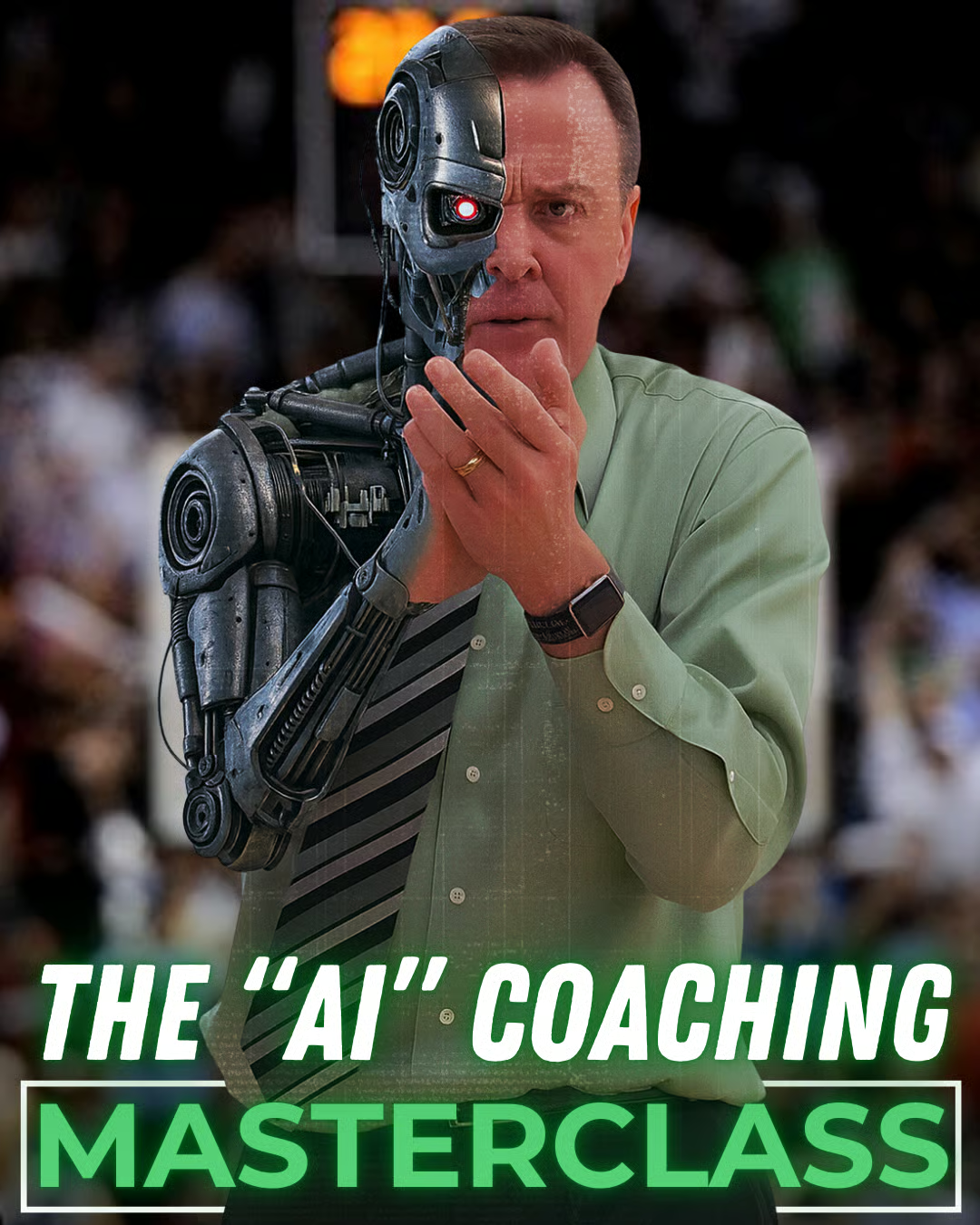
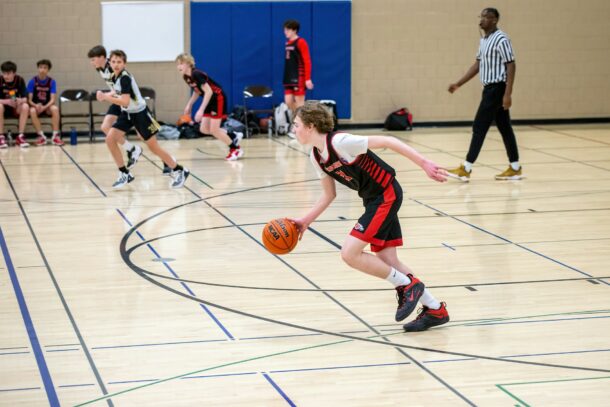
Let’s get one thing straight: AI isn’t replacing basketball coaches. But coaches who use AI will replace those who don’t. That’s the bold claim at the heart of The Coaching AI Masterclass from Coach Steve Collins, a Hall of Fame coach with 3 state titles, 10 state appearances, and nearly three decades of building winning programs. His message to coaches everywhere is simple: the game is changing, and early adopters win.
This isn’t about losing the human side of coaching. It’s about using new tools to handle the heavy lifting, so you can spend more time doing what you do best coaching the game.
AI Is the Assistant Coach That Never Sleeps
Imagine having an assistant who never gets tired. One who can serve as your Director of Operations, Head of Scouting, Analytics Wizard, and Communications Director, all at once.
That’s what AI can be when you learn how to use it correctly. It’s not a gimmick. It’s a tireless helper that organizes, writes, analyzes, and plans faster than any coach could on their own.
Every time, the coaches who embraced change gained an edge and this is no different. AI is simply the next step in that evolution. The coaches who adopt it early will be the ones out-organizing, out-preparing, and out-performing their opponents for years to come.
As Coach Collins says: “Building a machine is easier today than it’s ever been.” The only question is whether you’ll start building yours now or later.
If you’ve ever felt like you spend more time managing logistics than coaching your team, AI can change that.
In The Coaching AI Masterclass, you’ll see how to systemize the “program side” of your job, everything from communication to organization, so you can finally focus on the court again. It’s about reclaiming your time and reducing the mental clutter that comes with running a program.
Coach Collins has already tested the system himself. He calls it: “The Human Machine vs. The AI System,” 27 years of running everything manually compared to the new model that almost runs itself.
Masterclass Spotlight: The Coaching AI Masterclass
The Coaching AI Masterclass is a live, four-week training designed by Coach Steve Collins, a Hall of Fame high school coach with three state titles and 10 state appearances. In it, he reveals how to use AI tools to run your program faster, cleaner, and smarter, so you can focus on what really matters: coaching.
You’ll see live demonstrations of the exact systems he uses for scouting, practice planning, and communication. By the end, you’ll know how to turn AI into your most reliable assistant, the one that never sleeps.
This masterclass isn’t theory. It’s a practical, hands-on demonstration of what AI can do for your program today. You’ll see the exact tools Coach Collins uses, how he uses them, and what it looks like when AI handles the busywork while you focus on coaching.
Because the truth is, every coach wants more time. And now, you can finally have it.
If you’d like to explore further, check out theAIsportscoach.com, a free community for coaches to share prompts, strategies, and ways AI is helping them win both on and off the court.
Coaching youth basketball today comes with more responsibilities than ever: practice planning, film breakdown, scouting opponents, and constant communication with players and parents. For new or inexperienced coaches, it can feel overwhelming. That’s where AI Coaching Prompts come in.
By learning how to ask AI the right questions, you can save hours of busy work and focus on what really matters: developing players and building your program.
What Are AI Coaching Prompts?
AI Coaching Prompts are carefully worded instructions that tell AI exactly what you need, whether that’s designing a practice, analyzing film, or even writing a weekly parent email. Instead of spending hours piecing together drills, clips, and notes, you can let AI do the heavy lifting while you keep the final say.
The difference between a vague prompt and a sharp one is the difference between a messy assistant and a skilled one. These prompts give you the second kind.
Examples of AI Coaching Prompts You Can Use
Here are some real prompts and how you can put them to work:
Practice Planning Prompt: “Design a 90-minute practice for transition defense tomorrow. Include 2 breakdown drills, 2 competitive games with scoring, a 5-minute film segment, and time blocks.” Instead of juggling drills at the last minute, you’ll get a structured, balanced plan with teaching moments built in.
Film Breakdown Prompt: “Analyze our last game with 5 key clips. Create a 30-minute film session plan and suggest 3 practice drills to fix the issues.” You can turn raw game footage into actionable teaching points your players understand, without having to spend your whole night cutting clips.
Player Development Prompt: “Write a 4-week shooting plan for two guards under 30% from three. Include daily drills, weekly goals, and checkpoints.” This gives struggling shooters a personalized plan you can track week by week, instead of recycling the same generic shooting drills.
Team Communication Prompt: “Draft a short weekly parent email about updated practice times. Keep it clear, positive, and under 200 words.” No more scrambling to write updates. AI does the drafting, you add the personal touch.
Join the TeachHoops Community
TeachHoops.com offers a unique platform for coaches to share experiences and gain new insights. Learn from others who have navigated similar challenges. It’s an invaluable resource for those looking to:
Discover powerful AI prompts that professional coaches use to analyze game footage and identify winning strategies.
Unlock advanced training techniques that will elevate your players’ skills and basketball IQ to the next level.
Learn how to create personalized development plans for each player using AI assistance in minutes, not hours.
Learn how to ask AI the right questions the first time, so you stop wasting time on bad prompts and start injecting AI into your program. Do less busy work, and spend more time coaching where it matters most!
AI Coaching Prompts are just the start. They’re part of a larger movement to bring AI into youth sports in practical, coach-friendly ways. By using prompts as your foundation, you’ll start to see how AI can fit into every corner of your program, from practice plans and scouting to player development and culture-building.
The future of coaching isn’t about replacing coaches with technology. It’s about giving coaches the tools to spend less time on busy work and more time teaching the game.
What Other Coaches Are Saying
I’m not the only one who’s seen the impact. One high school coach shared that using these prompts boosted his team’s scoring average by 15 points a game. Here’s another:
“These AI prompts have completely transformed my coaching approach. I’m now able to break down opponent strategies more effectively and create targeted practice drills that address our specific weaknesses. My team’s defense has improved by 23% in just one month!” -Coach Johnson
That’s not magic. It’s better organization and smarter planning.
Final Word
If you’re a new or developing coach, AI Coaching Prompts can be the bridge between feeling overwhelmed and feeling in control. They’ll give you clear, ready-to-use outputs that free you to focus on the court, your players, and your team culture.
This is about making coaching simpler, smarter, and more effective. That’s a win for every coach and every player.
If you’d like to explore further, check out theAIsportscoach.com, a free community for coaches to share prompts, strategies, and ways AI is helping them win both on and off the court.
In today’s game, data, analytics, and AI are reshaping how coaches prepare and how players develop. But true progress isn’t about replacing coaches with technology, it’s about using tools to strengthen how we teach and connect. That’s where The Coaching Habit comes in. By pairing its simple framework with AI-backed basketball coaching strategies, you can build smarter players, stronger leaders, and a team culture that thrives on curiosity and accountability.
1. Stay Curious Longer
Instead of jumping in with “Run this set” or “Do this drill,” lead with curiosity. Ask questions before giving instructions.
“What did you see? And what else? What’s the real challenge here for you on that coverage?”
When you lead with questions, you shift players from order-takers to decision-makers, an essential part of modern, AI-backed basketball coaching strategies.
2. Find the Real Problem, Not the First Miss
A missed layup is often a symptom, not the root issue.
Was the angle off?
Did they misread pace or spacing?
Was contact the culprit?
Stick with one issue until it’s clear, instead of piling on five quick fixes. Probe:
“Of all the things here, what’s the real challenge for you finishing through contact?”
3. Coach for Autonomy
When players own their choices, they grow faster.
Ask for their ideas before giving yours: “Give me two ways you can guard that horn set.”
Use the “Lazy Question”: “How can I help?”
The real success metric: players begin self-correcting mid-possession, no coach voice needed. This type of autonomy is central to AI-backed basketball coaching strategies, where insights meet self-led adjustments.
4. Be Strategic with Time & Energy
Coaching is a finite resource. Use it wisely.
Strategic Question: “If we say yes to more transition, what are we saying no to in half-court touches?”
Keep micro-coaching to 1–3 questions, then get back to reps.
Use short film segments (10 minutes), focused on one theme, one cue, one behavior.
5. Make Coaching a Habit
Turn your best questions into daily rituals.
Daily loop closer: “What was most useful for you today, and what will you try tomorrow?”
Make it team culture that players ask each other first, then bring the coach in.
The habit isn’t answering. The habit is asking.
Join the TeachHoops Community
TeachHoops.com offers a unique platform for coaches to share experiences and gain new insights. Learn from others who have navigated similar challenges. It’s an invaluable resource for those looking to:
Pocket Scripts You Can Use (Or Adapt with AI Insight)
Sometimes coaches need ready-made prompts they can pull out on the fly. These “pocket scripts” keep your questions sharp and consistent, whether you’re in the middle of a drill, dealing with a slump, or breaking down film.
After a defensive breakdown:
“What did you see?” → “And what else?” → “What’s the real challenge for you on that switch?” → “How can I help?” → “What was most useful?”
Shooting slump:
“What do you want on your next two shots?” → “If yes to quicker release, what are you saying no to?” → “What was most useful from that sequence?”
Film review:
“What’s on your mind from Q3?” → “And what else?” → “What’s the real challenge for you vs. #24?” → “What’s one adjustment you’ll own next game?”
Player-Led Huddle Checklist
If you want players to lead from within, give them a clear framework. This checklist turns a huddle into a space where athletes drive the dialogue, while coaches step back and listen.
What’s on your mind?
And what else?
Real challenge for you?
What do you want?
How can I/teammates help?
If yes to X, what are you saying no to?
What was most useful?
The AI Connection: Coaching Habit + Smart Tools
Pairing The Coaching Habit with modern technology gives coaches a powerful edge. AI tools like video analysis, shot-tracking software, and player workload monitors can identify patterns or hidden weaknesses. But questions keep the learning personal.
AI highlights the “what” (e.g., shot release speed slowed in the 4th quarter).
The Coaching Habit digs into the “why” (mental fatigue? defensive pressure?).
The two together form AI-backed basketball coaching strategies that are both data-driven and player-centered.
Conclusion
If your goal is to create players who think, adapt, and lead, adopting The Coaching Habit is essential. By blending this framework with AI-backed basketball coaching strategies, you give your athletes the tools to self-correct, stay engaged, and grow into leaders on and off the floor.
Running a basketball program takes countless hours of planning, preparation, and communication. Between practice planning, player development, parent updates, and game prep, it can feel like there’s never enough time in the day. That’s where AI tools for basketball coaches come in.
AI won’t replace coaches. Instead, think of it as an assistant coach who never sleeps: ready to help you brainstorm, organize, and polish your ideas so you can spend more time focusing on players and less time stuck behind a laptop.
Why AI is a Game-Changer for Coaches
AI can give coaches a big boost in daily tasks. Even saving 15–30 minutes a week adds up to hours over the course of a season. Some of the biggest practical uses include:
Jump-starting the blank page: Struggling with practice planning or game adjustments? AI generates quick first drafts that you can refine.
Pattern recognition: Use AI for drill progressions, practice checklists, and team organization.
Polished communication: Draft parent reminders, player notes, and team updates in your own tone.
Idea generation: Stuck in midseason with a struggling team? AI can suggest new drills or strategies tailored to your constraints.
Consistency: From game notes to pre-practice routines, AI helps you stay organized and efficient.
What AI Can’t Do
Like any tool, AI has its limits. It doesn’t know your players’ personalities, attention spans, or your gym layout. It also tends to default to “middle of the road” answers unless you guide it with specific prompts.
And most importantly, AI drafts the plans, but you still teach. You’re the one demonstrating, motivating, and managing your players.
Join the TeachHoops Community
TeachHoops.com offers a unique platform for coaches to share experiences and gain new insights. Learn from others who have navigated similar challenges. It’s an invaluable resource for those looking to:
AI only works as well as the instructions you give it. A vague prompt will return vague results, but a clear, specific request can deliver real value. Think of it as working with an eager assistant who’s helpful but needs direction.
Here are a few tips to make AI work for you:
Be specific with context: Include details like age group, gym setup, time available, and team focus. For example: “I’m coaching a sixth-grade girls team with two baskets and 60 minutes. Give me a practice outline that includes ball-handling, shooting, and fun competitive drills.”
Ask for follow-up questions: Before AI gives you a plan, tell it to ask clarifying questions. This makes the output more tailored and useful.
Request short formats: Instead of long paragraphs, ask for bullet points, checklists, or a one-page outline that you can glance at quickly.
Tweak and refine: Don’t settle for the first draft. Adjust, re-prompt, and reshape until it fits your style and needs.
Think of it as a library: Over time, AI can “learn” your coaching voice and store your practice plans, emails, and notes, becoming a personal coaching archive.
The key is reps: the more you practice prompting, the better your results. Just like coaching itself, using AI is a skill you sharpen over time.
Getting Started with AI
There are plenty of free and accessible AI platforms. Options like ChatGPT, Gemini, Claude, or Grok all offer different features, but you don’t need to master them all. Start by picking one and practicing with simple prompts.
Think of AI like a cookbook: it won’t cook the meal for you, but it provides the recipes, order, and ingredients. You’re still the chef. It just makes your prep work faster and more efficient.
Final Thoughts
AI tools for basketball coaches are not about replacing human coaching. They’re about making the job easier, more efficient, and more creative. By using AI for practice planning, communication, and organization, you can free up valuable time to focus on what really matters: developing your players and building your team culture.
If you’d like to explore further, check out theAIsportscoach.com, a free community for coaches to share prompts, strategies, and ways AI is helping them win both on and off the court.
Designing a youth basketball defensive system can feel overwhelming when you’re just starting out as a coach. The game moves quickly, kids learn at different speeds, and you don’t want to overload your players. But the truth is, having a clear, structured defensive system will help your team grow, compete, and, maybe most importantly, develop good habits for the long term.
I’ve been coaching for years, and I’ve learned that the best systems aren’t about being complicated: they’re about being clear, adaptable, and consistent. Here are some steps to help you design a defensive system that works for your youth basketball team.
1. Keep the Offense Simple and the Defense Smart
One of the most important lessons I ever learned is this: a simple offense paired with a smart defense wins games. Your players don’t need dozens of offensive sets at the youth level. Instead, focus on giving them a defensive system that teaches positioning, communication, and effort.
When players learn how to defend as a unit, they start to understand the game on a deeper level, and that’s what sets them apart as they move up.
2. Divide the Court Into Manageable Sections
A helpful way to teach defense is to break the court into “zones” or sections. For example:
Full court (4) – Pressing or applying pressure the length of the floor.
Three-quarter (3) – Picking up around the opposite free throw line.
Half court (2) – Defending from midcourt back.
Quarter court (1) – Protecting deep in the paint.
This type of system gives players a visual framework. When you say, “We’re in a 2,” they immediately know the area of responsibility. It speeds up processing time, which is huge for young players.
3. Use Colors, Numbers, or Simple Cues
Adding another layer of clarity helps your team remember assignments. For example:
You don’t have to use colors. Numbers, mascots, or even school logos can work just as well. The point is to create a shared language your players will remember in the middle of a game.
4. Teach Clear Defensive Terminology
Kids need quick, simple words that tell them exactly what to do. A few examples I like:
“On” or “Off” – Guarding the inbounder or not.
“Up” – Apply full-court pressure.
“Lock” – Total disruption of the ballhandler.
“Hawk” – Face-guarding the point guard full-court.
These short, repeatable words stick with kids and reduce confusion when the game speeds up.
Join the TeachHoops Community
TeachHoops.com offers a unique platform for coaches to share experiences and gain new insights. Learn from others who have navigated similar challenges. It’s an invaluable resource for those looking to:
Don’t expect your players to learn an entire defensive playbook overnight. It usually takes four to six weeks before a system feels natural. Start with man-to-man principles, then gradually layer in zones, presses, and combination defenses.
Think of your defensive system as a staircase. Each week you’re taking one step up, reinforcing what came before.
6. Use Program-Wide Consistency
If you’re coaching in a program with multiple age levels, try to align your youth basketball defensive system with the varsity coach’s terminology and philosophy.
When younger players learn the same language early, they’ll transition smoothly as they get older.
7. Adapt to Your Players
Every season, your system should bend to your team’s strengths. Some years, man-to-man may be your bread and butter. Other years, a full-court press might make more sense.
The important thing is flexibility. The best system is the one that matches the abilities of the kids you’re coaching right now.
Final Thoughts
Building a youth basketball defensive system isn’t about having the flashiest plays or most complicated schemes. It’s about giving your players structure, language, and habits they can carry with them as they grow.
Start simple. Be consistent. Teach with clarity. And most importantly, give your players the confidence to defend as a team. That’s the foundation of great basketball.
A Game-Changing AI Coaching Tool
A powerful new AI-driven coaching platform is set to launch later this summer, built specifically for youth basketball teams and families looking for smarter, faster feedback without spending hours breaking down film.
Here’s how it works: Upload a short video clip or a simple stat sheet, and the tool instantly provides coaching insights, suggests next steps, and helps you make real-time adjustments. Whether you’re coaching a third-grade rec team or a middle school travel squad, it’s designed to meet you at your level.
The goal is simple: save time, reduce guesswork, and make the coaching process more efficient and effective. It’s being developed by people who understand youth basketball, practical tools for real coaches, not overcomplicated systems that slow you down.
Running a youth basketball practice that keeps players focused, motivated, and excited to return the next day can be a challenge. Too much repetition feels boring, while an overload of competition can burn kids out. The secret lies in finding the balance, blending skill development with fun, competitive games that simulate real basketball situations. In this post, we’ll break down proven strategies on how to make every youth basketball practice engaging so your players leave the gym both better and eager for more.
The Balance Between Fun and Competition
Youth athletes thrive when practices are structured but not rigid. Coaches should aim for a mix that challenges players to improve while making sure they actually enjoy the process.
Think of practice like a theme park: you want kids to leave while they still want more, not when they’re exhausted or frustrated.
A practical approach:
Not 100% fun, not 100% competitive. Adjust the ratio based on age and skill level.
End on a high note. Kids remember the last thing they do (“peak end”), so finish practice with something fun, like a scrimmage or a favorite drill.
Listen to your players. Ask them which drills they enjoy and build those into your plan. Giving them ownership increases buy-in and motivation.
Gamify the Drills
The fastest way to transform dull reps into engaging challenges is to turn drills into games with clear rules, scoring, and consequences. For example:
Shooting Drills: Instead of lining up for free throws, play “Beat the Pro” or “Knockout.” Every shot matters, and players feel the pressure of competition.
Defensive Drills: Track defensive stops, award points for charges, or time closeout contests. Suddenly, effort skyrockets.
Conditioning: Rather than running suicides, set up team races or relay competitions. Players push harder when winning is on the line.
This approach taps into kids’ natural competitive spirit. They’ll work harder without realizing they’re building essential skills.
Join the TeachHoops Community
TeachHoops.com offers a unique platform for coaches to share experiences and gain new insights. Learn from others who have navigated similar challenges. It’s an invaluable resource for those looking to:
Full-court 5-on-5 scrimmages have their place, but smaller formats, like 2-on-2, 3-on-3, or 4-on-4, maximize touches and decision-making. These games:
Force players to handle the ball more often.
Create constant decision-making in tight spaces.
Naturally build communication and teamwork.
Kids think they’re just “playing,” but you’re sneaking in skill development under the radar, like hiding vegetables in mashed potatoes.
Add Accountability
Competition means little without stakes. That doesn’t mean punishment, it means accountability. Try these tweaks:
Losers run a short sprint or do push-ups.
Keep running scores across the whole practice to crown a daily winner.
Track progress week to week so players see growth.
When kids know something is on the line, their focus, effort, and intensity immediately increase.
Final Thoughts
Learning how to make every youth basketball practice engaging isn’t about reinventing the wheel. It’s about blending fundamentals with competition in a way that feels like play while still demanding effort. Usesmall-sided games, gamify your drills, keep score, and end with fun.
Do this consistently, and you’ll create a culture where kids attack every practice with the same energy they bring to game day.
Stepping into your first season as a youth basketball coach can feel overwhelming. Maybe you volunteered because your child’s team needed someone, or perhaps you’ve been asked to move up to a higher age group. Either way, the doubts creep in quickly: What should I teach? How do I run a practice? How do I handle substitutions and game flow?
The good news is that every coach starts in that same spot. With the right mindset and resources, you can grow into the role, boost your confidence, and give your players a fun, meaningful experience.
1. Find a Mentor (or Two)
The fastest way to build confidence is to learn from someone who’s been there before.
Connect with experienced coaches in your area, even if they coach a different sport.
Ask if you can sit in on their practices or shadow them on game day.
Borrow what works, leave behind what doesn’t, and gradually build your own style.
2. Be a Student of Coaching
Coaching isn’t just about knowing the X’s and O’s. It’s about learning how to teach.
Study how kids learn and adjust your approach by age group.
Remember: practice is your laboratory. Try things, adjust when they don’t work, and don’t be afraid to fail forward.
3. Plan, But Keep It Simple
New coaches often overthink practices. The key is structure and simplicity.
Use age-appropriate practice plans. What works for high schoolers won’t fit third graders.
Focus on fundamentals first: dribbling, passing, layups, and defense.
Keep drills short and active so kids stay engaged and moving.
Join the TeachHoops Community
TeachHoops.com offers a unique platform for coaches to share experiences and gain new insights. Learn from others who have navigated similar challenges. It’s an invaluable resource for those looking to:
Games move fast, and first-time coaches often feel overwhelmed by decisions.
Practice managing substitutions, timeouts, and in-game adjustments.
Think of it like cooking: following the recipe matters, but learning the “nuance” is what makes a great coach.
Don’t copy NBA plays. Adapt strategies that fit the players you actually have.
5. Use Available Resources
You don’t have to reinvent the wheel.
Download sample practice plans, checklists, and tryout evaluation forms.
Join a coaching community where you can ask questions and swap ideas.
Watch games. Not just the pros, but local high school and college teams where strategies are closer to what youth players can handle.
6. Make Fun a Priority
At the end of the day, your success isn’t measured in wins and losses. It’s whether your players want to come back next season.
Be the coach who makes basketball fun and rewarding.
Focus on effort, growth, and positive experiences over perfection.
As veteran coaches often say: don’t be their last coach. If your players keep playing, you’ve done your job.
Final Thoughts
Being a first-time coach is a challenge, but it’s also a privilege. With preparation, mentorship, and a willingness to learn, you’ll grow more confident every week. Remember, your players don’t need perfection, they need encouragement and guidance. If you can give them that, you’re already winning.
When it comes to coaching, youth basketball substitutions can feel like one of the trickiest parts of game management. Unlike drawing up plays or running practice drills, substitution patterns are never one-size-fits-all. They depend on age, skill level, roster size, and the flow of the game.
Why Substitutions Matter
Good coaches know that subs aren’t just about resting players. They’re one of the most powerful tools you have to:
Keep players fresh and avoid foul trouble.
Build balanced lineups so one weak rotation doesn’t sink your team.
Manage player confidence by giving quick “teaching” breaks.
Take advantage of strategic moments, like free throws or running clocks.
Factors to Consider
When planning youth basketball substitutions, ask yourself:
What’s the goal today: winning, or player development?
How many players do I have on the bench, and how do their skills fit together?
Do I need to ride a hot hand or give my star player a breather?
How does the age group affect sub patterns (equal playing time in 10U vs. competitive balance in 16U)?
Join the TeachHoops Community
TeachHoops.com offers a unique platform for coaches to share experiences and gain new insights. Learn from others who have navigated similar challenges. It’s an invaluable resource for those looking to:
Balance lineups: Don’t start all your best players at once. Mix top players with developing ones.
Use foul shots smartly: Sub during free throws to set defenses or presses without losing rhythm.
Coach with subs: A 30-second break can reset a player’s mindset more effectively than a timeout.
Manage the clock: In youth leagues with running clocks, substitutions can become a hidden weapon to speed up or slow down play.
The Chess Match of Coaching
Substitutions, timeouts, and defensive adjustments are your main chess pieces as a coach. Learning to use them effectively can make the difference between chaos on the floor and a team that looks organized, confident, and prepared.
Mastering youth basketball substitutions isn’t about a rigid formula. It’s about reading the game, knowing your players, and using every substitution as an opportunity to teach, reset, or gain a strategic edge.
One of the biggest differences between average and elite defenders is their footwork. Teaching players how to move efficiently on defense not only helps them stay in front of their man, but also improves balance, reaction time, and overall confidence on the court. That’s why incorporating youth basketball defensive footwork drills into practice is essential for player development at any level.
Why Defensive Footwork Matters
Young players often focus on scoring, but defense is where games are won. Poor footwork leads to fouls, blown assignments, and easy points for the opponent. On the other hand, disciplined movement helps players close out properly, recover after getting beat, and contest shots without losing balance. Coaches who consistently emphasize footwork create teams that compete on every possession.
1. Agility and Reaction Drill
A simple cone setup can turn into one of the most effective youth basketball defensive footwork drills. Players sprint forward, chop their feet, and then slide laterally while keeping their stance low and their hands active. The focus is on controlled movements: closing out without leaning forward, stopping under balance, and recovering quickly.
This teaches players the difference between lunging out of position and moving with precision.
Setup:
Place 4–5 cones in a straight line, spaced a few feet apart.
Players line up at the start cone.
Execution:
Sprint to the first cone, chop feet, and close out under control with hands up.
Slide laterally down the line of cones, staying low.
At the end, sprint forward, then backpedal to the start.
2. Cone Circle Quick Feet
In this drill, each player works around a cone on their toes, switching directions on the coach’s call. The goal is to isolate the lower body: hips and legs should be moving, while the upper body remains steady.
Adding a ball for passing forces players to keep their eyes up, just like they’ll need to do in a real game situation.
Setup:
Each player has a cone on the floor.
Space players in a circle around the coach.
Execution:
Players move their feet quickly around the cone, staying on their toes.
On the coach’s call (“Switch”), they change direction.
Keep upper body steady, eyes up—coach can add passing for extra challenge.
Join the TeachHoops Community
TeachHoops.com offers a unique platform for coaches to share experiences and gain new insights. Learn from others who have navigated similar challenges. It’s an invaluable resource for those looking to:
While offensive skills are practiced here, the defensive focus remains on balance. Players perform a crossover and spin move into a jump shot, but coaches emphasize not leaning too far or losing control.
The goal is to build the ability to absorb contact, regain balance, and prepare for a defensive stance right after the shot or rebound.
Setup:
One cone or mark on the floor at the top of the key.
Each player has a ball.
Execution:
Players dribble forward, execute a crossover and spin move.
Finish with a balanced jump shot.
Emphasis: maintain balance, avoid leaning, prepare to get back on defense.
4. Layup and Close-Range Shot Challenges
Many young players neglect short jumpers and high-percentage finishes, but defensive footwork ties directly into these situations. Drills that require one dribble into a finish, or a quick baseline pull-up, encourage players to use strong first steps and body control.
Coaches can also add a competition element by dividing the team into groups racing to complete a set number of layups under pressure.
Setup:
Divide players into 2–3 groups at separate baskets.
Each group needs 1 ball.
Execution:
First player dribbles once and finishes a layup or short jumper.
Rebound, pass ball to next teammate, return to line.
First team to a set number of made shots (e.g., 15) wins.
5. The “Pride Drill” to End Practice
A great way to wrap up practice is with a high-energy drill that combines effort, conditioning, and defensive awareness. In the Pride Drill, players run through a three-man weave, crash the boards for put-backs, then sprint back into transition defense.
It forces everyone to stay engaged: jumping, closing out, and reacting while fatigued, just like in real games.
Setup:
Players line up in three-man weave formation.
One coach positioned at half court with a ball.
Execution:
Run three-man weave into a shot.
Crash the boards for three consecutive put-backs.
After last rebound, sprint to half court, turn, and defend in transition as coach rolls out a ball.
Repeat with new groups until everyone has gone.
Final Thoughts
For youth coaches, the foundation of defense is teaching proper movement. These youth basketball defensive footwork drills build habits that carry into games, helping players contest shots, recover after mistakes, and play with discipline. By making footwork a priority in every practice, coaches give their teams a real edge when it matters most.
Winning in basketball isn’t just about teaching shooting form, running plays, or drilling defensive fundamentals. Once the game starts, your ability to make smart in-game coaching strategies often decides the outcome. For youth coaches especially, knowing when and how to adjust can mean the difference between holding a lead, sparking a comeback, or letting the game slip away.
Below, we’ll break down practical ways you can manage the flow of a game, control momentum, and put your players in the best position to succeed.
Why In-Game Adjustments Matter
Most coaches know how to prepare their team before tip-off, but games rarely go as planned. Your opponent might find holes in your defense, your players might lose focus, or the pace of play may not favor your team. This is where basketball in-game coaching strategies come in.
By making the right decisions at the right time, you can shift the rhythm of the game, keep your players confident, and take advantage of opportunities as they come.
1. Control the Pace of Play
Basketball is a rhythm-based game, and pace is your biggest lever. Think of it like a chess match. Every move you make changes tempo.
Slow it down: Walk the ball up the floor, use more passes, and deliberately run half-court sets.
Speed it up: Push in transition, press on defense, or trap the first pass to disrupt the other team.
The key is to recognize what your team needs in the moment. If your opponent scores three straight baskets, change the rhythm immediately.
2. Mix Up Your Defense
If your opponent is scoring too easily, don’t be afraid to switch things up. At the youth level, even small adjustments can completely change the game.
Try doubling the first pass or switching screens to create confusion.
The goal is less about the “perfect” defense and more about disrupting the other team’s comfort zone.
Join the TeachHoops Community
TeachHoops.com offers a unique platform for coaches to share experiences and gain new insights. Learn from others who have navigated similar challenges. It’s an invaluable resource for those looking to:
Subbing isn’t only about resting players. It can also:
Break up the other team’s rhythm.
Find better matchups.
Bring in energy when your team looks flat.
Think of substitutions as another tool in your in-game strategy toolbox.
4. Master the Timeout Game
Timeouts are one of the most underused weapons in youth basketball. Don’t just wait for the scoreboard to look bad. Call timeouts to:
Stop the other team’s run.
Reset your players mentally.
Emphasize a tactical shift (slow it down, push the pace, switch defenses).
Even one well-timed timeout can swing momentum back your way.
5. Use Fouling to Your Advantage
Especially in youth games, free throws aren’t automatic. If the other team struggles at the line, don’t be afraid to foul selectively:
Send poor free-throw shooters to the stripe.
Use fouls to control tempo and get your team organized.
It’s not about being reckless. It’s about making the math work in your favor.
6. End-of-Game Decisions
One of the toughest moments for coaches is protecting a lead. Should you slow the game down or keep attacking?
Many experienced coaches now recommend staying aggressive until the last 30 seconds, especially with the three-point shot making comebacks faster than ever. Without a shot clock at most youth levels, it’s easy to stall too soon and give your opponent extra chances.
Key Takeaway
The best basketball in-game coaching strategies boil down to one theme: control the rhythm of the game.
You can do this by:
Adjusting the defense.
Controlling offensive tempo.
Using substitutions, timeouts, and fouls wisely.
Go into each game with clear rules for when to adjust (like changing defenses after three straight scores). The more organized you are, the easier it will be to make confident decisions under pressure.
Final Word for Youth Coaches
At the youth level, your players are still learning the fundamentals, but you as the coach can dramatically influence the outcome through smart in-game strategy. Don’t just roll the ball out and hope.
Take control of pace, momentum, and rhythm, and you’ll give your team its best chance to succeed.
Bonus: A Game-Changing Coaching Tool Is Coming Soon
A powerful new AI-driven coaching platform is set to launch later this summer, built specifically for youth basketball teams and families looking for smarter, faster feedback without spending hours breaking down film.
Here’s how it works: Upload a short video clip or a simple stat sheet, and the tool instantly provides coaching insights, suggests next steps, and helps you make real-time adjustments. Whether you’re coaching a third-grade rec team or a middle school travel squad, it’s designed to meet you at your level.
The goal is simple: save time, reduce guesswork, and make the coaching process more efficient and effective. It’s being developed by people who understand youth basketball, practical tools for real coaches, not overcomplicated systems that slow you down.
Coaching youth basketball isn’t just about teaching plays, setting up practices, and helping kids improve their jump shot. It’s also about modeling the type of behavior we want young athletes to carry with them on and off the court. That’s where youth basketball coaching etiquette comes in.
Why Coaching Etiquette Matters
When you’re on the sidelines, every move you make is being watched. Players, parents, referees, and even opposing teams notice how you respond under pressure. This is what players want out of their coaches.
If you’re screaming at refs or jawing at another coach, your players are likely to mirror that same behavior. If you remain calm, respectful, and focused, they’ll follow your lead.
Story From the Sidelines
During a recent 10U tournament, an assistant coach from the opposing team took issue with aggressive but legal defense. Instead of addressing his players, he animatedly mocked defensive stances on the sideline and yelled across the floor. Rather than escalate the situation, the opposing coach kept his cool and reminded him: “Coach your own team.”
The lesson? Coaches should avoid trying to correct or critique how others coach, especially during a live game. Stick to your own team, stay composed, and let the players decide the outcome.
Join the TeachHoops Community
TeachHoops.com offers a unique platform for coaches to share experiences and gain new insights. Learn from others who have navigated similar challenges. It’s an invaluable resource for those looking to:
Key Principles of Youth Basketball Coaching Etiquette
Respect officials: Have conversations, don’t shout. Disagreements happen, but yelling only sets the wrong tone.
Coach your team, not theirs: Focus on your players and let the other bench handle theirs.
Stay calm under pressure: Kids pick up your energy. If you stay composed, they will too.
Model sportsmanship: Shake hands, encourage respect for opponents, and teach players how to win and lose with class.
Do the right thing: Whether it’s easing off the press in a blowout or reminding your players to respect the game, integrity always wins out.
Handling Parent Expectations
Another situation involved a parent suggesting the coach should remove a player when the other team had only four on the floor after an injury. While not the coach’s responsibility, it’s the referee’s job to manage those situations, the broader point stands: parents and coaches need to respect roles and avoid second-guessing each other in the moment.
Good etiquette from adults keeps the game about the players.
Final Takeaway
At its core, youth basketball coaching etiquette is about doing the right thing and remembering that we’re teachers first. The way we act in tense moments will often stick with our players longer than any offensive set or defensive drill. By modeling composure, respect, and sportsmanship, we help young athletes grow not just as players, but as people.
Bonus: A Game-Changing Coaching Tool Is Coming Soon
A powerful new AI-driven coaching platform is set to launch later this summer, built specifically for youth basketball teams and families looking for smarter, faster feedback without spending hours breaking down film.
Here’s how it works: Upload a short video clip or a simple stat sheet, and the tool instantly provides coaching insights, suggests next steps, and helps you make real-time adjustments. Whether you’re coaching a third-grade rec team or a middle school travel squad, it’s designed to meet you at your level.
The goal is simple: save time, reduce guesswork, and make the coaching process more efficient and effective. It’s being developed by people who understand youth basketball, practical tools for real coaches, not overcomplicated systems that slow you down.
Basketball coaches pour countless hours into practices, games, film sessions, and player development. For many, it’s a passion that drives them year after year. But with long hours, weekend tournaments, and constant pressure to perform, basketball coaching burnout is a real challenge that can affect coaches at every level.
Whether you’re leading a youth team, an AAU program, or a high school varsity squad, understanding how to spot burnout early and prevent it can make all the difference in your career and personal life.
What Causes Basketball Coaching Burnout?
Burnout happens when the demands of coaching outweigh your ability to rest and recharge. Common factors include:
Year-round commitments: Many AAU and club coaches run nonstop from August through July without a break.
Family strain: Missed weekends, late nights, and constant travel can put stress on relationships at home.
Over-scheduling: Too many tournaments, practices, or commitments without downtime leads to fatigue.
Unrealistic expectations: Feeling like you have to be “on” 24/7 or that the game “owes” you for your time and effort.
Signs You May Be Experiencing Burnout
Recognizing the warning signs of basketball coaching burnout is crucial before it affects your players, your family, or your love for the game. Look for:
Losing patience with kids more quickly than usual.
Dreading practices or games instead of looking forward to them.
Feeling frustrated or unmotivated even when the team is succeeding.
Believing you deserve more in return for your hours, which can be a red flag that you need a break.
Join the TeachHoops Community
TeachHoops.com offers a unique platform for coaches to share experiences and gain new insights. Learn from others who have navigated similar challenges. It’s an invaluable resource for those looking to:
The best coaches know that longevity in this profession depends on balance. Here are a few proven strategies:
Schedule breaks: Take weekends or even full seasons off when necessary. Rest is not a weakness; it’s an investment in your coaching future.
Find support: Lean on assistants, summer programs, or other coaches so you’re not carrying every responsibility.
Revisit your “why”: Each season, write down why you coach. Your purpose might shift over time, but reminding yourself of it keeps your passion alive.
Take time away from the court: Go for a walk, spend time with family, or pursue hobbies outside basketball to recharge your energy.
The Bottom Line
Basketball coaching burnout is real, but it doesn’t have to end your career or diminish your passion for the game. By recognizing the signs early, setting healthy boundaries, and giving yourself space to step away when needed, you’ll be more effective for your players and more present for your family.
Remember: coaching is a marathon, not a sprint. Protect your health, keep perspective, and never forget the joy that led you to pick up the whistle in the first place.
Bonus: A Game-Changing Coaching Tool Is Coming Soon
A powerful new AI-driven coaching platform is set to launch later this summer, built specifically for youth basketball teams and families looking for smarter, faster feedback without spending hours breaking down film.
Here’s how it works: Upload a short video clip or a simple stat sheet, and the tool instantly provides coaching insights, suggests next steps, and helps you make real-time adjustments. Whether you’re coaching a third-grade rec team or a middle school travel squad, it’s designed to meet you at your level.
The goal is simple: save time, reduce guesswork, and make the coaching process more efficient and effective. It’s being developed by people who understand youth basketball, practical tools for real coaches, not overcomplicated systems that slow you down.
Do you know how to handle parents in youth basketball, especially when they’re yelling from the stands?
Many think their sideline coaching helps their child, but it often creates confusion, stress, and frustration for players and coaches alike. In a recent episode of Coaching Youth Hoops, veteran coaches Bill Flitter and Steve Collins, with more than 50 years of combined experience, explained the real cost of sideline shouting and shared practical strategies that every youth coach should know.
If you’re wondering how to handle parents in youth basketball without causing unnecessary conflict, here’s a clear game plan.
Why You Need to Handle Parents Before the Season Starts
It doesn’t take long for sideline chaos to throw off a game. Even well-meaning parents can derail your team’s rhythm with constant instructions from the bleachers.
Coach Collins recalled losing a close high school game because a player’s dad yelled “Shoot!” from the stands, directly contradicting the coach’s timeout instructions. The player listened to her dad, missed the shot, and the team ultimately lost. All because of mixed messages.
That’s why knowing how to handle parents in youth basketball before the season begins is key. Coach Flitter recommends:
Holding a preseason meeting to explain sideline expectations.
Setting a “one voice” rule for in-game communication.
Making it clear that yelling instructions will result in a warning and possibly their child being pulled from the game.
Subtle but Effective Ways to Handle Parents in Youth Basketball
You don’t need to start a confrontation. Most parents simply need a reminder of how much their involvement affects their child’s performance. Coach Flitter suggests:
Using comparisons: “You wouldn’t want two teachers giving different directions at once.”
Emphasizing the player’s perspective: conflicting messages hurt the athlete more than anyone else.
Reframing it as support: “The best way you can help your kid is to let them focus and listen to one coach.”
When parents understand that their child is caught between two voices, they’re often more willing to step back.
Join the TeachHoops Community
TeachHoops.com offers a unique platform for coaches to share experiences and gain new insights. Learn from others who have navigated similar challenges. It’s an invaluable resource for those looking to:
If sideline coaching continues, the best move might be silent: sit the player. It sends a message without drama and gives both parent and player a chance to reflect. As Coach Collins puts it, “Now you’ve got the rest of the game to talk to them because they’re not going back in.”
This approach protects the team, reinforces your authority, and shows you’re serious about focus and development.
It’s Not Just About Winning, It’s About Teaching
One of the best parts of youth basketball is using games as learning opportunities. When your team is up big, slow things down and practice running the offense. Let players learn game management, not just scoring.
Of course, if you haven’t explained this beforehand, parents may not understand why their child isn’t shooting. That’s why handling parents in youth basketball means constant, clear communication—before, during, and after games.
Final Takeaway
If you’re a coach trying to figure out how to handle parents in youth basketball, remember:
Set expectations early and stick to them.
Use clear, player-focused language to explain your approach.
Don’t be afraid to bench a player if it protects the team’s focus and learning.
Keep reinforcing the bigger picture: development, teamwork, and trust.
Looking for More Tools to Simplify Coaching?
Check out CoachingYouthHoops.com for full-season practice plans, drills, and resources built by experienced coaches. Whether you’re new to coaching or looking to save time, everything is done for you.
Turn Game Film Into A Game Plan with AI:
Don’t miss our new tech tool launching this fall, designed to streamline practice planning, highlight reels, and individual workouts. Sign up for early access at CoachingYouthHoops.com/AI.
One of the most important and most overlooked skills in youth hoops is team play. Scoring is flashy and fun, but passing, spacing, and unselfishness are what separate a group of kids from an actual team. If you’re coaching young players, especially at the 10U level, you’ve probably seen kids try to dribble through traffic instead of passing to an open teammate. That’s where teaching team play in youth basketball becomes essential.
This post breaks down how to build a team-first mentality with simple strategies, drills, and real-life coaching examples.
Why Teaching Team Play in Youth Basketball Matters
It’s easy for young players to equate “good basketball” with “scoring points.” Parents may unknowingly feed that idea by offering rewards based on how many points their child scores. But basketball is a team game, and if we don’t actively teach and celebrate the right behaviors, like making the extra pass or hitting a cutter in stride, we can’t expect kids to pick them up naturally.
At the youth level, teaching team play in youth basketball isn’t just a tactical choice; it’s a developmental must.
1. Recognize the Role of Age and Maturity
Younger kids often hold onto the ball not because they’re selfish, but because they don’t know any better. Coaches at the 10U and 8U levels should expect these habits and patiently coach through them. As players mature into 12U and beyond, their decision-making improves, and they’re more likely to trust teammates, if it’s been reinforced.
The key: Understand that ball dominance early on isn’t malicious. It’s just undeveloped awareness.
2. Coach Behavior with Clear and Consistent Feedback
In one great example from the TeachHoops team, a coach worked with a strong-willed, talented player who kept trying to go coast-to-coast. The coach calmly pulled her aside during multiple games, talked through her decisions, and gave her opportunities to reflect. Eventually, she made a beautiful assist in transition and the bench erupted. That celebration helped reframe her mindset.
The takeaway? When teaching team play in youth basketball, how you respond to unselfish moments matters. Kids notice. Make a big deal out of the right behaviors.
Join the TeachHoops Community
TeachHoops.com offers a unique platform for coaches to share experiences and gain new insights. Learn from others who have navigated similar challenges. It’s an invaluable resource for those looking to:
Another great tip: Communicate your emphasis on teamwork with parents early. Send a text or email letting them know your goal is to build unselfish habits and that there may be growing pains along the way.
When parents understand your coaching approach, they’re less likely to push for points and more likely to reinforce the team message.
4. Practice Strategies That Emphasize Passing
You are what you emphasize and your practices should reflect your values. Use these simple drills to reinforce team-first habits:
3-on-3 No Dribble: Forces players to move without the ball, cut with purpose, and make quick passes.
5-on-5 No Dribble: Great for older or more advanced teams. Helps build trust and timing.
Full Court “Never Touch the Ground”: Try to score in transition without a single dribble or bounce pass.
Drills like these create muscle memory for team play. They also help players experience the joy of moving the ball and seeing their teammates score.
5. Celebrate the Right Things
Scoreboards are loud, but celebrations can be louder. Make it a habit to celebrate assists just as much as buckets. Whether it’s a bench cheer, a clap from the coach, or a shoutout in postgame huddles, that recognition goes a long way.
Teaching team play in youth basketball won’t happen overnight. It takes reps, reminders, and a whole lot of patience. But if you stay consistent, communicate with parents, and celebrate progress, you’ll start to see it click.
And once it does, the game becomes more fun, not just for you, but for every kid on your roster.
Want More Coaching Support? Check out TeachHoops.com for mentoring, resources, office hours, and a proven coaching roadmap. You can also sign up for our upcoming AI film breakdown webinar to learn how technology can help you analyze and improve your team’s play.
The role of summer basketball has shifted significantly over the past two decades. For new and inexperienced youth basketball coaches, it can be difficult to navigate this ever-changing landscape. Between the explosion of AAU programs, the rise of highlight culture, and increased parental expectations, summer hoops now plays a complex and often misunderstood role in a player’s development.
As a veteran coach who has worked in both high school and AAU programs, I want to offer a grounded perspective on how summer basketball can truly help, or hurt, your players.
What Is the True Role of Summer Basketball?
At its best, the role of summer basketball is to supplement a player’s development, not replace it. Summer should be a time for refining skills, expanding basketball IQ, and getting meaningful reps in both structured and competitive environments. But increasingly, the focus has shifted from development to exposure.
Many programs today prioritize tournaments, social media highlights, and stacking up games. While those elements have value in small doses, they often distract from the foundational work that actually helps young athletes get better. Summer basketball is most effective when it balances reps with rest, competition with correction, and training with teaching.
1. Avoid the Trap of Overplaying
One of the biggest mistakes I see youth coaches make is overloading players with games in the summer. When kids are playing three to five games in a weekend and only practicing once during the week, the ratio is all wrong. Development comes from practice. Games are where you showcase what you’ve built.
If you’re running or coaching a summer team, schedule no more than one or two tournaments a month. Use the rest of the time for targeted practices that reinforce individual skill work and team fundamentals. The role of summer basketball should be to build, not burn out.
2. Make Skill Development the Priority
The European model offers a great example: three practices to every one game. Their emphasis is on long-term development, not short-term winning. In the United States, we often flip that model and wonder why players stagnate. Summer is the perfect time to focus on improving shooting mechanics, ball handling, decision-making, and conditioning, not just winning on the weekend.
Encourage your players to set development goals for the summer. Maybe it’s making 10,000 shots, improving their weak hand, or becoming more vocal on the court. Build workouts that support those goals and track progress. The role of summer basketball is to help your athletes return to their school teams as better, more complete players.
Join the TeachHoops Community
TeachHoops.com offers a unique platform for coaches to share experiences and gain new insights. Learn from others who have navigated similar challenges. It’s an invaluable resource for those looking to:
If your athletes are exploring AAU or travel ball, help them vet programs. Not all summer teams are created equal. Some are development-focused, offering honest feedback, quality coaching, and proper practice structure. Others are transactional, more interested in collecting fees than building players.
A reputable summer program should:
Provide qualified and committed coaches
Balance tournaments with practice time
Prioritize player development over win-loss records
Communicate openly with high school coaches
Let your players and their families know that more games don’t always equal more growth. The role of summer basketball should be developmental, not just promotional.
4. Help Players Balance Basketball with Life
One of the healthiest things a young athlete can do during the summer is step away from basketball for a stretch. Encourage them to play other sports, go on family vacations, or just rest. Overuse injuries and mental burnout are real issues in today’s youth sports scene.
As a coach, you can lead by example. Structure your summer plans with recovery time in mind. Whether your players are running track, swimming, or simply shooting around in the driveway, variety helps their overall athletic development. When basketball is mixed with balance, players come back fresher and more focused.
Final Thoughts: Keep the Big Picture in Mind
The role of summer basketball is not to churn out college prospects. It’s to help young people grow, as athletes and as individuals. Most of the kids you coach will never play at the next level, but they can still have an incredible experience learning life lessons through this game.
So when you’re planning your summer, ask yourself:
Are my players developing better habits?
Are they becoming smarter basketball thinkers?
Are we building a culture that will carry over into the fall?
If the answer is yes, then your summer has served its purpose.
Cross-training for basketball is a crucial strategy for developing well-rounded athletes. As a veteran basketball coach, I have seen firsthand how cross-training can enhance a player’s skills, prevent injuries, and keep the game exciting. This post will delve into why cross-training for basketball is essential and how it can be incorporated effectively into your training regimen.
Why Cross-Training for Basketball Matters
First and foremost, cross-training for basketball helps in injury prevention. When players engage in different sports, they use various muscle groups, which reduces the repetitive strain that can lead to injuries. For instance, playing soccer or volleyball can strengthen different parts of the body, promoting overall physical health and resilience.
Best Sports for Cross-Training for Basketball
When considering cross-training for basketball, it’s important to choose sports that complement basketball skills. Volleyball and soccer are two excellent options.
Volleyball involves jumping, lateral movements, and quick reflexes, all of which are crucial in basketball. The jumping and movement patterns in volleyball closely mirror those in basketball, making it an ideal sport for cross-training.
Soccer, on the other hand, enhances stamina, agility, and spatial awareness. The constant running and quick directional changes in soccer help build endurance and improve footwork, which are vital for basketball players. Moreover, soccer helps players develop better field vision and anticipation skills, both of which translate well to the basketball court.
Incorporating Cross-Training into Your Routine
One of the challenges of cross-training is managing the schedule. Balancing multiple sports can sometimes lead to conflicts, but the benefits far outweigh the challenges. It’s important to plan and communicate effectively with coaches and parents to ensure that players can participate in different sports without overextending themselves.
Additionally, consider the off-season as a prime time for cross-training. Encouraging players to engage in other sports during this period can help them stay active and continue to develop their athletic abilities.
Join the TeachHoops Community: Step into Enhanced Coaching
TeachHoops.comoffers a unique platform for coaches to share experiences and gain new insights. Learn from others who have navigated similar challenges. It’s an invaluable resource for those looking to:
Building a Well-Rounded Athlete through Cross-Training
To build a well-rounded athlete, it’s beneficial to incorporate a variety of activities. Dance, for example, is excellent for improving footwork. Tennis can enhance hand-eye coordination, and track and field events can boost speed and explosive power.
By focusing on these different areas, players can develop a more comprehensive skill set. For instance, a basketball player who also practices dance will have superior footwork, while one who plays tennis will have quick reflexes and better hand-eye coordination.
The Long-Term Benefits of Cross-Training for Basketball
Ultimately, cross-training is about more than just improving on-court performance. It helps in developing versatile athletes who enjoy a variety of physical activities. This approach not only keeps training interesting and fun but also fosters a lifelong love for sports.
In conclusion, cross-training for basketball is essential for developing well-rounded athletes. It prevents injuries, enhances various skills, and keeps the training process engaging. As you plan your training routines, make sure to include cross-training to maximize your players’ potential and enjoyment of the game.
Tips for Implementing Cross-Training for Basketball
Schedule Wisely: Balance different sports and avoid overloading players.
Focus on Complementary Skills: Choose sports that enhance basketball skills like soccer and volleyball.
Utilize the Off-Season: Encourage players to explore other sports during the off-season.
Communicate Effectively: Keep open lines of communication with coaches, parents, and players.
Prioritize Injury Prevention: Emphasize the role of cross-training in preventing injuries and maintaining overall health.
Cross-training for basketball is a game-changer. By integrating various sports into your training regimen, you can develop stronger, more agile, and more resilient basketball players. Embrace cross-training for basketball and watch your players thrive both on and off the court.
Stay connected and join our community of like-minded coaches at teachhoops.com for more tips and strategies to improve your coaching and help your team succeed!
As a veteran basketball coach, I’ve spent over three decades navigating the complex landscape of coaching youth basketball. For new and inexperienced coaches, understanding the challenges for a basketball coach can be daunting. In this post, I’ll break down the top eight challenges you will face and provide some insights on how to overcome them. Let’s dive in!
The Top 8 Challenges for a Basketball Coach
Here, I’ll outline the top eight challenges you likely encounter and offer insights on how to navigate them effectively.
1. Time Management
One of the biggest challenges for a basketball coach is managing time effectively. Coaching is incredibly time-consuming, involving planning practices, strategizing for games, and handling administrative tasks. Balancing these responsibilities while maintaining personal time can be challenging. Therefore, developing a solid schedule and prioritizing tasks is essential for success.
2. Dealing with Critics
Handling criticism is another significant challenge for a basketball coach. Critics will come from all directions—parents, players, and even other coaches. Developing a thick skin and focusing on constructive feedback while filtering out unhelpful noise is vital. Remember, you can’t please everyone, and that’s okay.
3. Limited Financial Rewards
Financial constraints are a common challenge for a basketball coach, especially at the youth level. Coaching often doesn’t provide substantial monetary rewards. It’s important to view coaching as a passion and community service rather than a lucrative job. The real payoff is the positive impact you make on young athletes.
4. Building a Successful Program Takes Time
Impatience can be a significant challenge for a basketball coach. Success doesn’t happen overnight. It requires consistent effort, dedication, and a long-term vision. Coaches must be patient and persistent, focusing on gradual progress rather than immediate results.
Join the TeachHoops Community: Step into Enhanced Coaching
TeachHoops.comoffers a unique platform for coaches to share experiences and gain new insights. Learn from others who have navigated similar challenges. It’s an invaluable resource for those looking to:
Having a supportive family is crucial for long-term success and is one of the personal challenges for a basketball coach. The demands of coaching can strain personal relationships. Ensuring your spouse and family understand and support your commitment is vital to maintaining a balance between professional and personal life.
6. Managing Player and Parent Expectations
One of the persistent challenges for a basketball coach is managing expectations. Not every player or parent will be happy with your decisions. Clear communication, transparency, and setting realistic expectations can help mitigate misunderstandings and dissatisfaction. Focus on what’s best for the team and individual player development.
7. Maintaining Player Motivation
Keeping players motivated is a continual challenge for a basketball coach. Players must find their own drive and passion for the game. As a coach, your role is to inspire and guide, but ultimately, players need to bring their own energy and commitment to the team.
8. Balancing Emotional Investment
Coaching is emotionally taxing, and balancing emotional investment is a challenge for a basketball coach. It’s easy to let wins and losses affect your mood and relationships. Learning to manage emotions, celebrate successes, and learn from failures without becoming overwhelmed is crucial for longevity in coaching.
In conclusion, the challenges for a basketball coach are numerous and demanding. However, with dedication, effective time management, and strong support systems, these challenges can be overcome. Embrace these obstacles as opportunities for growth and remember the profound impact you have on your players. Coaching is not just a profession; it’s a rewarding journey that shapes the future of young athletes both on and off the court.
Keep these insights in mind, and you’ll not only navigate the challenges for a basketball coach but also thrive in this rewarding career.
Stay connected and join our community of like-minded coaches at teachhoops.com for more tips and strategies to improve your coaching and help your team succeed!
As a veteran basketball coach, I’ve often been asked, “Why coach basketball?” It’s a fundamental question that every coach should answer, not just for themselves but for their players, parents, and fellow coaches. Understanding your core motivation is the cornerstone of a successful coaching career. In this post, we’ll explore why it’s crucial to know your “why” and how it can shape your approach to coaching.
Why Coach Basketball: The Foundation of Your Coaching Philosophy
Firstly, let’s delve into the primary reason why you should know why you coach basketball. This understanding forms the basis of your coaching philosophy and influences every decision you make on and off the court. For instance, when challenges arise, such as dealing with injuries or tough seasons, remembering why you coach basketball can provide the resilience and clarity needed to navigate these obstacles.
Moreover, creating a document that outlines your core values, ideal team culture, and definition of success can be incredibly beneficial. This “coaching cornerstone” document serves as a constant reminder of why you coach basketball. It keeps you grounded and focused, especially during tough times.
Tracking Goals and Measuring Success
Another key aspect of understanding why you coach basketball is tracking and measuring your goals. It’s essential to set clear objectives and track your progress towards them. As I always say, “What gets measured gets done.” By consistently measuring your goals, you can ensure that you’re always moving in the right direction.
For example, I make it a point to have a mission statement for my coaching career. Every three to four years, I revisit and update this mission statement. This practice helps me stay aligned with my core values and remember why I coach basketball. Additionally, sharing this mission statement with your players and their parents can create a transparent and supportive environment.
Join the TeachHoops Community: Step into Enhanced Coaching
TeachHoops.comoffers a unique platform for coaches to share experiences and gain new insights. Learn from others who have navigated similar challenges. It’s an invaluable resource for those looking to:
Understanding why you coach basketball is particularly important when dealing with adversity. Whether it’s a challenging season, difficult parents, or team conflicts, having a clear “why” helps you stay focused and resilient. During my career, I’ve faced numerous tough situations, but remembering my core motivation has always guided me through.
Moreover, knowing why you coach basketball allows you to connect more deeply with your players. For instance, some of my most rewarding experiences have come from the bonds I’ve built with my players. Seeing them grow and succeed, both on and off the court, reinforces my “why” and reminds me of the impact a coach can have.
The Power of Sharing Your “Why”
Lastly, sharing your “why” with others is incredibly powerful. During team meetings, I always make it a point to discuss my coaching philosophy and why I coach basketball. This transparency not only helps build trust but also ensures that everyone is on the same page.
For example, at the start of each season, I share my “why” with both the players and their parents. This practice fosters a sense of community and commitment. When everyone understands your motivation, it creates a supportive environment where everyone is working towards the same goals.
5 Tips for New Coaches
Define Your “Why”: Before anything else, understand why you coach basketball. This clarity will guide you through every challenge and decision.
Create a Coaching Philosophy: Outline your core values, ideal team culture, and definition of success. This document will be your roadmap.
Track Goals: Set clear objectives for yourself and your team. Measure progress consistently to stay on track.
Communicate Transparently: Share your coaching philosophy and goals with your players and their parents. Transparency builds trust and alignment.
Stay Resilient: Adversity is part of the journey. Remembering your “why” will help you stay focused and resilient during tough times.
In conclusion, understanding why you coach basketball is the cornerstone of a successful and fulfilling coaching career. It shapes your philosophy, guides you through challenges, and helps you build meaningful connections with your players. So, take the time to reflect on your “why” and make it a visible part of your coaching journey. Remember, knowing why you coach basketball can make all the difference.
Stay connected and join our community of like-minded coaches at teachhops.com for more tips and strategies to improve your coaching and help your team succeed!
Body language is often the unsung hero or silent saboteur in the world of basketball. As a veteran coach, I’ve learned that the way players carry themselves on the court can significantly influence the game’s outcome. For new and inexperienced coaches, understanding and improving basketball body language is crucial for fostering a positive and successful team environment. This post will explore the importance of body language, provide strategies for improvement, and highlight the role of leadership and energy on the bench.
The Power of Body Language
Body language comprises a substantial portion of our communication, often speaking louder than words. Research suggests that up to 93% of our communication is non-verbal, emphasizing the need for coaches to pay close attention to their players’ body language. Poor body language, such as slouching, pouting, or showing frustration, can negatively impact team morale and performance. Conversely, positive body language, like maintaining eye contact, standing tall, and showing enthusiasm, can boost team spirit and cohesion.
Addressing body language issues begins with observation. As a coach, it’s essential to watch for signs of negative body language during practices and games. This task can be challenging during fast-paced games, so enlisting assistant coaches to monitor players’ body language can be highly beneficial. Reviewing game footage can also help identify patterns and provide concrete examples to discuss with players.
3 Strategies for Improving Basketball Body Language
Once negative body language is identified, it’s crucial to address it immediately. Ignoring these issues can lead to a toxic environment that hampers team success. Here are some effective strategies for improving basketball body language on your team:
Education and Awareness: Begin by educating your players about the impact of body language. Explain how slouching, pouting, or disengagement can affect their teammates and overall team performance. Use video clips from games or practices to illustrate these points and foster self-awareness among players.
Positive Reinforcement: Encourage players to develop personal triggers to reset their mindset after a mistake. For example, clapping twice or snapping a wristband can help them move past the error and refocus on the game. Positive reinforcement from coaches and teammates can also reinforce good body language habits.
Create a Supportive Environment: Foster a team culture where positive body language is the norm. High-energy players can lead by example, encouraging their teammates to stay engaged and enthusiastic. Position these energetic players strategically on the bench to influence others positively.
Join the TeachHoops Community: Step into Enhanced Coaching
TeachHoops.comoffers a unique platform for coaches to share experiences and gain new insights. Learn from others who have navigated similar challenges. It’s an invaluable resource for those looking to:
The bench plays a vital role in maintaining team morale and energy levels. Players on the bench should remain engaged, ready to contribute positively, even when not on the court. A high-energy individual on the bench can uplift the entire team, creating a ripple effect that boosts everyone’s performance.
Encourage players to support each other verbally and through their body language. Simple actions like cheering, high-fiving, and maintaining eye contact with teammates on the court can make a significant difference. Establish a culture where every player, whether on the court or the bench, feels responsible for contributing to the team’s positive energy.
Conclusion
In conclusion, body language is a powerful, often overlooked aspect of basketball. For new and inexperienced coaches, understanding and improving basketball body language is essential for creating a positive team environment and achieving success on the court. By educating players, providing strategies for improvement, and fostering a supportive culture, coaches can harness the power of body language to enhance team cohesion and performance. Remember, the way players carry themselves can be the silent communicator that drives your team to victory.
As a veteran basketball coach with over 30 years of experience, I can tell you that criticism is an inevitable part of the coaching journey. Whether you’re coaching a high school team or a youth basketball league, you’ll encounter criticism from parents, players, and even other coaches. How you handle this criticism can significantly impact your effectiveness and longevity as a coach. Here are some key insights and strategies to help you navigate this challenging aspect of coaching. 7 tips to handle criticism as a youth basketball coach.
1. Assume Positive Intentions
When criticism comes your way, the first and most crucial step is to assume it comes from a place of good intentions. Most parents and players just want what’s best for the team and their individual development. By approaching criticism with this mindset, you can address concerns more constructively and maintain positive relationships.
2. Over-Communicate with Parents
One of the biggest sources of criticism is a lack of communication. Parents often feel out of the loop regarding schedules, changes, and team decisions. To mitigate this, make it a habit to over-communicate. Send regular updates about practice times, game schedules, and any changes that might occur. Use multiple channels like emails, team apps, and even social media to ensure everyone is informed.
3. Build Trust and Transparency
Trust is the foundation of any successful coaching relationship. From the first parent meeting, be transparent about your coaching philosophy, playing time decisions, and the challenges that come with managing a team. Explain that you’re committed to making the best decisions for all players, even if that means some difficult choices.
4. Use Objective Measures
To help parents and players understand your decisions, use objective measures whenever possible. For example, ask players to assess how many minutes they believe they should play and then compare it with the actual game minutes available. This exercise helps illustrate the reality of team dynamics and can put things into perspective for both players and parents.
Joining the TeachHoops Community: A Step Towards Enhanced Coaching
TeachHoops.comoffers a unique platform for coaches to share experiences and gain new insights. Learn from others who have navigated similar challenges. It’s an invaluable resource for those looking to:
As a coach, developing thick skin is essential. Not all criticism will be fair or constructive. Learn to distinguish between feedback that can help you improve and comments that you need to let go. Remember, once players move on from your team, their parents’ concerns will likely shift, and your focus should remain on the current team’s development.
6. Prioritize Relationship Building
At the end of the day, strong relationships with your players and their families can buffer against the sting of criticism. Show that you genuinely care about each player’s development, both on and off the court. When parents and players see that you have their best interests at heart, they’re more likely to support you, even when they disagree with your decisions.
7. Accept Criticism as Part of the Game
Finally, accept that criticism is part of the game. No matter how well you communicate or how much trust you build, you’ll still face criticism. Embrace it as an opportunity to learn and grow as a coach. Every piece of feedback, whether positive or negative, can help you refine your approach and become a better leader for your team.
Conclusion
Handling criticism effectively is a skill that every youth basketball coach must develop. By assuming positive intentions, over-communicating, building trust, using objective measures, developing thick skin, prioritizing relationships, and accepting criticism as part of the game, you can navigate this aspect of coaching with confidence and grace. Remember, your ultimate goal is to develop young athletes and help them grow both as players and individuals. Keep this focus, and you’ll not only survive the criticism but thrive in your coaching role.
For more tips and resources on becoming a better basketball coach, visit ts.com and explore our comprehensive roadmaps and tools designed to elevate your coaching skills. And don’t forget to check out Dr. Dish, the top shooting machine on the market, to enhance your team’s shooting abilities.
As a veteran basketball coach, I’ve learned that a successful season starts long before the first tip-off. Planning a basketball season involves more than just outlining a game schedule; it requires a comprehensive strategy that incorporates training, team-building, leadership development, and the flexibility to adapt as the season progresses. Here’s how to approach effective season planning and execute a winning season for your youth basketball team.
1. Create a Detailed Season Overview
The foundation of a well-structured basketball season is an organized plan. Using tools like Excel, map out the entire season, including game dates, practice sessions, team events, and key milestones. Break down the season month by month, and ensure all important dates are clearly marked. This detailed overview will help you stay on track and allow for easy adjustments when needed.
2. Prioritize Team Building and Training
A cohesive team is crucial for success on the court. Schedule regular team-building activities, such as team dinners, to strengthen relationships among players. Additionally, incorporate consistent training sessions. For instance, aim to get your players into the weight room twice a week to build their physical strength. Adjust these sessions based on your game schedule to avoid overtraining, especially before important games.
3. Optimize Film Sessions
Film sessions are essential for game preparation and review. Plan these sessions carefully, keeping them concise to maintain players’ attention. A typical structure could include 15 minutes for game prep or 30 minutes if combined with a game recap. Be flexible with how you conduct these sessions – sometimes review in small groups or individually during practice to keep things fresh and engaging. If the team needs a break, film sessions can be shortened or skipped to allow for recovery.
Joining the TeachHoops Community: A Step Towards Enhanced Coaching
TeachHoops.comoffers a unique platform for coaches to share experiences and gain new insights. Learn from others who have navigated similar challenges. It’s an invaluable resource for those looking to:
Leadership on and off the court can make a significant difference in your team’s performance. Invite guest speakers, such as teachers, business leaders, fellow coaches, and former players, to talk to your team about various aspects of leadership and personal development. Schedule at least one or two guests each week to provide diverse perspectives and motivate your players. This not only helps in developing their skills but also builds a strong support network within the community.
5. Adapt Your Practice Schedule
As the season progresses, it’s important to remain flexible with your practice schedule. For example, reduce practice times in January to an hour and a half to keep players fresh. Be open to canceling practices when necessary, especially if the team is dealing with injuries or fatigue. Listening to your players and adjusting based on their feedback ensures they stay motivated and feel valued.
6. Incorporate Player and Community Input
A successful season plan isn’t just top-down; it involves input from both players and the community. Regularly seek feedback from your team and be willing to make adjustments based on their needs. Engage with the community by involving them in team activities, which builds a sense of ownership and support for your team’s success.
Conclusion
Planning a youth basketball season is a dynamic process that requires organization, flexibility, and a focus on team and leadership development. By creating a detailed plan, prioritizing team-building activities, optimizing training and film sessions, developing leadership skills, and remaining adaptable, you can guide your team to a successful and fulfilling season. Remember, the goal is not only to win games but to foster a positive and supportive environment where players can thrive both on and off the court.
Welcome back to our coaching blog, where we delve into the minds of some of the best in the business. Today, we’re excited to share insights from a recent interview with Coach Barker, a seasoned basketball coach who has navigated his way through various coaching roles and locations. Here’s what we learned from our engaging conversation with him: Basketball Coaching Tips from Coach Barker.
Starting the Coaching Journey
Coach Barker’s coaching career began under unique circumstances. Just two days after getting married, he and his wife moved out west. Although he initially juggled coaching with a full-time job, the move allowed him to dive headfirst into coaching when the right opportunity came along. Barker’s journey began in Utah, where he coached boys’ basketball at multiple levels, gaining invaluable experience and honing his skills.
Transitioning Back to Wisconsin
After his stint out west, Coach Barker returned to Wisconsin. He started as an assistant to a friend before taking on the role of JV head coach for girls’ basketball. This period was crucial as it taught him the importance of comprehensive planning, including off-season workouts and open gyms. Barker emphasizes the need for detailed practice plans, ensuring that every minute on the court is used effectively.
Joining the TeachHoops Community: A Step Towards Enhanced Coaching
TeachHoops.comoffers a unique platform for coaches to share experiences and gain new insights. Learn from others who have navigated similar challenges. It’s an invaluable resource for those looking to:
Coach Barker is a strong advocate for ball handling and one-on-one finishing drills. According to him, these skills are foundational and should be practiced daily. He believes that every player should be proficient in ball handling, regardless of their position. For Barker, structured practice routines are essential to maximize efficiency and player development.
Overcoming Challenges
Teaching plays and ensuring that players understand them can be challenging. Barker found that structured in-bounds plays (BLOBs) are more straightforward for players to execute compared to transition plays. He highlights the importance of building strong relationships with players, noting that trust and mutual respect significantly impact a team’s performance.
Advice for Young Coaches
One of the key takeaways from our conversation with Coach Barker is his emphasis on relationships. He believes that relationships with players are more important than technical skills. His advice to young coaches is to learn continuously and stay true to themselves. He encourages them to focus on one or two coaching strategies, perfect them, and avoid overcomplicating their methods.
Personal Insights
Coach Barker reflects on the importance of mentorship and adapting coaching techniques based on experiences and feedback. He recalls significant moments in his career where positive interactions with other coaches and players reinforced the value of strong, supportive relationships.
Final Thoughts
Our interview was a treasure trove of insights and practical advice of Basketball Coaching Tips from Coach Barker. From his early days juggling a job and coaching to his structured and relationship-focused approach today, Barker’s journey is a testament to the power of passion, perseverance, and continual learning. For aspiring coaches, his story is an inspiring reminder to stay true to your values, build strong relationships, and always strive for excellence.
Stay tuned for more interviews and insights from the world of basketball coaching. And remember, as Coach Barker would say, “Details win. Stay focused and keep growing.”
As a coach in the realm of youth basketball, one of your primary roles is to develop young athletes not only in their physical capabilities but also in their ability to lead. Vocal leadership in youth basketball is particularly impactful, as it helps direct the flow of the game and builds resilient team spirit. This type of leadership encourages players to express themselves, support their teammates, and take initiative, crucial for their growth as athletes and individuals.
Cultivating Vocal Leadership in Youth Basketball
Vocal leadership in youth basketball involves guiding and motivating teammates through direct communication. It’s essential for maintaining high energy and focus during games and practices. A vocal leader isn’t just the loudest in the room but the one who brings out the best in others through encouragement and strategic communication. For inexperienced coaches, it’s important to identify players who naturally communicate during play and nurture this trait. Encouraging your players to be vocal about what they see and feel during games can lead to better plays and more cohesive team dynamics.
Four Ways to Foster Vocal Leadership in Youth Basketball
1. Cheer for Each Other
Start with the basics of vocal leadership in youth basketball: cheering. Teach players to be their teammates’ biggest fans. Applauding effort on the court, celebrating good plays, and even acknowledging attempts that don’t end successfully can boost morale. Coaches should demonstrate this by actively cheering from the sidelines. Use practices as opportunities for players to practice cheering for small successes, like a well-executed pass or a strong defensive stand, to make it a habit.
2. Connect Through Touch and Talk
Human connection reinforces team bonds. Encourage your players to engage in positive physical contact, such as high-fives or team huddles, which can comfort and energize teammates. Additionally, teach them to communicate constructively during huddles and breaks, discussing strategies or offering encouragement. Role-play various game situations in practice where players must communicate their actions or intentions, which prepares them for real-game scenarios, enhancing vocal leadership in youth basketball.
3. Hold Each Other Accountable
Accountability is critical in team sports. Players should learn to politely but firmly call out teammates when they’re not meeting the team’s standards of effort or behavior. This could be as simple as reminding a teammate to defend more aggressively or to focus during drills. Coaches can foster this environment by setting clear expectations and then stepping back at times to let players handle situations among themselves, providing guidance as needed. This approach is a cornerstone of vocal leadership in youth basketball.
4. Challenge Teammates to Improve
Challenging each other is a way to push the team to excel. Encourage your players to set team and individual goals, and to help each other achieve them. For example, if a player struggles with free throws, teammates might challenge them to extra practice after training, providing support and motivation. Also, during scrimmages, encourage players to challenge each other by setting up matchups that force them out of their comfort zones, such as having your guards practice against your forwards.
Joining the TeachHoops Community: A Step Towards Enhanced Coaching
TeachHoops.comoffers a unique platform for coaches to share experiences and gain new insights. Learn from others who have navigated similar challenges. It’s an invaluable resource for those looking to:
Integrating vocal leadership in youth basketball into your coaching strategy can dramatically enhance both performance and team cohesion. By encouraging cheering, connection, accountability, and challenges, you not only improve the individual skills of each player but also the collective strength of the team. These leadership qualities are invaluable as they teach young athletes about responsibility, empathy, and the importance of communication. Start integrating these practices into your coaching routine to see a notable improvement in how your team interacts and performs both on and off the court.
As a seasoned basketball coach, I’ve witnessed the transformative power of effective leadership on the court. Whether you’re a young or inexperienced coach, understanding the nuances of leadership is crucial for building a successful and cohesive team. In this article, I’ll delve into the key insights shared in a recent YouTube video titled “10 Things To Make a Basketball Leader,” as well as five common coaching mistakes. Let’s explore the actionable steps you can take to become a better leader for your team.
5 Common Coaching Mistakes and their Solutions
1. Positional Leadership Mindset
– Mistake: Believing that a title automatically grants leadership power.
– Solution: Emphasize to your players that leadership is about influence and relationships, not just a title. Encourage a servant leadership approach.
2. Thinking the Job is Over Once Selected
– Mistake: Assuming leadership responsibilities end once chosen as a leader.
– Solution: Teach your players that leadership is an ongoing commitment. Emphasize a team-first mentality and the need for consistent effort.
3. Not Confronting Issues
– Mistake: Ignoring team issues that may fester and harm team dynamics.
– Solution: Empower team leaders to be gatekeepers of team culture. Encourage them to confront issues or communicate them to the coaching staff.
4. Succumbing to Peer Pressure
– Mistake: Difficulty in holding teammates accountable due to peer relationships.
– Solution: Help leaders navigate this challenge by providing guidance on effective communication and the importance of accountability in a team setting.
5. Allowing Negativity to Build
– Mistake: Ignoring signs of negativity that can harm team morale.
– Solution: Instill a culture where open communication is valued. Encourage leaders to address negativity early on to prevent long-term consequences.
Actionable Steps to Avoid Common Coaching Mistakes
1. Leadership Workshops
Organize workshops to educate your players on the principles of effective leadership. Use real-life examples to illustrate the impact of leadership on team success.
2. Individual Meetings
Conduct one-on-one meetings with potential team leaders. Discuss their understanding of leadership, address concerns, and set expectations for their role on the team.
3. Cultivate a Team-First Mentality
Foster a culture where individual success is tied to team success. Highlight the importance of each player’s role, whether on the court or cheering from the bench.
4. Communication Training
Provide communication training for team leaders. Equip them with the skills to address issues openly and professionally, promoting a healthy team environment.
Conclusion
Becoming a great basketball leader takes intentional effort and continuous learning, especially from common coaching mistakes. By addressing common mistakes head-on and providing actionable steps for your players, you’ll be on the path to building a cohesive and successful team. Embrace the journey, empower your leaders, and watch as your team flourishes under the guidance of effective basketball leadership. Remember, it’s not just about winning games – it’s about building a winning team culture that lasts.