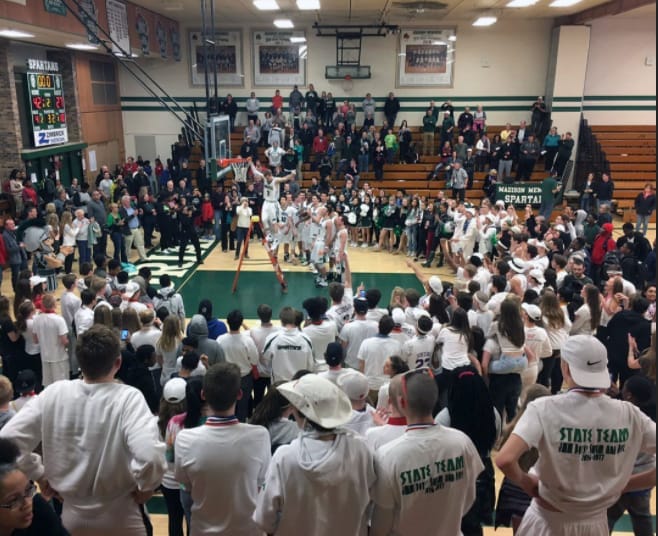
When people think of success on the basketball court, they often picture star players making flashy plays. But experienced coaches know the truth: games are often won or lost by the players beyond the starting five. Your bench matters. If you want consistent wins, you need a second unit that understands your system, executes under pressure, and contributes without disrupting chemistry. That starts with intentional, consistent basketball skill development.
In this post, we’ll break down proven ways to develop your bench into a dependable, game-ready unit. Every tip below is rooted in real coaching experiences and built for practical use with youth teams.
Shift the Focus of Basketball Skill Development
Many new or inexperienced coaches rely on static drills, things like stationary ball handling, one-handed passing, or cone zig-zags. These have value, but they don’t teach players how to think. Game performance is about reactions, not routines. So shift your focus toward decision-based drills. Give players scenarios where they must choose and act quickly.
Start with a “catch-and-react” drill. Have a player catch the ball at the short corner or wing. On the catch, give them 1–2 options: attack baseline or middle. Add a defender. Teach them to scan, decide, and go. From there, layer in additional reads: help defense rotation, post feed, or pull-up. Let the drill evolve based on game situations.
By repeating these reactive moments, players stop thinking and start playing instinctively. And that’s when development becomes game-real.
Use Small-Sided Games for Basketball Skill Development
Want your bench to get better? Let them play. But in controlled, competitive, small-sided settings. Small-sided games (2-on-2, 3-on-3, 4-on-4) speed up learning because they isolate key decision-making moments.
In a 5-on-5 setting, a bench player might go minutes without touching the ball. In a 3-on-3 setting, they’re involved constantly.
Add simple rules to shift the focus. Try 3-on-3 where players must pass within 2 seconds. Or 2-on-2 with no dribbles allowed. These rules force quicker thinking and better spacing. You can even run a 4-on-4 “advantage” game: defense starts with only three players, offense reads and attacks the gap.
Keep scores and rotate teams quickly to maintain pace and energy. Bench players thrive in these formats because they learn how to read defenders, use space, and make fast decisions.
Make Rebounding Part of Basketball Skill Development
Rebounding is often treated as a hustle stat. While effort is critical, it’s also a teachable skill. Especially for youth players, learning how to box out and read angles can be the difference between a rebound and a put-back bucket.
Teach “find, hit, get.” That’s your rebounding sequence. First, locate your assignment. Next, initiate contact. Finally, go get the ball. Simple, clear, and actionable.
One effective drill: position two players, one on the wing, one under the hoop. Toss a shot from the top. When the shot goes up, both players sprint to the ball. The one underneath works on boxing out; the wing player works on attacking the glass. Add consequences if the ball hits the floor. This raises intensity without needing to run extra sprints.
Another option: play 5-on-5 where a missed box-out equals a point for the other team. Now your team connects rebounding with winning.
Join the TeachHoops Community
TeachHoops.com offers a unique platform for coaches to share experiences and gain new insights. Learn from others who have navigated similar challenges. It’s an invaluable resource for those looking to:
Bench players won’t always get touches, but they can earn minutes with defense. And nothing gets a coach’s trust faster than strong on-ball pressure. But players must be taught how to defend, not just told to “stay in front.”
Drill footwork and angles in short bursts. Start with a “mirror drill.” Two players face each other: one on offense, one on defense. The offensive player can shuffle left or right, no ball, no fakes. The defender mirrors their movement. Focus on low hips, active hands, and short steps.
Then layer in a live ball. Let the offensive player attack with one dribble max. Defender focuses on forcing weak-hand drives and keeping their hips square. Rotate pairs every 30 seconds to keep energy high.
Don’t forget to emphasize help defense and recoveries too. Bench players often come in cold. They need to be mentally sharp and positionally aware to contribute defensively.
Every Player Should Learn to Shoot
Not every player will become a scorer, but every player should be able to shoot. It’s the most universal skill in basketball, and it travels to every level. Great shooters space the floor, force closeouts, and give your offense breathing room.
Teach consistent form. Repetition matters here. Require every player to make 50 form shots before practice or after. Use a shooting ladder in workouts: start short, move out, track makes. Teach players that shooting under pressure starts with shooting under control.
Here’s a challenge to give your team: in an empty gym, your shooters should hit 60% from three. If they can’t do that without a defender, they’ll struggle when a defender contests or bumps them. Help players understand that gym shooting and game shooting are not the same, but one builds the other.
Build Skill Through Repetition and Accountability
Skill doesn’t develop through variety alone. It develops through repetition, accountability, and purpose. As the coach, set a tone that the bench must meet the same expectations as the starters.
Start with accountability. If no one boxes out in a drill, stop the action. Explain the mistake. Reset. If your second unit turns the ball over, don’t ignore it. Teach the right choice and run it back.
Use a rotation that gives your bench group specific goals during scrimmages. For example: hold the other team to one shot, move the ball through all five players, or force two turnovers before rotating out. This gives structure and lets players connect effort to results.
Even when you’re not drilling specific skills, your culture is always developing. So make sure your bench players know they’re a vital part of it.
Final Thoughts on Basketball Skill Development
The best way to prepare players for games is by mimicking games. That means creating pressure, enforcing decision-making, and building habits they can rely on when things speed up. Your bench needs reps just like your starters. Let them play, make mistakes, and learn in controlled chaos.
When you focus on basketball skill development that builds thinking players, not just skilled ones, you develop a team that’s deep, confident, and ready for any moment.
If you’re coaching youth basketball, you’ve probably seen it a hundred times, players catch the ball and immediately start dribbling. That habit kills ball movement and stalls the offense. A simple fix? Try the No Dribble Basketball Drill.
This constraint-based drill teaches players how to move, cut, and pass with purpose. As mentioned in the video below, over-dribbling is a problem at every level, especially early in the season. Players often bring habits from AAU or summer play, where dribbling on the catch is the norm. This drill starts to undo that.
Why Use the No Dribble Basketball Drill?
The No Dribble Basketball Drill forces players to engage mentally and physically. This is an example of what’s called a constraint-based drill, which is an exercise that uses specific limitations to force players towards discovering effective solutions and skills.
This drill teaches players to scan the floor, move with purpose, and communicate. Without the option to dribble, they are forced to pass and cut. This encourages better spacing, sharper footwork, and more intentional ball movement. It also helps develop awareness of defensive switches and off-ball positioning. These are all areas where players often struggle if they rely too heavily on the dribble.
Because you can assign offensive and defensive goals within the same drill, it turns into a multi-layered teaching tool.
When to Use the No Dribble Basketball Drill
This drill doesn’t need to dominate your practice plan. It works well as a short segment in practice. Ten to fifteen minutes is plenty. It fits into small-sided games like 3-on-3, 4-on-4, or 5-on-5. You can also include it as a constraint in advantage-disadvantage situations.
For example, when running a 5-on-3 drill, simply instruct the offense not to dribble. This makes them look for better cuts and smarter passes instead of falling into bad habits. The change forces quick decision-making. This can be an eye-opener for players and helps them learn how to find gaps with movement rather than a bounce.
What to Emphasize During the No Dribble Basketball Drill
The beauty of this drill is that it is very adaptable to the skill level of your team. Coaches should tailor their teaching points based on the skill level of their players to get the most out of this drill.
What to Emphasize for Lower-Level Teams
Pivoting under pressure: Teach players to stay under control and use their pivot foot to avoid travels and turnovers.
Basic passing techniques: Focus on chest passes and bounce passes with proper form and timing.
Simple cuts and movement: Encourage players to cut after passing and avoid standing still. Keep it basic and repeatable.
Spacing fundamentals: Help players understand the need to spread out and avoid bunching up near the ball.
Making the next pass: Reinforce the idea of moving the ball quickly to an open teammate rather than holding it.
Join the TeachHoops Community
TeachHoops.com offers a unique platform for coaches to share experiences and gain new insights. Learn from others who have navigated similar challenges. It’s an invaluable resource for those looking to:
Reading the defense: Push players to scan and react to how defenders are positioned and where the help is coming from.
Creating passing angles: Teach players to use fakes, step-throughs, and footwork to open up better lanes.
Second cuts and re-screening: Introduce more complex off-ball movements like backdoor cuts and re-screening actions.
Using voice and eye contact: Encourage clear communication and non-verbal cues to stay in sync with teammates.
Adjusting to switching defenses: Work on how to recognize and exploit mismatches after defensive switches without relying on dribbling.
These points can be layered as your players develop. Starting simple and gradually increasing the challenge ensures growth while maintaining confidence.
Coaching Tips for the No Dribble Basketball Drill
Keep the drill moving. Do not stop practice repeatedly. Give coaching points in between reps or while players rotate in and out. This keeps energy high and reps consistent.
Use short prompts and quick feedback. Ask questions like “What was the next pass?” or “What did you see there?” to keep players thinking. Make adjustments on the fly rather than turning the drill into a lecture.
Adapting the Drill to Any Offense
No matter what system you run, this drill has value. Even if your team plays a dribble-drive style, players need to know how to move the ball without pounding it. The No Dribble Basketball Drill teaches them to catch, scan, and move. These are universal skills.
The goal is to reduce empty dribbles and increase purposeful actions. Better movement creates better shots, no matter the offense. Players learn to make better decisions, move without the ball, and work as a unit. When introduced early in the season, it can help set the tone for smarter, team-first basketball. Even if things look rough at first, that is part of the growth. The more reps your team gets, the more comfortable they will become.
This drill belongs in every coach’s toolbox. It is quick to implement, easy to adjust, and effective at every level.
As a coach, finding fun and engaging basketball camp games can make all the difference in developing your team’s skills and fostering team cohesion. Whether you’re running a camp or looking to add some fresh drills to your practice, these games are not only enjoyable but also promote essential basketball fundamentals.
Today, we’ll explore a game called “Spartan Ball” that can energize your team and improve communication, movement, and teamwork.
What is Spartan Ball? A Unique Basketball Camp Game
Spartan Ball is a fast-paced and fun basketball camp game that helps players develop key skills like communication, quick decision-making, and spatial awareness.
The game’s design encourages constant movement, which is essential for developing a competitive team. The goal is simple: keep the players active, talking, and engaged in both offense and defense.
Setting Up Spartan Ball
To set up Spartan Ball, divide your players into two teams, one team with white jerseys and the other with blue. You can adapt the number of players and teams depending on how many people you have, but typically, the game is played with three players on each side.
You’ll need two baskets, but you can also use more depending on your gym setup. The key to success in Spartan Ball is constant communication.
Rules of Spartan Ball: How the Game Works
Teams and Directions: One team will go toward one basket, while the other will head toward the opposite basket. This encourages players to quickly adapt to different offensive and defensive situations.
Scoring: Either team can shoot at any of the two baskets. This adds an element of unpredictability and forces players to quickly adjust their defense.
Movement and Communication: The game demands that players communicate and move continuously. Coaches should encourage players to speak to each other, call out switches, and direct traffic on the court.
Defensive Strategy: Players will quickly learn that they need to match up against their opponents and cut off their angles. The game allows them to practice defending while constantly on the move.
Join the TeachHoops Community
TeachHoops.com offers a unique platform for coaches to share experiences and gain new insights. Learn from others who have navigated similar challenges. It’s an invaluable resource for those looking to:
The beauty of Spartan Ball lies in its simplicity and the variety of skills it helps players develop. It’s a great basketball camp game because it blends fun with critical learning opportunities. Here’s how Spartan Ball can help your team:
Improves Communication: As players need to talk constantly to coordinate their offense and defense, this game builds verbal and non-verbal communication skills.
Boosts Movement and Decision-Making: Players learn to make quick decisions based on what’s happening on the court, helping them think faster during real-game situations.
Enhances Teamwork: Spartan Ball fosters a sense of collaboration. Players must work together to succeed, making it a perfect game for building team chemistry.
Variations of Spartan Ball: Adapt to Your Group
You can easily modify Spartan Ball depending on your team’s needs and your available equipment. If you have more baskets, you can increase the number of players on the court to make the game more competitive.
Conversely, if you’re short on space or players, you can modify the game to suit a smaller group. The flexibility of Spartan Ball makes it a versatile addition to any basketball camp game lineup.
Integrating Basketball Camp Games into Your Schedule
Whether you’re running a week-long camp or a one-day event, Spartan Ball is a great way to wrap up a practice session. The intensity and fun will keep players engaged and motivated. After a challenging drill or workout, players will often ask to play Spartan Ball because of its enjoyable and competitive nature.
You can also turn the game into a team-building competition by offering small rewards, such as Gatorade or a “winner’s court” where the victorious team stays on while others rotate in. This adds an element of excitement to the game and encourages friendly competition.
Conclusion: Make Your Basketball Camp Games Memorable
Including games like Spartan Ball in your camp schedule will not only keep players entertained but will also teach them crucial basketball skills that they can apply in actual games. These basketball camp games provide a great way to end your practice on a high note, building communication, teamwork, and quick decision-making abilities. By regularly incorporating such drills, you’ll help your players develop the skills they need to succeed, all while keeping things fun and engaging.
By using this simple, yet effective game, you can ensure that your camp is both educational and enjoyable for all players. So, the next time you plan a basketball camp game, consider Spartan Ball and watch how quickly your players improve their communication and teamwork skills on the court.
As a parent or new coach, it’s easy to feel uncertain during the early stages of youth basketball development. You might see your child nail every drill in practice or training, but then freeze or fall short in games. It can be frustrating. However, progress in youth sports isn’t always obvious.
In fact, true development often shows up in small, gradual ways. That’s why it’s important to know what signs to look for. With the right mindset and focus, you’ll spot the growth even when the stat sheet doesn’t show it. Let’s explore what progress really looks like—and how to support it along the way.
1. Understand That Youth Basketball Development Is Not Linear
Many parents expect a straight upward path. Unfortunately, that’s not how learning works. Improvement happens in bursts, with plateaus in between. During the “flat” times, it might feel like nothing is changing.
In reality, your child is likely absorbing skills and preparing for the next leap. That’s why it’s important to be patient. If they’re showing up, practicing, and trying, they are getting better.
2. Look for Small Wins in Every Game
Don’t just focus on points scored. Progress can look like:
Taking a second dribble under pressure
Breaking a press without panicking
Attempting a move they’ve trained on, even if it fails
Each of these is a victory. During youth basketball development, these little steps often matter more than game stats.
3. Recognize the Difference Between Practice and Game Pressure
In practice, the stakes are low. Kids are relaxed. So, it’s no surprise they nail every behind-the-back dribble or euro step. But once a defender shows up and the crowd is watching, everything changes.
The pressure adds a layer they aren’t used to yet. That’s normal. Learning how to apply skills under pressure is a key part of development.
Join the TeachHoops Community
TeachHoops.com offers a unique platform for coaches to share experiences and gain new insights. Learn from others who have navigated similar challenges. It’s an invaluable resource for those looking to:
One of the most effective ways to support youth basketball development is to increase intensity in practice. Try small-sided games like 3-on-3. Or, add time limits and scoring constraints.
When kids learn to handle pressure in a controlled setting, they’re more likely to succeed in real games. It’s why we run scrimmages and simulate late-game situations.
5. Know That Mental Growth Comes First
Sometimes the body just isn’t ready yet. Your child may understand how to finish strong at the rim, but lack the strength to do it. That doesn’t mean they’re behind. It means the brain is ahead of the body.
Eventually, when those two sync up, everything clicks. During youth basketball development, this mental foundation is crucial.
6. Trust the Process and Celebrate the Love of the Game
If your child is working with a trainer, going to practice, and playing for fun at home, that’s a win. Whether it’s driveway shooting or playing in weekend tournaments, they’re investing in themselves. Progress is happening.
The best sign of development? They still love the game.
Final Thoughts on Youth Basketball Development
Stay patient. Stay positive. Look for progress beyond the scoreboard. As long as your child is engaged and working hard, they’re on the right track. And when the game starts to slow down for them—when all those drills begin to show up in real time—you’ll know the journey was worth it.
As a veteran coach, I’ve learned that nothing impacts player development more than a well-planned basketball practice structure. It doesn’t matter if you’re coaching third graders or varsity athletes—structure keeps practices efficient, focused, and fun. If you’re just starting out as a coach, the way you organize practice can make or break your season.
Fortunately, it’s not as complicated as it sounds. With the right practice plan, you can balance skill-building, teamwork, and conditioning—all while keeping your players engaged and improving every day.
Why a Strong Basketball Practice Structure Matters
Let’s be honest: players thrive on consistency. A reliable basketball practice structure gives your team a rhythm. It helps them know what to expect and keeps things moving. Moreover, it saves you from scrambling or repeating drills out of habit.
Even better, when practice has flow, your players stay engaged. That means fewer distractions and more improvement.
1. Start with a Calm, Centered Beginning
I like to kick off every practice with a quick huddle at center court. We take a minute to check in. Sometimes I even lead a brief breathing exercise or moment of reflection.
Why? School is stressful. Players walk into practice carrying the weight of the day. A structured opening helps shift their focus to basketball. It also builds team chemistry and lets them settle in.
2. Build Practice Around the Game Flow
A good basketball practice structure follows the natural flow of a game. After the huddle, we typically spend 5–10 minutes on light ball-handling or partner drills. This keeps the energy positive and the players connected.
Then, I break the main session into four areas:
Offense
Defense
Transition offense
Transition defense
You don’t need to follow that order exactly. However, covering all four areas helps your team prepare for real-game scenarios.
Join the TeachHoops Community
TeachHoops.com offers a unique platform for coaches to share experiences and gain new insights. Learn from others who have navigated similar challenges. It’s an invaluable resource for those looking to:
Another method I use, especially for younger or less experienced teams, is breaking practice into quarters. Think of it like:
First quarter: Individual skills
Second quarter: Team offense
Halftime: Quick break or fun mini-game
Third quarter: Team defense
Fourth quarter: Scrimmage or situational play
This approach keeps things fresh. Players know change is coming soon, so they stay locked in. It also helps you cover everything without overloading one area.
4. Keep It Flexible, But Always Planned
Here’s the truth: no two practices should look exactly the same. You’ll need to adjust based on game results, injuries, or team mood. However, a solid basketball practice structure still gives you a reliable framework to fall back on.
My rule? If I have a 90-minute practice, I plan for 120 minutes. That way, I’m never short on drills or ideas.
And don’t forget to leave space for feedback. Ask players what’s working and what isn’t. That alone can make a huge difference.
5. End with Purpose and Energy
Players will always ask, “Are we scrimmaging today?” They think that’s the fun part. And it is—but scrimmage doesn’t always mean 5-on-5 full court.
We use constraint-based drills like 3-on-3 no dribble. It’s game-like, competitive, and forces players to think. That’s still scrimmaging. Just smarter.
Final Thoughts on Basketball Practice Structure
You don’t need to reinvent the wheel. Start with a plan. Break it into clear sections. Keep things moving, and focus on building real-game habits. A strong basketball practice structure builds stronger teams, plain and simple.
Want help designing your own practices? Head over to CoachingYouthHoops.com for full-season plans and tools that make it easy.
If you’re looking for a way to fire up your players and toughen them around the basket, you need a strong basketball finishing drill. Finishing at the rim, especially through contact, is one of the toughest skills young players must develop. In today’s post, I’ll walk you through a drill that teaches players how to finish hard and stay aggressive. Plus, I’ll share tips on running it safely and effectively.This basketball finishing drill is great for middle school and high school teams. It brings energy to your practices while building skills that transfer directly to games. Best of all, it’s fun and competitive—two things that keep players engaged!
Why You Need a Basketball Finishing Drill in Every Practice
First and foremost, finishing through contact separates good players from great ones. Many youth players shy away from physical play near the basket. However, running a basketball finishing drill regularly builds their toughness.
Additionally, drills like this prepare players for real-game scenarios. In a real game, nobody lets you walk to the rim untouched. Players must learn how to absorb contact and still score. That is why finishing drills should be a key part of your practice plan.
The MAA Drill is a simple, energetic way to teach finishing skills. It also builds competitive spirit in your gym. Here’s how to set it up:
Line up players on each block under the basket.
The coach (or a passer) throws the ball to either side randomly.
The player must attack the basket while the opposite block player contests the shot.
Players must play through contact but stay under control. No unnecessary roughness is allowed.
After the play, the next two players immediately step in.
The drill should run for about five minutes with high intensity. Because it is quick and aggressive, players stay engaged without getting bored. Furthermore, it creates a game-like finishing environment that players love.
TeachHoops.com offers a unique platform for coaches to share experiences and gain new insights. Learn from others who have navigated similar challenges. It’s an invaluable resource for those looking to:
Expanding the Basketball Finishing Drill to Different Spots
Once your players master the basic version, add more complexity. Move players to the free-throw line or baseline for a new challenge. You can even allow players to take charges during the drill if you coach older or more skilled athletes.
While doing this, emphasize two important defensive concepts:
Verticality: Players must contest shots by going straight up with two hands.
Controlled aggression: Play hard but safely to avoid injuries.
The ultimate goal is helping players learn how to finish against real defenders. Because of this, toughness improves and so does their body control.
A fun twist to this basketball finishing drill is allowing players to call out who they want to challenge. Players love picking their matchup and competing. This not only spices up the drill, but it also shows who is competitive and who tends to back down.
You’ll learn a lot about your team just by watching who calls out stronger players. Moreover, it builds team chemistry because everyone cheers each other on.
As always, keep the environment supportive but competitive. We want players to push themselves without fear of being embarrassed.
Final Thoughts on the Basketball Finishing Drill
Running a basketball finishing drill like this every week toughens your team and improves scoring under pressure. Plus, it brings a lot of energy to practice, which young players always need.
For even more coaching tools, visit TeachHoops.com for coaching resources, or watch great drills on the TeachHoops YouTube Channel. Keep working, coach—you’re building players for the long run!
If you’re a coach looking to keep your players active and improving during the offseason, the Summer Basketball Shooting Drill known as the Magic 20 is a must-add to your training plan. It’s simple, competitive, and helps reinforce strong fundamentals. Better yet, it’s easy to run and track, which is exactly what youth basketball players need during the summer.
In this post, I’ll break down how to run the drill, what skills it develops, and how to make it part of your summer training routine.
Why Use the Magic 20 Summer Basketball Shooting Drill?
First of all, the Magic 20 is a fantastic way to build consistency. Secondly, it encourages accountability through a timed format. In other words, it’s a complete workout in just a few minutes. Players must complete 20 makes, hitting key shots from around the floor.
This Summer Basketball Shooting Drill develops:
Finishing with both hands
Touch around the basket
Bank shot accuracy
Elbow shooting consistency
Pressure free-throw shooting
Most importantly, it builds mental toughness through repetition and time-based pressure.
How to Run the Magic 20 Shooting Drill
Here’s how to set it up:
Start the clock — players will track how long it takes them to make all 20 shots.
Players must make each shot before moving on.
They finish with five free throws after the 20 makes.
The 20 required shots:
2 right-handed layups
2 left-handed layups
2 right-handed Mikan shots
2 left-handed Mikan shots
2 right-handed reverse Mikan shots
2 left-handed reverse Mikan shots
2 right-side bank shots
2 left-side bank shots
2 right elbow jumpers
2 left elbow jumpers
This challenge can be repeated daily. As a result, players can track improvement throughout the summer.
Join the TeachHoops Community
TeachHoops.com offers a unique platform for coaches to share experiences and gain new insights. Learn from others who have navigated similar challenges. It’s an invaluable resource for those looking to:
1. Focus on Form Before Speed Encourage players to focus on footwork, follow-through, and balance first. Speed comes with confidence and repetition.
2. Use Both Hands It’s tempting for younger players to favor one hand. However, this drill demands both sides of the body to be active.
3. Track Progress in a Notebook Have each player log their best times. This keeps them engaged and allows for measurable improvement.
4. Make it Competitive Use leaderboards in practice. For example, post the top three times on the gym wall each week.
5. Don’t Skip the Free Throws Finishing with five free throws simulates late-game pressure. Additionally, it reinforces the importance of free throw shooting when fatigued.
How to Integrate It into Your Summer Program
This Summer Basketball Shooting Drill is a great way to start or end a workout. You can also use it as a station in a skills circuit. Since it doesn’t require defenders or fancy equipment, players can even do it solo at a park or driveway hoop.
Looking for more summer workout ideas? Check out this great youth shooting workout at CoachingYouthHoops.com. And for coaches looking to level up their approach, I recommend the full training library at TeachHoops.com.
Final Thoughts
The offseason isn’t just about rest—it’s about smart reps. This Summer Basketball Shooting Drill gives players a tool to sharpen key skills without burnout. Run it regularly, track progress, and watch your players’ confidence grow shot by shot.
For more drills, mentoring, and complete summer planning resources, visit TeachHoops.com. And don’t forget to subscribe to their YouTube channel for fresh content posted almost daily.
Running youth basketball camps is one of the most impactful ways to develop young players, build community, and grow your program. As a veteran coach with decades of experience, I’ve seen firsthand how well-structured camps can instill fundamentals, create lasting memories, and prepare athletes for competitive play. However, success doesn’t happen by accident.
It takes thoughtful planning, skilled instruction, and a consistent structure that balances learning and fun. Whether you’re coaching a weekend clinic or a multi-day summer camp, the goal remains the same: engage the players, build their skills, and keep them coming back. Below, I’ll break down my best practices for organizing youth basketball camps that are both effective and memorable.
Why Structure Matters in Youth Basketball Camps
The biggest mistake I see in youth basketball camps? Winging it. If your players are standing around, they’re not learning. Camps should be active, upbeat, and constantly moving. I always emphasize a few core elements in every session: skill development, small-sided games, and structured fun.
Having a detailed practice plan—just like during the season—is non-negotiable. I recommend planning for nearly double the time you expect to fill. If you’re running a two-hour camp, come prepared with four hours of drills and games. Some activities may flop with one group and soar with another. Be ready to pivot.
Skill Work Comes First You can’t run before you walk. Shooting, dribbling, passing, and pivoting are cornerstones of every camp I run. I like to teach these fundamentals in creative, competitive ways so the kids stay engaged.
Games for Engagement Three-on-three, five-on-five, and no-dribble games help players apply what they’ve learned. Adjust the complexity based on age and experience. Younger kids love dribble tag; older players thrive on controlled scrimmages.
Player-to-Player Teaching One of the most underrated tools in a camp setting is peer coaching. I often assign older or more advanced players to lead stations or assist with younger groups. It improves their leadership skills and deepens their own understanding of the game.
Join the TeachHoops Community
TeachHoops.com offers a unique platform for coaches to share experiences and gain new insights. Learn from others who have navigated similar challenges. It’s an invaluable resource for those looking to:
Each day of camp should have a clear structure. Here’s a sample framework I’ve used for years:
0:00 – 0:15: Dynamic warm-up and ball-handling
0:15 – 0:45: Skill stations (rotate every 7 minutes)
0:45 – 1:15: Shooting or finishing focus
1:15 – 1:45: Competitive games (3v3, relays, contests)
1:45 – 2:00: Wrap-up, leadership lesson, and Q&A
Short attention spans require short stations. Aim for 5–7 minutes max per drill. This keeps things moving and avoids burnout.
Pro Tips for Coaches Running Youth Basketball Camps
Have a Plan B for every drill. Sometimes the group just doesn’t click with what you’ve planned.
Use your players as staff. High school players love to lead and younger kids respond well to them.
Limit camp duration. For grades 3–5, two hours is plenty. Younger kids may only last 90 minutes.
Include fun breaks. Dribble tag, knockout, and Pac-Man keep kids smiling—and still learning.
Teach through games. Use no-dribble or small-sided games to encourage movement and decision-making.
Conclusion: Make It Fun, Make It Count
If you’re planning to host youth basketball camps, remember the golden rule: kids come back if they had fun and learned something new. With clear goals, thoughtful organization, and a good mix of teaching and play, your camp can be the highlight of a young athlete’s summer.
Need help getting started? Download full practice plans and coaching resources at TeachHoops.com and CoachingYouthHoops.com. With the right tools and mindset, your camp can leave a lasting impact—on and off the court.
When it comes to building smarter players, youth basketball decision-making drills are essential. As a veteran coach, I’ve seen too many young athletes struggle under pressure. Their instincts are good, but the execution falls short. Why? They haven’t had enough reps in real-game situations. In this post, we’ll break down simple ways to improve player decision-making. We’ll also explain how to get the most out of limited practice time.
Young players often make poor decisions because they haven’t experienced enough live reps. They try to dribble through two defenders. They throw soft passes out of traps. They take rushed, low-percentage shots. While this is frustrating, it’s also fixable. However, it takes time and repetition. Decision-making improves when players fail, adjust, and try again. This can’t happen in drills that don’t simulate real pressure.
Repetition Is Key in Youth Basketball Decision-Making Drills
Want smarter players? Let them make mistakes in practice. Then correct those mistakes with immediate feedback. Set up drills that force them to think quickly. For example, run 3-on-4 or 4-on-5 transition drills. These uneven situations teach spacing, passing angles, and timing. More importantly, they develop court awareness. As the reps increase, so does the player’s confidence and decision-making speed.
Join the TeachHoops Community
TeachHoops.com offers a unique platform for coaches to share experiences and gain new insights. Learn from others who have navigated similar challenges. It’s an invaluable resource for those looking to:
Most youth teams only practice twice a week. That’s just three hours to cover everything. Therefore, you must prioritize. Choose 2–3 key areas to focus on each week. If your team struggles with passing under pressure, start there. Use youth basketball decision-making drills that simulate traps. Teach your players how to pivot, protect the ball, and deliver strong passes. It’s better to be great at a few things than average at many.
Take Inventory and Adjust As Needed
Don’t wait until the end of the season to evaluate your team. Instead, watch your games and take notes. Ask yourself, “Where are we breaking down?” Create a checklist with three categories—skills we’re good at, skills we’re bad at, and skills we’ll ignore for now. Then adjust your practice plan. Focus on what will help you win the next game, not what sounds impressive.
Communicate With Parents About Your Focus
Parents want to know what their kids are learning. Be honest and clear. Explain that you’re focusing on specific youth basketball decision-making drills this season. Let them know why rebounding or free throws may not be a focus right now. When they understand your goals, they’re more likely to support your process.
Final Thoughts on Youth Basketball Decision-Making Drills
Decision-making isn’t taught—it’s earned through repetition and failure. Youth basketball decision-making drills give players a chance to grow. But you must be intentional with how you use your time. Prioritize what matters, adjust as needed, and stick with it. Your players will thank you when they start making smarter plays under pressure.
When it comes to player development, consistency is everything. As a veteran youth basketball coach, I’ve seen firsthand how the best shooting drills help players gain confidence and accuracy. That’s why I use this structured daily plan for off-season workouts. It combines warm-ups, repetition, competition, and conditioning. In this post, I’ll break down each drill so you can easily implement them at your next practice.
4 Reasons Why Off-Season Workouts Matter for Youth Basketball Players
The off-season is where real growth happens. During the season, players focus on team systems and game prep. But in the off-season, they can focus on skill development.
Off-season shooting workouts help players:
Refine technique without game pressure
Build muscle memory through repetition
Improve conditioning and stamina
Develop confidence through self-paced progress
Even 30 minutes a day can make a huge difference. The players who improve the most aren’t always the most talented—they’re the most consistent. If you want results, the off-season is the time to commit to the best shooting drills and daily improvement.
Best Shooting Drills – Everyday Drills to Build Great Habits
Start with a 5-minute warm-up to get loose and locked in. Players begin with:
10 form shots from 8 feet
5 form shots from 15 feet
The Flip Series: 10 shots per side (8–20 feet)
Elbow-to-elbow shooting: 10 total shots
Coaching Tip: Encourage players to move with energy. These reps should produce a sweat.
Next is the Make 50 drill:
10 made 3’s from each of 5 core spots (corners, wings, top)
Partner rebounding and tracking
Goal: 80 total shots
This combination is one of the best shooting drills for building rhythm and consistency.
Pick 1 – Repetition Drills
After warm-up, choose one of the following repetition-focused partner drills:
1. 2 Minutes of 3’s Players shoot for 2 minutes, making as many 3’s as possible.
Can’t shoot from the same spot twice in a row
Goal: 20 makes This drill improves focus and shot variety under time pressure.
2. Beat the Pro Players compete against a fictional “pro.”
+1 for each make (no layups)
-2 or -3 for each miss, depending on range
First to 33 points wins Use this to simulate pressure and decision-making.
Both are among the best shooting drills to improve confidence and mental toughness.
Join the TeachHoops Community
TeachHoops.com offers a unique platform for coaches to share experiences and gain new insights. Learn from others who have navigated similar challenges. It’s an invaluable resource for those looking to:
Choose two drills from the list below. These are excellent for simulating in-game stress and physical fatigue.
Best Shooting Drills – Competitions (Partner Required)
Curry Drill
Pick 5 different spots
Keep shooting until you miss 2 in a row
Then move to the next spot
Goal: 100 total shots
Nuggets Drill
5 different spots
Make 3 in a row to move on
Miss 2 in a row = sprint to half court and back
Goal: 45 shots
Bird Drill
5 core spots
Must make 2 in a row to move
Finish with 2-minute timed shooting from top of the key
Goal: 10 made 3’s from the top
Best Shooting Drills – Conditioning (Partner Required)
Knicks Drill
Shoot 5 in a row, sprint to half court
Then shoot 4, sprint again, then 3, etc.
Switch with partner
Goal: 50 total shots
Star Shooting
Shoot in a star pattern across 5 spots
Make 2 in a row at each
Repeat the pattern 5 times
Goal: 30 makes
These drills combine competition, cardio, and shot repetition. They are some of the best shooting drills to simulate game-like fatigue and focus.
Final Thoughts
The key to development is structure. Use this plan to build consistent mechanics and competitive edge in your team. Whether it’s warm-ups or high-intensity competitions, these are the best shooting drills to help youth players thrive.
If you’re a youth basketball coach—new or experienced—you know how easy it is to overlook preseason planning. But the truth is, this is where your season is won or lost. That’s why smart coaches focus on basketball coaching strategies that go beyond the playbook and lay a solid foundation before the first tip-off.
Coach Steve Collins’ “Win the Season” Masterclass isn’t just another coaching clinic. It’s a deep dive into the strategies, systems, and habits that turn average teams into competitive programs.
Why Preseason Planning Matters More Than You Think
Too many coaches dive into drills and plays without first setting expectations. But as Coach Collins puts it, you have to “pour the concrete” before building anything else. The preseason gives you the chance to create structure, culture, and clarity.
Most importantly, the right basketball coaching strategies help you save time during the season. You’ll spend less time scrambling and more time focused on development and team chemistry.
Culture Is Your Foundation
Strong culture doesn’t happen by accident. It’s built intentionally, and preseason is the perfect time to do it.
Coach Collins recommends:
Morning team meetings to test player commitment
The “Foxhole Test” to identify true leaders
Creating player-led traditions that outlast a single season
When your culture is strong, your team runs itself—even when you’re not in the gym.
Smart Basketball Coaching Strategies Win Games
Great basketball coaching isn’t about memorizing drills. It’s about knowing what to teach and when to teach it. That’s what separates winning programs from the rest.
Use your preseason to:
Develop your offensive and defensive philosophies
Plan practices backwards from the first game
Identify which drills deliver the biggest return on time
Coach Collins warns: “Don’t build the plane while flying it.” If you prep with purpose now, you’ll avoid panic later.
Practice Plans That Match Your Team
Every team is different. So, your practice plans should reflect your current roster—not last year’s strengths.
Build better habits by:
Tracking time spent on key skills (like free throws or turnovers)
Prioritizing player development early
Adjusting your plan to fit your personnel
The best coaches adapt. But first, they plan.
Join the TeachHoops Community
TeachHoops.com offers a unique platform for coaches to share experiences and gain new insights. Learn from others who have navigated similar challenges. It’s an invaluable resource for those looking to:
Unlike most basketball coaching clinics, Win the Season gives you behind-the-scenes access to a coach who’s still in the game. You’ll see real footage, live strategy calls, and even team meetings.
Here’s what’s included:
Weekly Zoom calls with other coaches
Full season documentation from Coach Collins’ program
Templates, drills, and plug-and-play resources
Personal mentorship for those who want more access
These aren’t just tools. They’re basketball coaching strategies that have been tested over 25 seasons.
Who Is This For?
Youth coaches building from scratch
Experienced coaches needing a system reset
Programs with talent but no identity
Anyone tired of wasting time and losing close games
Basketball coaching clinics are still one of the best ways to grow—no matter how many seasons you’ve coached. They give you fresh tools, sharpen your philosophy, and remind you why you coach in the first place.
But let’s be honest—not all basketball coaching clinics hit the mark. That’s why Win the Preseason stands out. It’s packed with strategy, culture-building, and tools you’ll use all season—not just in November.
What Is the Win the Preseason Masterclass?
Win the Preseason is a free 90-minute online masterclass designed for youth and high school coaches. Led by Coach Steve Collins, it walks you through how to win the season before the season even starts.
But it doesn’t stop there. Unlike other basketball coaching clinics that only cover preseason ideas, this one dives deep into what it takes to manage your program in-season too.
You’ll learn:
How to design strategic practices
How to handle team and parent challenges
How to plan for momentum shifts, foul trouble, and game-ending situations
Plus, you’ll get downloadable tools and handouts used in real championship programs.
The Three Frameworks That Set This Basketball Coaching Clinics Apart
Coach Collins doesn’t just throw drills at you. He delivers a complete coaching blueprint that’s built on three clear frameworks:
1️⃣ In-Season Management
Adaptive Coaching: Handle foul trouble, manage timeouts, and prepare for chaos.
Roles & Rotations: Use midseason evaluations, player role check-ins, and touchpoints to guide your rotation.
Momentum Maintenance: From student sections to rest periods—everything matters.
2️⃣ Game Planning
Practice Structure: Run practice like game day, complete with pregame routines and halftime adjustments.
End-of-Game Execution: Develop situational plays like “WIN” and “SCORE” that players actually remember.
Scouting & Film Prep: Give players focused keys, while you handle the deeper 20-page scout.
Academic Accountability: Weekly teacher reports starting in 6th grade.
Motivation Techniques: Weekly player “grades” based on hustle, leadership, and locker room presence.
These are the things most basketball coaching clinics never get into. And they’re exactly what win programs—not just games.
Join the TeachHoops Community
TeachHoops.com offers a unique platform for coaches to share experiences and gain new insights. Learn from others who have navigated similar challenges. It’s an invaluable resource for those looking to:
Coach Steve Collins is the creator of Coach Unplugged, Teach Hoops, and Coaching Youth Hoops. He’s a veteran head coach in Wisconsin with over two decades of experience—and 14 straight conference titles.
He’s built a winning program from scratch. And now he’s sharing every piece of that journey—from preseason to postseason.
His philosophy centers on three things:
Culture matters more than schemes
Touchpoints build trust
Your program is more than the scoreboard
He still teaches full-time, coaches his team, and mentors coaches through his Championship Access program.
Bonus: A Look Inside Championship Access
Want more than one webinar? Coach Collins offers Championship Access, a full-season mentorship program. It includes:
Weekly Zoom meetings with other coaches
Practice footage, film sessions, and locker room talks
One-on-one mentorship via Voxer and email
All the tools, templates, and handouts featured in the masterclass
Think of it as your behind-the-scenes pass to a real high-level high school program.
Basketball Coaching Clinics Final Thoughts: Stop Winging the Preseason
Basketball coaching clinics should give you more than buzzwords and generic drills. This one delivers real answers, real systems, and real inspiration.
Whether you’re entering your first season or your fifteenth, the Win the Preseason Masterclass is a chance to level up.
As a veteran basketball coach, I have seen firsthand the importance of developing solid shooting and dribbling skills in young players. Today, I want to share a highly effective practice method that can elevate your game: the 44 Shooting and Dribbling Drill. This drill not only improves ball handling but also enhances shooting accuracy, making it a must for any youth basketball training regimen.
What is the 44 Shooting and Dribbling Drill?
The 44 Shooting and Dribbling Drill is designed to challenge players by combining dribbling and shooting in a dynamic and engaging way. It involves five key spots on the court where players will dribble for 4 seconds at each spot before executing a series of dribble attacks. This drill helps players develop coordination, speed, and accuracy under pressure.
Setting Up the Drill
Identify Five Spots on the Court:
Select five spots around the court. These can be marked with cones or simply visualized by the player.
Dribble for 4 Seconds:
At each spot, the player will dribble creatively for 4 seconds. This part of the drill encourages ball-handling creativity and control.
Perform Dribble Attacks:
After the 4-second dribble, the player will perform a two-dribble attack with the right hand.
Next, perform a two-dribble attack with the left hand.
Then, execute a one-dribble attack with the right hand.
Finally, complete a one-dribble attack with the left hand.
Repeat at All Spots:
Move to the next spot and repeat the process until all five spots are covered.
Join the TeachHoops Community: Step into Enhanced Coaching
TeachHoops.comoffers a unique platform for coaches to share experiences and gain new insights. Learn from others who have navigated similar challenges. It’s an invaluable resource for those looking to:
Why the 44 Shooting and Dribbling Drill is Effective
This drill is particularly beneficial for youth players as it combines multiple skills into one practice session. Here are some key benefits:
Enhances Ball Handling:
The requirement to dribble for 4 seconds at each spot forces players to handle the ball with confidence and precision.
Improves Shooting Accuracy:
Transitioning from dribbling to shooting helps players get used to shooting under various conditions, improving their overall shooting accuracy.
Builds Game-Like Conditions:
By incorporating dribble attacks, the drill simulates game-like scenarios, preparing players for real-game situations.
Develops Both Hands:
The drill requires using both hands for dribble attacks, ensuring that players develop ambidextrous skills crucial for higher levels of play.
Tips for Coaches and Parents
To maximize the effectiveness of the 44 Shooting and Dribbling Drill, here are some tips:
Encourage Creativity:
Allow players to be creative with their dribbling during the 4-second intervals. This not only makes the drill fun but also improves their overall ball-handling skills.
Focus on Form:
Ensure that players maintain proper shooting form even after dribbling. Good habits during practice lead to better performance during games.
Consistency is Key:
Regular practice of the 44 Shooting and Dribbling Drill will yield the best results. Incorporate this drill into your training sessions consistently.
Positive Reinforcement:
Praise effort and improvement. Building confidence is crucial for young players’ development.
Conclusion
The 44 Shooting and Dribbling Drill is an excellent way to develop essential basketball skills in young players. By focusing on ball handling, shooting, and game-like scenarios, this drill prepares youth players for success on the court. Whether you are a parent helping your child practice or a new coach looking to improve your team’s skills, incorporating this drill into your routine will undoubtedly yield positive results. Remember, consistent practice and a positive attitude go a long way in youth basketball development.
Stay connected and join our community of like-minded coaches at teachhoops.com for more tips and strategies to improve your coaching and help your team succeed!
As a veteran basketball coach, I have spent years refining techniques and drills that truly make a difference in youth basketball practices. One drill stands out above the rest, and today, I’m excited to share it with you. This is the ultimate youth basketball drill to enhance your players’ passing, cutting, and pressure handling skills. This drill is simple, effective, and perfect for new and inexperienced coaches looking to improve their practices.
Why This Drill is the Ultimate Youth Basketball Drill
First and foremost, this drill is all about fundamentals. Youth players often struggle with spacing, passing, and cutting under pressure. By focusing on these key areas, you can significantly improve your team’s overall performance. The ultimate youth basketball drill eliminates dribbling, forcing players to concentrate on moving without the ball and working as a team.
How to Implement the Ultimate Youth Basketball Drill
Step 1: Set Up Start by organizing your players into groups. Depending on the number of players, you can set up 3v3, 4v4, or 5v5 games. The key here is to play without dribbling. This forces players to focus on passing, cutting, and getting open.
Step 2: Emphasize Key Skills Once the game starts, emphasize the importance of cutting after passing. Players should move towards the basket to receive a pass back. If the pass isn’t available, the next player should fill in and rescue their teammate, maintaining proper spacing.
Step 3: Encourage Communication Communication is crucial in this drill. Players must talk to each other, call for passes, and alert teammates to open opportunities. This not only improves their on-court skills but also builds team chemistry.
Step 4: Create Challenges To make the drill more engaging, turn it into a contest. For example, award points for successful passes or for getting seven consecutive passes without a deflection. This keeps players motivated and focused on their tasks.
Join the TeachHoops Community: Step into Enhanced Coaching
TeachHoops.comoffers a unique platform for coaches to share experiences and gain new insights. Learn from others who have navigated similar challenges. It’s an invaluable resource for those looking to:
This drill offers numerous benefits. Firstly, it teaches players the importance of spacing. Many youth games suffer from players crowding around the ball. By eliminating dribbling, players learn to move without the ball and create space for their teammates.
Secondly, the ultimate youth basketball drill enhances passing skills. Since players can’t rely on dribbling, they must make precise and timely passes to keep the game moving. This improves their accuracy and decision-making under pressure.
Additionally, cutting and getting open become second nature. Players learn to read the game, anticipate passes, and make quick cuts to the basket. This constant movement keeps the defense on their toes and opens up scoring opportunities.
Practical Applications in Games
Implementing the ultimate youth basketball drill in your practices will translate to better game performance. Your team will become more disciplined, understanding the value of each pass and the importance of spacing. They will also develop better court vision, making them more effective in both offense and defense.
In actual games, you can apply the principles of this drill by encouraging your team to make multiple passes before shooting. This not only ensures that everyone is involved but also helps in breaking down the opposing defense. Additionally, players will be more comfortable handling pressure, as they are accustomed to making quick decisions without dribbling.
Conclusion
In conclusion, the ultimate youth basketball drill is a game-changer for any youth basketball coach. By focusing on passing, cutting, and pressure handling, you can significantly improve your team’s performance. Remember, simplicity is key. This drill is easy to implement, yet its impact is profound. So, next time you’re planning your practice, make sure to include the ultimate youth basketball drill. Your players will thank you, and you’ll see the results on the court.
Stay connected and join our community of like-minded coaches at teachhoops.com for more tips and strategies to improve your coaching and help your team succeed!
As a veteran basketball coach, I’ve seen countless young athletes develop on the court. Over the years, I’ve identified the most important skills youth basketball players need to master. These skills go beyond mere physical abilities and encompass mental and emotional growth. Today, I’ll share insights into the most important skills youth basketball coaches should focus on to build successful teams and well-rounded players, along with specific drills and activities to enhance these skills.
1. Patience and Vision: Cornerstones of Youth Basketball
One of the most important skills youth basketball coaches should teach is patience. Patience allows players to stay calm and make better decisions under pressure. When players have patience, they can control the game’s pace and force their opponents to play at a rhythm they’re uncomfortable with. Vision, on the other hand, enables players to anticipate movements, both of their teammates and their opponents. Teaching young athletes to develop patience and vision can lead to significant improvements in their overall game performance.
Drill: “Slow-Fast Breaks”
Set up a scrimmage where players must play at a slow pace for a set period (e.g., 2 minutes) and then switch to a fast break for another period. This teaches players to control the tempo and be patient, while also recognizing when to speed up and take advantage of opportunities.
2. Accountability: A Key Skill for Youth Basketball Success
Accountability is another critical skill for youth basketball players. Encouraging players to take responsibility for their mistakes helps them learn and grow. When players understand that mistakes are part of the learning process, they become more resilient and focused. Coaches can foster accountability by creating a team culture where mistakes are viewed as opportunities for growth rather than failures. This mindset shift is one of the most important skills youth basketball coaches can instill in their players.
Drill: “Mistake Response Drills”
During practice, intentionally put players in situations where mistakes are likely, such as a difficult passing drill. After a mistake, pause and have the player acknowledge it, then immediately repeat the drill to correct the error. This reinforces the idea that mistakes are learning opportunities.
Join the TeachHoops Community: Step into Enhanced Coaching
TeachHoops.comoffers a unique platform for coaches to share experiences and gain new insights. Learn from others who have navigated similar challenges. It’s an invaluable resource for those looking to:
Teamwork is arguably the most important skill youth basketball players need to learn. Basketball is a team sport, and success depends on how well players work together. Coaches should focus on teaching players to communicate effectively, show empathy towards their teammates, and understand the value of collaboration. Activities that build camaraderie, such as team-building exercises and off-court events, can enhance teamwork. By emphasizing teamwork, coaches can help their players develop into cooperative and supportive individuals.
Activity: “Blindfolded Team Dribble”
Divide players into pairs, with one player blindfolded and the other providing verbal instructions to dribble a basketball through a series of cones. This drill enhances communication, trust, and teamwork, as players must rely on each other to complete the task.
4. Building a Sense of Community Among Youth Basketball Players
Community building is an often-overlooked aspect of coaching youth basketball, but it is crucial for developing cohesive teams. Organizing activities outside of regular practices, such as team dinners or volunteer events, can strengthen bonds among players. These experiences help players see each other as more than just teammates, fostering a deeper sense of trust and unity. Emphasizing community building is one of the most important skills youth basketball coaches should prioritize.
Activity: “Team Outings and Volunteer Work”
Plan regular team outings, such as attending a local basketball game or having a picnic. Additionally, organize volunteer activities like helping at a local food bank. These events build camaraderie and a sense of community among players.
5. Skill Development: The Foundation of Youth Basketball
Of course, fundamental basketball skills such as defense, shooting, and ball handling remain essential. However, these skills should be integrated with the broader concepts of patience, accountability, teamwork, and community building. By combining physical skill development with these foundational principles, coaches can create well-rounded players who excel on and off the court. Therefore, focusing on skill development is one of the most important skills youth basketball coaches should maintain.
Drill: “Progressive Skill Stations”
Set up multiple stations focusing on different skills: shooting, dribbling, passing, and defense. Rotate players through each station, emphasizing the integration of patience, accountability, and teamwork at every stop. For example, at the shooting station, emphasize patience in shot selection; at the passing station, focus on accountability for accurate passes.
Conclusion: Cultivating the Most Important Skills in Youth Basketball
In conclusion, the most important skills youth basketball coaches should focus on extend beyond the court. Patience, vision, accountability, teamwork, and community building are crucial for developing successful players and cohesive teams. By integrating these skills into their coaching practices, youth basketball coaches can ensure their players grow into not only better athletes but also better individuals. Remember, the most important skills youth basketball players learn will serve them well beyond their time on the court.
Stay connected and join our community of like-minded coaches at teachhops.com for more tips and strategies to improve your coaching and help your team succeed!
As a veteran basketball coach, I understand the importance of effective ball handling for youth players. A solid individual ball handling workout is essential for developing control, precision, and confidence on the court. In this post, I’ll share three key ball handling tips and a detailed workout plan to help your players excel.
3 Key Ball Handling Tips
Mastering the basics of ball handling is crucial for any basketball player. Here are some essential tips to keep in mind during your individual ball handling workout:
Dribble Harder, Tighter, and Lower: Pounding the basketball with every dribble ensures control and explosiveness. Keep the ball tight within your body box, which includes the space between your shoulders and feet, to allow for quicker movements and better protection from defenders. Aim to dribble lower than you think, practicing at ankle height to naturally dribble at knee height during games.
Stay Within the Body Box: Keeping the ball inside your body box allows for quicker directional changes and better control. This is especially important when you’re facing pressure or attacking the basket.
Practice Low Dribbles: There are different dribbling heights to practice—ankle, knee, waist, and shoulder. Players often dribble higher than they think, so aim to practice at ankle height to naturally dribble at knee height during actual play.
Join the TeachHoops Community: Step into Enhanced Coaching
TeachHoops.comoffers a unique platform for coaches to share experiences and gain new insights. Learn from others who have navigated similar challenges. It’s an invaluable resource for those looking to:
1. Warm-Up with Two Basketballs: Start your individual ball handling workout by challenging your control with two basketballs. This not only activates both hands but also makes handling one basketball feel easier later.
2. Zigzag Dribbling:
Perform zigzag drills with two basketballs, dribbling at ankle height.
Use 45-degree angles, crossing over after each dribble.
Focus on keeping the ball low and tight while maintaining control.
3. Crossover Dribbling:
As you zigzag, turn your shoulders at 45-degree angles with each crossover.
Keep the ball tight and low, especially when changing directions.
4. Between-the-Legs Dribbling:
Alternate dribbling between your legs, using the outside hand to control the ball.
Keep the ball close to your leg for better protection and quicker directional changes.
5. Behind-the-Back Dribbling:
Ensure your feet are wider than shoulder-width apart to stay low and athletic.
Snap the ball behind your back, keeping it low and tight.
Advanced Tips
Maintain Control Under Pressure: During your individual ball handling workout, practice dribbling in high-pressure scenarios to improve your ability to keep the ball close and controlled.
Utilize Quick Directional Changes: Keep your dribbles tight and close to your body to facilitate quick directional changes, crucial when navigating through defenders.
Final Drills
Full Court Dribbling:
Perform full trips down and back the court, alternating between crossovers, between-the-legs, and behind-the-back dribbling.
Focus on dribbling speed, tight control, and maintaining a low dribble.
Speed and Precision: Push yourself to dribble as fast as you can while keeping the ball low and tight. This simulates game conditions and enhances your control under pressure.
Conclusion
An effective individual ball handling workout is vital for developing a youth basketball player’s skills. By incorporating these key ball handling tips and detailed drills into your practice routine, you can help your players achieve better control, precision, and confidence on the court. Remember, consistency and dedication to these drills will yield significant improvements over time. Keep pushing your limits and striving for excellence in every workout.
By following this comprehensive individual ball handling workout, your players will not only improve their ball handling skills but also gain the confidence needed to excel in any game situation.
Stay connected and join our community of like-minded coaches at teachhops.com for more tips and strategies to improve your coaching and help your team succeed!
As a veteran basketball coach, I’ve always emphasized the importance of practical drills and realistic game situations in developing young players. In our previous post, we explored the fundamentals of the Basketball Blitz Offense and its value for youth teams. Now, let’s dive into the nitty-gritty of practical drills, key concepts, and handling game-like pressure using the Blitz Offense. These components are crucial for making the Blitz Offense effective and engaging for young players.
Practical Drills and Concepts to Teach the Blitz Offense
To effectively teach the Blitz Offense, it’s essential to incorporate specific drills that focus on its core principles. These drills not only help players understand the offense but also ensure they can execute it smoothly during games.
Down Screens and Dribble Handoffs
Drill: Pair up players and have them practice setting down screens and receiving dribble handoffs. Start slowly, emphasizing proper technique.
Why: Down screens create space and opportunities for handoffs, which are central to the Blitz Offense. This drill helps players understand their roles and the timing required.
Creating Triple Gaps
Drill: Set up cones to simulate defenders and practice moving the ball to create triple gaps. Players should learn to recognize and exploit these gaps.
Why: Triple gaps are essential for driving and scoring opportunities. This drill teaches spatial awareness and effective ball movement.
Weak-Side Patience
Drill: Divide the team into offensive and defensive groups. Focus on the weak-side players maintaining spacing and timing their cuts.
Why: Patience on the weak side prevents ball-watching and keeps the defense spread out. This drill reinforces the importance of movement without the ball.
Finishing Moves
Drill: Practice various finishing moves such as layups, floaters, and short jump shots. Include defenders to simulate game conditions.
Why: Finishing moves are critical for scoring in the Blitz Offense. This drill builds confidence and versatility around the basket.
Join the TeachHoops Community: Step into Enhanced Coaching
TeachHoops.comoffers a unique platform for coaches to share experiences and gain new insights. Learn from others who have navigated similar challenges. It’s an invaluable resource for those looking to:
Handling Pressure and Game-Like Situations in the Blitz Offense
One of the biggest challenges in youth basketball is preparing players to handle pressure during games. The Blitz Offense can be highly effective under pressure if players are well-prepared through specific drills and practice scenarios.
Importance of Practice with Appropriate Pressure
Practicing under pressure helps players develop composure and decision-making skills. Here’s how to incorporate pressure situations into your Blitz Offense practice:
Simulate Game Pressure
Drill: Set up scenarios where players must execute the Blitz Offense under timed conditions or against aggressive defenders.
Why: This helps players get used to making quick decisions and maintaining their poise during games.
Pressure Drills
Drill: Use partner drills where one player acts as a defender applying pressure on the ball handler. Switch roles to give all players experience.
Why: This drill enhances ball-handling skills and teaches players to protect the ball under pressure.
Competitive Drills
Drill: Incorporate competitive elements such as 3-on-3 or 5-on-5 scrimmages where points are awarded for executing specific Blitz Offense actions.
Why: Competition mimics game intensity and encourages players to apply what they’ve learned in practice.
Conditioning with Pressure
Drill: Combine conditioning drills with offensive execution. For example, have players run sprints before performing offensive sets.
Why: This builds stamina and helps players perform under physical fatigue, similar to real game conditions.
Conclusion
The Blitz Offense is not just about understanding the fundamentals; it’s about executing them under pressure and in real game situations. By incorporating practical drills and simulating game-like pressure, you can prepare your youth team to effectively use the Blitz Offense. These strategies will help your players develop confidence, improve their decision-making, and enhance their overall basketball skills.
Stay connected and join our community of like-minded coaches at teachhops.com for more tips and strategies to improve your coaching and help your team succeed!
As a veteran basketball coach, I’ve seen firsthand the transformative power of well-designed drills. In the competitive world of basketball, the ability to perform under pressure is a critical skill that often separates good players from great ones. One drill that stands out for its effectiveness in building both skill and mental toughness is the “pressure shooting drill.” This drill not only challenges players physically but also conditions their minds to handle the intense pressure of game situations.
Whether you’re coaching beginners or seasoned players, incorporating this drill into your training sessions can be a game-changer. Let’s dive into how you can implement the pressure shooting drill and why it’s so beneficial for your team’s development.
Understanding the Pressure Shooting Drill
What is the Pressure Shooting Drill?
The pressure shooting drill is designed to simulate game-like conditions by adding a time constraint and the need for consecutive successful shots. This drill not only hones shooting accuracy but also builds resilience under pressure—a crucial skill for any basketball player.
The concept is simple: players must make two consecutive shots from each of five designated spots on the court within a two-minute timeframe. The catch is that if they miss a shot, they must continue shooting from that spot until they make two in a row.
Step-by-Step Guide to the Pressure Shooting Drill
Setup: Position players at five designated spots around the court. These spots typically include two corners, two wings, and the top of the key. Ensuring that players start from consistent locations helps them develop a sense of spatial awareness and improves their ability to shoot from different parts of the court.
Making Shots: Players must make two consecutive shots from each spot. If they miss, they must continue shooting from that spot until they make two in a row. This requirement adds a layer of difficulty, as players must not only focus on their shooting form but also manage the mental pressure of making consecutive successful shots.
Timing: The drill is timed for two minutes. The goal is to complete all ten successful shots within this timeframe. The time constraint adds an element of urgency, mimicking the pressure of game situations where players must perform under a ticking clock.
Flexibility for Skill Levels: Adjust the distance based on the player’s age and skill level. Younger players can start closer to the basket, which helps them build confidence and ensures proper shooting form. More advanced players should challenge themselves with longer distances, such as three-point range for high school and college athletes.
Competition and Improvement: Encourage players to track their progress and aim to beat their personal best each day. This not only fosters a competitive spirit but also drives continuous improvement. By setting daily goals, players are motivated to push themselves and develop a growth mindset.
Join the TeachHoops Community: Step into Enhanced Coaching
TeachHoops.comoffers a unique platform for coaches to share experiences and gain new insights. Learn from others who have navigated similar challenges. It’s an invaluable resource for those looking to:
Transitioning from understanding the basics to effectively implementing the drill requires some nuanced insights, especially for new and inexperienced coaches.
Start Simple: Begin with shorter distances for younger or less experienced players. This helps build confidence and ensures proper shooting form before increasing the difficulty.
Emphasize Rebounding: Since players must retrieve their own rebounds, it adds an element of conditioning and hustle. Reinforce the importance of quick rebounds and returning to the shooting spot promptly.
Positive Reinforcement: Encourage players consistently, especially when they struggle to make consecutive shots. Highlight effort and incremental improvements to keep morale high.
Use Assistants: If possible, involve assistant coaches or parents to help retrieve balls. This keeps the drill flowing smoothly and maintains the focus on shooting under pressure.
Track Progress: Maintain a visible chart of each player’s progress over time. This not only motivates individual players but also fosters a team culture of continuous improvement.
Conclusion
Incorporating the pressure shooting drill into your regular practice sessions can yield significant improvements in your players’ shooting accuracy and mental toughness. By simulating game-like pressure, this drill prepares them for the high-stakes moments they’ll face in actual games. Remember to adjust the drill to fit the skill level of your players and use it as a tool for fostering a competitive yet supportive team environment. With consistent practice and the right approach, your players will not only become better shooters but also more resilient athletes.
So, coaches, why not give the pressure shooting drill a try in your next practice? You might just find it becomes a staple in your training routine, leading to marked improvements in your team’s performance on the court.
Ray Allen, renowned as one of the greatest shooters in NBA history, exemplified the art of precision and consistency. Over his illustrious 18-year career, Allen amassed over 24,000 points and set the record for the most three-pointers made, a testament to his unparalleled shooting prowess. His dedication to perfecting his craft through relentless practice serves as an inspiration to basketball players and coaches alike. In this post, we’ll explore the Ray Allen shooting drill, a training technique designed to enhance shooting accuracy and speed, crucial for any player aiming to excel in the game.
The Ray Allen shooting drill is named after this legendary shooter to embody his approach to training: relentless practice, precision, and versatility. This drill is particularly valuable for developing players who aspire to shoot with the same consistency and confidence as Allen. By implementing this drill, coaches can instill these qualities in their players, helping them elevate their game to new heights.
The Ray Allen Shooting Drill: Overview
The Ray Allen shooting drill is a highly effective training exercise that focuses on improving a player’s shooting accuracy from various spots on the court. This drill mimics in-game shooting scenarios, requiring players to adapt quickly and maintain their form under pressure. The structure of the drill is simple yet demanding, making it suitable for players at different skill levels.
The drill involves taking a series of shots from five designated positions on the court: the two corners, two wings, and the top of the key. Starting at a close range, players gradually move further back with each successful shot, with the final shot from each spot being a three-pointer. This progressive approach helps players build confidence and consistency as they extend their shooting range.
Key elements of the Ray Allen shooting drill include:
Five Designated Spots: The drill covers the corners, wings, and top of the key, ensuring comprehensive coverage of key shooting areas on the court.
Progressive Shooting: Players start close to the basket and move back step-by-step after each made shot, simulating game-like scenarios where shooters often need to adjust their distance quickly.
Time Constraint: The goal is to make 25 shots within a two-minute timeframe, adding an element of urgency and focus that mirrors the pressure of actual game situations.
Implementing this drill in your practice sessions not only enhances shooting accuracy but also helps players develop a quick release and adaptability, essential traits for any successful shooter. The Ray Allen shooting drill is a testament to the fact that consistent practice and attention to detail can significantly improve a player’s performance on the court.
Join the TeachHoops Community: Step into Enhanced Coaching
TeachHoops.comoffers a unique platform for coaches to share experiences and gain new insights. Learn from others who have navigated similar challenges. It’s an invaluable resource for those looking to:
Setting up the Ray Allen shooting drill is straightforward. Begin by marking five key spots on the court: the corners, wings, and the top of the key. The player starts close to the basket and moves back one step after each made shot. Here’s a step-by-step breakdown:
Start at a close range.
Move back step-by-step after each successful shot.
Final shot at each spot is a three-pointer.
Five spots: corners, wings, and top of the key.
Footwork and Rebounding
Effective footwork is essential in the Ray Allen shooting drill. Players should focus on quick and precise movements to ensure they are always in the optimal shooting position. Rebounding is equally critical; having a dedicated rebounder ensures a continuous flow of shots. Key points include:
Quick execution of fundamentals.
Proper foot placement for balance and accuracy.
Rebounder assists to maintain drill pace.
Passing Focus: Enhancing Team Coordination
A unique aspect of this shooting drill is its dual function as a passing drill. Accurate passing is vital for successful shooting, and this drill emphasizes passing with the weak hand to develop ambidextrous skills. During the drill, ensure players:
Receive passes on time and in rhythm.
Use their weak hand for passing.
Communicate effectively for seamless execution.
Goals and Encouragement: Achieving Excellence
The primary goal of the Ray Allen shooting drill is to make 25 shots within two minutes. This goal challenges players to maintain focus and consistency under time pressure. Encouragement and constructive feedback are crucial during this process. Coaches should:
Set clear goals: 25 shots in 2 minutes.
Encourage players to stay focused and persistent.
Provide continuous feedback to enhance performance.
Conclusion
Incorporating the Ray Allen shooting drill into your training routine can significantly improve your team’s shooting accuracy and overall performance. This drill not only hones individual shooting skills but also fosters team coordination through its integrated passing focus. As you guide your players through this drill, remember to emphasize the importance of footwork, consistent practice, and effective communication. Embrace this drill as a fundamental part of your coaching toolkit and watch your team’s shooting prowess soar.
As a veteran basketball coach, I’ve seen countless players struggle with their shooting mechanics. The journey to perfecting your shot can be challenging, but with the right techniques and drills, you can develop a consistent and reliable shooting form. One effective method that I’ve found incredibly beneficial is incorporating “squeezer shots” into your training regimen. In this post, we’ll explore the importance of this technique and how it can transform your players’ basketball shot mechanics. The best shooters in basketball are often described as having a “great feel” for the ball. This elusive quality is something every coach strives to instill in their players.
Understanding Squeezer Shots and Developing a “Great Feel”
Before we dive into the details, let’s break down what squeezer shots are. This drill focuses on overemphasizing the act of squeezing the ball to develop a better touch and feel for it. By incorporating this into your training, you help players build a strong sensory connection with the ball, crucial for effective shooting. The best shooters in basketball are often lauded for their “great feel,” and this technique can help foster that quality in your players. Here’s how to implement squeezer shots into your practice sessions.
5 Tips and Details for Incorporating Squeezer Shots into Basketball Shot Mechanics
1. Emphasize the Squeeze
Tip: Instruct your players to squeeze the ball as hard as they can before taking a shot. This overemphasis helps them develop a strong sensory feel for the ball.
Detail: When the player squeezes the ball, it sends signals to the brain, enhancing their touch and control. This is a critical step in the progression of their shot mechanics. Having a “great feel” for the ball means being intimately connected with its weight, texture, and movement.
2. Perfect Shots Focus
Tip: Start your training sessions with a focus on achieving perfect shots. This means hitting nothing but the net.
Detail: Encourage your players to get a feel for the ball and the rim. Perfect shots should ideally not touch the rim, emphasizing precision and control. The more they practice, the better their “feel” for the ball will become.
Join the TeachHoops Community: Step into Enhanced Coaching
TeachHoops.comoffers a unique platform for coaches to share experiences and gain new insights. Learn from others who have navigated similar challenges. It’s an invaluable resource for those looking to:
Tip: Make squeezing the ball a daily routine for your players, not just during shooting drills but also as they walk around.
Detail: This constant engagement with the ball helps players develop a natural feel for it, making it an extension of their hand. It becomes second nature, which is essential for consistent shooting. Consistency in feeling the ball’s texture and weight is key to developing a “great feel.”
4. Brain Sensory Training
Tip: Use squeezer shots to train the brain’s sensory response to the ball.
Detail: By squeezing the ball before shooting, players train their brains to anticipate the shot, improving their focus and consistency. It’s about building muscle memory and a strong neural connection. A shooter with a “great feel” has a brain finely tuned to the ball’s every move.
5. Integration with Drill Work
Tip: Incorporate squeezer shots into regular drill work and practice routines.
Detail: Whether it’s a shooting drill or a scrimmage, remind players to squeeze the ball before shooting. This reinforces the technique and ensures it becomes a fundamental part of their shooting mechanics. Drills that emphasize the “great feel” for the ball will naturally improve basketball shot mechanics.
Conclusion
Mastering basketball shot mechanics requires dedication, repetition, and the right techniques. Squeezer shots offer a unique approach to developing a strong sensory connection with the ball, enhancing touch, control, and overall shooting accuracy. As coaches, it’s our job to equip our players with the best tools and practices. By incorporating squeezer shots into your training sessions, you can help your players improve their shooting mechanics and become more confident shooters on the court.
Remember, consistency is key. Make these drills a regular part of your practice routine, and watch your players’ shots transform over time. For more tips and comprehensive coaching resources, be sure to subscribe and visit our site. Together, we can help every player reach their full potential.
By integrating these insights into your coaching strategy, you’re not only refining your players’ skills but also paving the way for their success. Happy coaching!
In the competitive world of basketball, honing your shooting skills can make all the difference. As a veteran basketball coach with over 30 years of experience, I’ve seen firsthand the transformative power of structured practice. Today, I want to introduce you to a highly effective timed shooting workout that I’ve used to develop precision and consistency in my players: the Magic 20 Shooting Drill.
The Magic 20 Timed Shooting Workout Sequence
The Magic 20 Shooting Drill is a comprehensive workout designed to improve various types of shots within a timed framework. Here’s a breakdown of the sequence:
Layups: Two left-handed layups and two right-handed layups.
Mikan Shots: Two right-handed Mikan shots and two left-handed Mikan shots.
Reverse Mikan Shots: Two reverse left-handed Mikan shots and two reverse right-handed Mikan shots.
Bank Shots: Two right-handed bank shots and two left-handed bank shots.
Elbow Shots: Two right-handed elbow shots and two left-handed elbow shots.
The goal is to complete all 20 shots as quickly as possible, making each one before moving on to the next. By timing this drill, players can track their progress and push themselves to improve.
Importance of Proper Shooting Form
Executing each shot with proper form is crucial for success in the Magic 20 Shooting Drill. Proper shooting form ensures that players develop consistent mechanics, which translates to better performance during games. Here are a few key points to remember:
Balance: Maintain a strong base with feet shoulder-width apart.
Hand Position: Place your shooting hand under the ball and your guide hand on the side.
Follow Through: Extend your arm fully and flick your wrist for a proper follow-through.
Focus: Keep your eyes on the target, whether it’s the rim or a specific spot on the backboard.
Emphasizing proper form during each shot helps in building muscle memory and reduces the likelihood of developing bad habits.
Join the TeachHoops Community: Step into Enhanced Coaching
TeachHoops.comoffers a unique platform for coaches to share experiences and gain new insights. Learn from others who have navigated similar challenges. It’s an invaluable resource for those looking to:
Timing yourself during the Magic 20 Shooting Drill is essential for measuring improvement. Here’s how to get the most out of this timed shooting workout:
Record Your Time: Use a stopwatch to track how long it takes to complete all 20 shots.
Track Progress: Maintain a notebook or a digital log to record your times and identify trends over time.
Repeat and Improve: Aim to complete the drill multiple times in a session, striving to beat your previous best time.
Free Throw Practice: After completing the Magic 20, shoot five free throws to simulate game-like pressure and improve your accuracy.
By regularly tracking and aiming to improve your times, players can stay motivated and see tangible progress in their shooting abilities.
Conclusion
The Magic 20 Shooting Drill is an excellent timed shooting workout for basketball players looking to enhance their shooting skills. By focusing on proper form and consistently tracking progress, players can develop the precision and consistency needed to excel on the court. Incorporate this drill into your regular practice routine, and watch as your shooting performance reaches new heights.
For more drills, tips, and a roadmap to becoming a nationally ranked coach, be sure to visit ts.com. Let’s continue to elevate our game, one shot at a time!
As a veteran basketball coach, I’ve come across countless drills designed to enhance the skills and conditioning of players. One of my favorites, which I’ve refined over the years, is the “Sequence Drill” – a versatile and effective basketball conditioning drill that I originally adapted from the Tennessee coach. This drill not only boosts a player’s shooting ability but also significantly improves their overall conditioning.
The Sequence Drill, also known as the Tennessee Drill, is an excellent way to combine shooting practice with conditioning. Here’s how it works:
Setup: Divide your players into groups and position them across the court. Four players start at the baseline, another four at half-court, and four more at the opposite baseline. Ensure each group has basketballs.
Execution: Players dribble down to the 15-foot mark, take a shot, then immediately retrieve their rebound and run full court. After shooting, players continue to move, ensuring they remain in constant motion. This drill not only sharpens their shooting skills but also keeps them moving, enhancing their endurance and agility.
Adjusting the Drill for Maximum Impact
Over the years, I’ve made several adjustments to this basketball conditioning drill to suit different practice needs:
Three-on-Three to Four-on-Four: Initially, I conducted this drill with three players, but increasing it to four added a level of chaos that better simulates real-game scenarios. Players must navigate the unpredictability of rebounds and movement, which prepares them for the dynamic nature of actual gameplay.
Chaotic to Controlled: While the chaotic nature of the drill is beneficial, it can be modified for less experienced teams. Simplifying the drill to three lines with three players each reduces the chaos but still provides a rigorous workout. Players shoot, retrieve their rebounds, and run back, focusing on precision and speed.
Join the TeachHoops Community: Step into Enhanced Coaching
TeachHoops.comoffers a unique platform for coaches to share experiences and gain new insights. Learn from others who have navigated similar challenges. It’s an invaluable resource for those looking to:
Chaos in practice drills is crucial. It prepares players for the unexpected turns of a live game. By incorporating chaotic elements, such as random rebounds and unpredictable movements, players learn to think on their feet and adapt quickly. This approach ensures they’re not just physically conditioned but mentally sharp as well.
Preseason Conditioning Regimen
Before the season kicks off, it’s essential to focus on rigorous conditioning drills. Here’s how we do it:
Outdoor Drills: We start with hill runs and other outdoor activities to build a strong fitness foundation.
Sequence Drill Progression: Players must complete the Sequence Drill to earn their practice gear and locker room access. This tradition builds team discipline and commitment, as players understand the importance of hard work and unity.
Building Team Discipline and Commitment
The Sequence Drill is more than just a basketball conditioning drill; it’s a tool for instilling discipline and teamwork. By setting high standards and making players earn their gear and locker room privileges, we create a culture of accountability and dedication. This mindset translates to better performance on the court and a stronger, more cohesive team.
Incorporating the Sequence Drill into your training regimen will undoubtedly enhance your team’s conditioning and shooting prowess. It’s a tried-and-tested method that prepares players for the demands of competitive basketball, both physically and mentally.
As a veteran basketball coach, I understand the importance of incorporating effective and engaging drills into practice sessions. These drills not only enhance the skills of individual players but also build team chemistry and conditioning. Today, I’m excited to share three great basketball drills that have consistently delivered results for my teams. Each of these drills is designed to target specific areas of the game, making them perfect for youth basketball practices. Let’s dive in!
Great Basketball Drills #1: War Rebounding Drill
The first of our great basketball drills is the War Rebounding Drill. This stands as a staple in my practice routine, emphasizing aggressiveness and conditioning in the paint.
Setup:
Three players position themselves in the paint.
The coach stands at the free-throw line with a ball.
Instructions:
The coach shoots the ball towards the basket.
The three players compete to rebound and score.
Players must score three points to rotate out.
Shots must be taken within the paint; no fouls or out-of-bounds calls are enforced.
Once a player scores three points, a new player rotates in from the baseline.
Variations:
For added conditioning, reset the drill without allowing players to rotate out.
Adjust the scoring goal based on your team’s conditioning level.
This drill not only builds physical toughness but also instills a competitive spirit in your players, teaching them the importance of fighting for every rebound and scoring opportunity.
Joining the TeachHoops Community: A Step Towards Enhanced Coaching
TeachHoops.comoffers a unique platform for coaches to share experiences and gain new insights. Learn from others who have navigated similar challenges. It’s an invaluable resource for those looking to:
Great Basketball Drills #2: 120 Layups in Four Minutes Drill
Layups are a fundamental skill, and this drill ensures your team can execute them under pressure and fatigue.
Setup:
Divide your team into two groups.
Line up each group under opposite baskets with two basketballs per line.
Instructions:
Set a timer for four minutes.
Players must make 120 layups within the time limit.
Players take turns sprinting full court and making a layup, passing the ball to the next player in line.
Players must dribble down the court in five dribbles or less.
Key Points:
Focus on making uncontested layups efficiently.
Encourage players to push their pace without sacrificing control and accuracy.
This drill not only enhances layup skills but also improves overall conditioning and teamwork, as players rely on each other to achieve the common goal.
Great Basketball Drills #3: Maryland Layups Drill
The Maryland Layups Drill, formerly known as “Four Minutes in Hell,” is a continuous drill that combines conditioning with layup practice.
Setup:
Form a line of players at the sideline and another line at the baseline.
One player starts under the basket with the ball.
Instructions:
The player under the basket rebounds and passes to an outlet on the sideline.
The outlet player passes up the sideline to a sprinting player who attempts a layup.
After making the layup, the player immediately sprints down to the other end of the court.
The initial passer follows their pass and moves to the sideline position.
The next player in line rebounds the layup and throws a long pass to the sprinting player for another layup.
This sequence continues in a continuous loop.
Focus Areas:
Ensure players follow their passes and maintain the drill’s continuous flow.
Emphasize the importance of accurate passes and controlled layups under fatigue.
This drill is excellent for conditioning and teaches players to maintain their focus and technique even when tired. It also improves court awareness and passing accuracy.
Conclusion
Incorporating these great basketball drills into your practice sessions can significantly enhance your team’s performance. The War Rebounding Drill builds toughness and competitiveness, 120 Layups in Four Minutes emphasizes efficiency and conditioning, and the Maryland Layups Drill enhances full-court transition skills and endurance. As you implement these drills, you’ll notice improved skills, better teamwork, and a more conditioned squad ready to take on any challenge.
Stay tuned for more tips and drills to keep your team at the top of their game. Happy coaching!
As a veteran basketball coach with over 30 years of experience, I’ve come to understand the importance of effective shooting drills in developing well-rounded, skilled players. In this post, I’ll share three valuable shooting drills that I’ve consistently used in my coaching clinics. These drills are designed to improve movement, accuracy, and offensive rebounding skills. Whether you’re a new or inexperienced coach, these valuable shooting drills will help you enhance your team’s performance on the court.
Valuable Shooting Drills #1: Shoot and Relocate
Objective: To improve shooting accuracy while teaching players the importance of movement and offensive rebounding.
Instructions:
Setup: Players start with a ball and a partner (the passer). Position them around the three-point line.
Execution:
The shooter takes a shot from a set position.
Immediately after the shot, the shooter relocates to a different spot on the floor.
If the shot is missed, the shooter retrieves the rebound and shoots again.
If the shot is made, the passer rebounds and passes back to the shooter at the new location.
Rebounding: Emphasize the importance of rebounding every shot, whether it’s made or missed. This teaches players to read the ball and react quickly.
Tips for Coaches:
Encourage constant movement. Players should not stand still after taking a shot.
Correct shooting form and ensure the ball is not brought below chest level to prevent steals from shorter defenders.
Run this drill for 35-40 seconds per player before switching roles.
Joining the TeachHoops Community: A Step Towards Enhanced Coaching
TeachHoops.comoffers a unique platform for coaches to share experiences and gain new insights. Learn from others who have navigated similar challenges. It’s an invaluable resource for those looking to:
Valuable Shooting Drills #2: Screen and Curl Shooting
Objective: To develop shooting skills off the dribble and from screens, simulating game-like situations.
Instructions:
Setup: Place a cone to act as a screen. Position a passer near the top of the key and the shooter near the wing.
Execution:
The shooter starts by moving off the cone (screen) and curling towards the basket.
The passer delivers the ball to the shooter, who then takes a jump shot.
If the shot is missed, the shooter rebounds and takes a follow-up shot.
Variation: Alternate between shooting off the curl, dribbling to the paint, and baseline shots to keep the drill dynamic.
Tips for Coaches:
Teach players the importance of reading the defense when coming off screens.
Discuss different theories on following shots – some players believe every shot will go in, while others should follow their shot to improve rebounding chances.
Encourage quick decision-making and fluid movements.
Valuable Shooting Drills #3: Conditioning and Shooting Combo
Objective: To combine conditioning with shooting practice, ensuring players can perform under fatigue.
Instructions:
Setup: Position a rebounder under the basket and the shooter at the free-throw line.
Execution:
The shooter runs from the free-throw line to the baseline and back.
Upon returning, the shooter receives a pass and takes a 15-foot jump shot.
Repeat this sequence, increasing the number of down-and-back runs each time (e.g., run once, shoot; run twice, shoot; run thrice, shoot).
Ensure the shooter rebounds their own shot if missed and quickly returns to the drill.
Tips for Coaches:
Focus on proper shooting form even when players are tired.
Use this drill to build endurance and simulate game-like conditions where players need to shoot accurately while fatigued.
Adjust the distance as well as number of runs based on the players’ fitness levels.
Conclusion
Incorporating these three shooting drills into your practice sessions will help your players improve their shooting accuracy, movement, and rebounding skills. And remember, consistency and repetition are key. Encourage your players to practice these drills regularly and watch their performance on the court soar. Also, for more coaching tips and resources, visit teachhoops.com and join our community of coaches dedicated to excellence.