Basketball team building can be a difficult task. Whether a coach is looking for bonding events or building morale through game awards, building a positive basketball culture remains integral.
Developing a Positive Basketball Culture
A positive basketball culture is the first thing you will need to build a winning basketball program. You will need to fight for this every single day in every thing you do–from the weightroom to your open gym sessions. When you face adversity your culture will be able to overcome any negativity if you have a strong foundation.
Jon Gordon is a master teacher on culture and I strongly recommend you check out some of my favorite books of his–The Energy Bus, The Power of a Positive Team, The Carpenter, and You Win In the Locker Room First.
When you start to establish your culture and identity as a positive team, you will then need to establish some core values for your program. We stole ours from Alabama and Nate Oats: Max Effort, Continuous Learning, and Selfless Love. We even tied Bible verses into these so we can reach our players spiritually.
Our program spent some money and put some cool signage up to improve our facilities with these words all around it for our players to see daily. The important thing is, you must fight for these values daily as a coach and hold your players accountable to them!
We talk about these values daily and what it means to live them out on and off the court to develop the entire individual. A few things we do is ask a player at the end of practice or a weight room session to name a core value. Then we will ask them to tell us how one player on our team lived it out today and why. This gets our kids thinking about the values constantly!
When you are building your culture, you have to have players buy into your culture. One way you can do this as a coach is to have your players have some input. We asked our players to create a vision statement and standards they would like to live out daily that correlate with our core values.
One tip I got from a few experts on culture was don’t limit yourself when setting goals. For example: we want to win districts, go undefeated at home, and go to the State Tournament.
While those are great things, oftentimes everyone has those same goals. And what happens when you lose that first game at home? What happens when you don’t win districts but you can still advance? Or an even better question: what if your players do get complacent when they accomplish winning districts and going undefeated at home?
You can get complacent and think you achieved enough and you fall short of going even further than what you were capable of doing. So we made a vision statement instead that has seemed to really motivate our players to the next level.
They came up with the following: The FCS basketball team is a united group of brothers here to glorify Jesus through the game of basketball while exceeding the expectations of others, with the expectation to win everytime we step on the floor.
A few standards our players came up with through guided discussion include: Accountability, Communication, Elevate, Grit, Selflessness, and Servanthood.
Avoiding Burnout
Kids have to have fun with the game of basketball and so do coaches! Basketball is a long season, and in a lot of ways it’s year round with post-season workouts, summer, pre-season, and in season. One way to avoid any burnout is to celebrate little things. Celebrate progress in the weight room. Celebrate winning two games in a row in season. And celebrate simple things like winning a situational segment in practice!
Another tip to have a positive basketball culture comes with making time for relationships with your players. Something I got from T.J. Rosene at Emmanuel College and PGC Basketball is to write out the names of three players on your practice plan and have a meaningful conversation with those players that day. Mix up the names each practice and you will be able to reach all of your players consistently.
Use Your Assistant Coaches
As coaches we have to trust our assistant coaches–we hired them for a reason! A tip I want to suggest is to delegate your work and let your assistant coaches lead in some areas of the program. For example, in the pre- and post-season, my assistant coaches lead all my weight room and skill development days. As the head coach I serve as the manager and see the big picture.
My assistants will run everything by me and make sure it is in alignment with what we are trying to accomplish. This allows your players to hear someone else’s voice and allows you to save yours more so for the season! You also are helping your assistant coaches who want to move on to become a head coach one day.
I would also encourage you to write out other areas of your program you can delegate to your assistants. I really like the defensive end of the floor, so I call one of my assistants the “offensive coordinator.” We run a read and react/dribble drive hybrid offense, so I give him free reign out of that to come up with ways to improve our offense, drills, small sided games, etc. This also limits my film, as he will watch everything on us offensively and I will watch everything defensively.
I hope you found some useful tips and strategies that have worked for our program. Best of luck this season!
Coaches know that to win games you ultimately must score more points than your opponent. What coaches also know is that teams cannot win unless there are players willing to do all the small things that amount to winning. Small things like blocking out and getting rebounds, finding the open player for an assist, or taking a momentum-swinging charge. These are oftentimes the things that go overlooked when the local newspaper comes to write their stories about basketball teams.
Well, as a staff, we wanted to reward the players who impacted games in ways that don’t always make the paper. So, we created a system for our varsity game awards where the individual who earns that award will get recognition. We wanted to award them with an item that represents individuals who are tough, gritty people who show up every day to work hard and get the job done. We decided to go with the following three items: a Hard Hat, a Windex Bottle, and a Lunch Pail.
Lady Titan Basketball Varsity Game Awards
The Hard Hat
Our coaching staff elected to use a Hard Hat for one of our awards because construction workers are the type of people that do hard, tough, gritty work. We wanted to reward the individual who earned this award with a hard hat that has our school logo on it. We use a formula to help figure out the winner of this game award. The following stats are worth one point: Rebounds, Steals, Assists, and Deflections. Charges are worth 2 points. You add that number up and subtract turnovers, and the player who has the highest number wins the Hard Hat award.
Windex Bottle
As we all know, the team that wins the rebounding battle is oftentimes the team that wins the basketball game. We reward the player who leads our team in rebounding with the Windex Bottle as the person who did the best job “cleaning the glass.” Rebounding is something that is a tough,gritty skill to teach young players, and this is such a winning part of the formula that we wanted to reward it.
Lunch Pail
While the first 2 awards are very objective, the Lunch Pail is something that is very subjective. There is no formula or stat we look at for the winner of the Lunch Pail. The person who wins the Lunch Pail is going to be someone who makes a major impact on the game. This impact could be taking a momentum-changing charge, playing great defense on the opposing team’s best player, or being a supporting teammate on the bench. The player who earns this award represents all the people who pack up their lunch everyday and head to work, hence why we found a dingy old lunchbox.
These game awards have become a huge part of the identity of our program, and these awards are something our players want to achieve. They understand we can only pass these awards out for games that are victories, and on those victories the coaching staff will walk in with these players having already laid out the awards in anticipation of learning who earned the awards for the night. Those players then get their name on the board and a group picture taken for social media. This stat tracking method brings great life to our program and basketball team.
Kyle Brasher Gibson Southern High School
Social Studies Teacher
Lady Titans Basketball Coach
Any team that has hopes and aspirations of a great season needs to ensure that the team chemistry is very solid. An extremely talented team that lacks in the chemistry department could easily fail to meet its ceiling. On the opposite end of the spectrum, a team that is not as talented but has great team chemistry could exceed their expectations. This is where basketball team building comes in.
While the players in and of themselves play a huge role in developing chemistry, I think the coaching staff plays a huge role in that department as well. The staff needs to provide opportunities for the team to develop this culture. Because it cannot be done in your normal practice time. The staff needs to look for ways to create this culture through different activities. Below are some things we have done as a staff to help develop, in our opinion, strong culture through team building.
Basketball Team Building
Lead ‘Em Up
This has been hands down one of the best investments our program has made. Lead ‘Em Up is a leadership-based program run by Adam Bradley It teaches and encourages leadership habits that bring groups closer together. It is a positive-based program with fun activities that teach selflessness, encouragement, and a “green” mindset. This helps propel athletes into leadership roles as they continue to go through life. It’s a program that we run weekly and something our players look forward to weekly.
Dance Routine
We took our athletes to a local dance studio a few years ago for an opportunity to learn a choreographed dance routine to the High School Musical song “Get your Head in the Game.” It started where our girls stretched for a bit and then it was time to learn the routine. From a coach’s standpoint, it was a lot of fun to see our athletes in new situations to see how they would respond. It is safe to say it was a day filled with laughs and memories that will last a lifetime.
Great Basketball Cookoff
This is a new event we are trying this season and it centers around something our coaching staff and program loves: FOOD! Food seems to bring people together, and nothing brings a team together like a great team meal. We will break the athletes into teams, and each team will create the same dish. In addition, we will have a panel of judges who will then judge which group made the meal the best. The team that is judged to be the winner will receive the glory on social media, but at the end of the day what is really important is the team bonding aspect of the event.
These are just a few of a wide variety of ideas that we have implemented over the years. We have had lots of discussions on other ideas and there are other things we have done. The challenge is for every coaching staff to foster a culture and environment where the athletes want to come and work hard every day. We cannot always make everything centered around basketball. I believe that will burn the athletes out very quickly. The athletes need to realize we want to get to know them on a personal level. These fun-filled team bonding activities can go a long way to helping establish that type of positive, team mindset culture.
Kyle Brasher Gibson Southern High School
Social Studies Teacher
Lady Titans Basketball Coach
Here is the good news: AAU is not killing high school basketball. The bad news is that schools are themselves killing it, or, more accurately, school boards are killing it.
Reasons Why High School Basketball is Failing
No-one to hire. Coaches historically were teachers who taught to coach, or who coached to teach. It was easy to schedule practices after school, Mon-FRI, 2:30pm-4:00pm, plus be away from family 2 evenings per week, and on weekends. You only had to do it 3-4 months. The aim was to win. How you handled players came second, and parents a distant third. Coaching was fun, relatively easy to do, families were intact, and expectations clear.
It is impossible to hire competent non-teachers to coach who can do so mid-afternoon, and put parents first, players second, school boards third, ADs fourth, and, finally, still win enough games to keep your job based on merit. Who can do it, and who will do it for a stipend of $2.000.00-5,000.00?
As for teachers coaching, there is a joke: “The fastest way to unemployment as a teacher–is to coach.” The money has never been worth it; today the risk of coaching outweighs its benefit. Have you calculated recently how dangerous it is to show taught love to kids, so as to make a difference in their lives?
Standardized tests are the sole determiner today of the continued employability of teachers, and principals alike. Test scores, not Game scores, matter in both the long term and short term teaching calculus. Principals are never pressured today on how well their coaches coach, or if their teams win the conference. Teachers get meager annual appraisal points for “making a difference” in lives of players coached. I think it fair to say, of all parent feedback principals receive about coaches, 90% of it is negative.
So while the personal risk to teachers is skyrocketing, to be responsible to coach others’ kids, schools have completely de-incentivized coaching in the name of test scores and US News & World Report rankings.
High School Basketball Isn’t a Movie
Schools drift in nostalgia, in a sort of basketball movie Hoosiers-mode, where kids of mediocre talent come together once per year, in the Fall, to play for their high school to earn a letter jacket, under a wise teacher-coach. In reality, no serious basketball player 16YOA and up waits till October to dribble, and begins to condition only on the first day of practice in running line-drills.
Schools do not care about the other 8 months of a player’s basketball development. That is not the school’s problem. If you ever read a basketball coach’s contract, it generally says you will coach 6th grade, and Coach Joe will coach 7th grade, and Bill JV, James Varsity, etc.
None in the school track the overall, cross-year development of any player. This omission is from elementary school (95% of states do not have school-based basketball in elementary schools) to middle school to high school. As far as the school system is concerned, the first time a basketball player shows up on its duty-radar screen is 7th grade. Can you imagine any player in college today starting to play in 7th grade?
Responsibilities
No one in the school system (even the Athletic Director of that system), “owns” the responsibility to create and run a basketball development program reaching across grades and ages, and skill levels, of players who want to grow in the game. No one manages transitions of players from year to year, and no trains them longitudinally. Further, no one in the school district is responsible to recruit out-of-school season coaches, and build valuable relations with adults in the community to staff a basketball development feeder program. No one coordinates between schools and, say, AAU or travel teams, from March to the next October.
The school sees, and contracts, only in parts. Most school coaches sign contracts just a few weeks before season begins, then wait to see who shows up for tryouts. Some are cut, others kept, then 10 practices are held before the first game. In most states HSB varsity coaches are precluded from coaching AAU, Elite and travel teams during the off-season. And below varsity coaches, few school coaches also coach in these venues. Similarly, very few coaches hold pre-season workouts or post-season player improvement trainings. Few hold camps, clinics or one-on-one trainings, at any time of year.
School System Difficulties
Schools are inherently political. They must satisfy the constituents they serve, who all vote, complain, and run to social media whenever the pettiest slight is felt, or perceived. It is impossible to believe how many people complain to a school principal on a given day.
The problem is not that parents complain (they do in AAU and travel as well). The problem is that no school board, and very few superintendents, will defend you, or hold warpath-parents accountable for their unfounded attacks on you. You get no protection from any quarter. In my experience, not one person above you will say anything good about you on the record, or to the newspaper, once an allegation is raised against you. Instead, you will meet a haunting silence that will fill the space around you.
Internal school system are also difficult. The principal’s daughter will make the team; the coach’s daughter will start, and; the son or daughter of a school board member will get to take the final shot in a close game! Children of fellow teachers also generally make the team, out of solidarity for all that teachers have to put up with to stay in the profession.
Athletic Department Difficulties
Athletic Directors are schizophrenic. Historically coaches had to do 2 things to keep their jobs: win 60% of games, and not hit players. Today the list of expectations is growing, and non-sustainable. Now yelling at is akin to battery. To be “mean” or to “talk down to” players is sister to abuse. To not respond to a player’s every need is to “negate their self-esteem.”
High School basketball coaches today are expected to: 1) Start each parent’s child; 2) Validate them in every way, and; as far as the AD is concerned, 3) Generate copious amounts of money to pay for all the other unsuccessful sports programs in the school. Win 70% of games, and be a “nice guy” 100% in practices, games, interviews, and in all conversations with members of the public.
As for ADs, 75% are full of pride, and the other 25% failed when they were coaches. They are men (almost all are males) who cannot coach, and who do not want to teach. Most see themselves as above principals, and many in fact do report direct to the school system superintendent.There is a clear dichotomy today inside schools: principals hire the teachers, and ADs hire the coaches. ADs function in perpetual plausible deniability.
Social Media Difficulties
In this social media age, every aspect of you as a teacher-coach is under direct, constant scrutiny. The problem is you cannot afford to hire a lawyer, personal security guard, and public relations specialist to defend you. There are no rules of ethics or legal procedures to limit how anyone may attack you. You do not get to argue merits. You can bet that each night while you stay awake to ready the team for the next day’s big event, someone, somewhere is posting something about you on social media that is harmful and not true. If it should go viral, you are dead before morning. I bet a parent is already taping you at games, to edit later, and use however they wish. It does not take long to get from a hostile parent facebook page to your school superintendent. In fact, just two “Shares” will do it.
When you coach kids from 2-parent homes there is a good chance you can reach agreement on what are the goals for the season, and how they define success, and fun, for their child. But with our totally messed up “family” structures today, 70 percent of the friction you face during the season will be caused by those who are not even related to those you coach. Most you will never meet, know or have any dealings with. Yet all can harpoon you in moments, so as to “stand up” in protecting “their” child.
For the reasons above, good coaches regularly leave schools after 2-3 seasons. The reason is because a rolling stone gathers no moss. Nothing sticks to the one who moves. So since 90 percent of high school basketball coaching positions are part-time, if you want to move up to coach full-time, you simply have to move. And move. And move. For coaches to survive today, move in 3, or perish, is the reality.
Mr. Terry Boesch is a Gold-level Certified Youth Basketball Coach with USA Basketball. He is a US Army veteran, and former senior leader in the US Federal Government in Washington, DC. He is a licensed public school teacher, and previously taught in the hometown of his basketball hero, John Wooden, in Martinsville, IN. Contact: [email protected] Website: TexasExpress.org
John Wooden, the Wizard of Westwood, is the coach by whom modern-day coaches are measured. Winning ten of twelve NCAA Championships has immortalized his place in basketball history. History, on the other hand, has not been as kind to another basketball wizard. Ernest Blood, who dominated his peers to an even greater degree a few generations earlier in New Jersey, was called the Grey Thatched Wizard.
Few basketball purists in California are aware of this first wizard of the hardwood. “Prof” was a shortened version of Professor. It was the name his players and students called him, but they spoke it reverently. Passaic High School’s Grey Thatched Wizard was known for his all-around coaching acumen. His teams enjoyed six undefeated seasons, and during another season, his team lost one game. His truncated stay at Passaic High School was a nonpareil 188-1. Furthermore, his teams would have undoubtedly won many more if jealous administrators and school board members hadn’t interfered.
A recently published book investigates the life of Prof Blood from his precocious athletic youth to the development of his avant-garde system of coaching. In Prof Blood and the Wonder Teams: The True Story of Basketball’s First Great Coach, California coaches learn how and why this man was a generation ahead of his peers. His methods and philosophies, which are not always followed today, are still very much worth learning and implementing.
Winning streaks followed these two coaching wizards. Wooden’s UCLA teams once compiled 88 consecutive victories. While a couple of generations earlier, Blood’s boys went five seasons in a row without a loss, 159 straight, topping the latter-day wizard’s mark by 71 games. Besides the length of their winning steaks, these two coaching wizards had much in common.
Basketball Lifers: Blood & John Wooden
For starters, Blood and Wooden were astrological Libras. Their birth dates were October 5, 1872, and October 14, 1910, respectively. If self-confidence is an essential ingredient to be a successful coach, then that explains the reason for their success. And their confidence was reflected in their teams’ demeanor.
Other similarities of these two Naismith Memorial Hall of Famers include:
Excellent, accomplished athletes—one of Wooden’s two inductions into the hall of fame was for his accomplishments as a player
Great free throw shooters–Wooden once made 134 straight in professional game competition with the Kautsky Athletic Club, while Blood at age seventy-four, calmly sank 484 out of 500 after a practice session
Physical conditioning enthusiasts. With Wooden, it was an obsession
Adherence to clean living was a must
Adamantly stressed the importance of teamwork
Recognized the importance of speed and quickness as essentials
Strange eating habits
Proponents of a controlled offense, fastbreak, and full court pressing defense. Blood pioneered these innovations and referred to his full court defense as “offensive defense”
Shy in social situations
Honest to a fault
Far ahead of their time as basketball tacticians
The only enemies they had were people who were jealous of their success
Neither believed in charging a team up before a game. They wanted a calm assurance in the dressing room and in the pre-game warm-ups.
Prof Blood often said: “I train boys for the game of life—not to win basketball games. If I succeed in that, I have accomplished something worthwhile.” In Prof’s way of thinking, winning remained incidental.
The Story of Basketball’s First Great Coach: Ernest Blood
Before little John Wooden was a twinkle in Joshua Hugh Wooden’s eye, Prof was equating basketball to the more important game of life. While reading John Wooden’s book They Call Me Coach, you could insert Blood’s name for Wooden’s. You would be accurately describing Blood’s philosophy as well.
The major differences between the two behemoths of the game were their eras of dominance (’20s and ’60s) and their arenas (high school and college). They had their priorities straight; they were teachers of the game of life. The differences between the two lay in society’s memory. Wooden has become a household name synonymous with basketball coaching excellence while Blood’s story has never accurately been told until now. His accomplishments, contributions to the game and tribulations that have been lost in the annals of basketball have been resurrected in Prof Blood and the Wonder Teams: The Story of Basketball’s First Great Coach.
There isn’t a basketball coach who knows an X from an O who wouldn’t benefit from becoming more familiar with basketball’s first great coach. Prof’s biography should be required reading for all high school coaches and fans.
***
Chic Hess, Ed. D. is the author of Prof Blood and the Wonder Teams: The True Story of Basketball’s First Great Coach, available at www.profblood.com. Hess is a former NAIA College District and NABC-Kodak National Junior College Coach of the Year.
Scheming the right defensive system for your team remains one of the most important parts of preseason preparation for any basketball coach. While defensive principles may largely be the same from year to year, the athletes on the team might not be. Coaches must gear their strategies and approaches to fit the capabilities of their players. That makes systems like the Funnel Down Defense so valuable. Funnel Down stands as a versatile defensive weapon for any team, no matter the level.
The Funnel Down Defense
The basic principle of this defensive set up is to prevent opposing offenses from comfortably using the middle of the floor. Funnel Down creates “gutters” outside the volleyball lines, which are present on most high school and even college courts. Defenders force dribblers into these gutters and funnel them down the line to the next man. The ball is pushed down to the baseline and toward “strike zones,” or trap areas in the short corner.
Ideally, the offense never centers the ball, or swings the ball to the weak side of the floor. This defense focuses on shrinking the court for opposing offenses. Funnel Down tries to prevent offenses from effectively using 60 percent of the court.
Funnel Down is purposefully built to get opposing offenses out of their normal rhythm and flow, resulting in turnovers, and bad or rushed shots. When deployed in games that feature a shot clock, the effectiveness of this strategy is further amplified because the offense must spend time getting out of the trap zones.
Why Use Funnel Down?
This defensive system provides coaches with a versatile set up, adaptable to almost any talent level. Funnel Down can be paired with any base defense. It doesn’t matter if a team normally runs man-to-man or zone, funnel down can work either way.
When used correctly, this system disrupts any offense by keeping the ball on one side of the floor. Funnel Down seeks to “pin” opposing offenses to the sidelines and forcing them into traps. This creates an urgency in dribblers that often speeds them up to a point where they are uncomfortable. By speeding up the dribbler, the offense becomes more mistake prone, leading to game-changing turnovers.
And this defense can be taught by any coach, to basically any team. The lesson linked below provides all of the video tutorials, drills and practice plans needed to implement this system. Funnel Down might be the only defense a team needs!
The versatility of this set up allows for any type of athlete to be used on the floor. The defense creates difficult angles for passing and shooting, especially once the ball handler enters that baseline trap area. Funnel Down uses the sideline and the baseline as extra defenders to leverage pressure on the floor.
Incorporating this system into your routine forces opposing teams to spend extra time preparing. That ultimately robs opponents of time to prep for other parts of their game plans.
For more on how to implement this game-changing defensive system, Click Below for the Limited Time Offer!
Basketball coaches often find themselves scheming for different ways to defeat the best team on their schedule. Many of those schemes are oriented around the defense. Coaches searching for ways to streamline their practices and become more efficient in their instruction need to look no further than the Funnel Down Defense. This approach provides coaches with a tried and true defense system that dictates pace and generates turnovers.
The Funnel Down Defense
Funnel Down uses something most basketball courts feature and many coaches dismiss: the volleyball lines. This defense focuses on shrinking the court for opposing offenses by pushes ball handlers outside of that key stretch of the floor. Funnel Down tries to prevent offenses from effectively using 60 percent of the court. Instead, it forces them to the perimeter, operating on just 40 percent of the floor.
This approach attempts to keep the ball on one side of the floor. It speeds up opposing offenses to the point where they become mistake-prone. It also shrinks the usable floor space for the offense.
Funnel Down is purposefully built to get opposing offenses out of their normal rhythm and flow, resulting in turnovers, and bad or rushed shots. When deployed in games that feature a shot clock, the effectiveness of this strategy is further amplified because the offense must spend time getting out of the trap zones.
Three Key Concepts of the Funnel Down Defense
1. Pin the ball on the sideline
2. Funnel the ball to the baseline
3. Trap and Rotate in the short corner
The design of this defense borrows its terminology from bowling. The task of the defense remains to “funnel” the ball along the “gutter” of the court to the baseline, where a trap awaits in the “strike zone.” Funnel Down seeks to keep the ball out of the “alley,” which is the main stretch of center court inside the volleyball lines. The traps occur in “strike zones” positioned at the short corners.
Ideally, defenders pressure the ball into the gutters, avoiding the centering pass. This is called a “pin.” This tactic overplays the ball handler away from the middle so that the ball can’t be swung. Defenders stay ahead of the ball handlers by sprinting, not sliding, trying to stay half a body width ahead of the dribbler. This discourages penetration and funnels the ball toward the trap areas.
The defender “up the line” covers a man below the ball level on the court. This defender needs to remain between his man and the ball in order to help. The defenders continue to “funnel” the ball along the sideline, encouraging the dribblers to head toward the baseline. Once the ball enters the “strike zone” in the short corner, that triggers a trap and weak side rotation.
For more on how to implement this game-changing defensive system, Click Below for the Limited Time Funnel Down Defense Offer!
I think it is safe to say that there has never been a course created or an experience a coach could pull from on how to plan for and attack this situation. This has been a trying time for sure. But ultimately, this has been a time where, if done correctly, players and teams could still have improved. At Gibson Southern High School in Fort Branch, Indiana, the Lady Titans basketball program, like everyone else, has experienced our share of challenges and has taken many steps to combat the challenges of coaching in a pandemic
Challenge 1: Coaching with Masks On
Like all coaches, this has been a change for our staff. The biggest part of this is the difficulty in communicating and talking in a loud gym and the inability to show emotion in our facial expressions. There are many coaches, just like the great Pat Summit, who used emotion in their facial expressions to help coach their players. This is something that we have had to adjust in our practices to ensure we are able to continue the teaching of the game that is necessary to improve as a program.
Challenge 2: Keeping Everyone Healthy
It is imperative to emphasize the importance of masking up and putting ourselves in positions to remain healthy. We have consistently talked to our players about avoiding situations where they could be compromised and possibly contract COVID or become a close contact.
Challenge 3: Volatility in Schedule
We had arguably the best schedule our program has seen in over a decade scheduled for this season. Then we had received an invitation to play in an 8-team holiday tournament with seven schools more than double our size, many of which routinely play for sectional championships. Due to our county COVID status, we were forced to drop out of that tournament. Luckily, we were able to get in a shootout with two other quality teams to partially make up for the games lost in the holiday tournament. We have had multiple other games rescheduled or dropped within 24-48 hours of tip off. This volatility of scheduling has been very difficult to coach through. Needless to say, our Athletic Director has earned his money this season.
Challenge 4: Inability to conduct Team Gatherings
One of the things we pride ourselves in as a program and staff is developing a strong team culture/bond. One way we do this is through team gatherings and give-backs. We were unable to host our annual holiday giveback, where we’ll volunteer time to ring bells for the Salvation Army and/or donate gifts and time at our local YWCA. Unfortunately, we were unable to have our annual team Christmas Party as well. We have had to become more creative to help develop these strong bonds.
Challenge 5: Ticket Guidelines
In Indiana, every county has different ticket guidelines. Some counties allow two tickets per player. Others allow two tickets per player but can only be parents. Some allow six tickets per player. Others tickets are sold at gates, while others sell online. It can be a major challenge to stay on top of the various ticket guidelines from game to game.
With the volatility in our game schedule, it has become that much more important to network around the state with other coaches. I talked to a veteran coach this past week and one thing he mentioned he will miss when he retires is the camaraderie of the coaching fraternity. Every coach can understand and relate to the difficulty of fulfilling a schedule during these trying times. This season has shown the needed importance of developing those relationships with coaches around the state.
Step 3: Ornament Party
In an attempt to keep some semblance of normalcy for our players and do some form of team-building activity, we held a socially-distanced ornament party with our players. We got the players soft drinks and individually packaged snacks. With Christmas music playing, the girls paint their own ornaments. We then took the ornaments and had them “fired up” at a local pottery store that finished the ornaments. Many of the girls commented on how fun this activity was and we feel it met the important goal of team-building and improving our culture.
Step 4: Ticket Sales
One piece of advice: Try to have your athletic director conduct ticket sales online. This could take the collection of money and distribution of tickets out of your hands. It is important to be organized and have a system in place to ensure all money is collected and all tickets are distributed. As much as can be done online or via mobile sales, the better.
In conclusion, while this time is difficult, it is important to look at it through the lens of we still have a great opportunity to coach this great game and see young people grow. If we view this time as a positive, our players and those around us will view it the same way. Good luck and coach them up!
Where is your WRITTEN Basketball Coaching Philosophy? Don’t miss the FREE OFFER Below, to help Fellow-Coaches!
I know, you don’t need one, because others will figure you out if they just watch how you coach. Oh, and you are too busy to write anything down. I know, I said these things for five years also. As a result, I had no real clear answer to any of these questions about coaching: WHY Do This? WHAT am I about, Really? WHO do I want to produce thru my coaching efforts?
Then it dawned on me, while reading something General Eisenhower said during WWII, when he planned the biggest military maneuver in the history of the world (D-Day). He said that while a Plan may be useless in that it can and will change, the PROCESS of MAKING the Plan, and thinking it through, over and over, is THE MOST useful thing a leader CAN do. I feel the same about making a written coaching philosophy.
Basketball Coaching Philosophy
Your written coaching philosophy is your business card about you. It makes you better by making your mind clearer. It defines “you” when you dont have time to explain what you are thinking. And it helps you make better decisions. For if something doesn’t fit within your vision (no matter how great it sounds, or who else may be doing it), the answer is: “Sorry, it doesn’t fit with what I am doing.”)
A written philosophy simplifies–and who today does not need to simplify every aspect of our lives and coaching? Writing down your coaching philosophy makes clear to parents, other coaches, future players, and officials, what you believe, why you coach, and what they should expect from you. It defines-up your best. Isnt this what coaching is all about? “Without vision,” the scripture says, “a people perish.” Your written philosophy is your vision.
There are two errors in writing a philosophy. First, trying to please others by saying everything. If you work for a corporation (or the government), you know what I am talking about. No one even reads their vision or mission statements, because they are full of words written by lawyers & public relations experts. The second error to avoid is cutting & pasting someone else’s as your own. This is especially true if you are quoting from some famous coach. You cannot Google your way to authenticity. Or copy your way to originality. Instead, you must scratch & dig it out for yourself.
Train each player how to succeed at this, and the next, level of her basketball career, and;
Show all players how to play, and win, within the context of team.
My elements are life, the game, training to succeed individually, and showing how to win collectively.
I offer these tips to help you. Use no more than 3 bullet points; this will force the cream to the top of your thinking. Otherwise you will start to list things, and in the process go too far.
Start with the really big picture, almost at God-level, then break it down from there. Include values at the individual and team levels. For basketball begins with a person, but is played as a team. Do not worry, you will not get it right the first time, even the first fifteen times!
Keep working it over in your mind. Say it aloud, even type it (my method). As you do so, it will emerge from the fog like a big ship. But hear me: your philosophy must both be descriptive (defining how you see yourself now). And it must be prescriptive (meaning it must pull you to get even better–in your practice planning, in your selection of offensive & defensive schemes, in your hiring of assistants, and in your tryout of players.
With a good coaching philosophy, you, too, will be ready for the D-Day of this year’s basketball season.
Free Offer!
MY FREE OFFER (I am serious) is to help you craft your coaching philosophy. If you want to share your philosophy ideas with me, send me an email. I will give you my honest feedback, for free. I love learning from, and sharing ideas with, fellow-coaches.
Email me at [email protected] and I will have Terry Take a look at it.
Block out the Block-out (#3 thing I no longer teach on Defense). Tom Izzo gets the credit, but I thought of it first! (Just kidding). I did realize this point on my own as a coach, however, and only later learned Izzo agrees with me 🙂 All this before I get to my 4 Steps to Get a Basketball Rebound.
Izzo deserves credit for his courage, for he challenged the Big 10 Creed that when rebounding a player must first Find his (or, a) player, Spin around, Put his butt into gut, Spread his arms & legs out (wide), Lean back into his man, Hold him there for, say, 2 seconds, and THEN go get the ball.
How many years have we seen coaches teach this same thing to players? Answer: Too long. Truthfully, it doesnt work, at least not for anyone outside the paint.
The only thing that matters in rebounding is getting the ball. Anything more is just a dance. What does matter is what I outline below, which is what I now teach regarding How to Rebound. First, though, some background.
Recently I happened to be watching another coach practice with his team. Dutifully, they did the 3-Man Box-out Rebounding Drill. But this time I saw what was actually happening each time the coach shot the ball. When his shot went off, his players looked AWAY from the ball, to find a person to go try to box out. They ran AWAY from the basketball to go get that person.
Then when they got to where that player was, they tried to turn around to locate them with their butts. But by then that offense player (who was facing the basket, and watching the ball the whole time), easily got around the spinning rebounder. In 80% of time the boxer-outer rebounder never even made contact with the moving, reacting offense player. No contact! Instead, just wasted effort, and an unsuccessful solo dance.
I have since noticed this same phenomenon at other practices (disclaimer, including at my own!)
4 Steps to Get a Basketball Rebound
This is what I now teach on the 4 Steps to Get a Rebound:
First, ASSUME every shot is going to miss (this may sound obviously, but most of our players assume every shot is going to be made–which is why 90% stand there watching the shot floating in the air toward the basket, and dont move). They assume the ball will go in; a good rebounder knows it will not.
Second, ANTICIPATE where the missed ball is going to bounce after it hits off the rim or backboard. And while anticipating, take your first step in that direction. Go when no one knows where, not after it is obvious. Let me ask you as a coach, isnt rebounding more about positioning than player size? Will not the smallest, slowest player on the floor get the rebound if he is in the right place, than a taller guy who is out of place and gazing flat-footed?
The truth is, most players stand where they are and hope the ball bounces to them. Almost none move. The next time you are at a practice note how many stand where they are when the shot is taken, and dont move more than 4 inches in any direction. Instead, they freeze & gaze.
Third, POSITION yourself between the ricocheting ball and ANY other player who may be standing in that same area on the court (even if it is your own teammate). As coach, I am okay with one of my players getting in front of another of our players, to grab the rebound. The point is to get the rebound; it doesnt matter to me who on our team gets it.
Fourth, JUMP to meet the ball at the highest point in the air. Again, this sounds obvious. Yet it is surprising how many players only partially jump, if at all; and, instead, they assume the ball will come to them, so they wait for it.
One of my original observations about basketball is this: The first-mover wins the play. And, rebounding is all about who moves first, to the right place, and there jumps first & highest.
Watch your players–are they dancing, or actually getting the ball?
When I was in college I would get through some of the most tedious lectures by drawing out basketball plays within my notes. And that evolved into designing offensive sets that would seamlessly flow from one right into another. At the time I didn’t have a big picture in mind but I was being creative and I was trying to solve a problem.
Little did I know the problem was already being solved. And the journey through the rabbit hole began.
Concerns About The Princeton Offense
The Princeton Offense is more often than not a polarizing topic for offensive basketball discussion. Coaches seem to either love it or they will say, “you’ll never catch me running that offense!”
There are three main reasons coaches will not entertain running Princeton and these are the actual words they say to me:
1) The Offense is too much. It is too hard to learn. It’s a slow down offense… and even if I wanted to run it, I don’t even know where to start.
2) The Offense is too complicated, too hard to break down, and takes too much time to install in practice.
3) I just don’t have smart enough or skilled enough players to run it. And my best players won’t buy in. It will bog them down.
And on the surface… these concerns ARE valid.
Simplifying the Offense
1) Yes the offense can be overwhelming and yes most teams run it as a slow down offense. But did you ask “why” those teams slow the game down? For example: Princeton University vs any Tournament Program. Northwestern vs The Big Ten. The Air Force Academy vs The Mountain West.
The teams we typically see run the offense slow it down because of who the can recruit and more importantly who they compete with. Have you seen Chris Mooney’s Richmond teams play lately?
2) Sure Princeton looks like an extremely complicated offense. It has many moving parts and an unorthodox philosophy. But have you actually seen a good coach break it down “correctly” in a practice situation?
One thing I have done is I’ve completely abandoned the “Whole-Part-Whole” philosophy of teaching. Sure that is a little controversial. But what I’ve learned is teaching (especially Princeton) in a progression based manner which I am calling The Progression Method, is much more efficient at getting reps and covering every scoring action and counter action. And it is simple because it addresses them step by step.
3) Having less than skilled or instinctual players is something we all battle with. But I am going to repeat some of the best advice i’ve ever received as a coach, “So you’re players aren’t good… Well, Coach Em Coach!”
The Princeton Offense: Helping the Role Players
The Princeton Offense will actually do MORE for your role players because it has the ability to “manufacture” shots that they cannot create on their own. So the advantage of running an offense like that versus one where you hide your role players is this. Now the defense has to stay honest and they cannot as easily target your best player with double teams and stopper defensive philosophies. I actually argue Princeton can actually “FREE” up your best player(s) rather than coup them up.
The Princeton Offense is designed to take the tension out of the game and to help even the playing field especially for the underdogs. And it might be the championship game but eventually we will all be the underdog. How will you compete to win that game?
And when you do have players, alright who wants to lace them up now!!!
By: John Wheeler
If you want to learn more about The Princeton Offense go to www.teachhoopsprinceton.com for a free training. Coach John Wheeler has 20 years experience with The Princeton Offense in both girls and boys programs and has a unique ability to simplify what is complicated and emphasizes the details of the game that elevates a players’ ability to execute under pressure.
I want to become a head coach? Here are the 5 Keys to Becoming a Basketball Coach and the Interview Process.
Becoming a Basketball Coach
Over the next month or so I’m going to do discuss getting a basketball job and the interview process, kind of things like that. Things that I’ve collected over the years for that. It doesn’t matter if you want to be a head coach of a junior high team, head coach of a high school team or NBA head coach. I think there’s some key components that you as a coach need to be able to do before you do that.
So I’m just gonna go through these. First thing I think you have to ask yourself is especially if you’re an assistant coach and want to leave, which is great. I only hire assistant coaches that want to be a head coaches.
If you want your first basketball coaching job, you have to ask yourself, where do I want to go, why do I want to go there? What can I bring to the table in that community, in that school, in that a specific basketball program? I think he had to start making a list.
If you want to be a head basketball coach you have to take a chance. You can always change your location and look for better job. You can always look for a more supportive community or more supportive administration, whatever it is, especially if you’re in the, in the high school ranks. There’s always people looking for good coaches. If you want to be a head coach make sure to make a list and ask yourself why, where, how, when…. Why are they looking for new coach? Was the coach fired? What is the salary?
With the sweltering heat of the summer months on the horizon. The fear of drought can overtake even the best of teams. And only the vital summer rain can keep the fields fresh and the crops growing. Young basketball players are no different, especially freshmen. But the rain that they require to grow is in the form of experience and guidance, provided by veteran players and coaches. A drought can strike a young player or team at anytime and in many forms. Even a brief lack of focus and dedication can be huge dangers to a young crop, especially during summer basketball.
Summer Basketball
Bad habits can also be a form of drought, which can quickly spread throughout the team if not addressed early. It can be something as simple as a poor diet, or something as complex as not properly grasping an advanced scheme. These bad habits can be compared to stubborn weeds that consistently appear in a yard or garden. Pulling them up is only a temporary solution, and the only way to be rid of them completely is to destroy the source beneath the surface.
It’s also extremely important to make a list of these bad habits as soon as they pop up. Even after they’re addressed and eliminated. Writing each one down makes them far less likely to forget about. Including when, where, why, and how they occurred. Just like the famous George Santayana quote: “Those who do not remember the past, are condemned to repeat it.” In contrast, be sure to list all the good habits as well, which can just the same be easily forgotten.
Lastly, it’s also a helpful suggestion to have all players write down their individual “Max-Out” Shooting numbers (from “Spring” Blog) as they progress throughout the summer. As the preseason gets closer, it’s best to have those numbers as accurate as possible. At this point, all routines and regiments should be carved in stone. Most players are creatures of habit, and the product of every summer break should be a strict “Game Day” and “Off Day” schedule to be followed in detail for the rest of the year. And with these details established, it’s time to tip off another preseason.
I am currently reading one of the best basketball books on the market, Attitude by Jay Wright. I would highly recommend this book to any coach. In a chapter I just read, Wright talks about how real progress comes when nobody is watching. That idea is fundamental to developing a program and winning basketball attitude.
Winning Basketball Teams: Attitude
There is just not enough practice time in a given season at any level for skill development. A player truly grows through being what I call a gym rat. A gym rat is someone who lives in the gym or on the courts working on their game.
Gym Rats are continuing to decrease every year in my opinion. I feel that players have come accustomed to coaches organizing their skill time opportunities for them. As if coaches don’t set times and opportunities for players then the growth often doesn’t happen. We have now become a generation of convenience and having things done for us. I am sure if players could just purchase an App to get better they would.
At the college level, we recruit kids with high character and value hard work. Our job is often easier then coaches who coach high school or younger when it comes to skill development. For example, there were times this past summer the doors closed at midnight in our gym. I am telling you this not to brag, but to provide the results of the hard work that happened. We won our first state title in school history with having 4 all-conference players this past season.
Summer development benefits the whole team. You cannot simply win with one or two players that put up a lot points. For example, when I coached HS I had player scored 530 points in his senior season. We completed the season with only 5 wins. Why? Not enough scoring from others and easy to defend of our tactics.
Take a look at the winning teams in the last few years: Villanova, Golden State, North Carolina, Gonzaga, and even our team this season. If you view these team’s statistics, you would notice a trend of 4 to 5 players scoring in double figures every game. I believe role players still exist in some capacity and often are glue kids for a team, but coaching basketball is easy when you have multiple players that can score. It’s hard to defend and scout. Also, I think as a coach you can keep your offensive system very simple with many players that can score. You allow them to create and score on reads and reaction. We were able to complex our defense this season, which made it very difficult for other teams to compete with us.
The more commitment you get from players in the summer, especially dedication in skill development that team becomes harder to defend. Better players and deeper bench equals better practices as well. Practices become more competitive with players challenging each other for minutes. Summer development for all equals better results during season play.
The Legendary Clint Eastwood once said: “You can say more with your mouth closed than you can with your mouth open.” Unfortunately, in today’s society, most young people learn only how to talk about taking action, but very few learn how to actually do it. To demonstrate basketball leadership effectively, you need to show it, not just say it.
Basketball Leadership: Show, Don’t Tell
The best leaders in life, are the one’s who lead by example. And although communication is the cornerstone of every great team, the most important thing any player can do is let their actions speak while leading their teammates into battle. It’s the same thing when a player makes a mistake, and tries to atone by using phrases like: “my bad” or “my fault”.
These hollow apologies can become contagious, and eventually create a culture of excuses. The only response that should ever be accepted for making a mistake, is learning from it and correcting it as soon as possible. Especially in game situations, when uncorrected mistakes and excuses can deflate a team faster than anything else.
Players should be quick to address the cause of their mistakes, and even quicker to move on from them. A short memory and a closed mouth can restore order amidst in-game chaos faster than any excuse can. And moving on to the next positive play keeps bad possessions from turning into bad stretches, or even bad quarters.
This makes it possible for the team to maintain closer connection to their opponent more often, which increases comeback opportunities by limiting deficits. This action-based mindset is a valuable asset to any player and team, but it’s an ongoing process that begins as soon as every new player arrives to the program. The earlier it’s instilled in each player, the more it can be cultivated in every practice and eventually every game.
From Talk To Action
The steps to shifting your team from talk to action are simple.
First, implement a strict punishment policy in practice whenever a player either makes an excuse for a mistake or begins to talk too much about execution, without actually delivering. Extra running or push-ups for the whole team following each infraction is a punishment that works very well.
Second, is adding a brief stretch to each practice known as “Silent 5”, in which the entire team must be completely silent for a full 5 minute scrimmage. Any talking of any kind will result in punishment for the whole team following each infraction. This will encourage the team to rely on their actions and instincts, rather than their words.
Lastly, comes the final measuring stick for a successful shift in mindset. And that’s incorporating the concept in actual games. Punishment at that point will be decreased playing time instead of extra running or push-ups. Follow all 3 steps carefully, and repeat them each practice or game, and you’ll begin to see a solid shift in mindset.
As we continue to address the topic of summer, I find it’s time to start talking how the improvement happens for a player in the summer. First, you have to understand that many other steps have to be in place before summer begins for the biggest improvement to happen. There is still a lot of effort that needs to be made on the coach’s part to make growth happen. Here is my pre-summer checklist, note these actions can happen right now if needed.
Summer Team Basketball Work
1. Player Evaluation with an End of Year Meeting
I believe development is at its strongest when supported and guided by coaches. Take the time to meet with your players after the season. Talk about what skills they need to work on, but also enhance the strengths that possess.
2. Schedule available times throughout the summer for players to work on their game.
Society and the game has changed so much. You hardly see players working on their games in their driveways or the local parks. Players tend to do things when organized for them. Create a calendar that players can see in the advance so they can plan with their parents on to make time for getting better.
3. Workout Resources
You need to provide workout for your players. I have developed my own and used others in the past. Please email me if you need workout resources
4. Summer Camp
When I was Varsity coach, I ran a camp early in June. During that time, I took the time to teach the players the workouts during the camp. The rest of summer, I provided gym times to do the workouts on weekly basis three times a week.
5. Less emphasis on games more dedication on getting better.
Some players will play more than 40 games in the summer if they play the AAU circuit. Players need to understand that games will only help your game in small amounts, but direct workouts of basketball skills is where development happens. You can’t be a great shooter by just playing games. It takes repetition just like any other skill in basketball.
6. Develop a culture of hard work and improvement
At my end of the season, I tried to highlight the players who improved the most from the previous season. Usually, it’s those players who committed to the summer are the ones making the gains.
For example, I had player who told me at the end of his junior season, he was going to score 1,000 points in his career. I said, “You will have score more than 500 points in one season.” We worked together to make this goal happen. He learned to create his own shot with learning how to be a rim attacker. His growth is one of many stories I share with players and parents about the importance of getting better.
Your team is only as strong as its weakest player.
Basketball Practice Breakers are fun and challenging 10-minute activities that help break up the tedious practice schedule. The monotony of a set practice schedule might lull your players to sleep in some cases. These activities help breakup that monotony and serve almost like ice breakers at the start of any season.
Basketball Practice Breakers
Basketball Practice Breakers stem from a long-held classroom management technique from elementary and middle school. Every player will have their name listed on “The Practice Breakers Board.” They each get 1 Point for every “Practice Breaker” activity they win, including tiebreakers if necessary. At the end of the year, whichever player has the most points gets a symbolic reward or prize from the coaching staff.
What usually works best is an item or symbol that best represents the spirit of “Practice Breakers”, which is all about working hard as a team everyday, but having fun and staying loose as well. Something personalized that the players can wear in class on gameday is always a big hit.
For example, an old style sport coat embroidered with the phrase “P.B. Champ,” the more goofy looking, the better. Something inexpensive that will make your players laugh whenever they wear it or see it, but will also mean something special to them as a season-long accomplishment they have to earn. I encourage coaches at all levels to be creative in implementing new ideas for “Practice Breaker” activities and rewards/prizes. Here’s 3 fun suggestions that work really well:
Basketball Practice Breakers: Opposites
1) “Opposites”: A 10-minute scrimmage where every player can only use their opposite hand to dribble, pass, and shoot. Their strong hand can only be used to catch passes, and as a guide for shooting and dribbling transfers. Coaches ref the scrimmage to make sure everybody’s sticking to the rules. Every player on the winning team gets 1 point for “The Practice Breakers Board”.
This activity is hilariously fun, but also strongly encourages each player to work intensely on developing their opposite hand. It gets them in the habit of forcing the issue, and experiencing the intial ups and downs along with the rest of the team. “Opposites” is a tremendous team confidence builder, and is truely a blast. Have fun!
Basketball Practice Breakers: Half-Court Heroes
2) “Half-court Heroes”: 3 players spread across the halfcourt stripe. They will all back up several feet, and with a running start at the coach’s whistle, will each take a halfcourt shot at the same time. The challenge is for them to choose the proper height, distance, and speed that will allow their shot to arrive at a different time then their 2 teammates. Thus giving their shot a better opportunity to go in.
The only true rule is that all 3 players must shoot at the same time. Coaches ref this activity as well, and often join in with the team, which makes it even more fun. The player with the most makes at the end of 10 minutes, gets a point on “The Practice Breakers Board”. Your team will love it!
Basketball Practice Breakers: Stick and Pick
3) “Stick and Pick”: The coaches select a specific shot for every player to shoot. Whoever makes(sticks) it first, gets to pick the next shot for everybody to take until the next make, which can be any shot they want, regardless of the difficulty. The more difficult each shot becomes, the safer it becomes for the current leader to protect their point for “The Practice Breakers Board”.
There are only 2 simple rules. First, the shot must be attempted from no more than a few feet beyond the 3 point line, and must be shot from in bounds. Second, the line must rotate in order every practice, so each player gets the chance to be the first shooter. It’s very similar to “H.O.R.S.E.”, but is so much more challenging and engaging.
The last player to make a shot at the end of 10 minutes, will of course, get a point on “The Practice Breakers Board”. This is also another great opportunity for coaches to participate whenever they see fit. Enjoy!
Where can you find the best basketball coaching podcasts? I have always loved listening to podcast and especially podcasts that would help my basketball coaching. I look for podcast that not only inspire me, but also are inspirational, interesting and very entertaining.
Look no further! Every basketball coaching podcast you need is listed here! Some of the podcasts will be X’s and O’s others might talk about the psychological part of the game.
I like to listen to podcasts while I’m in the car, mowing the lawn or walking my dogs around he neighborhood. They’re perfect to fit into your day at any point when you are doing a task that doesn’t require your full attention….which during the Covid process is most of the time!
This is a shameless plug for my own podcast, but I am really proud of it and it comes out 5 days a week. It is a mixture of Coaching tips, interviews, Drills, X’s and O’s and everything in between. This Podcast will discuss basketball C with Coach Steve Collins. Coach Collins will do this with interviews and on topic discussions. (Discussion will revolve around basketball topics such as: Offense, Defense, Motivation, Team Building, Youth Basketball, High School Basketball, college basketball and much more…) We will publish weekly shows at 6:00 am….. Please check out our site if you like our podcast. C
Are you on the hunt for exceptional leadership strategies for your basketball team? Your search ends here! Step onto the court of knowledge with Coach Collins and Coach Berge as they unveil the ultimate guide to cultivating standout leaders in your basketball community.
Explore a treasure trove of practical tips and transformative techniques that are tailor-made for easy implementation.
Unlock the secrets to turning your team into trailblazers, setting the standard in your league.
Embrace the true essence of visionary leadership, translating into not just wins on the court, but a legacy of inspiration.
This podcast isn’t just for coaches or players – it’s a must-listen for anyone who loves basketball.
Tune in to level up your leadership game, because champions aren’t simply born; they’re shaped through mentorship, strategic insights, and an unwavering commitment to excellence. Make a mark on your calendar for the highlight of your Thursdays, brought to you by Coach Collins and Coach Berge. Get ready to soar high above the competition!
This podcast is an extension of the Coaching U education and training program. Coach Brendan Suhr moves the lessons off of the court and into your earbuds with interviews of coaches on their career journeys, coaching philosophies and challenges they have overcome. Weekly podcast featuring the best coaches in the world hosted by 2-Time NBA World Champion, Brendan Suhr.Each episode Coach Suhr and his guests give you insight into some of the best and newest trends, techniques, philosophies and lessons from not only the game of basketball; but also in leadership, culture, professional development and life.
A Discussion all about being and coaching Basketball at the High School Level Scrimmage, Preparation, Practice Planning, Parents, Getting your Players to Play Hard, and everything in between MUCH MORE….
Coach Raveling is considered by most as the godfather of college basketball coaching. On his podcast, Coach Raveling shares lessons for personal and professional growth through his conversations with other coaches. This is truly a hidden gem that I found several years ago…
The 1.Question Leadership Podcast is designed to highlight executive and organizational leadership with a heavy emphasis on college athletics. 1.Question is primarily hosted by @TaiMBrown, but features occasional guest hosts.
Are you a new or experienced youth basketball coach looking to cut through the noise and have someone just tell you what works? It’s easy to waste time and money learning how to coach kindergarten through 8th grade basketball on your own. Join season youth basketball coaches Bill and Steve as they give you the blueprint you need to succeed on and off the court. In each episode, you’ll discover easy-to-imp
This podcast go through the Funnel Down Defense and how it can change the way you coach the game. The defense can be used with any type of athlete and any team. It takes your opponent out of there offense in seconds
Bonus; Here are some Bonus Basketball Coaching Podcasts and a few that are just fun.
Coaching Culture The podcast for leaders in athletics. Sharing practical ideas on how to build character and leadership with a like-minded community.
Teacher Side Gig Do you have a side gig? I have colleagues who drive for Lyft/Uber, work in the service industry, clean houses and businesses, run online businesses, drive trucks, and work in all sorts of other industries during the Summer AND school year. Some have even left teaching because their other job pays more and provides better benefits.
Greatest Game Podcast
The Greatest Games Podcast. Our intention is to create a light and fun environment where we can just talk hoops, and hopefully offer some wisdom to young coaches and seasoned coaches alike about some of the lessons we have learned along the way. We really appreciate you coming by.
A Pen and a Napkin: Great interviews and inspiration to take you on this great journey of coaching
Developing a practice plan can be one of the most daunting tasks for a coach at any level. Coaches need to consider the talent of their team when assembling the plan. They also need to keep in mind how they want their team to improve over the course of the season. That improvement gets jumpstarted in practice with targeted drills. Coaches often have a set of their favorite basketball practice drills aimed to do just that.
Here are Coach Steger’s 2 Favorite Practice Drills and a couple of videos below to show their use.
Basketball Practice Drills: Closeout
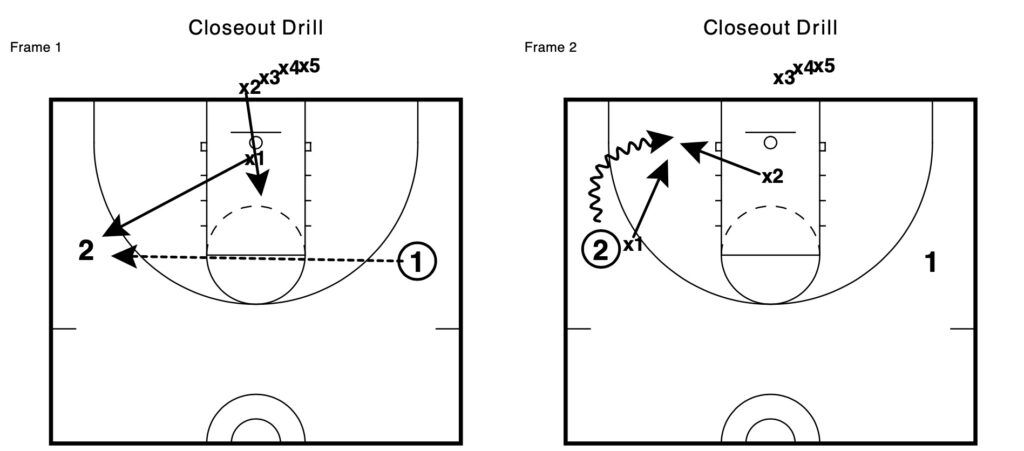
The first basketball practice drill that holds a great deal of value is a basic close out drill. This drill should be a regular for any team playing man-to-man defense. In addition, this drill aids in the instruction of help-side defense.
In this drill, two players start on the floor, occupying the wings. The defenders wait in a line beneath the rim and one positions himself in the “help side” spot in the lane. The drill begins with a skip pass from one wing to the other. The defender is expected to run from his help side position to close out on the shooter.
This drill can use a coach as the passer, or rotate players into that position. Coaches should emphasize defensive placement and positioning when integrating this drill. The close out defender should not over-run the shooter, but stop just before with one hand up.
This drill can be altered to force the shooter to drive baseline. The drill can incorporate another defender at that point, who also moves into help side positioning.
Basketball Practice Drills: DeMatha Finishing Drill
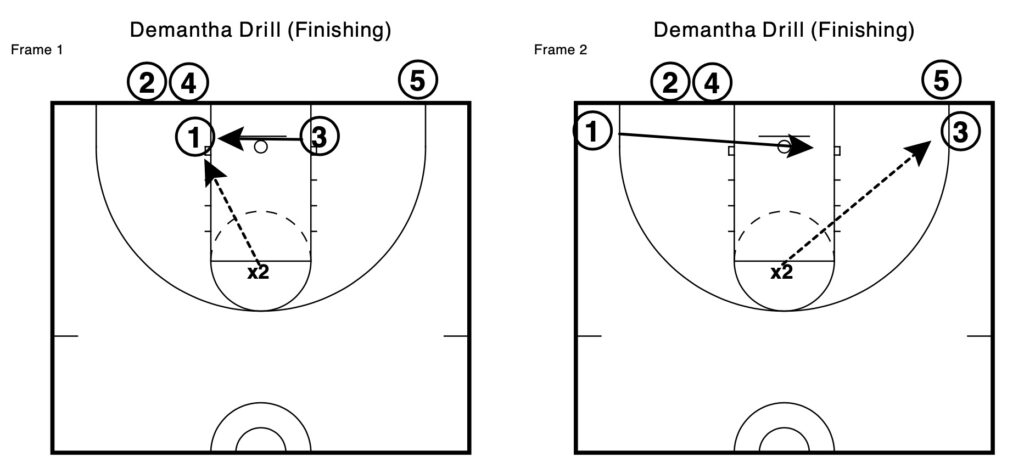
The next of Coach Steger’s favorite basketball practice drills is the DeMatha Finishing drill. This drill can be particularly valuable as both a practice drill and as a pregame warmup drill.
This drill pits two players against one another in a simple clash of offense and defense. It’s a high-impact, fast-paced drill where the offensive player attacks the basket and the trailing defender needs to recover. The drill features two lines and usually a coach for passing. Players can stand in for the coaches as passers if need be.
The drill itself can be situated in a number of different spots on the floor. Where the drill starts can be dictated by the coach and what the team needs are.
The drill itself is simple. The passer feeds the offensive player, who must finish at the rim from their starting point. The offensive player can try a dunk or layup. The defender, meanwhile, must contest the shot as best they can. Physical play can be encouraged for the defense to help the offense improve finishing through contact.
So much goes into winning and losing basketball games. Coaches and teams prepare to the best of their ability, but sometimes the ball bounces in the other team’s favor. Wins remain joyous, while losses hurt for days. Coaches have a number of elements to consider in this regard.
Winning and Losing Basketball Games: The Winning Side
First 3 Quarters
Nothing should change strategically through the first three quarters, regardless of the lead size. The only change worth contemplating would be a slight shift in gears emotionally. Specifically, addressing any play or conduct that is only taking place because of the lopsided score. These play or conduct could either create bad habits in competitive games to come, or provide obvious motivation for future matchups against the same opponent.
Composure and Discipline
Avoid disrespecting or embarrassing your opponent at all costs. These mistakes in professionalism might inspire a comeback in the current game, regardless of how improbable. They might fuel future inspiration for many years to come, and possibly a lifetime rivalry.
Tim Hardaway once said that talking trash when the game is “nip/tuck” or when the outcome has yet to be decided, is completely respectable. However, talking trash when the outcome of the game has long since been decided, is 100 percent disrespectful. That’s because the main objective of winning has already been achieved.
Winning and Losing Basketball Games: The Losing Side
I can vividly picture the well-known TV Commercial Character “Captain Obvious” saying that being blown out in any sport is not fun. Thanks Captain Obvious. Although that is the truth, there’s actually a number of positive things that can come from being on the losing side of a blowout.
What To Take With You
A big one is being reminded of how hard winning really is. More importantly, how much consistent hard works it takes to win or even be competitive against today’s level of size and talent. How we apply these reminders to our team going forward makes the biggest difference. Physical, mental, emotional, and attitude adjustments must all be made at some point in the process to apply what we learn in the most humbling of defeats.
Many positives can actually occur while the blowout is still taking place. A great example is the freedom a blowout provides to give unproven players a chance to get some well needed playing time. They also provide time to experiment with new lineup combinations. The most important piece of a blowout for a team to take with them, is the memory of the blowout itself.
Embrace the carry-over, and every emotion that comes with it, good or bad. Mark it on the calendar, write it on the wall, save the tape, and don’t ever forget the feeling. Let every single second of that embarrassment be a driving force for future success. One of the greatest motivations for the joy of winning, is never wanting to feel the pain of losing ever again. Of course, that pain is just one part of the overall improvement process, but it’s a great place to start.
One of the best feelings in sports is being on the right side of a blowout. The team is on cruise control, smiles abound from ear to ear, and all seems to be right with the world. But one of the worst feelings is being on the wrong side of a basketball blowout.
Basketball Blowout
Perhaps what makes being on the right side of a basketball blowout feel so powerful is the remembrance of how equally powerful the opposite feelings can be on the other bench. Hence, one of the worst feelings in sports is being on the wrong side of a blowout. The mind tries to assess the damage, and quickly produce a potential comeback strategy.
Meanwhile, with every passing second, the body takes a little longer to engage in the action because win probability has decreased so drastically. Motivation becomes increasingly harder to muster, and as the clock ticks away, the thoughts of most every player and coach turn from salvaging the present, to future revenge.
There’s far more to be played for in a blowout than just the final outcome. Seeds planted for future strategy and motivation. It teaches valuable lessons in professionalism that can often be the difference between winning and losing long-term.
The best teams are not only the teams that know how to win, but know how to win best.
Composure and Discipline
It’s very important for every successful team to be memorable. The key remains being memorable for the right reasons, not the wrong ones. Your opponent should only remember you for general things, like tough defense, team speed, or overall intensity. This will always be in their thoughts and preparation, but not likely to be an emotional focal point.
However, when your opponent remembers specific disrespectful moments, they will be much more likely to keep those memories fresh in their minds, and make them an emotional focal point for all future matchups against you.
This means that by consistently being unprofessional and disrespectful, especially in blowouts, your team could very well be freely providing enough motivation to inferior teams you’ve already beaten to one day turn the tables and finally beat you. Every season, teams with terrible records some how pull off a major upset against elite teams. Many of these scenarios occur because the inferior team had circled that particular game “Super Bowl” so to speak, based on a sour taste in their mouth from a past matchup.
4th Quarter and Finishing Respectfully
The best way for good teams and great teams to avoid this type of revenge situation each year is to finish every game respectfully, especially blowouts! Whenever the outcome of a game has long been decided. Take a page from football and run the ball until the clock runs out. All but abandoning the air attack, in order to finish a blowout respectfully. Of course, the basketball equivalent would be to walk the ball instead of run it, and eventually take the air out of the 3-point attack. Late 3-pointers can often be a source of great contentment amongst teams that are being blown out. It’s always best to simply finish the game quietly and respectfully, shake hands, and be on your way.
The TeachHoops.com community connects coaches throughout the nation and all over the world. In this basketball coaching interview, Coach Collins connects with Coach Marc Skelton to discuss his basketball journey and his approach to the game.
Coaching Interview: Marc Skelton
Marc Skelton is a former all-state basketball guard from Derry, New Hampshire. He graduated from Northeastern University, then served two years in the Peace Corps in Moldova. Skelton holds a master’s degree in education and Russian studies from Columbia University.
Coaching Interview: March Skelton’s Favorite Drill
Coach Skelton reveals in this coaching interview that his favorite drill one he calls “Popeye.” In this drill, a lone shooter spends at least one minute attempting to find the right angle for a shot that only touches the backboard and net. After a set amount of time, the shooter switches sides.
The drill continues with a dribble progression from there. The shooter uses a ball fake, then attacks with the dribble. The shooter is seeking the same “Popeye” shot off the dribble that they’d found in the stationary portion of the drill.
Coaches always need to consider data when evaluating their team’s latest performance. That data often instructs what the focus might be for the next practice. But any given basketball game provides hundreds of potential data points. These contests also vary wildly given external and uncontrollable factors. So here’s a look at 10 Ways to Evaluate a Basketball Game.
10 Ways to Evaluate a Basketball Game
Turnover Margin
Rebounding Margin
Field Goal Attempts
Shooting Percentage
Free Throw Attempts
Defensive Effectiveness
3-Point Game
Floor Game
Assist Margin
Momentum
The Breakdown
These 10 ways to evaluate a basketball game may seem arbitrary but they each focus on specific production.
Turnover margin and rebounding margin both indicate how well your team is controlling the basketball. Naturally, your team wants to limit turnovers on offense and leverage turnovers on defense. The same is true with rebounding. If your team is securing more missed shots, then your team has more opportunities to score.
Tracking those scoring opportunities are important as well. Considering no team will ever make every single shot it takes, having more total shots shifts the odds in your team’s favor. However, not all shot attempts are created equal. Your team should focus on quality shots.
Offense
Having quality shot attempts will improve your team’s field goal percentage. This efficiency stat stands as a key market for in-game success. Furthermore, your team should be look to leverage your best shooter while minimizing the weakest ones.
Free Throw Attempts stand among the highest percentage shots available, so piling up those tries are key. But it’s not enough to get the attempts, great teams make their free throws at a high clip.
Defense
For defensive effectiveness, your team should look to limit the opponent’s scoring opportunities. What’s more, your defense should make it a goal to limit opposing players to no more than 10-15 points.
The three-point game stands as an opportunity to leverage effective offensive play. Look to get your best distance shooters open shots while preventing the opposing team from similar opportunities. Your defense should force opposing shooters into creating their own offense rather than standing still and hoisting from deep.
Your team’s floor game consists of getting loose balls, 50-50 balls, taking charges, saving the ball, etc. These moments can be hidden on a traditional stat sheet, but they create additional opportunities for the team.
The team should always look to help each other and create offensive opportunities for teammates. Creating those opportunities stresses opposing defenses. Likewise, keeping the opposing team from creating a similar offensive flow hurts their rhythm on that end as well.
And each of these builds to swinging the game’s momentum in your favor.
The internet holds a seemingly unlimited supply of resources for basketball players and coaches. But in an effort to gain mastery of the sport, players and coaches might need to turn to unlikely sources of information.
Basketball Mastery
LEVEL 1: COGNITIVE MASTERY
I see this all the time in my math classroom. A student will see or hear something and they will think that they mastered it. But in reality, understanding is only the first step toward mastery. You have seen it with your players. ” I got this coach” but when they try it in a game or practice it does not work. It takes repetition and working on those skills to really understand your body movements. “Repetition is the mother of skill”
LEVEL 2 OF MASTERY: EMOTIONAL MASTERY
“Emotional mastery is where you start linking consequences and doing. You act on what you know instead of just know it. When you add emotion like pain or pleasure to repetition, the link becomes stronger and the action more automatic”. For example if your player does a action ( IN my world its a turnover )….They are going to get a negative reaction from my entire coaching staff. Pretty soon, they know not to turn the ball over.
Now, apply this concept to your team. Maybe you kept the wrong player, but you ignored what your instincts tried to tell you. What happened ? I bet you had enough pain from that experience that you think more carefully the next time you pick a team?. “But even if you’ve been burned once, does that mean you never get burned again? No. People repeat the same mistakes over and over because they haven’t yet associated enough pain with the problem, which holds them back from reaching the last level of mastery: physical mastery.”
LEVEL 3 MASTERY: PHYSICAL MASTERY
“With enough repetition, enough emotion, we can get to physical mastery Physical mastery, you don’t have to think about it, you just do it. It’s automatic. No extra effort required. This is the level of true mastery”.
We have all been there on the court when we just play the game and everything comes easily…You do not have to think about setting the screen and rolling to the basket is has become second nature. It is our goal as coaches to get this level. Where we have coached enough, felt the ups and downs, and just know what to do for our teams.


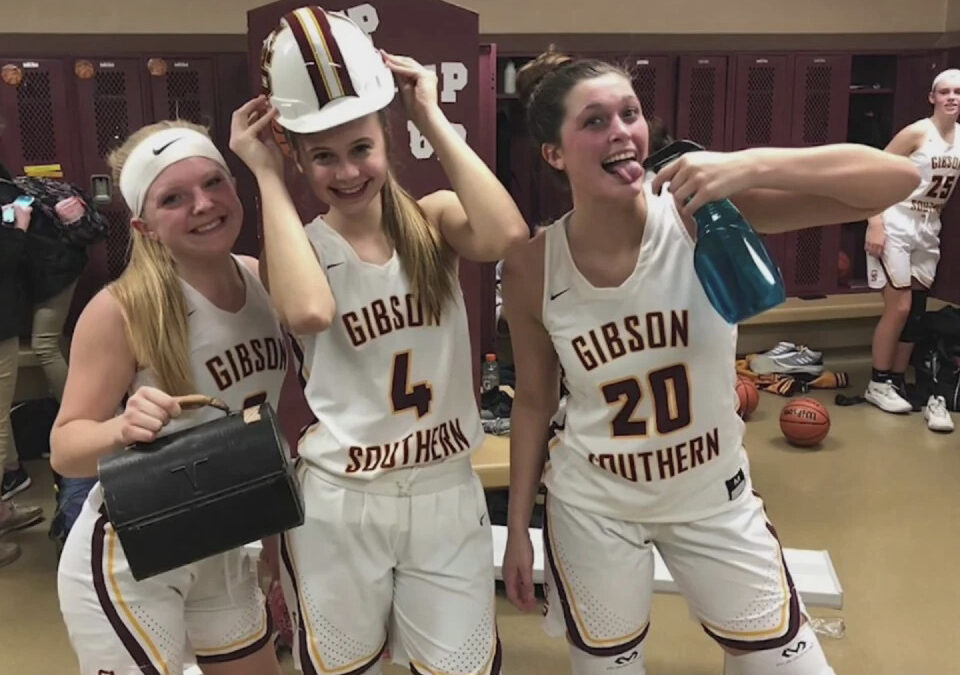
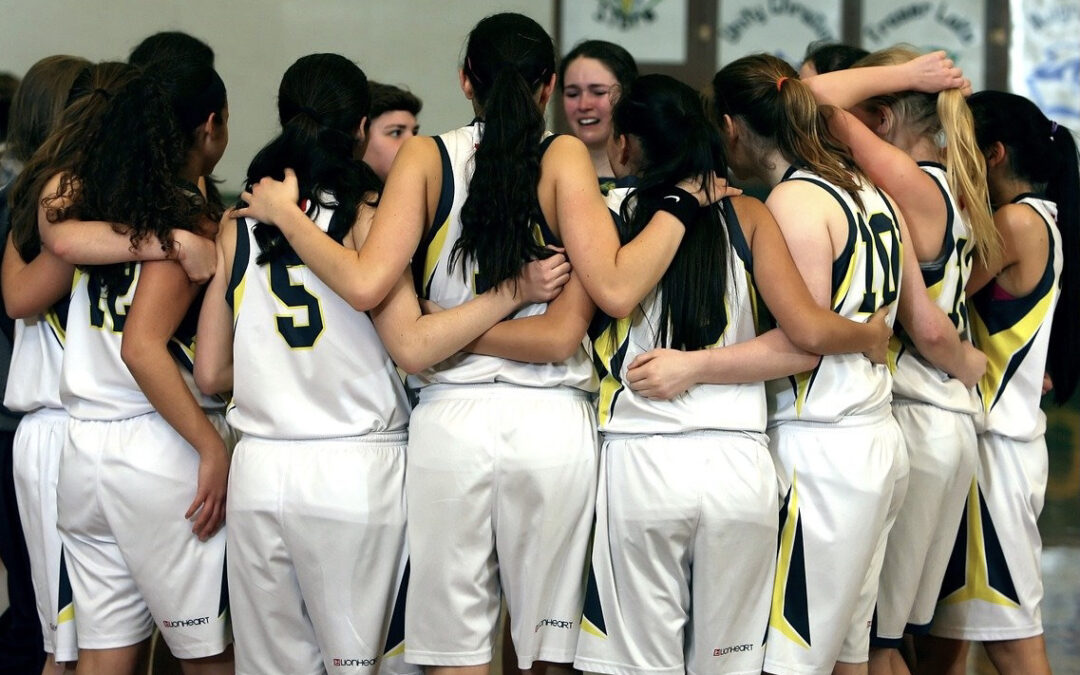

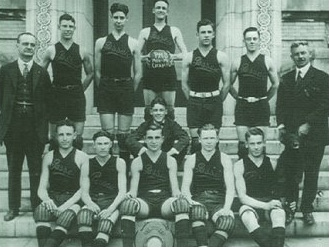
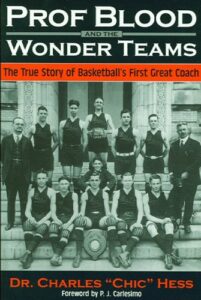 Few basketball purists in California are aware of this first wizard of the hardwood. “Prof” was a shortened version of Professor. It was the name his players and students called him, but they spoke it reverently. Passaic High School’s Grey Thatched Wizard was known for his all-around coaching acumen. His teams enjoyed six undefeated seasons, and during another season, his team lost one game. His truncated stay at Passaic High School was a nonpareil 188-1. Furthermore, his teams would have undoubtedly won many more if jealous administrators and school board members hadn’t interfered.
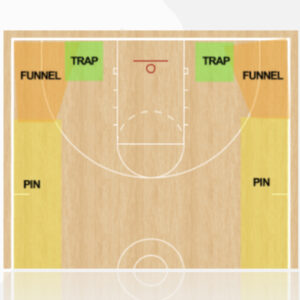 The
The 
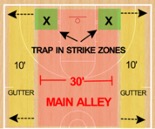 1. Pin the ball on the sideline