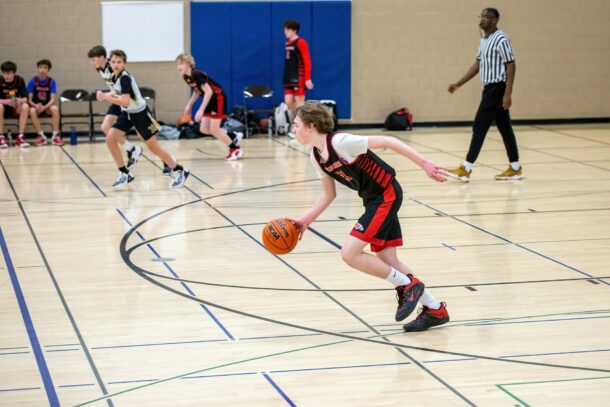
Summer stands out as one of most integral points for any basketball program from year to year. This stretch of time allows for both individual and team-wide development, depending upon your set up. No matter if you’re participating in summer basketball team camps or simply conducting workouts, giving your players specific summer basketball development drills will make all the difference come next season.
However, like teams, not all developmental drills are created equal. Coaches need to scale the drills to optimize the success for their players. Provide your team with different phases to progress through as the summer moves on, and this will allow your basketball players to maximize these developmental drills.
Summer Basketball Individual Development Drills: The Basics
The first phase of your summer basketball development drills should address the basic skills your players need to master. This set of exercises remains particularly useful for youth basketball teams, especially those with younger players just getting into the sport. The drills here help players with the familiarization of necessary skills for competitive play. (Court length is 94 feet from baseline to baseline.)
Full Court, Right-handed Dribble
You should go down go down and back the court without losing control once before switching to the next drill. If you lose control, start over. Practice maintaining control, balance and stability in dribbling.
Full Court, Left-handed Dribble
You should go down go down and back the court without losing control once before switching to the next drill. If you lose control, start over. Practice maintaining control, balance and stability in dribbling.
One-handed layups, right side
You should make at least 70 percent before finishing. Don’t run for these layups, stand under the basket and use the backboard. This is a variation of the Mikan Drill.
One-handed layups, left side
You should make at least 60 percent. Don’t run for these layups, stand under the basket and use the backboard.
One-handed form shooting
Start within 2-3 feet of the basket standing in the paint. Practice same form every shot. Once you’ve made three in a row, take one step back, and do the same process. Must make three in a row to move back. Continue until you reach the free throw line.
Free Throws
Complete the same pre-shooting routine every time. Take a deep breath before you shoot and don’t move over the line. Start with 20 free throws and keep track of how many you make.
Summer Basketball Individual Development Drills: Intermediate Work
The next phase of your summer basketball development drills should up the skill-level necessary to complete each exercise. This intermediate work stands to sharpen each player’s skill if completed correctly and consistently.
Full Court, Crossover Dribble
You should go down go down and back, using a crossover dribble to switch hands every two dribbles, without losing control once before moving on to the next drill. If you lose control, start over. Practice maintaining control, balance and stability in dribbling.
Wing Layups
Start from the three-point line and complete slow, half, and full speed layups where you finish under the basket. From the right side, make at least 70 percent of your shots. From the left, at least 60 percent. Use the backboard with each layup attempt.
Elbow Shooting
Start on the right side, free throw line extended. Similar to the form shooting drill from the basics phase, practice same form every shot. Once you’ve made three in a row, shift to the left side and do the same process. Add a set number for completion.
Spot Shooting
Find a spot on the court within the three-point arc. Start 8-10 feet away from that spot, dribble quickly to it, pull up and shoot. Focus on stopping and shooting with good form. Complete a walk through the first couple of times if necessary. Do this for the same spot at least 15 times and keep track of how many shot you make.
Free Throws
Complete the same pre-shooting routine every time. Take a deep breath before you shoot and don’t move over the line. Start with 20 free throws and keep track of how many you make.
Individual Development Drills Progression
These summer basketball development drills can be completed both individually or within a team setting. The beauty of these basic and intermediate exercises is they can be incorporated into team workouts or players can complete them on their own at a neighborhood park or with at their basketball hoop at home.
Over the summer, players should look to complete these drills at least five times a week, unless they’re involved in other sports. But even if a player is participating in summer training for another sport, they should crave out time to complete these summer basketball development drills so as to not fall behind.
A well-conditioned team is a team that has an opportunity for great success on the basketball court. To become this kind of team though, basketball conditioning must take place. There are a variety of ways to do this: sprints, distance running, tough drills to improve game conditioning, or a combination of the previously mentioned activities.
While we do complete longer distance running, that is something we do the least amount of. That’s because when playing basketball, rarely do you jog or run for a really long distance. We prefer to implement more conditioning through wind sprints and drills that promote conditioning. Below are 3 wind sprint drills that are different from doing basic down/back line touches or suicides.
Basketball Conditioning: the Basketball Mile
This is a great conditioning drill that we got from PGC Basketball. Basketball is divided into four quarters, so the basketball mile is divided into four quarters. The premise behind the basketball mile is the players do run a mile. But they do it in shorter spurts/springs to mimic basketball actions.
To successfully complete this, you need a running clock. At each interval on the clock, coaches must hit the buzzer and players start. The faster they run in the allotted time, the longer rest they get. The slower they run in the allotted time, the shorter amount of rest they receive. A table below shows the breakdown of basketball mile.
Basketball Conditioning: Champion Runs
This is a run that I ran in my high school under my coach Andy Elkins. It is a long sprint where if you don’t give 100 percent effort, it is impossible to complete.
The Champion Run consists of the following: 1 valley (see note in intro paragraph) followed by 5 full court touches (full court touch= start at 1 baseline and sprint to opposite baseline is 1). Coach Elkins always said the beauty of the Champion Run is that you will end up on the opposite baseline from where you started, so you might as well run two Champion Runs!
We do these runs when we don’t make free throws like we should, commit too many turnovers, or for just some good old-fashioned conditioning. We time these. Boys, especially guards and wings, should complete a Champion Run in the 1:00-1:07 range. Girl basketball players should complete a Champion Run in the 1:10-1:16 range.
Basketball Conditioning: the Riley Test
This is a conditioning test from the Xavier Newsletter #198. This is a great conditioning exercise because it is tough but achievable for players to accomplish.
The Riley Test is five “down and back” runs. The players start on the baseline and must run those five down and back sprints. It is best to group your players by position. After each set the players get a 2:30 break.
The goal for high school boys has always been anywhere from 1:05-1:10 per set and for the girls has been 1:10-1:20. This can decrease as you go throughout the season or get more conditioned. We always started with 3 sets but never did more than 6 sets.
Getting good looks at the basket remains the primary focus of most offenses. Although there’s value in developing intricate offensive sets, sometimes in a close basketball game, getting a quick hitter releases the pressure and allows your team to thrive. A good basketball playbook features a number of options across a variety of situations, and having a consistent quick hitter is an absolute must. Sometimes, getting your best basketball players going downhill toward the basket with a pistol action helps create easy looks.
This is especially true as a season winds down or teams begin their postseason tournaments. You’re team’s already been well-scouted at this point, and you may have matched up with your opponents more than once. So it’s important to keep your opponents on their toes with a fresh playbook. The tricky part remains how to add to our repertoire without providing an extra burden on our players.
Enter the Basketball Quick Hitter series. These simple sets afford any offense release valves that players learn in a matter of minutes.
The basketball pistol play refers to an early offense action between the point guard and a wing player, with a post player at the top of the arc. The two main Pistol options to start a play are a dribble handoff and a pick and roll. In the Pistol action, the offense attempts to catch the defense before it sets in hopes to find optimal mismatches or blown coverage by a lack of defensive rotation, which makes it one of the best basketball quick hitters.
The sequence of this play begins with your point guard hitting ahead quickly to the wing. From there, Player 1 follows his pass and sprints into a dribble handoff with Player 2. As this pistol action develops, Player 4 sets a screen for Player 3 on the weak side. 4 rolls to the basket while 3 slips to the corner.
Player 1 needs to sprint up the basketball court into this pistol action. Completing the dribble handoff creates the quick-hitter here, because 1 is now going downhill to the basket at full speed.
If the defense covers this initial pistol action, the secondary scoring option unfolds for your basketball team. Player 2 cuts off a flare screen from Player 5. Player 1 on the wing has two options at this point: a pass to Player 2, who will have either a shot or a drive.
After setting the flare screen, Player 5 dives toward the hoop, drawing the defense down with him. While all that action is going on, 4 and 3 can screen for each other on the weak side to keep the defense honest.
Getting good looks at the basket remains the primary focus of most offenses. Although there’s value in developing intricate offensive sets, sometimes in a close basketball game, getting a quick hitter releases the pressure and allows your team to thrive. A good basketball playbook features a number of options across a variety of situations, and having a consistent quick hitter is an absolute must. Sometimes, a simple quick backdoor cut provides all the offense you need.
This is especially true as a season winds down or teams begin their postseason tournaments. You’re team’s already been well-scouted at this point, and you may have matched up with your opponents more than once. So it’s important to keep your opponents on their toes with a fresh playbook. The tricky part remains how to add to our repertoire without providing an extra burden on our players.
Enter the Basketball Quick Hitter series. These simple sets afford any offense release valves that players learn in a matter of minutes.
Basketball Quick Hitter: Quick Backdoor Cut
This quick hitter generates a great, quick backdoor cut opportunity for your offense. The play requires precise timing to ensure maximum efficiency. You’ll want to design this play with the player you want shooting the ball on the left wing.
The play opens with a fairly traditional set up, with both bigs starting down low and the shooters occupying the wings. The point guard brings up the ball, and as he crosses half court, the action of this quick hitter begins. The wings exchange positions on the floor, with Player 3 starting the movement and Player 2 waiting until 3 passes the right elbow. Player 3 initiating the movement draws the eyes of the defense away from Player 2.
Once the wings have exchanged, the bigs cut up to the elbows. The point guard, Player 1, can lead the defense to the left with his dribble before an entry bounce pass to Player 5 at the elbow. Player 3 clears from the wing and floats to the weak side corner at this point.
This is where the quick-hitting element of this quick backdoor cut takes place. As Player 5 receives the ball at the elbow, Player 2 starts his quick backdoor cut. Player 2 can set up his defender with fake or hard step toward the top of the key before his backdoor cut. 5 looks for 2 on the cut. 5 should use his peripheral vision to read the play.
As the pass happens, Player 4 sets a flare screen for Player 1, who cuts to the left wing. Should the defense cover Player 2’s cut, 5 should look to skip the ball to 1 on the wing. This secondary action keeps multiple actions occupying the defense.
Getting good looks at the basket remains the primary focus of most offenses. Although there’s value in developing intricate offensive sets, sometimes in a close basketball game, getting a quick hitter releases the pressure and allows your team to thrive. A good basketball playbook features a number of options across a variety of situations, and having a consistent quick hitter is an absolute must.
This is especially true as a season winds down or teams begin their postseason tournaments. You’re team’s already been well-scouted at this point, and you may have matched up with your opponents more than once. So it’s important to keep your opponents on their toes with a fresh playbook. The tricky part remains how to add to our repertoire without providing an extra burden on our players.
Enter the Basketball Quick Hitter series. These simple sets afford any offense release valves that players learn in a matter of minutes.
The play begins with your point guard coming up the left side of the basketball court, and Player 5, the quick hitter target, on the opposite block. 1 uses a high-ball screen from Player 4. As that happens, 5 comes across to screen for Player 3.
After the ball screen, 4 pauses at the top of the key. 1 begins a dribble penetration and looks for Player 3, who cut to the right corner. Player 5 acts like he’s setting a cross-screen near the elbow as Player 4 clears to the wing. 1 makes the pass to 3 in the corner.
From there, Player 2 sets a cross screen for Player 5. Player 3 looks for 5 as he cuts to the hoop. It’s important that Player 5 cuts to the rim and not the opposite block since this is a basketball quick hitter.
If 2 sets a solid cross screen, 5 should be open for a clean touch down low and a layup. Player 3’s pass must hit 5 in the hands to minimize the time needed to get the shot up.
If you have a left-handed post player, you can reverse this play. The important part of this play is you want to have the player that screens across for the post (2 in this play) to be a major scoring threat. You want the defense to respect this player and not cheat off onto your post.
Coaches Steve Collins and Bill Flitter have joined forces for a new basketball podcast: Coaching Youth Hoops! This latest venture joins Coach Collins’ portfolio of popular podcasts on coaching basketball, both youth hoops and high school. These coaches bring a wealth of knowledge from their experiences in the game of basketball, developing talented players across the spectrum of talent levels.
If you’re new to coaching youth hoops, or perhaps an experienced coach looking to cut through the noise, this is the podcast for you! Coach Steve and Coach Bill will provide weekly episodes to simply your processes. They’ll help you avoid wasting time and money learning to coach basketball players from as young as kindergarten.
Goal of the Podcast
This podcast is designed to help volunteer coaches, or coaches getting a small stipend, that jump in and try to figure it out in their spare time. Join these seasoned youth basketball coaches as they give you the blueprint you need to succeed on and off the court. In each episode, you’ll discover easy-to-implement tips and techniques that you can apply to your next practice.
As Coach Flitter says in the first the first episode:
“I want to help one million kids learn the game of basketball. But how do you do that? By helping the coaches.”
The episodes for the show will drop on Tuesday mornings. They’re designed to educate coaches from rec leagues all the way to competitive youth leagues. It doesn’t matter if you have a team of third graders who can’t dribble, or a group of eighth graders being recruited. You’ll find something helpful here.
Check out the dedicated Facebook group right now. As the podcast grows, you’ll find downloadable resources and deep dives into the nitty-gritty of coaching youth basketball. Subscribe today!
At some point in your career, if not your season, a situation will arise where you are down three points with two free throws on tap. Or, you could be down two points with one free throw. In these situations, you’ll need a missed free throw play for a chance to extend or win the game.
The question is: Are you ready for this situation? Is this a situation you have worked on in practice? While this does not need to be a huge part of your practice planning, it is something that should find a place. This is especially true as you head into your postseason tournament.
Below is a play that we implement each season called Desperado. In it, we work on a missed free throw play to give us a chance to tie or maybe even win the game! This is not something we work on a ton, but we will sprinkle it in at times throughout the season to ensure we are ready for this situation.
Missed Free Throw Play: Desperado
Situation: A free throw shooter MUST miss a free throw at end of a game.
Process:
Run this on side of shooter’s arm (R handed shooter= R side, L handed shooter= L side).
Shooter must line their shooting hand up with the vertical side of the backboard square.
Shooter will shoot a high a high arching shot to ball banks off backboard and onto top of rim. This will cause a long rebound for offensive rebounder on 2nd block.
If down 2, rebounder gets it and attempts a shot quickly.
If down 3, rebounder either boards and passes out or tips it out to shooter for 3.
Shooter will go to top of key and 1 guard at top will go to ball side corner while other will got to ball side wing.
The two players at the top need to start moving on the flight of the ball but need to be sure not to cross the top of the key extended until ball is released to avoid a violation. Once ball is released, these players must sprint to their spots.
We like to overload the rebounding side to give us multiple looks for a shot.
In addition to running this play in a situation, you need to find time to allow all of your players to work on missing a free throw in this way. In addition to practicing missing the free throw, practice players grabbing the rebounding for a quick putback or receiving a tip back for a 3 point shot. Just make sure you are prepared for all situations!
Kyle Brasher Gibson Southern High School
Social Studies Teacher
Lady Titans Basketball Coach
As coaches, it is vital that we check in our players frequently, but especially at certain points during the season. We schedule three basketball team meetings with our players throughout the basketball season. These go beyond just the simple evaluation of a single basketball game. The check-ins allow us to connect with our players and make expectations clear. It provides a forum for open communication, which is always important.
Basketball Team Meetings
The first meeting is the Beginning of Basketball Season Team Meeting. We will always have a beginning of the season meeting where we inform them of what team they will currently be on and what their role will be. This meeting allows us to make our expectations clear, so the players understand how best to improve their games and help the team succeed.
Our second sit down for a team meeting comes in the middle of the basketball season. During this meeting, we review the team and player performances thus far. By the middle of the season, we have a decent sample size for statistics, so that data is helpful. This meeting will consist of going over their stats. We discuss what they’re doing well and areas to make sure they are focusing on for improvement going into the second half of the season.
The final basketball team meeting of the season comes after we’ve completed our schedule. This meeting consists of a season-long review, going over what went well and what the next steps in development are. This post-season meeting provides a launching point for our team’s off-season work.
The Post-Season Team Meeting
The post-season team meeting provides coaches and players an opportunity to reflect on the season. You can touch on the highs and lows of the season, both the good and the bad. This is particularly useful for your returning athletes Improving as individuals and as a collective unit needs to be the emphasis for your off-season plans.
It is important to motivate players about where they currently are and hope to be over the upcoming off-season to prepare for next season. As coaches, we must engage in this dialogue and realize the important role we play. We need to make sure our players can state specific goals and ambitions they hope to achieve to become the best basketball player they can be.
Goals of “getting better,” “getting shots up,” and “getting into the gym” just will not cut it. We need our players to be specific about their goals and ambitions. Think of goals like:
“I want to make 10,000 shots this off-season,”
“spend 3 hours a week working on ball handling,” or
“increase my squat max by 35 pounds.”
These are tangible, specific goals that can be measured. The more specific we can be with our athletes and make them the main character in their story the better player they will become and the bigger impact they will have on our program.
Post-Season Basketball Team Meeting Handouts
In addition to thinking about the physical side of the game, we must consider the mental and leadership side of our players as well. In these basketball team meetings, we strive to get our players reading leadership material. Anything from Jon Gordon will resonate with any high school athletes. Some of the best we have given include “The Energy Bus“, “The Hard Hat“, and “Positive Dog“. We want to make sure we are molding and building our future leaders to help take our program to the next level.
With the reading of the book, we also include a short assignment for them to complete as well to help in their learning of leadership qualities.
Handout 1- Off-season player handout.
We will go through this chart with each player, fill it out together, and they get a copy to take home with them.
Player:
22/23 Grade:
Spring:
3 Success from Season:
3 Areas of Improvement:
What do you want from basketball?
Plan to accomplish?
Handout 2– Spring Leadership Book Assignment.
This is a short assignment they can complete over the leadership reading of their choice.
Assignment: In a 1 page double-spaced paper, answer the following 2 questions:
Summarize the book. What are important lessons/themes you learned from this book? Be sure to provide some examples.
How can you take what you have learned from this book and apply it to both your teams and life at large? Be sure to provide 3 examples of how you plan on applying these principles in your life.
We are anxious to see what you learn from this reading!
At the end of the day, we need to make sure our players are improving as much as possible. We need to be their guide on their journey and make them become the main character in their story.
The season is over and spring workouts are starting to commence. It’s now time to start thinking about your Summer Basketball plans. As your players ease into their time off from school, summer stands out as the perfect opportunity to improve their game. It’s never too early to prep for next season!
As you prepare for the next season, it’s important to remember every other team will be doing the same. Communicate to your players that teams are planning and working towards defeating them on the floor. It’s up to them to be ready for the next challenge. Urge them not to wait until the next school year. Definitely tell them not to wait until September to physically prepare. Impress upon them the value of being the person that’s going to work harder than everyone else to improve. Your journey starts with summer basketball prep, so ignore the noise, embrace the grind, and love the challenge!
Consider these elements to help streamline the summer basketball prep work and to help have a great off-season.
Returning Opponent Data
Our staff loves to go through our upcoming opponents for next season and start gathering data on them. Summer is a great time to start this basketball scouting work. We look at their previous season record, returning players and starters. We also look at offensive average and defensive average.
By doing this, we consider what the strengths and weaknesses of our opponents are. This helps us think about the main question of our program: What do we have to do to be better than our opponents?
The answer to that question will help dictate what we focus on starting in our summer basketball practices.
Promote Basketball Summer Camp
The youth/feeder program is the lifeline of any successful high school program. It is important to have these upcoming athletes coming into your gym.
There are a variety of ways to run a summer basketball camp, but the most important thing is to find one that best fits you and your players schedules. With this ever-changing world, it is important to have all hands on deck. If your school requires service hours for their students, using your players as counselors for the youth summer basketball camp might fill that graduation requirement for them. It also keeps them busy and in the gym!
After locking in a date for your camp, promote it! Get into the schools to talk to your future campers, create a YouTube video, promote on social media, do whatever it takes to get as many people in the gym as possible.
Schedule Summer Basketball Games & Practices
This is something that needs to be done with your high school athletes, but you may want to even consider doing practices and games with your middle school athletes, too. Communication is key at either level, especially with parents. Make your expectations clear for the involvement with summer basketball work in your program.
Chat with your returning players about their schedules, get a feel on where they’d like to play games, and find ways to make these as fun but as cost effective as possible. Find local games against your local high school opponents but also consider an out-of-town trip to bring about some extra bonding with your team.
In addition to practicing with your high school players, find time to get into the gym with your middle school players, too. They can start to hear your voice, hear your philosophies, and start prepping them to be part of the high school program.
Overnight Summer Basketball Camp Trip
If possible, find a team summer basketball camp that is out of town. Get a hotel and find some activities to enjoy as a team. Take your players to cities they have never been to. Partake in activities they’ve never done (escape rooms, billiards, bowling, etc.). Eat at restaurants they haven’t been to, and play games against opponents they otherwise may never see.
These activities provide valuable team building opportunities that will strengthen the bonds between players and coaches. Summer basketball trips often create life-long friendships and memories that your players will cherish.
If you have some players with aspirations of attending college to play basketball, find schools they may be interested in attending after high school.
10K Shot Club
Motivate your players to get shots up on their own. As all high school coaches know, you can never have enough shooting. Encourage your players to log their shot attempts and track this. Reward them in the fall with prizes, recognition, food, whatever it may be. Do a shooting program not only for your high school athletes but your feeder athletes, too.
The Box Set offense in basketball stands out as a popular offense because it is purposefully designed to get easy buckets. This offense requires precise movement and timing, but when properly executed, the box set leads to scoring opportunities. These sets incorporate both on-ball and off-ball screens, and can be deployed against both man-to-man and zone defenses. This box set uses a UCLA cut for a quick-hitting first action.
Some of the most famous coaches throughout the history of basketball, including Chuck Daly, Mike Krzyzewski, and Dean Smith, used variations of the box set offense at different points in their careers. Box allows the ball to flow into the hands of your best playmakers in sports on the floor where they will be successful.
Box Set Offense: UCLA Cut
Unlike the Box Set Isolation play, this set uses multiple actions to create good shots. This set, like the others in the Box Set Series, begins with the same alignment. This helps prevent opposing defenses from immediately recognizing the play. Having the same set up also makes scouting your team more difficult.
This box set is designed purposefully as a quick-hitter with the initial UCLA cut. If the opposing defense covers up that cut, the second action of this play creates a pick-and-roll opportunity on the strong side. It also adds a weak side stagger screen to a potential jump shot. This play is great if you want to isolate a post defender on a ball screen and/or if you have a player that is great coming off a ball screen. This play is very effective because it keeps both sides of the floor busy to really allow that ball screen to get as open of a look as possible, either on the drive or roll.
Box Set UCLA Progression
This set starts with the same alignment as the Box Set Three-Pointer play, with your team’s two big men occupying the elbows. Your wing players, 2 and 3, start on the low blocks.
The play begins with both Player 2 and Player 3 popping to the wings. The point guard passes to the open wing. Depending upon the defensive coverage, Player 1 can pass to either wing. Another variation to this play could have Players 2 and 3 cut to the opposite wings from the low blocks.
The Box Set UCLA cut comes following the first pass. If Player 1 passes to Player 2, he cuts off an elbow screen from Player 4. 2 immediately looks at the cutter for this quick-hitter opportunity.
If the defense covers this box set’s UCLA cut, then Player immediately moves into a ball screen on the wing for Player 2. As that’s happening on one side, Player 1 uses stagger screens on the opposite wing as well.
Player 2 can attack the lane, hit Player 4 on the roll, or look to kick the Player 1 on the weak side wing. Another layer for this could see either 3 or 5 slip the screen and cut.
This play works in either direction. All the box set offense plays can easily be flipped to either side of the court and with them all starting out of the same base look. It makes scouting your set plays that much harder.
The Box Set offense in basketball stands out as a popular offense because it is purposefully designed to get easy buckets. This offense requires precise movement and timing, but when properly executed, the box set leads to scoring opportunities. These sets incorporate both on-ball and off-ball screens, and can be deployed against both man-to-man and zone defenses. The box set can also create solid low-post looks.
Some of the most famous coaches throughout the history of basketball, including Chuck Daly, Mike Krzyzewski, and Dean Smith, used variations of the box set offense at different points in their careers. Box allows the ball to flow into the hands of your best playmakers in sports on the floor where they will be successful.
Box Set Offense: Low-Post Look
Unlike the Box Set Isolation play, this set sports multiple actions to create good shots. Ideally, this set begins with the same alignment as other Box Set plays in your playbook. This helps prevent opposing defenses from immediately recognizing the play. Having the same set up also makes scouting your team more difficult.
This box set is designed purposefully to get an open low-post look for your best post player. If the opposing defense covers up that shot, the second action of this play creates an open look for your team’s best shooter. It’s imperative to stress the importance of cutting hard for both the post and the guard in this set.
Box Set Low-Post Progression
This box set play begins with the same alignment as the Box Set Three-Pointer play, with your team’s two big men occupying the elbows. Your wing players, 2 and 3, start on the low blocks.
The play starts with a series of cuts. Player 5 pops from the right elbow to the left wing and receives the initiating pass from Player 1. The point guard then cuts down to set a screen for Player 4, who curls to the top of the key. Following the screen, Player 1 cuts to the weak side wing. As this action unfolds, Player 2 cuts to the strong-side corner, and Player 3 moves from the left block to the right elbow.
The next action involves 5 reversing the ball. Player 4 receives the centering pass and reverses to Player 1 on the wing. As those passes occur, Player 3 sets a back-screen for Player 5 at the elbow. Player 5 uses that screen and cuts down the lane. Player 1 can either hit Player 5 on the cut to the basket, or once 5 establishes himself on the low-post.
The second action for this box set low-post play creates an opportunity for your team’s best shooter.
If Player 1 can’t get Player 5 the ball, the next movement begins. Player 3 and Player 4 set stagger screens on the weak side for Player 2. The shooter cuts up from the corner, curling along the three-point line.
In this box set, Player 1 can ball-fake to the low-post before passing to the shooter. Player 2 uses the stagger screens and receives the pass at the top of the key. He can either take that shot, or attack the lane. A hard dribble drive could draw Player 5’s defender, leaving the low-post open for a drop off pass.
The Box Set offense in basketball stands out as a popular offense because it is purposefully designed to get easy buckets. This offense requires precise movement and timing, but when properly executed, the box set leads to scoring opportunities. These sets incorporate both on-ball and off-ball screens, and can be deployed against both man-to-man and zone defenses. The box set can also create certain three-pointer opportunities.
Some of the most famous coaches throughout the history of basketball, including Chuck Daly, Mike Krzyzewski, and Dean Smith, used variations of the box set offense at different points in their careers. Box allows the ball to flow into the hands of your best playmakers in sports on the floor where they will be successful.
Box Set Offense: Three-Pointer
Unlike the Box Set Isolation play, this set is designed purposefully to get an open look at a three-pointer for your team’s best shooter. Ideally, this set begins with the same alignment as other Box Set plays in your playbook. This helps prevent opposing defenses from immediately recognizing the play. Having the same set up also makes scouting your team more difficult.
This box set three-pointer generates a wipe open look for your team’s best shooter when executed correctly. The most important part of this set is that the screeners must be shoulder-to-shoulder on both screens. If that happens, your shooter will be open a lot.
Box Set Three-Pointer Progression
This box set begins with your two bigs, players 4 and 5, occupying the elbows. Your two wings, players 2 and 3, start off on the low blocks.
The point guard dribbles up and the box set three-pointer play starts with player 3 popping to the wing. Player 1 passes 3 the ball and cuts to the opposite wing. As the pass takes place, 2 fills the strong-side low block vacated by 3.
Once 3 has the ball on the wing, player 5 sprints across and stands shoulder-to-shoulder with player 4 at the elbow, free throw line extended.
3 uses the double ball screen and puts pressure on the lane, with 1 spread out wide for a potential kick out. 3 can attack the basket at this point if the defense overplayed on the wing.
The box set three-pointer play’s progression continues with players 4 and 5 pivoting to set a second screen.
4 and 5 stay shoulder-to-shoulder and drop to set another double screen, this time for player 2, ideally your team’s best shooter. The key to this second screen is setting it well below the three-point line to give your shooter space behind the arc.
Player 2 uses the double screen and curls up the floor. The shooter must have his hands ready to receive. This is a catch-and-shoot opportunity.
Player 3 drives toward the land, but picks up his dribble and reverses his stance. He hits player 2 coming up following the off-ball screen.
If players 4 and 5 set their screen properly, this box set should get your best shooter a wide open look at a three-pointer. Player 1 can drop for an offensive rebound opportunity. Player 3 remains high as an outlet to reset the offense if the defense covers the shot.
The Box Set offense in basketball remains one of the more popular offenses because it is purposefully designed to get easy buckets. This offense requires precise movement and timing, but when properly executed, the box set leads to scoring opportunities. These sets incorporate both on-ball and off-ball screens, and can be deployed against both man-to-man and zone defenses. The box set can also create certain isolation opportunities.
Some of the most famous coaches throughout the history of basketball, including Chuck Daly, Mike Krzyzewski, and Dean Smith, used variations of the box set offense at different points in their careers. Box allows the ball to flow into the hands of your best playmakers in sports on the floor where they will be successful.
Box Set Offense: Isolation
Unlike the Box Set Backdoor play, this set is designed purposefully to get an isolation opportunity for your team’s best attacker. Ideally, this set begins with the same alignment as other Box Set plays in your playbook. This helps prevent opposing defenses from immediately recognizing the play. Having the same set up also makes scouting your team more difficult.
This is a great box set isolation play to get your best penetrator a cleared side of a court. The key to this play is the player that gets the ball for the isolation must make a quick move. We have always coached our players up to do a quick jab to the middle of the court and go towards the baseline side. If you have a left handed player, this play could easily be flipped to the other side.
Box Set Isolation Progression
This box set isolation play begins with the two bigs, players 4 and 5, on the left box and elbow. 2 and 3 complete the box set on the opposite side.
The point guard, player 1 in this figure, dribbles hard toward the left, stopping at the three-point line elbow-extended. 1 picks up his dribble and looks to pass.
As that action happens, player 3 sets a down screen for player 2, who is the team’s best isolation player. 2 uses the down screen and pops up to the three-point line on the weak side of the floor.
As 2 pops up to the top, player 5 slides down beside player 4 in order to set up a double-screen along the baseline.
This box set isolation play continues as player 2 cuts to the right wing.
After setting the down screen, 3 then cuts to the strong side corner. 3 uses the double-screen set by players 4 and 5 along the baseline to draw the defense.
1 can ball fake to the corner before finding 2 with a pass on the right wing. From there, 1 holds his position to flood the left side, leaving 2 to operate along the right with this opportunity.
The box set isolation design creates an open side of the floor for your team’s best attacker to create off the dribble. 2 should look to penetrate hard, knowing he has a drop off on the opposite block as well as an outlet in the weak side corner. As player 2 begins his drive, the point guard can float toward to right wing to provide his teammate with a safety valve.
The Box Set offense in basketball remains one of the more popular offenses because it is purposefully designed to get easy buckets. This offense requires precise movement and timing, but when properly executed, the box set leads to scoring opportunities. These sets incorporate both on-ball and off-ball screens, and can be deployed against both man-to-man and zone defenses.
Some of the most famous coaches throughout the history of basketball, including Chuck Daly, Mike Krzyzewski, and Dean Smith, used variations of the box set offense at different points in their careers. Box allows the ball to flow into the hands of your best playmakers in sports on the floor where they will be successful.
Box Set Offense: Backdoor Lay-Up
This play out of the box set offense is designed purposefully to create a quick and east backdoor lay-up opportunity. When facing a man-to-man defense, this set can be used once or twice a game, depending upon how disciplined the opposing defense is. The key to running this play is misdirection.
This box set offensive play begins with the two bigs, 4 and 5, on the left box and elbow. 2 and 3 complete the box set on the opposite side.
The point guard initiates the play with a hard dribble drive toward the left elbow. As he makes that move, 4 slides down to create a double screen for 3, who races to the string-side corner. As 3 makes his cut, he yells “Ball!”
While this action takes place, 2 steps back to the three-point line. 1 picks up his dribble and does a ball fake to the corner. With all eyes and flow heading toward the left, 2 executes a backdoor cut at that point. 1 hits 2 with a bounce pass as he cuts down the lane.
Box Set Offense Progression
If 2’s cut gets covered up by the defense, the progression out of this box set offense remains simple.
First, 2 must clear to the right side corner. Then, 4 sets a screen for 5, who curls into the lane. If neither of those players is open on their cuts, 3 must sprint up from the left corner to take a handoff from 1.
This variation allows the offense to flow into another set if need be, or create a scramble situation if 3 can attack an open lane.
The box set offense stands out as an adaptable set for almost any team. These plays can be quick-hitters, or designed to generate open three-point looks.
One of the benefits of using the box set offense can make scouting difficult for opposing teams. Using the same starting look with the set keeps the defense from immediately knowing the progression of the play, even if they’ve scouted well. Check back for more on the box set series.
In my coaching education workshops, I always asked coaches if they thought sports should be a fun experience for their players. Should there be fun at basketball practice? Of course, everyone said yes. So then I would make them the following offer: “If you can give me an adequate definition of ‘fun,’ I’ll sign off on your certification right now and you can leave six hours earlier than everyone else.” I made that offer for almost 15 years running and there were no winners.
Focus & Fun at Basketball Practice
Since the majority of your athletes’ time is spent in practices, it is vital that practice time be a fun, enjoyable experience. If it’s not, it’s not going to be effective. Unfortunately, some coaches feel that, because learning sports skills require discipline and focus, it’s incompatible with fun. But focus and fun are not incompatible at all.
In fact, focus is necessary for fun to occur! Just think of some of the fun experiences you’ve had in your life. You probably remember them very clearly. And that’s because you were very focused on what you were doing, who you were with, and what your surroundings were like.
It’s the same with sports. Sports are fun when three things are happening:
Kids are deeply involved in what they are doing
They feel closely connected to their “mates” (e.g., teammates, coaches, parents)
Kids feel like they are performing to the best of their ability
All three of these items require focus on the part of the athlete. And, as a coach, you can make all of these things happen in your practices and your games. There are ways to maximize your time as a coach. Here are some suggestions.
Developing Focus and Fun
Encourage your players to participate with all their senses.
For example, if you’re outside on a beautiful summer day, take a deep breath, pound your chest and say, “Don’t you just love the way the grass smells on a day like this?” If you’re poolside, you could say: “I love the ‘swoosh’ sound you guys make as you glide through the water. It’s better than therapy!”
Help your players to get to know each other better.
When everyone is pulling for each other, even the hardest drills become more enjoyable.
Focus on skill development.
Improved skills lead to feelings of competence, satisfaction, and accomplishment. These feelings, in turn, create enjoyment and fun at basketball practice.
Provide realistic challenges.
Kids learn and grow through a progressive series of challenges that are appropriate for their skill level and development.
Emphasize personal successes.
Playing well, or the feeling that a person has played well, is an essential part of the fun in sport.
Keep winning in perspective.
Being on the winning side is less important than striving to win. By striving to win, your players learn to concentrate, try hard, and be the best they can be.
Look for ways to energize kids and jazz up your practices.
Be creative. Cal Ripken saw a mannequin in a ski lodge and got the idea to use old mannequins to help kids learn to hit the cutoff man in the infield grass while practicing throws from right field. Just imagine how entertaining (and educational) it was when someone hit the mannequin in the wrong spot.
Other ways to incorporate fun into your practices might include ending a week as ”crazy socks day,” and doing fun, teamwork-oriented drills like “follow the leader.” Don’t think that just because your coach always made you run laps, you have to do the same thing to your players!
A former Hall of Fame athlete and coach, Dr. Selleck—a retired psychologist, organizational and management consultant, and sports education specialist—is the founder and director of Lead2Play, a comprehensive program that encourages youth participation in sports while promoting healthy living and the development of key life skills, such as organization, management, and team-building.
Dr. Selleck was inducted into the Stanford University Basketball Hall of Fame, the Pac-12 Hall of Honor, and named one of the “100 Most Influential Sports Educators in America” by the Institute for International Sports at the University of Rhode Island.
Incorporating team building exercises into practice has been one of the most impactful things I have done as a coach! My mission when coaching is to create an environment where everyone feels safe, valued, has a voice, and experiences joy every day! Coaches should strive to incorporate focus and fun into their basketball practices.
If you want to learn more about basketball specific principles and drills to create a championship culture, please check out my book, “Help Them Up” on Amazon.
The below exercises can be used for all team sports!
3 Practical Steps for Team Building
Question of the Day
Every day at the start of practice, we circle up. I ask if anyone has anything they want to share with the group. I have also used this time to praise someone for a good teammate moment I observed them do, had the team sing happy birthday to a team member, etc. Then, I share a question of the day or ask the team to think of one.
Everyone gets into groups of two or three and during a warmup lap and they ask each other the question. I ask them to pick a different teammate every day, so they get a chance to connect with everyone. They jog back to the circle, and I ask if anyone wants to share something they learned.
The team always enjoys learning about teammates. I have seen friendships develop through this exercise because they find commonalities about each other they previously didn’t know about.
A few examples:
What is your favorite topic to talk about and why?
What do you like to do on the weekends?
Do you have any pets? If so, how many and what are their names? (With my team, they love talking about their pets!)
What is a goal you have for today’s practice and is there anything I can do to help you with it?
What are you grateful for?
Dynamic Warm-Up
A few years ago, I attended a UConn Women’s basketball practice. It was incredible! They were in complete unison when executing their dynamic warm-up. Since that day, I have been very intentional with warming-up as a team which prevents side conversations, shows unity, and creates elite level communication!
I have my team line up on the sideline and they do the exercises to the opposite sideline. I select someone to be the leader of the day or ask for a volunteer who then energetically yells out the exercises. The team then responds in a loud and energetic tone the name of the exercise. Then the leader yells, “go” and the team, while in unison, travel across the court trying to stay synchronized with all teammates.
For example, the leader will yell, “high knees” and then the team yells, “high knees” followed by the leader yelling, “Go”. We proceed with exercises like defensive slides, skips, lunges, jog, back pedal, etc.
I love to make this player led and have them take accountability over their team.
Accountability Circle
A few years ago, I attended a USA Basketball youth development clinic. I was amazed by Coach Joe Mantegna at Blair Academy (New Jersey) and his presentation on building a culture. He shared this concept which happens at the end of practice for 5-10 minutes and after games.
We meet in a circle so everyone can make eye contact with each other. You can choose to have players put their arms around each other to stay connected.
When first introducing and teaching the team this exercise, I shared, “This is a safe space, and everyone needs to be respectful of one another. We will invest time everyday doing this because it will help us all grow as individuals and as a team. We are not stating things about any specific person, rather their actions and words that we witnessed that specific day. For the first few weeks we will only say positive things about each other and then if we do a good job, we will allow everyone to share feedback that may be tough to hear but said with the intent to help us improve.”
However, the coaches can interrupt if someone shares something unkind or not helpful to the team. The coach can explain why what was said was not helpful and why. It works best when the coaches don’t speak first and allow for some silence so teammates can use their voice to build up teammates. This exercise was key to our team building. It single handedly elevated my team’s culture and use it consistently.
Developing a patient team can be one of the most difficult aspects of coaching. Young and inexperienced teams tend to rush through sets and often leave scoring opportunities unexplored. These teams need to reduce turnovers and play with more purpose. So finding the right drills and competitive practice games becomes a challenge. So here’s a look at a basketball passing drill that works on both the offense and the defense simultaneously.
Basketball Passing Drill: Passing Lanes and Patience
The Passing Lanes and Patience drill promotes multiple things. For the offense, it promotes patience and making good passes. It stresses the importance of working for great shots. It also helps build habits like crashing the offensive boards.
For the defense, this drill promotes getting into the passing lanes, blocking out, and limiting teams to one shot. It stresses toughness in taking charges and playing hard without fouling.
Coaches implement four 2:30 minute quarters for the drill, with a 45 second break in between each segment. The two teams split time as offense and defense, alternating after each quarter. Subs can be incorporated with each dead ball situation.
The Rules
Coaches set a specific number of passes the offense must complete. (We do 6 passes.)
The offense “scores” 1 point if they reach that number of passes without a turnover or deflection. They also get 1 point for each offensive rebound. The offense gets 3 points for made three-pointers, but 4 points for a made two-point field goal. We stress working for great shots.
The defense “scores” 1 point for each deflection of a pass. They get 2 points for a steal, and 3 points for limiting the offense to one shot in a possession. They get 4 points for each charge drawn. The defense loses a point when a player commits a foul.
COACHING POINTS
Emphasize the importance of getting in passing lanes to get deflections & steals. On the line, up the line is a way of life for our program.
Discuss scoring with teams & ask them why they think 2’s are worth more than 3’s in this drill & ask them why they think securing a D-Board after one shot and taking a charge are worth so many points.
Kyle Brasher Gibson Southern High School
Social Studies Teacher
Lady Titans Basketball Coach
Gold. Basketball turnovers. What do these two items have in common? The answer is more than you may realize! As all coaches know, a turnover in basketball is one surefire way for your team to be defeated each and every game out. Not only do turnovers mean you do not get a field goal attempt, if the turnover is a live ball turnover, it could mean an easy bucket for your opponent. So basketball coaches seek new and innovative ways in reducing turnovers.
Gold is one of the most precious metals on earth, and an item that has monetary value. Gold is something that people want to protect and ensure that they retain. When playing the game of basketball, we like to think of the basketball as a piece of gold, We like to think of it as something that is very precious, which we hope to retain more than we lose. So using special gold basketballs to aid in reducing turnovers created a competitive practice game with stakes.
Reducing Turnovers with Gold Basketballs
As a program, we instituted gold basketballs in many of our live scrimmage segments to help encourage our players to be more focused on reducing turnovers. Players do not like the punishment of running; players will do almost anything to avoid running, so as a staff we decided to tap into that mindset and try to become a team that commits fewer turnovers.
In live scrimmage segments, we place three gold basketballs out for each team playing. (To create gold basketballs, we found three old basketballs that would not retain air and spray painted them gold.) During the scrimmage, each time a team commits a turnover, they lose one of their gold basketballs. Once a team has lost all three of their gold basketballs, we stop the scrimmage and that team gets on the line to run. After their run is complete, they only get two gold basketballs back.
It is imperative that they retain a high level of focus in not turning the ball over. Once those two balls are gone and they run again. Then, they get the last ball back. Once that final ball is gone and they run, they get all three back and we repeat the process again. The goal is for the players to understand the value of limiting our turnovers and putting ourselves in the best position possible to succeed.
Limiting Use (and Turnovers)
The Gold Basketballs are not something we use every day. As a staff, we feel they may lose their luster if we commit to doing them every practice. We utilize the balls once or twice a week. If we have a game where we just committed a lot of turnovers or an upcoming game where reducing turnovers is important, we may utilize the balls a tad more.
It has given our players a visual cue to look at and realize the importance of retaining possession and putting ourselves in the best position to succeed in all game situations.
Understanding situational basketball comes only after playing the game competitively for some time. Getting young and developing players to understand the ins and outs of different situations takes time, and experience. Coaches can carve out practice time for situational drills, but often, players won’t fully understand until they’ve experienced it in a competitive game.
Situational Basketball: The Background & Problem
Let’s start by setting a scene: low-scoring, hard fought playoff game in a loud high school gym in the first week of March. We worked for this all year long. It’s the month of the season where any coach would work for free just to have the chance to feel that utterly different, barely describable adrenaline that comes with a win to advance to the next round.
So that’s where I was as an assistant coach. Up off the bench trying to diagnose the intended action of a play before our team forced a five-second call on a sidelines out of bounds play. It’s where I was a few moments later, using what was left of my voice to remind our inbounder that we were out of timeouts. It’s where I was when his inbounds pass took our best free throw shooting guard back toward our own basket.
I exhaled as a late whistle negated a steal that would have led to our opponent tying the game. With both hands pressed behind my head, I felt a tap on my shoulder from our older and more composed assistant coach.
“We’ve got to work on late game situations tomorrow in practice,” seemingly oblivious to the fact that we still needed to make a pair of free throws to ice the game.
“I hope we have a practice tomorrow,” I shouted back to him.
We survived and advanced. I knew he was right. Teaching situational basketball was integral. But, in my career and with the coaches I had played for, worked for, or even spoken to, it’s always been the thing that got cut out of practice.
I first heard this response as a high school player when I was talking to a respected and decorated retired coach from my high school as I explained the newfangled approach of fouling in the closing seconds when up three points.
“You’d have to practice that and then hope you get it right with the same players,” he said. “And no one is going to find time to practice that.”
I next heard the response as an eager young coach, trying to offer something different to a coach in my first job.
“That’s great, Bennett,” he said. “But have you noticed that we aren’t even good enough to be in late-game situations?”
“This is why we don’t do this,” I heard another coach say as I watched a comical close to an otherwise fine practice when my situations were marred by managers not being able to run the clock and JV players incapable of handling any sort of pressure defense.
But my idea persisted. I tucked it away in a notebook until finally, called for out of complete frustration, it got its chance to make its way into a practice plan.
“Bennett,” our head coach said. “We’ve got to figure out ways to teach our players what to do in different situations.” I heard this after a weekend where we nearly choked away a double digit lead in a Friday night game. We suffered a very frustrating loss a night later when we gave up not one, not two, but three 3-point shots to close quarters.
Our Solution
So what did I propose and implement? Nothing too time consuming. Nothing too difficult. But something that has helped our players think situationally better.
Three to four times in each practice, in little short segments, we blow a whistle, gather two teams, and conduct a situation. It works as a palate cleanser for whatever else has happened to that point in practice or to what might happen next. Of course, there are also consequences. We run when we don’t achieve our stated goal for that situation.
But, above all, it’s a chance to teach, talk, and coach players through a situation that they have seen or could see. It’s the opportunity to work on that last second play, see how long it will take to get into a set and execute it. Teaching situational basketball can reaffirm a recently taught point, or test the mental mettle of your team.
Defining Situational Basketball
Too often, I think coaches envision working on situations to mean the last two minutes, holding a lead or last 45 seconds trying to come back. Those kinds of situations often do take too much time or can lead to frustration when a JV team can’t pressure or a manager doesn’t know when to stop the clock.
Our situations are often short. I think back to the idea of getting a pass inbounded with two seconds left and no time outs. After that situation, we can grade our players immediately as to whether we got what we wanted. Did the right player get the catch or was the pass thrown to a place where it would hurt us the last if it were to be intercepted?
Often our situations aren’t end game either. One of my favorites is putting 45 seconds or so on the clock, giving the ball to us on a sideline out of bounds and saying that I want to win the end of the quarter. Our players have learned to look for quick action off the sideline out of bounds and then to move into a “get the last shot” situation.
Other times, we simply talk about urgency and give the ball to the opposition with 20 or so seconds to go. Give up that last shot? Enjoy a few sprints before we move on to the next part of practice. I reiterate that the most important thing that we do is huddle again after the situation and address exactly what we thought went right and what still needs to be fixed in future situations.
What We Like Best
Competitiveness
It’s a great way to bring some intensity to practice, even amongst coaches. I have been given free reign to coach our top varsity unit through the situations. Our other varsity assistant and JV coach, who both work in our building, often find me at lunch to try to figure out what situations we’ll be working on that day and what lineups I plan to use.
By the beginning of practice, I find that they’ve schemed to come up with sets they want to run against the top group in order to force them to have to run sprints. There’s been a healthy amount of competition while our players are also learning. As I mentioned earlier, it can also act as either a bridge to the next segment of practice or a cap on the previous portion.
Teaching
How often do we say to our guys “know the time and situation” or “be aware of the situation”? Now, we have three to four chances each day to teach our basketball players situational awareness. Want to know how and when to foul up three? How about focusing on getting 2-for-1 at the end of a quarter or half? Want to practice turning a ball handler after getting a score with a few seconds left on the clock?
These are all little quizzes that you can more easily incorporate into practice. Better yet, it’s a great way to review the situations you might have failed in previous games. Finally, it even gives us a chance to fit in sets/tendencies of our upcoming opponent.
Lineups
So often because of fouls, you wind up with strange groups on the floor. How often is your big on the floor at the end of the half because of foul trouble? This is a great way to try out different lineups as you envision the best or worst case that might come Friday night.
It’s also a great way to know who you can trust to do certain things. Going back to my high school’s old coach – I can pick one or two guys and teach them how to foul with a 3-point lead.
Data
How often as coaches do we say things like “Can we do this?” “Can so-and-so run that?” “How much time do we need to do this?” So much of the intel that I try to collect and have ready for our games comes from these situations.
I have an “end of quarter” column on a sheet I have with me each game that lets me know exactly how much time each set might take us to run. That way when our head coach calls something out at the end of a quarter, I can let our point guard know exactly what time to start the action. It’s similar with lineups. I know, based often by what guys have done in the past couple weeks, who can handle what assignment or what certain guys actually know how to do.
Takeaways
Does this cure all situational ails? Of course not. But, what it does do is it gets players thinking throughout practice. Just the other day, we had worked on how we wanted to finish a quarter by getting a stop and then running a bit of clock before going to a closing seconds set that we call “tap.”
Toward the end of practice, we worked a simple 8-minute quarter as a scrimmage situation. A ball got batted out of bounds with about 30 seconds left on the clock. Without prompting, our shooting guard turned to me and said “You want this like we did earlier?” I nodded and he right away called out and gave direction to his teammates. Something had clearly stuck with him.
How has it helped though? I think some. And the wins and losses do show that to be the case. Going back to that frustrating weekend where our current head coach tasked me with coming up with some solutions. We were 3-12 in two possession games over the past year and a half. Since then, a sample size of a little more than a year now, we are 8-1 in two possession games.
I go back to the coach I worked for (and highly respect) who said there were so many other things that needed to be done before we worried about end game situations. He was exactly right. But, I think winning situations in the first three quarters is integral in getting a lot of teams to the fourth with a chance. Nevertheless, it is something that you can work on in practice tomorrow – if there even is a practice tomorrow.
Brian Bennett is the associate boys basketball coach for Richmond (Indiana) High School. He has coached high school basketball for more than a decade in Indiana high schools. Bennett teaches composition, speech, and journalism.
Basketball team building can be a difficult task. Whether a coach is looking for bonding events or building morale through game awards, building a positive basketball culture remains integral.
Developing a Positive Basketball Culture
A positive basketball culture is the first thing you will need to build a winning basketball program. You will need to fight for this every single day in every thing you do–from the weightroom to your open gym sessions. When you face adversity your culture will be able to overcome any negativity if you have a strong foundation.
Jon Gordon is a master teacher on culture and I strongly recommend you check out some of my favorite books of his–The Energy Bus, The Power of a Positive Team, The Carpenter, and You Win In the Locker Room First.
When you start to establish your culture and identity as a positive team, you will then need to establish some core values for your program. We stole ours from Alabama and Nate Oats: Max Effort, Continuous Learning, and Selfless Love. We even tied Bible verses into these so we can reach our players spiritually.
Our program spent some money and put some cool signage up to improve our facilities with these words all around it for our players to see daily. The important thing is, you must fight for these values daily as a coach and hold your players accountable to them!
We talk about these values daily and what it means to live them out on and off the court to develop the entire individual. A few things we do is ask a player at the end of practice or a weight room session to name a core value. Then we will ask them to tell us how one player on our team lived it out today and why. This gets our kids thinking about the values constantly!
When you are building your culture, you have to have players buy into your culture. One way you can do this as a coach is to have your players have some input. We asked our players to create a vision statement and standards they would like to live out daily that correlate with our core values.
One tip I got from a few experts on culture was don’t limit yourself when setting goals. For example: we want to win districts, go undefeated at home, and go to the State Tournament.
While those are great things, oftentimes everyone has those same goals. And what happens when you lose that first game at home? What happens when you don’t win districts but you can still advance? Or an even better question: what if your players do get complacent when they accomplish winning districts and going undefeated at home?
You can get complacent and think you achieved enough and you fall short of going even further than what you were capable of doing. So we made a vision statement instead that has seemed to really motivate our players to the next level.
They came up with the following: The FCS basketball team is a united group of brothers here to glorify Jesus through the game of basketball while exceeding the expectations of others, with the expectation to win everytime we step on the floor.
A few standards our players came up with through guided discussion include: Accountability, Communication, Elevate, Grit, Selflessness, and Servanthood.
Avoiding Burnout
Kids have to have fun with the game of basketball and so do coaches! Basketball is a long season, and in a lot of ways it’s year round with post-season workouts, summer, pre-season, and in season. One way to avoid any burnout is to celebrate little things. Celebrate progress in the weight room. Celebrate winning two games in a row in season. And celebrate simple things like winning a situational segment in practice!
Another tip to have a positive basketball culture comes with making time for relationships with your players. Something I got from T.J. Rosene at Emmanuel College and PGC Basketball is to write out the names of three players on your practice plan and have a meaningful conversation with those players that day. Mix up the names each practice and you will be able to reach all of your players consistently.
Use Your Assistant Coaches
As coaches we have to trust our assistant coaches–we hired them for a reason! A tip I want to suggest is to delegate your work and let your assistant coaches lead in some areas of the program. For example, in the pre- and post-season, my assistant coaches lead all my weight room and skill development days. As the head coach I serve as the manager and see the big picture.
My assistants will run everything by me and make sure it is in alignment with what we are trying to accomplish. This allows your players to hear someone else’s voice and allows you to save yours more so for the season! You also are helping your assistant coaches who want to move on to become a head coach one day.
I would also encourage you to write out other areas of your program you can delegate to your assistants. I really like the defensive end of the floor, so I call one of my assistants the “offensive coordinator.” We run a read and react/dribble drive hybrid offense, so I give him free reign out of that to come up with ways to improve our offense, drills, small sided games, etc. This also limits my film, as he will watch everything on us offensively and I will watch everything defensively.
I hope you found some useful tips and strategies that have worked for our program. Best of luck this season!
Coaches know that to win games you ultimately must score more points than your opponent. What coaches also know is that teams cannot win unless there are players willing to do all the small things that amount to winning. Small things like blocking out and getting rebounds, finding the open player for an assist, or taking a momentum-swinging charge. These are oftentimes the things that go overlooked when the local newspaper comes to write their stories about basketball teams.
Well, as a staff, we wanted to reward the players who impacted games in ways that don’t always make the paper. So, we created a system for our varsity game awards where the individual who earns that award will get recognition. We wanted to award them with an item that represents individuals who are tough, gritty people who show up every day to work hard and get the job done. We decided to go with the following three items: a Hard Hat, a Windex Bottle, and a Lunch Pail.
Lady Titan Basketball Varsity Game Awards
The Hard Hat
Our coaching staff elected to use a Hard Hat for one of our awards because construction workers are the type of people that do hard, tough, gritty work. We wanted to reward the individual who earned this award with a hard hat that has our school logo on it. We use a formula to help figure out the winner of this game award. The following stats are worth one point: Rebounds, Steals, Assists, and Deflections. Charges are worth 2 points. You add that number up and subtract turnovers, and the player who has the highest number wins the Hard Hat award.
Windex Bottle
As we all know, the team that wins the rebounding battle is oftentimes the team that wins the basketball game. We reward the player who leads our team in rebounding with the Windex Bottle as the person who did the best job “cleaning the glass.” Rebounding is something that is a tough,gritty skill to teach young players, and this is such a winning part of the formula that we wanted to reward it.
Lunch Pail
While the first 2 awards are very objective, the Lunch Pail is something that is very subjective. There is no formula or stat we look at for the winner of the Lunch Pail. The person who wins the Lunch Pail is going to be someone who makes a major impact on the game. This impact could be taking a momentum-changing charge, playing great defense on the opposing team’s best player, or being a supporting teammate on the bench. The player who earns this award represents all the people who pack up their lunch everyday and head to work, hence why we found a dingy old lunchbox.
These game awards have become a huge part of the identity of our program, and these awards are something our players want to achieve. They understand we can only pass these awards out for games that are victories, and on those victories the coaching staff will walk in with these players having already laid out the awards in anticipation of learning who earned the awards for the night. Those players then get their name on the board and a group picture taken for social media. This stat tracking method brings great life to our program and basketball team.
Kyle Brasher Gibson Southern High School
Social Studies Teacher
Lady Titans Basketball Coach
Any team that has hopes and aspirations of a great season needs to ensure that the team chemistry is very solid. An extremely talented team that lacks in the chemistry department could easily fail to meet its ceiling. On the opposite end of the spectrum, a team that is not as talented but has great team chemistry could exceed their expectations. This is where basketball team building comes in.
While the players in and of themselves play a huge role in developing chemistry, I think the coaching staff plays a huge role in that department as well. The staff needs to provide opportunities for the team to develop this culture. Because it cannot be done in your normal practice time. The staff needs to look for ways to create this culture through different activities. Below are some things we have done as a staff to help develop, in our opinion, strong culture through team building.
Basketball Team Building
Lead ‘Em Up
This has been hands down one of the best investments our program has made. Lead ‘Em Up is a leadership-based program run by Adam Bradley It teaches and encourages leadership habits that bring groups closer together. It is a positive-based program with fun activities that teach selflessness, encouragement, and a “green” mindset. This helps propel athletes into leadership roles as they continue to go through life. It’s a program that we run weekly and something our players look forward to weekly.
Dance Routine
We took our athletes to a local dance studio a few years ago for an opportunity to learn a choreographed dance routine to the High School Musical song “Get your Head in the Game.” It started where our girls stretched for a bit and then it was time to learn the routine. From a coach’s standpoint, it was a lot of fun to see our athletes in new situations to see how they would respond. It is safe to say it was a day filled with laughs and memories that will last a lifetime.
Great Basketball Cookoff
This is a new event we are trying this season and it centers around something our coaching staff and program loves: FOOD! Food seems to bring people together, and nothing brings a team together like a great team meal. We will break the athletes into teams, and each team will create the same dish. In addition, we will have a panel of judges who will then judge which group made the meal the best. The team that is judged to be the winner will receive the glory on social media, but at the end of the day what is really important is the team bonding aspect of the event.
These are just a few of a wide variety of ideas that we have implemented over the years. We have had lots of discussions on other ideas and there are other things we have done. The challenge is for every coaching staff to foster a culture and environment where the athletes want to come and work hard every day. We cannot always make everything centered around basketball. I believe that will burn the athletes out very quickly. The athletes need to realize we want to get to know them on a personal level. These fun-filled team bonding activities can go a long way to helping establish that type of positive, team mindset culture.
Kyle Brasher Gibson Southern High School
Social Studies Teacher
Lady Titans Basketball Coach
Here is the good news: AAU is not killing high school basketball. The bad news is that schools are themselves killing it, or, more accurately, school boards are killing it.
Reasons Why High School Basketball is Failing
No-one to hire. Coaches historically were teachers who taught to coach, or who coached to teach. It was easy to schedule practices after school, Mon-FRI, 2:30pm-4:00pm, plus be away from family 2 evenings per week, and on weekends. You only had to do it 3-4 months. The aim was to win. How you handled players came second, and parents a distant third. Coaching was fun, relatively easy to do, families were intact, and expectations clear.
It is impossible to hire competent non-teachers to coach who can do so mid-afternoon, and put parents first, players second, school boards third, ADs fourth, and, finally, still win enough games to keep your job based on merit. Who can do it, and who will do it for a stipend of $2.000.00-5,000.00?
As for teachers coaching, there is a joke: “The fastest way to unemployment as a teacher–is to coach.” The money has never been worth it; today the risk of coaching outweighs its benefit. Have you calculated recently how dangerous it is to show taught love to kids, so as to make a difference in their lives?
Standardized tests are the sole determiner today of the continued employability of teachers, and principals alike. Test scores, not Game scores, matter in both the long term and short term teaching calculus. Principals are never pressured today on how well their coaches coach, or if their teams win the conference. Teachers get meager annual appraisal points for “making a difference” in lives of players coached. I think it fair to say, of all parent feedback principals receive about coaches, 90% of it is negative.
So while the personal risk to teachers is skyrocketing, to be responsible to coach others’ kids, schools have completely de-incentivized coaching in the name of test scores and US News & World Report rankings.
High School Basketball Isn’t a Movie
Schools drift in nostalgia, in a sort of basketball movie Hoosiers-mode, where kids of mediocre talent come together once per year, in the Fall, to play for their high school to earn a letter jacket, under a wise teacher-coach. In reality, no serious basketball player 16YOA and up waits till October to dribble, and begins to condition only on the first day of practice in running line-drills.
Schools do not care about the other 8 months of a player’s basketball development. That is not the school’s problem. If you ever read a basketball coach’s contract, it generally says you will coach 6th grade, and Coach Joe will coach 7th grade, and Bill JV, James Varsity, etc.
None in the school track the overall, cross-year development of any player. This omission is from elementary school (95% of states do not have school-based basketball in elementary schools) to middle school to high school. As far as the school system is concerned, the first time a basketball player shows up on its duty-radar screen is 7th grade. Can you imagine any player in college today starting to play in 7th grade?
Responsibilities
No one in the school system (even the Athletic Director of that system), “owns” the responsibility to create and run a basketball development program reaching across grades and ages, and skill levels, of players who want to grow in the game. No one manages transitions of players from year to year, and no trains them longitudinally. Further, no one in the school district is responsible to recruit out-of-school season coaches, and build valuable relations with adults in the community to staff a basketball development feeder program. No one coordinates between schools and, say, AAU or travel teams, from March to the next October.
The school sees, and contracts, only in parts. Most school coaches sign contracts just a few weeks before season begins, then wait to see who shows up for tryouts. Some are cut, others kept, then 10 practices are held before the first game. In most states HSB varsity coaches are precluded from coaching AAU, Elite and travel teams during the off-season. And below varsity coaches, few school coaches also coach in these venues. Similarly, very few coaches hold pre-season workouts or post-season player improvement trainings. Few hold camps, clinics or one-on-one trainings, at any time of year.
School System Difficulties
Schools are inherently political. They must satisfy the constituents they serve, who all vote, complain, and run to social media whenever the pettiest slight is felt, or perceived. It is impossible to believe how many people complain to a school principal on a given day.
The problem is not that parents complain (they do in AAU and travel as well). The problem is that no school board, and very few superintendents, will defend you, or hold warpath-parents accountable for their unfounded attacks on you. You get no protection from any quarter. In my experience, not one person above you will say anything good about you on the record, or to the newspaper, once an allegation is raised against you. Instead, you will meet a haunting silence that will fill the space around you.
Internal school system are also difficult. The principal’s daughter will make the team; the coach’s daughter will start, and; the son or daughter of a school board member will get to take the final shot in a close game! Children of fellow teachers also generally make the team, out of solidarity for all that teachers have to put up with to stay in the profession.
Athletic Department Difficulties
Athletic Directors are schizophrenic. Historically coaches had to do 2 things to keep their jobs: win 60% of games, and not hit players. Today the list of expectations is growing, and non-sustainable. Now yelling at is akin to battery. To be “mean” or to “talk down to” players is sister to abuse. To not respond to a player’s every need is to “negate their self-esteem.”
High School basketball coaches today are expected to: 1) Start each parent’s child; 2) Validate them in every way, and; as far as the AD is concerned, 3) Generate copious amounts of money to pay for all the other unsuccessful sports programs in the school. Win 70% of games, and be a “nice guy” 100% in practices, games, interviews, and in all conversations with members of the public.
As for ADs, 75% are full of pride, and the other 25% failed when they were coaches. They are men (almost all are males) who cannot coach, and who do not want to teach. Most see themselves as above principals, and many in fact do report direct to the school system superintendent.There is a clear dichotomy today inside schools: principals hire the teachers, and ADs hire the coaches. ADs function in perpetual plausible deniability.
Social Media Difficulties
In this social media age, every aspect of you as a teacher-coach is under direct, constant scrutiny. The problem is you cannot afford to hire a lawyer, personal security guard, and public relations specialist to defend you. There are no rules of ethics or legal procedures to limit how anyone may attack you. You do not get to argue merits. You can bet that each night while you stay awake to ready the team for the next day’s big event, someone, somewhere is posting something about you on social media that is harmful and not true. If it should go viral, you are dead before morning. I bet a parent is already taping you at games, to edit later, and use however they wish. It does not take long to get from a hostile parent facebook page to your school superintendent. In fact, just two “Shares” will do it.
When you coach kids from 2-parent homes there is a good chance you can reach agreement on what are the goals for the season, and how they define success, and fun, for their child. But with our totally messed up “family” structures today, 70 percent of the friction you face during the season will be caused by those who are not even related to those you coach. Most you will never meet, know or have any dealings with. Yet all can harpoon you in moments, so as to “stand up” in protecting “their” child.
For the reasons above, good coaches regularly leave schools after 2-3 seasons. The reason is because a rolling stone gathers no moss. Nothing sticks to the one who moves. So since 90 percent of high school basketball coaching positions are part-time, if you want to move up to coach full-time, you simply have to move. And move. And move. For coaches to survive today, move in 3, or perish, is the reality.
Mr. Terry Boesch is a Gold-level Certified Youth Basketball Coach with USA Basketball. He is a US Army veteran, and former senior leader in the US Federal Government in Washington, DC. He is a licensed public school teacher, and previously taught in the hometown of his basketball hero, John Wooden, in Martinsville, IN. Contact: [email protected] Website: TexasExpress.org
John Wooden, the Wizard of Westwood, is the coach by whom modern-day coaches are measured. Winning ten of twelve NCAA Championships has immortalized his place in basketball history. History, on the other hand, has not been as kind to another basketball wizard. Ernest Blood, who dominated his peers to an even greater degree a few generations earlier in New Jersey, was called the Grey Thatched Wizard.
Few basketball purists in California are aware of this first wizard of the hardwood. “Prof” was a shortened version of Professor. It was the name his players and students called him, but they spoke it reverently. Passaic High School’s Grey Thatched Wizard was known for his all-around coaching acumen. His teams enjoyed six undefeated seasons, and during another season, his team lost one game. His truncated stay at Passaic High School was a nonpareil 188-1. Furthermore, his teams would have undoubtedly won many more if jealous administrators and school board members hadn’t interfered.
A recently published book investigates the life of Prof Blood from his precocious athletic youth to the development of his avant-garde system of coaching. In Prof Blood and the Wonder Teams: The True Story of Basketball’s First Great Coach, California coaches learn how and why this man was a generation ahead of his peers. His methods and philosophies, which are not always followed today, are still very much worth learning and implementing.
Winning streaks followed these two coaching wizards. Wooden’s UCLA teams once compiled 88 consecutive victories. While a couple of generations earlier, Blood’s boys went five seasons in a row without a loss, 159 straight, topping the latter-day wizard’s mark by 71 games. Besides the length of their winning steaks, these two coaching wizards had much in common.
Basketball Lifers: Blood & John Wooden
For starters, Blood and Wooden were astrological Libras. Their birth dates were October 5, 1872, and October 14, 1910, respectively. If self-confidence is an essential ingredient to be a successful coach, then that explains the reason for their success. And their confidence was reflected in their teams’ demeanor.
Other similarities of these two Naismith Memorial Hall of Famers include:
Excellent, accomplished athletes—one of Wooden’s two inductions into the hall of fame was for his accomplishments as a player
Great free throw shooters–Wooden once made 134 straight in professional game competition with the Kautsky Athletic Club, while Blood at age seventy-four, calmly sank 484 out of 500 after a practice session
Physical conditioning enthusiasts. With Wooden, it was an obsession
Adherence to clean living was a must
Adamantly stressed the importance of teamwork
Recognized the importance of speed and quickness as essentials
Strange eating habits
Proponents of a controlled offense, fastbreak, and full court pressing defense. Blood pioneered these innovations and referred to his full court defense as “offensive defense”
Shy in social situations
Honest to a fault
Far ahead of their time as basketball tacticians
The only enemies they had were people who were jealous of their success
Neither believed in charging a team up before a game. They wanted a calm assurance in the dressing room and in the pre-game warm-ups.
Prof Blood often said: “I train boys for the game of life—not to win basketball games. If I succeed in that, I have accomplished something worthwhile.” In Prof’s way of thinking, winning remained incidental.
The Story of Basketball’s First Great Coach: Ernest Blood
Before little John Wooden was a twinkle in Joshua Hugh Wooden’s eye, Prof was equating basketball to the more important game of life. While reading John Wooden’s book They Call Me Coach, you could insert Blood’s name for Wooden’s. You would be accurately describing Blood’s philosophy as well.
The major differences between the two behemoths of the game were their eras of dominance (’20s and ’60s) and their arenas (high school and college). They had their priorities straight; they were teachers of the game of life. The differences between the two lay in society’s memory. Wooden has become a household name synonymous with basketball coaching excellence while Blood’s story has never accurately been told until now. His accomplishments, contributions to the game and tribulations that have been lost in the annals of basketball have been resurrected in Prof Blood and the Wonder Teams: The Story of Basketball’s First Great Coach.
There isn’t a basketball coach who knows an X from an O who wouldn’t benefit from becoming more familiar with basketball’s first great coach. Prof’s biography should be required reading for all high school coaches and fans.
***
Chic Hess, Ed. D. is the author of Prof Blood and the Wonder Teams: The True Story of Basketball’s First Great Coach, available at www.profblood.com. Hess is a former NAIA College District and NABC-Kodak National Junior College Coach of the Year.



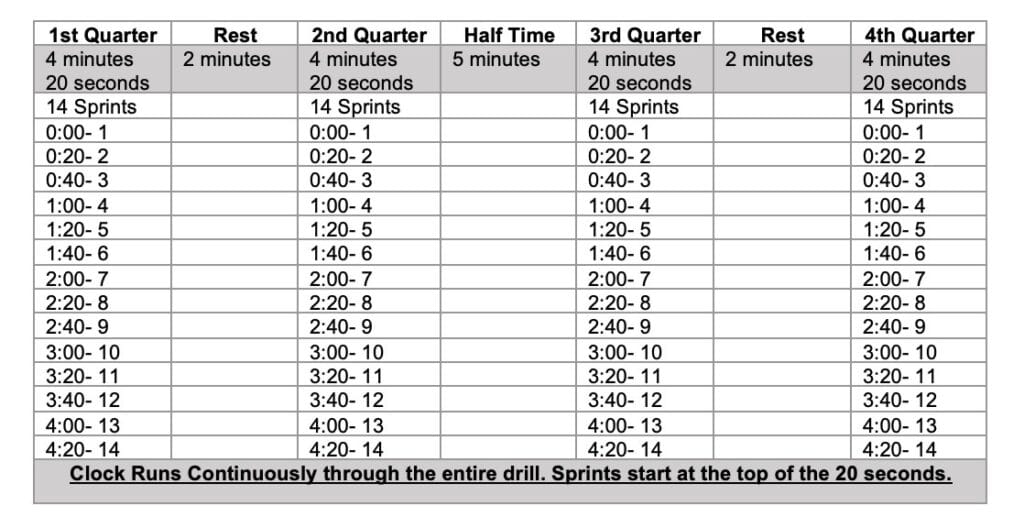
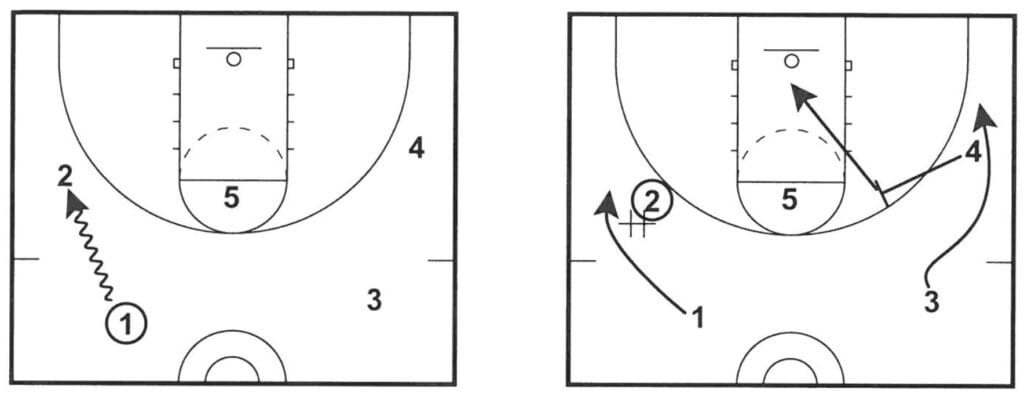
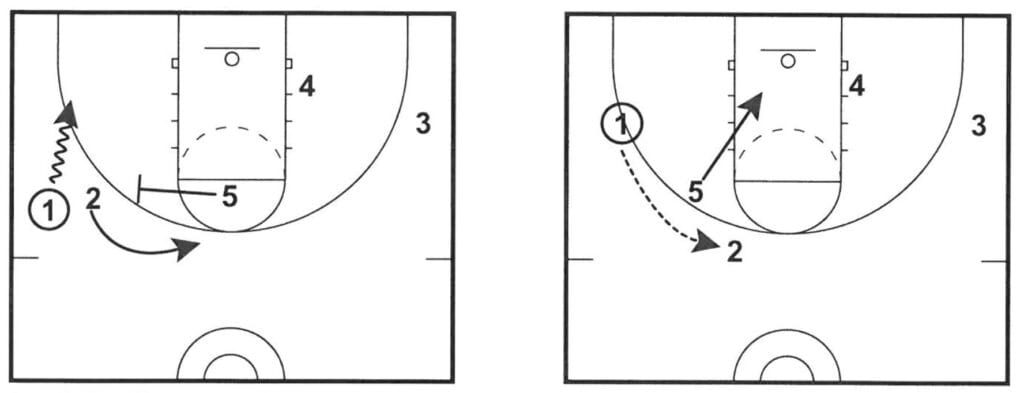
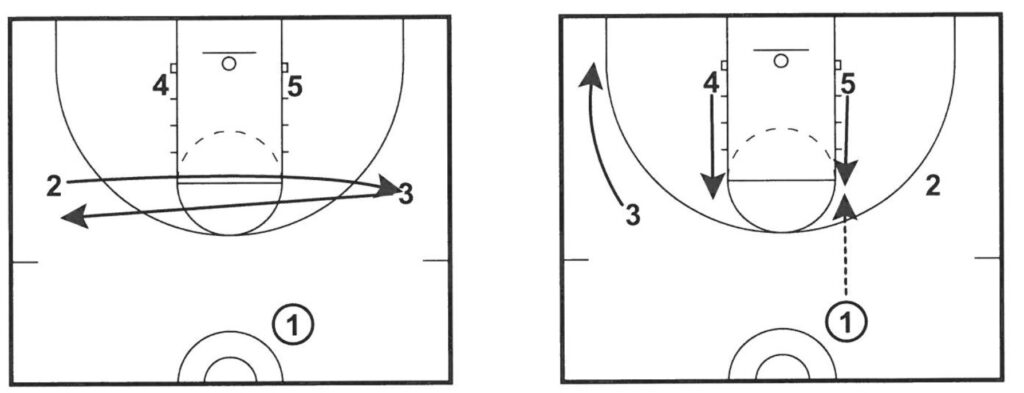
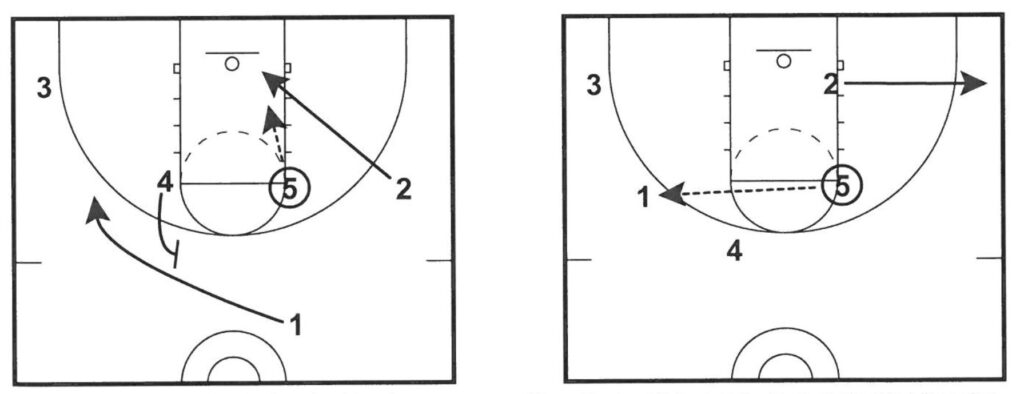
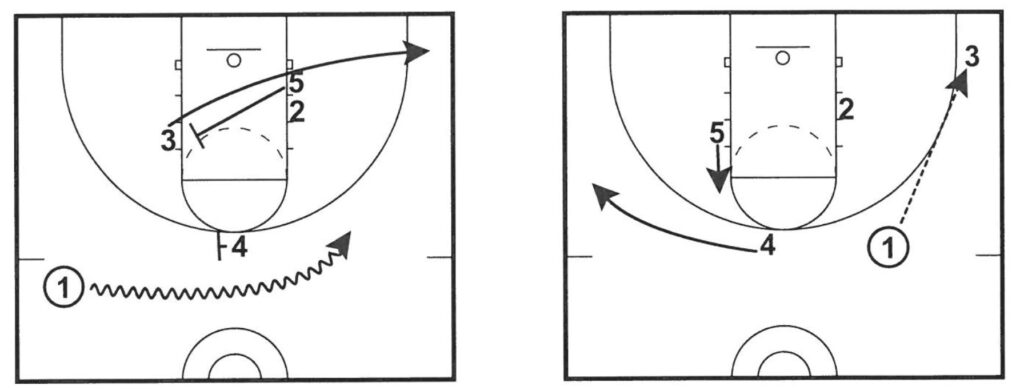
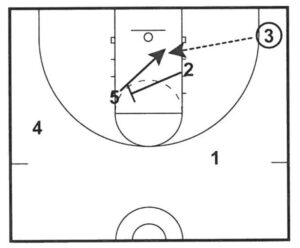 From there, Player 2 sets a cross screen for Player 5. Player 3 looks for 5 as he cuts to the hoop. It’s important that Player 5 cuts to the rim and not the opposite block since this is a basketball quick hitter.
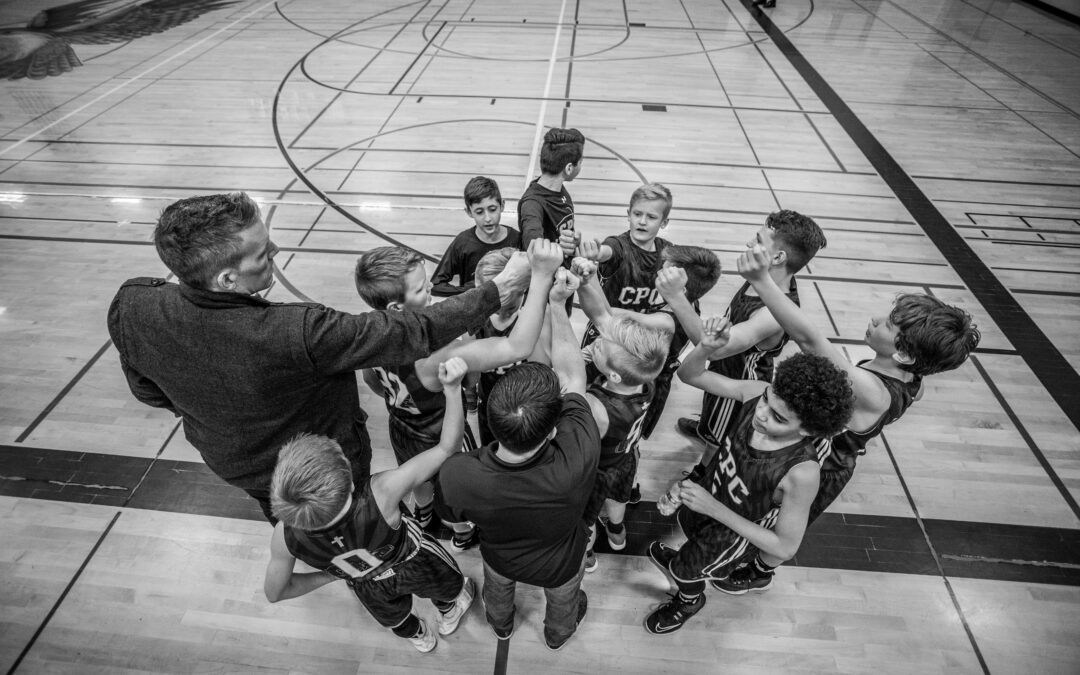
 2nd Episode:
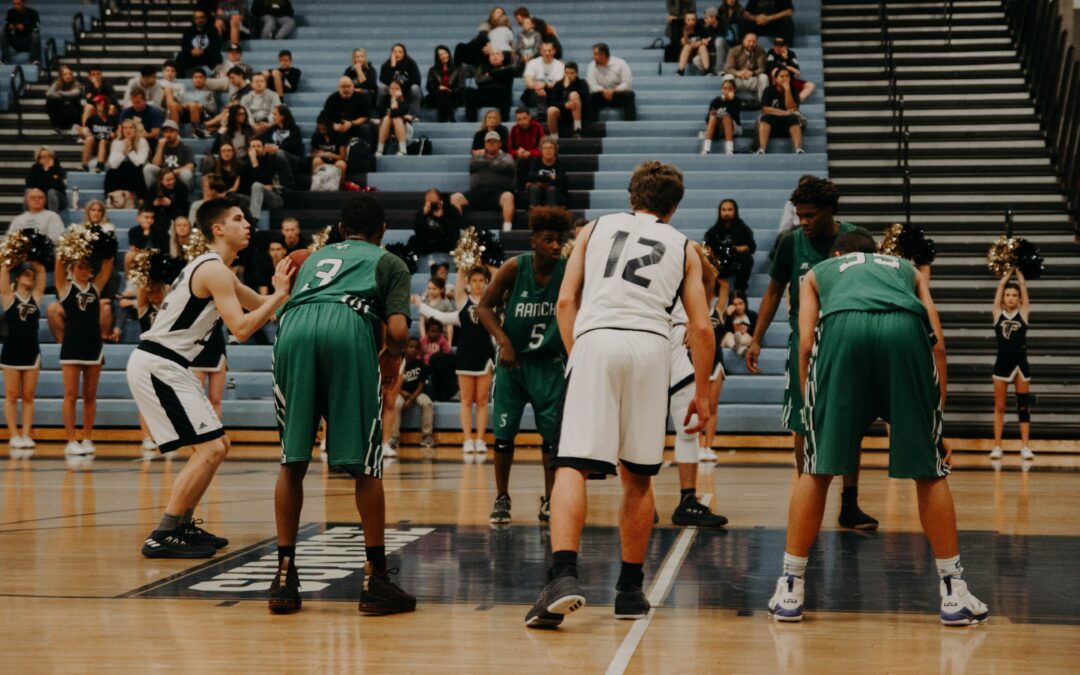
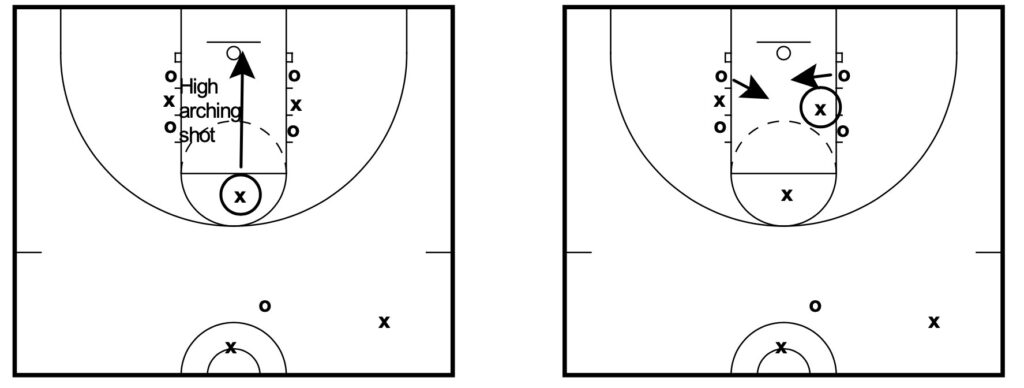
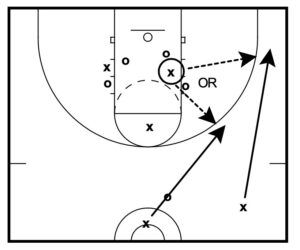
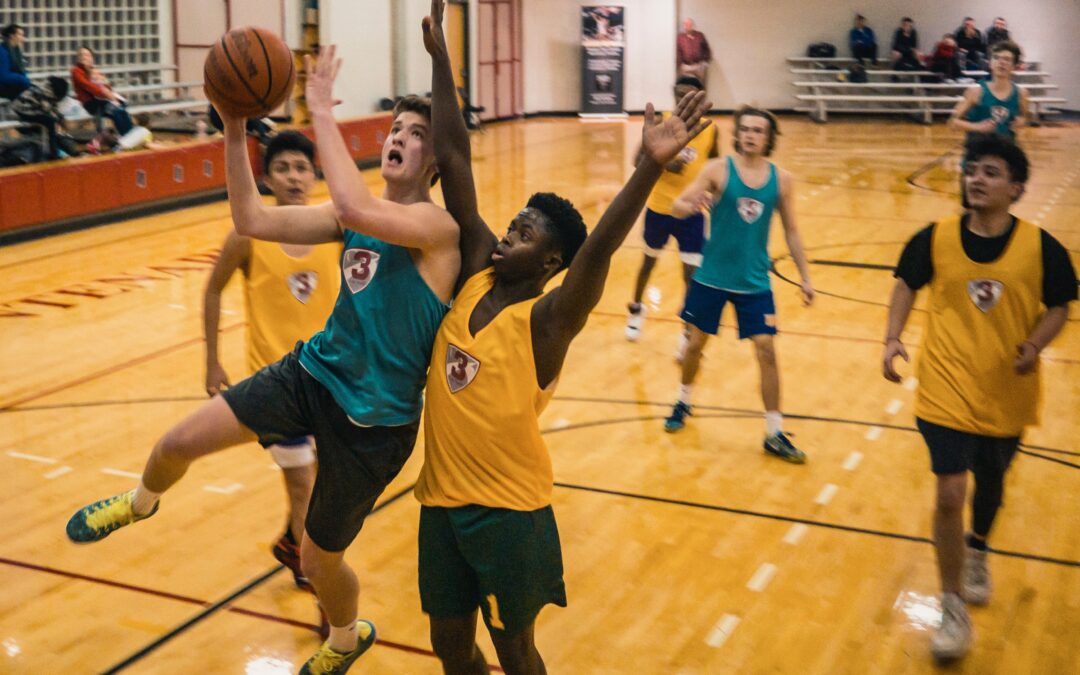
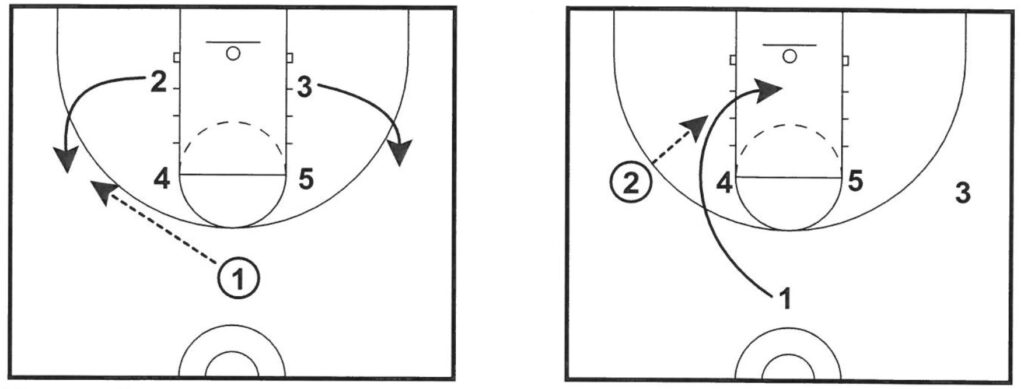
 If the defense covers this box set’s UCLA cut, then Player immediately moves into a ball screen on the wing for Player 2. As that’s happening on one side, Player 1 uses stagger screens on the opposite wing as well.

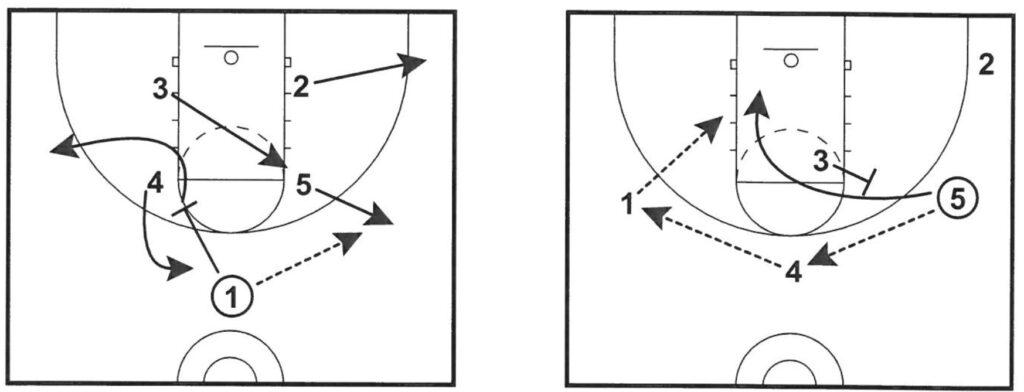
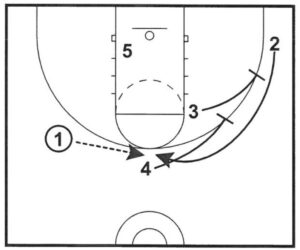 The second action for this box set low-post play creates an opportunity for your team’s best shooter.

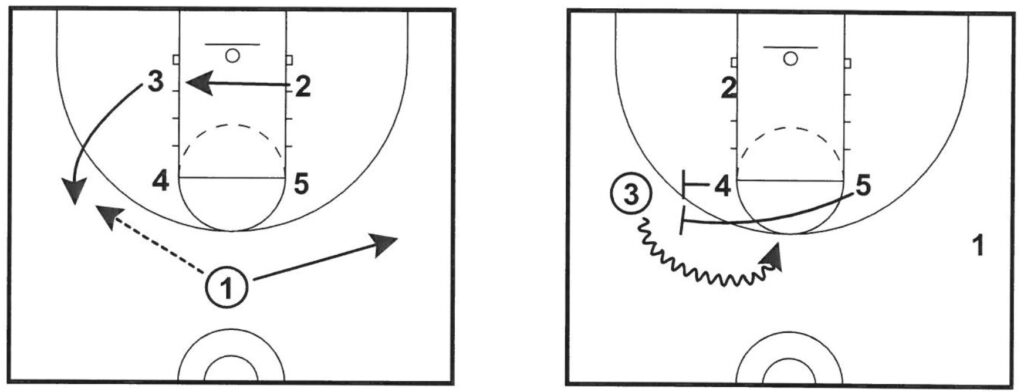
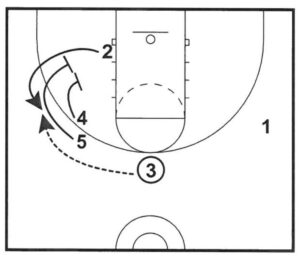 The box set three-pointer play’s progression continues with players 4 and 5 pivoting to set a second screen.
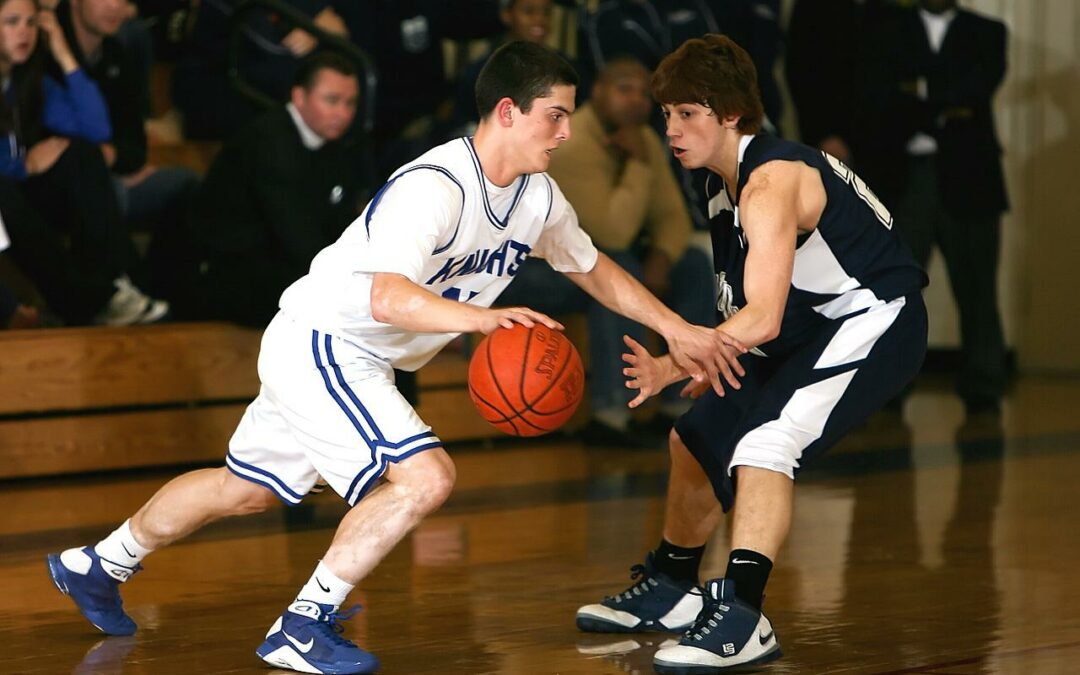
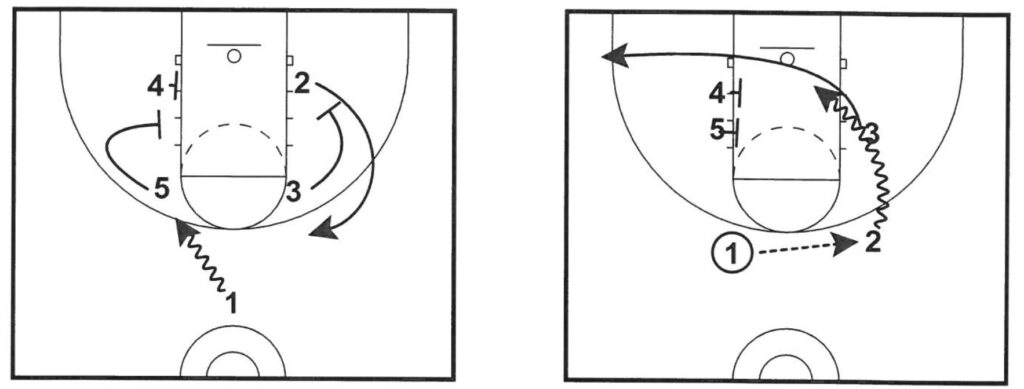
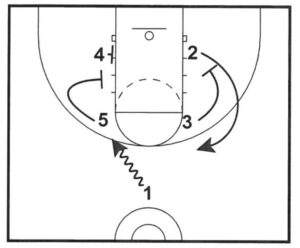 This box set isolation play begins with the two bigs, players 4 and 5, on the left box and elbow. 2 and 3 complete the box set on the opposite side.

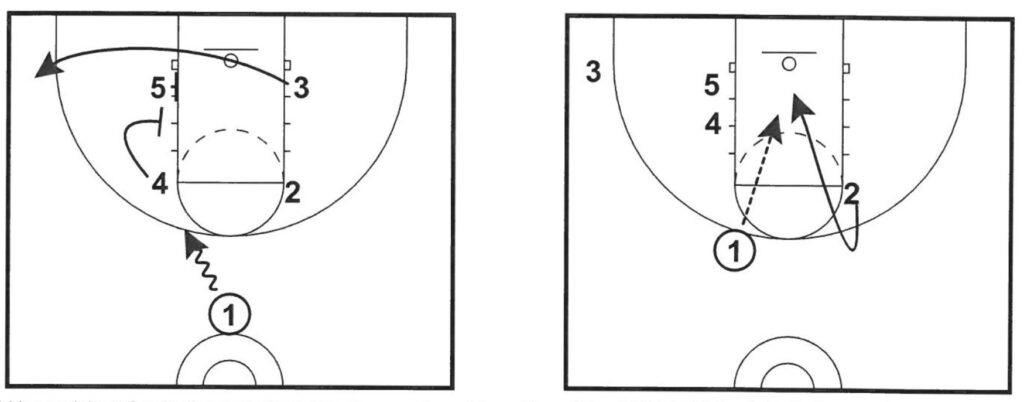
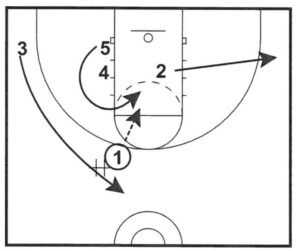 If 2’s cut gets covered up by the defense, the progression out of this box set offense remains simple.
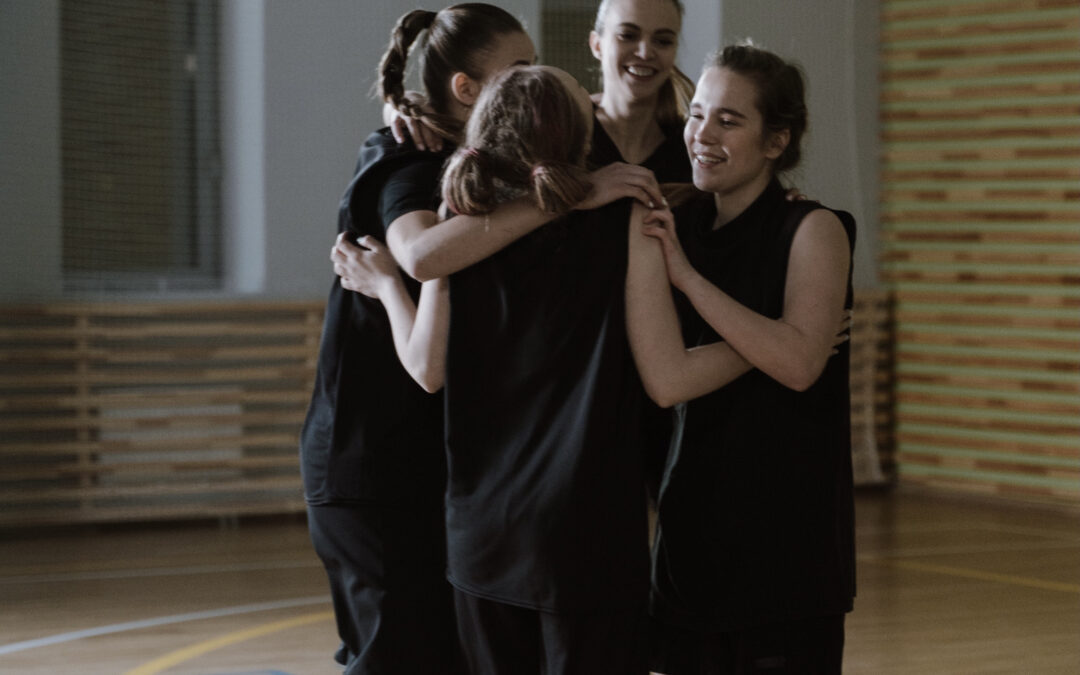
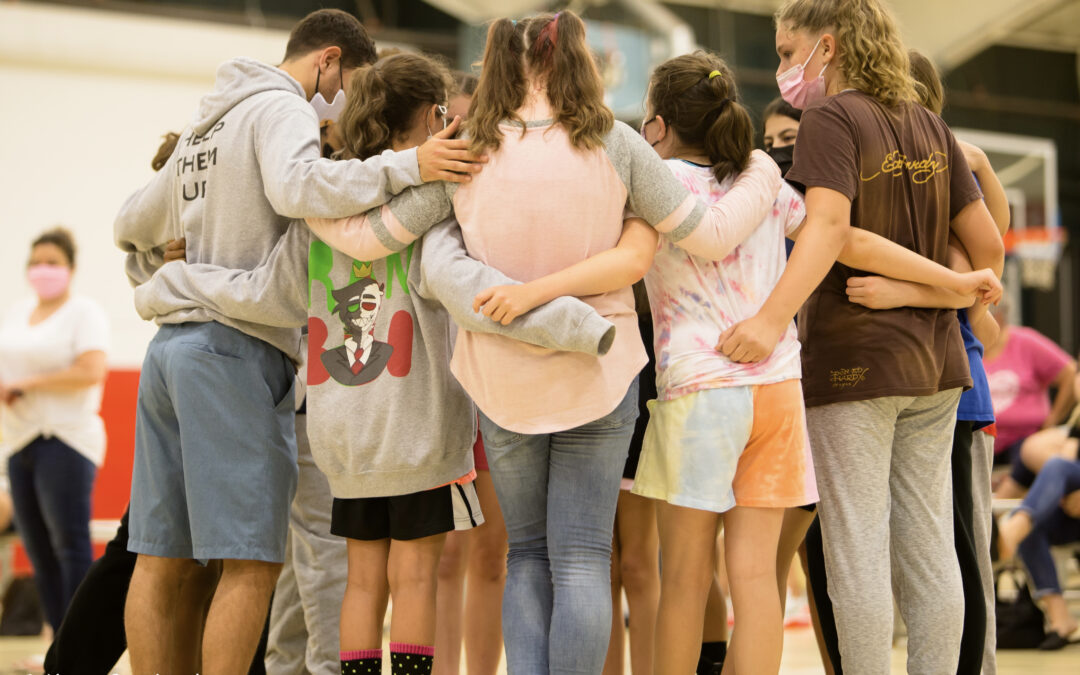
 Dan Horwitz
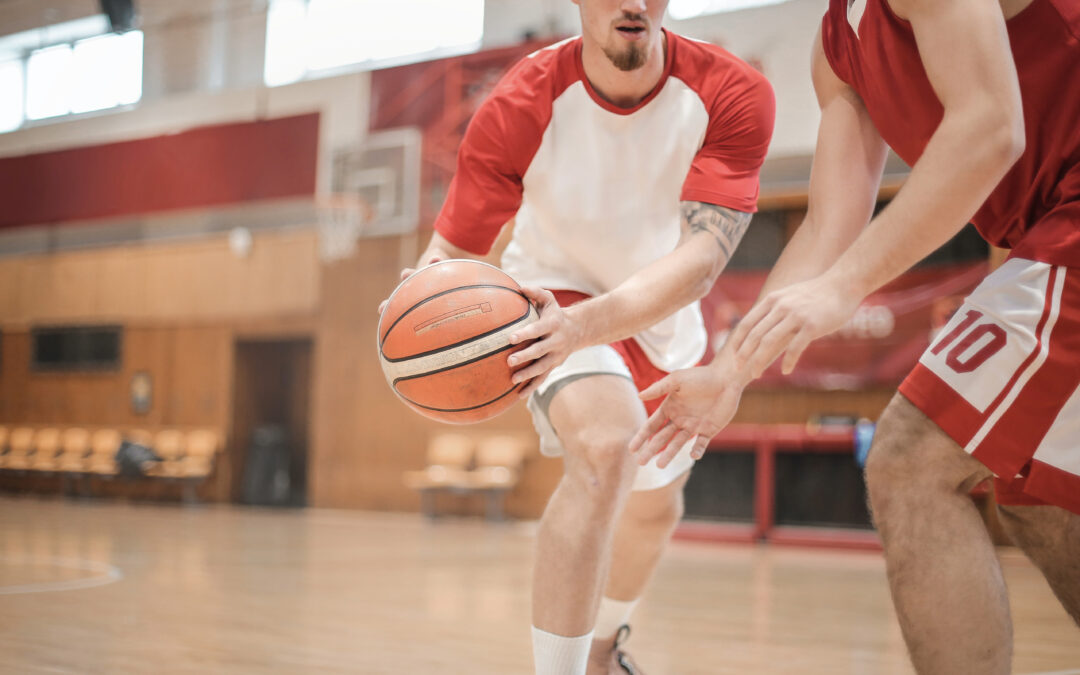
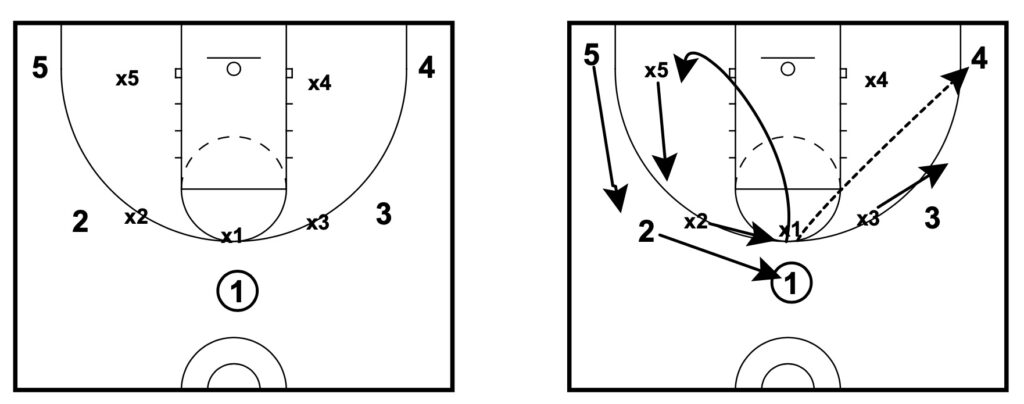
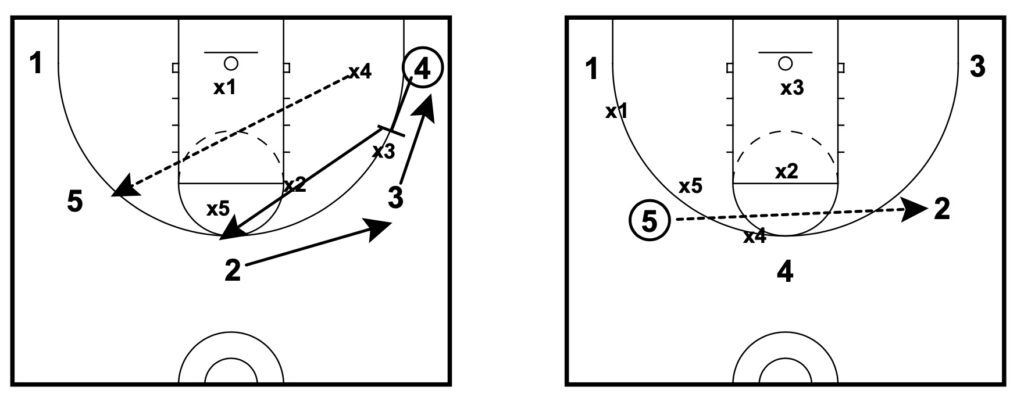
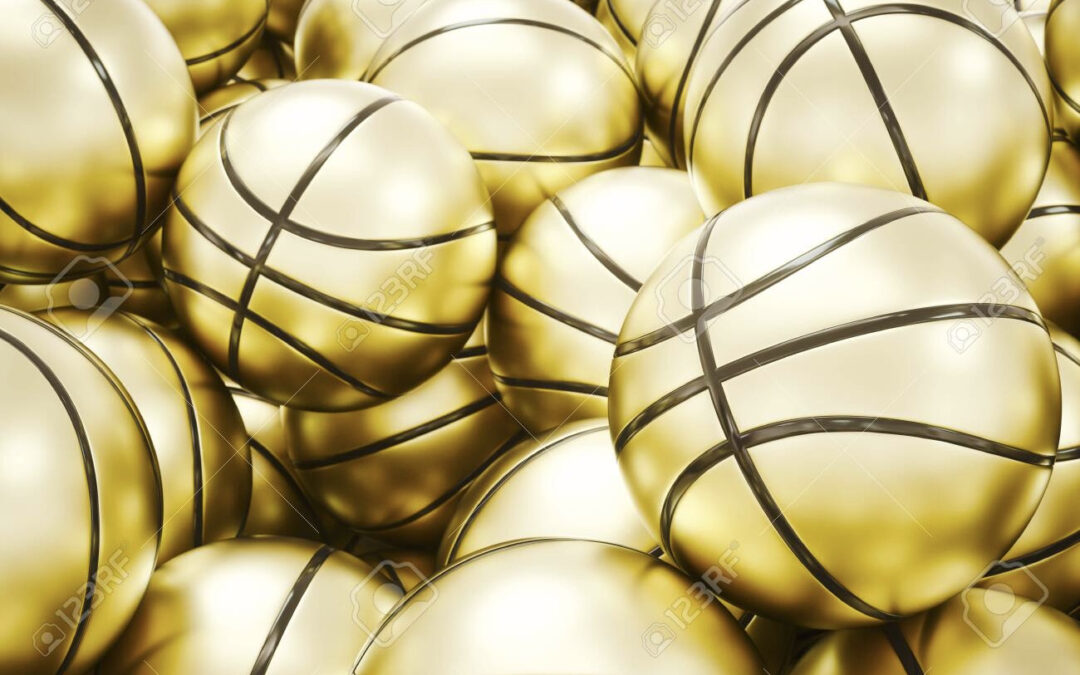
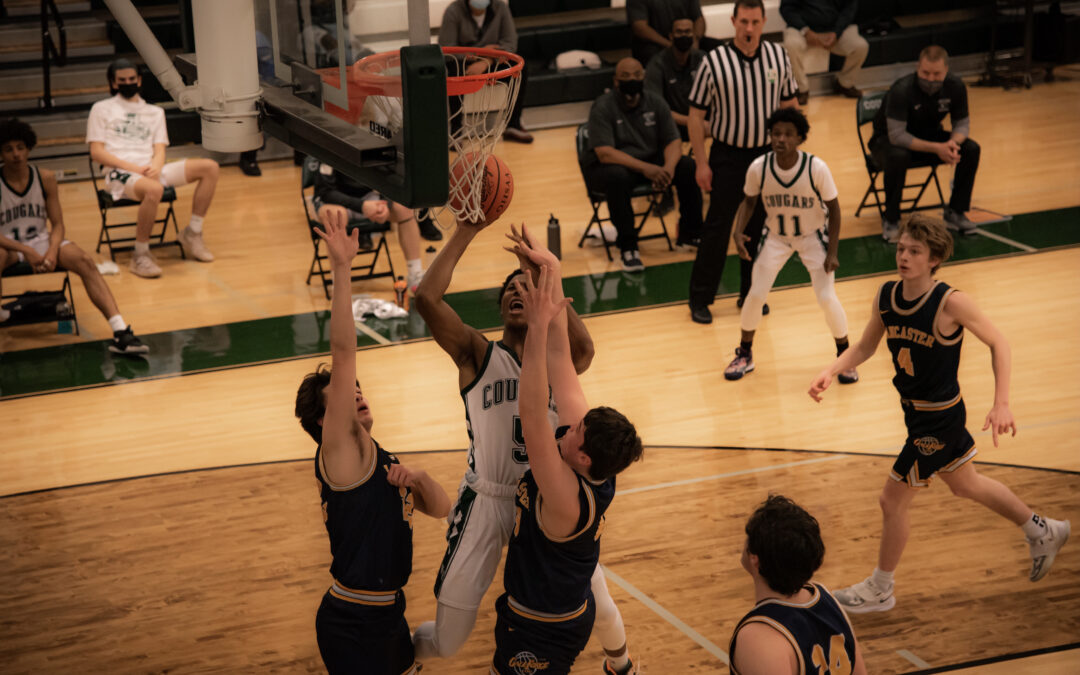
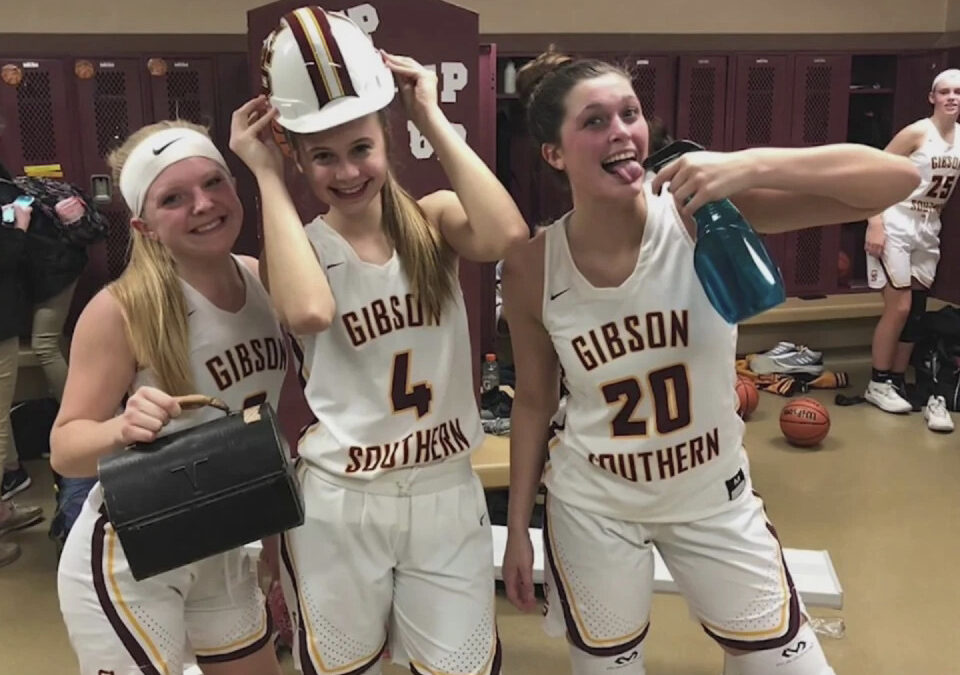
 Few basketball purists in California are aware of this first wizard of the hardwood. “Prof” was a shortened version of Professor. It was the name his players and students called him, but they spoke it reverently. Passaic High School’s Grey Thatched Wizard was known for his all-around coaching acumen. His teams enjoyed six undefeated seasons, and during another season, his team lost one game. His truncated stay at Passaic High School was a nonpareil 188-1. Furthermore, his teams would have undoubtedly won many more if jealous administrators and school board members hadn’t interfered.