Coaching basketball at the youth level invariably involves dealing with zone defenses. The most common zone, 2-3, allows developing teams to hide certain players on the defensive end. It can also frustrate offenses to no end, especially if the offensive players tend to stick to their spots. So, as zones become more and more common even at the game’s highest levels, it’s integral that every coach knows exactly what they want to do when attacking a 2-3 zone. Using a continuity offense often helps.
One of the most common misconceptions to combating a good zone is the reliance on distance shooting. Teams might have a reliable zone-buster on their team, capable of consistently draining three-pointers. But the reality is most defenses would rather their opponent launch from deep rather than attack for higher percentage shots near the rim.
Continuity Offense Attacking a 2-3 Zone
Continuity offense stands as one of the most valuable approaches to attacking a 2-3 zone. These plays and sets create a rhythm and offensive flow that allows the team to stress the opposing defense. Offensive players know where to go as each pass is made within the continuity. The constant flow forces the defense to adjust, not only to each pass but also to each cut.
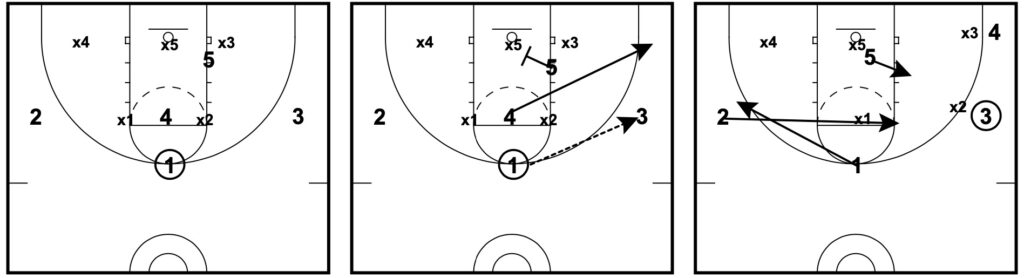
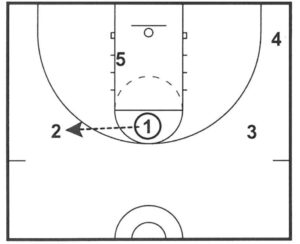
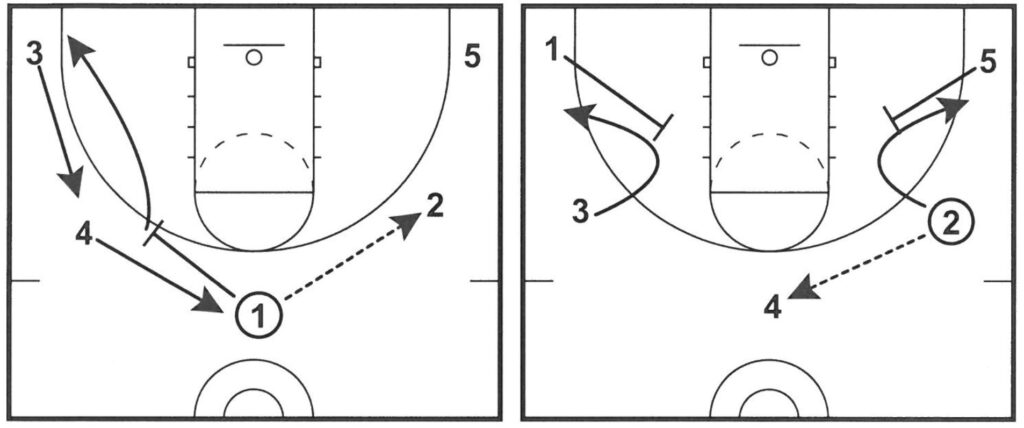
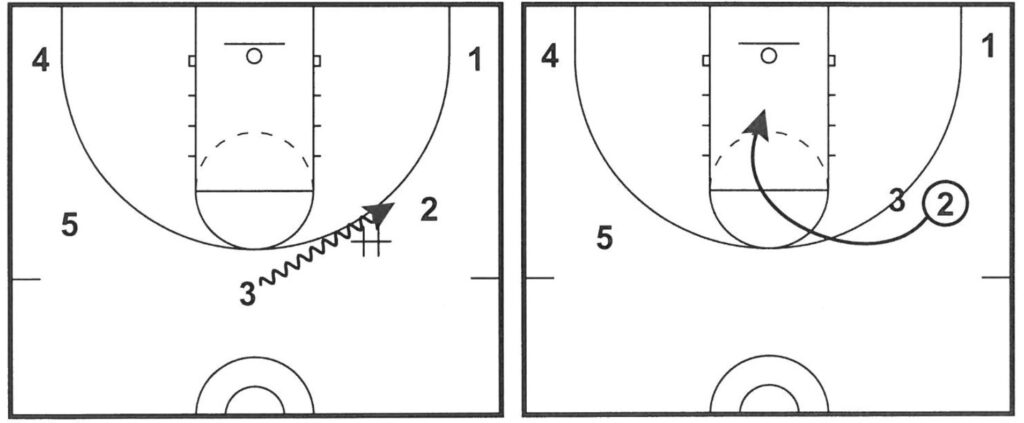
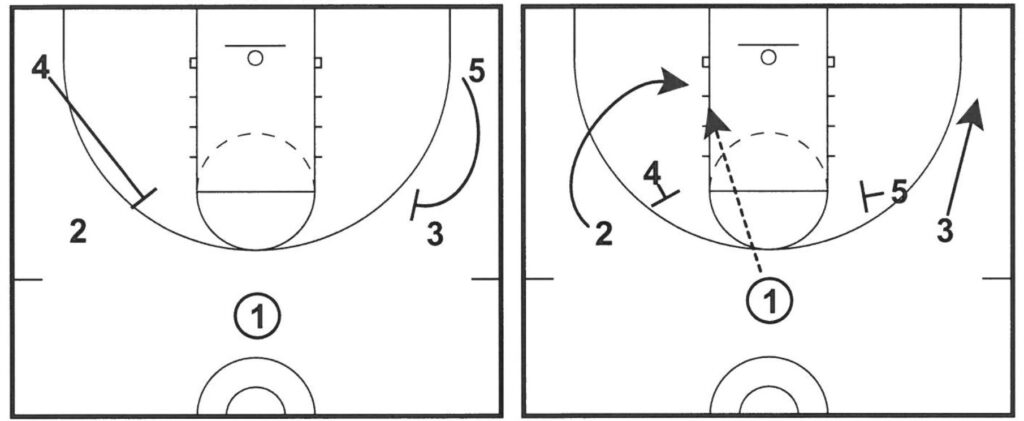
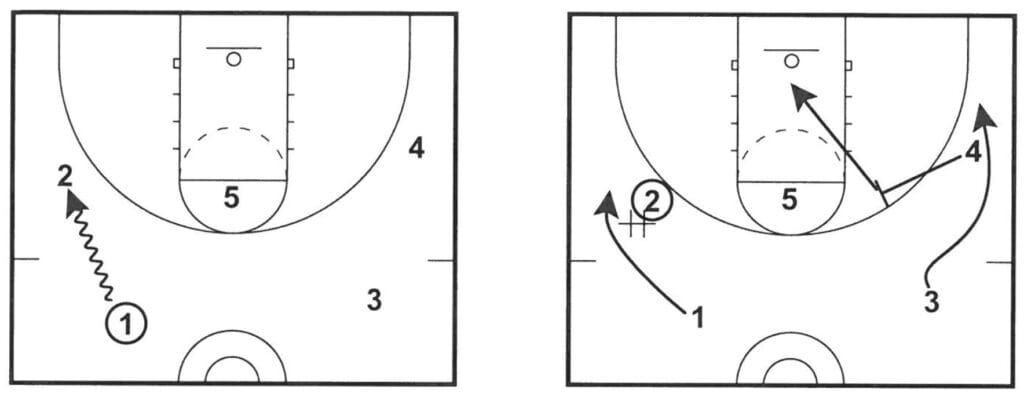
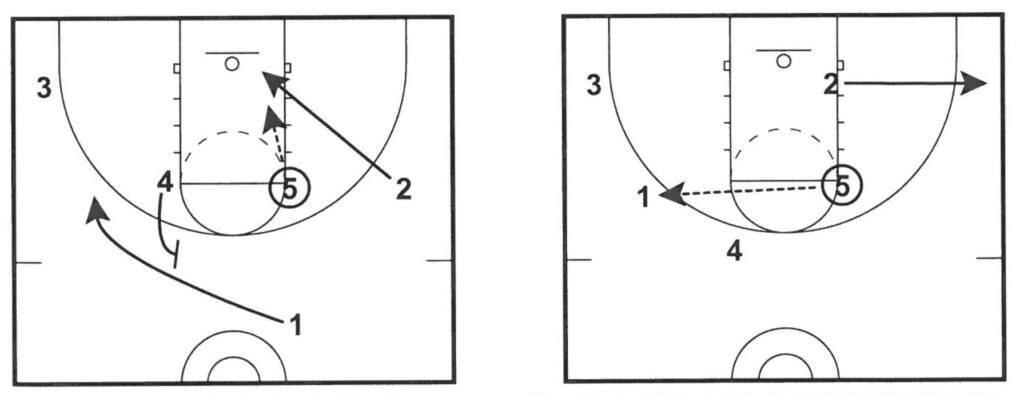
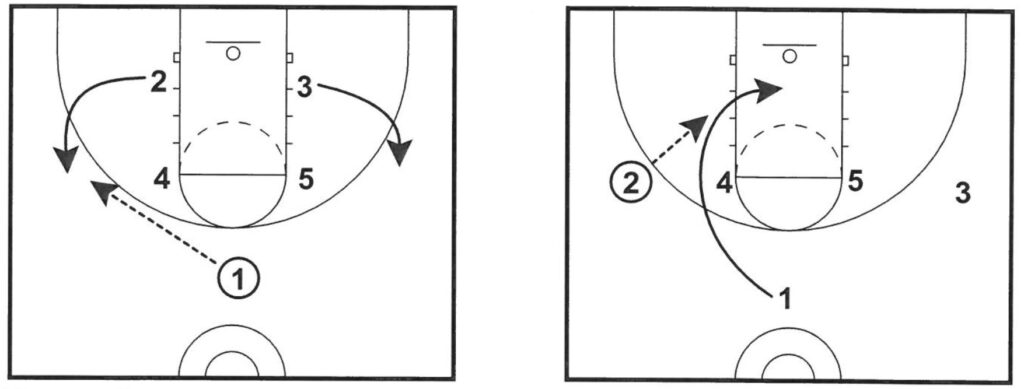
The set up for this continuity offense involves using a 1-3-1 counter to the 2-3 zone. 1 brings the ball down, with 2 and 3 on the wings. 4 occupies the high post, while 5 takes the low post. The initial action is a pass to either wing. 4 reads that initial pass, then cuts with the ball to that strong-side corner (or short corner).
From there, 5 presents as a low-post option and 2 cuts across from the opposite wing. 2 flashes to the open elbow area, while 1 makes a flare cut to the opposite wing. 3 reads the movement of the defense before making the next pass. If 2 doesn’t immediately receive the ball at the elbow, they lift to the top of the key.
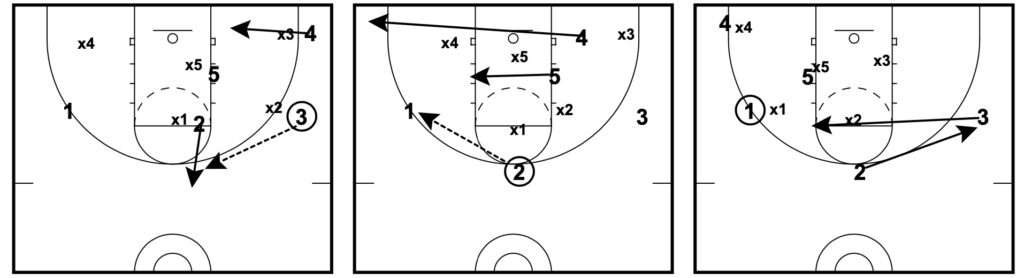
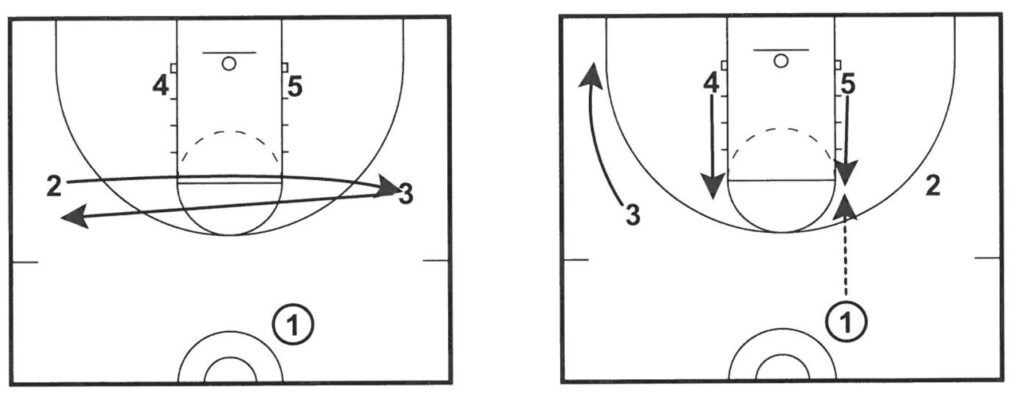
The continuous element of this continuity offense comes if the defense recovers through the initial movement. 3 gets the ball to 2, who reverses to 1. As the ball switches sides, both 4 and 5 cut to the new strong side of the offense. 4 makes the baseline cut behind the zone, while 5 flashes to the opposite low post.
As the ball reverses, 3 makes the cut across, flashing to the open elbow. 2 makes a flare cut to the opposite wing, away from the ball.
Keys to Attacking a 2-3 Zone
The first, and perhaps most important, key to attacking a 2-3 zone remains not settling for a three-point shot. Of course, if a three-pointer comes as a clean result of an offensive action, then by all means take it. But too often, teams settle for threes against zones because they can’t consistently pressure the paint. Approaching the zone with a one-pass-shot, or ball-reversal-shot, gets the defense off the hook.
Another key to combatting the zone is movement. Many times, the offensive players stand around and the zone shifts with each pass. The offense occupies set positions during the possession in hopes of finding an opening. The reality is, the openings won’t appear until more than just the ball moves. Accompanying a pass with a hard cut, filling the vacant spots, and forcing the defense to account for the movement stresses the rigidity of the zone.
A forgotten key against a zone defense is offensive rebounding. With defenders occupying designated areas instead of checking specific players, boxing out becomes problematic. Facing any zone creates lanes for offensive players to crash the boards on missed shots. The misses often result in scramble situations which could yield good scoring opportunities.
The final key to dealing with this defensive set up is learning how to screen the zone. While ball screens are typically staple counters against man-to-man defense, learning to screen the zone forces the defense to immediately adjust their alignment. If the defense doesn’t adjust, huge openings appear within the zone itself. Using a continuity offense helps.
Variations to this Continuity Offense
A variation for this set could involve 5 cutting to the corner or short corner, then 4 cuts into the low post. This would be an option of the 4 and 5 are interchangeable on offense.
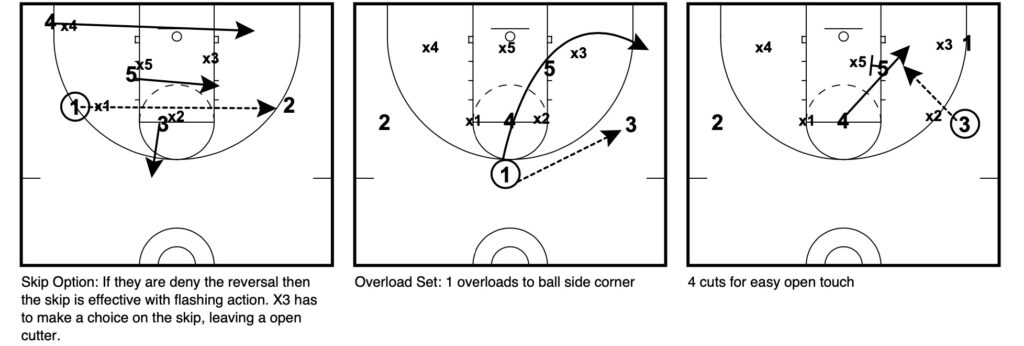
Another variation involves using a skip pass. If the defense overplays the elbow cut, or overplays the potential ball reversal at the top, the wing can use the skip pass to the opposite side. As that skip is happening, 4 and 5 make their cross cuts like normal.
A drawback to running continuity will always be the defense learning the cuts that are coming. Adding a slight variation to the progression might catch the defense off guard. Varying this continuity with an overload option should yield good looks.
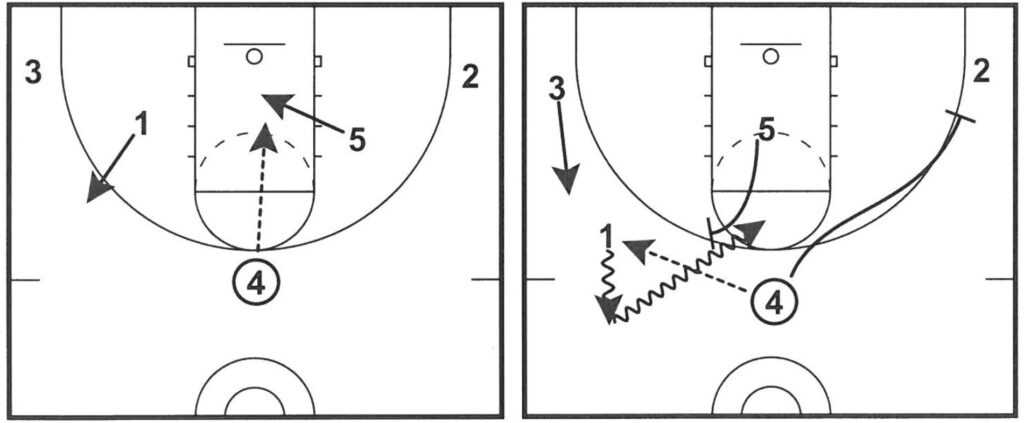
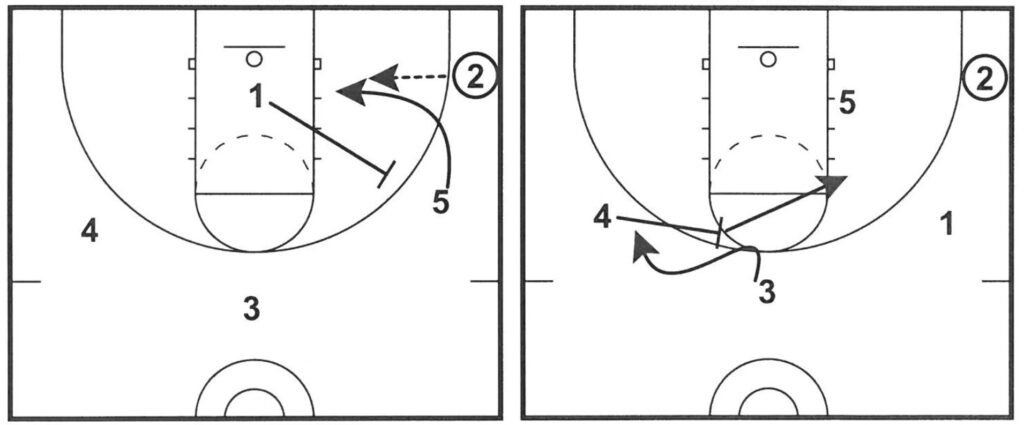
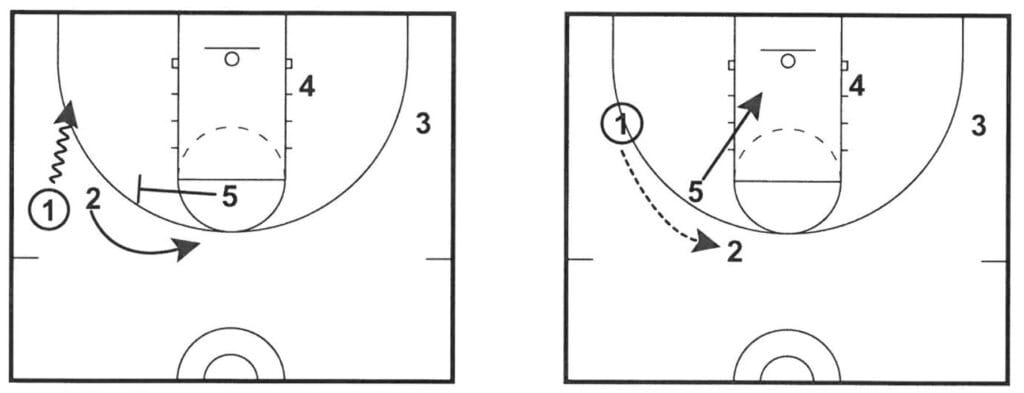
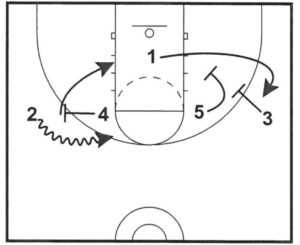
In the overload, 1 makes the initial wing pass, but instead of cutting away, 1 cuts to the strong side corner. From there, 5 turns and screens the middle of the zone and 4 flashes to the open low post area. 2 can stay wide for a skip pass or cut up to the top of the key.
It’s key for the offensive players to be patient when attacking a 2-3 zone. Force the defense to adjust to each pass and cut before settling for a shot. The initial progression through the continuity might not yield openings, but as the offense moves, the defense must remained disciplined. If the defense is slow to adjust, the openings will be there.
In this ever changing world of trying to find ways to separate yourself from your opponent, it is important to take any step necessary to give yourself an edge over the opponent. We run Rick Torbett’s Read and React offensive system in our program and have enjoyed what it has brought to our players. The Read and React sets like the ball screen shooter lift can be tailored to get touches in specific areas of the floor.
One area where we as a staff felt like were falling short for our players was in a lack of set plays. We always know those times where we are going to need those quick hitters to get a quick bucket, but we wanted to avoid totally changing our system to just throw in a few quick hitters. What we decided to go with was sets using the principles of the Read and React.
What these sets did was allow us to get quick buckets using our offensive principles. But even if we did not need a quick bucket, it still got our players moving within our offensive parameters.
Read and React Sets: Ball Screen Shooter Lift
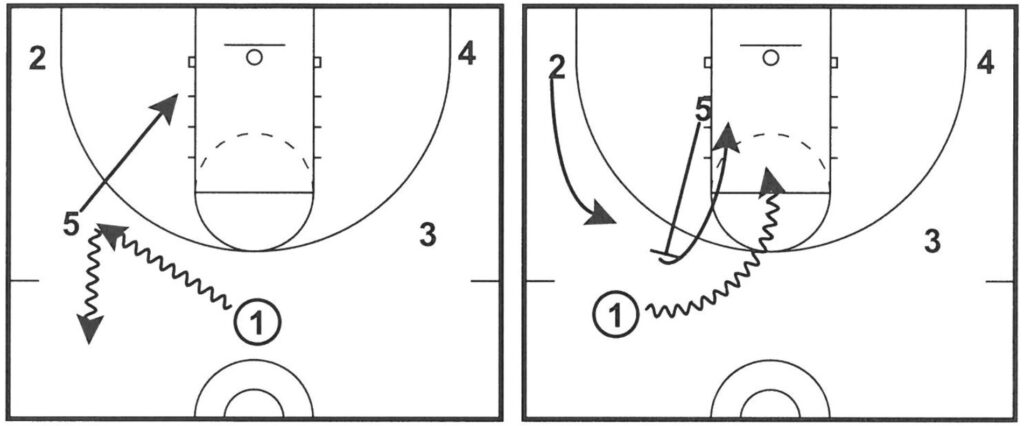
This play was inspired by watching the NCAA tournament a few years back. And we just applied Read and React principles to it. It is a simple ball screen look. However, while everyone is watching the ball screen action, you bring a shooter up on the backside behind the pick and roll. That player should get a good look at the basket.
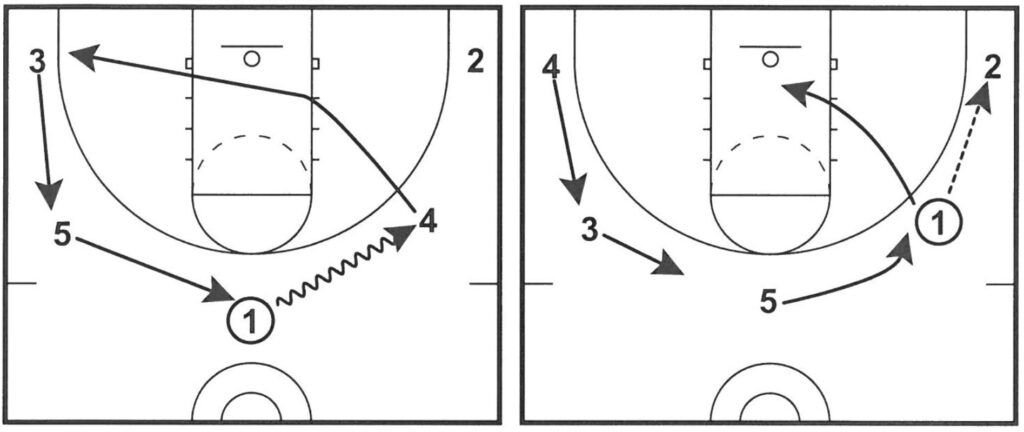
This Read and React set also begins with a 5-Out formation. The point guard, Player 1, initiates the action with a dribble-at move toward Player 5 on the wing. Player 2 keeps his defender spread wide by standing in the corner.
After Player 5 slips the dribble-at, Player 1 pull dribbles on the wing to bring Player 5 back for a ball screen.
The second action of this read and react set looks to get the shooter in motion. Player 1 utilizes the ball screen on the wing and attacks the lane. After setting the screen, Player 5 makes a hard roll to the basket.
Player 1 penetrates into the middle, with Player 5 occupying the defense with his roll. The defender for Player 2, the shooter in this read and react action, might help down if the defense tries to trap the ball handler.
After getting into the lane, Player 1 completes the throwback pass to Player 2 on the wing. This is a catch-and-shoot opportunity for Player 2.
The pick-and-roll action clears the backside along the wing for Player 2, who moves into the space following that action. This play can be run from either side of the floor, depending upon the set up of the defense and the hand preference of the driver.
Kyle Brasher | Gibson Southern High School
Lady Titans Basketball Coach
Be sure to check out that episode for some great content on the journey of Coach Torbett, how Read and React came about, and the philosophy behind the offense.
In this ever changing world of trying to find ways to separate yourself from your opponent, it is important to take any step necessary to give yourself an edge over the opponent. We run Rick Torbett’s Read and React offensive system in our program and have enjoyed what it has brought to our players. The Read and React sets like the 5-Out Attack can be tailored to get touches in specific areas of the floor.
One area where we as a staff felt like were falling short for our players was in a lack of set plays. We always know those times where we are going to need those quick hitters to get a quick bucket, but we wanted to avoid totally changing our system to just throw in a few quick hitters. What we decided to go with was sets using the principles of the Read and React.
What these sets did was allow us to get quick buckets using our offensive principles. But even if we did not need a quick bucket, it still got our players moving within our offensive parameters.
Read and React Sets: 5-Out Attack
This Read and React 5-Out set gets the ball swinging side-to-side with lots of action to keep the defense occupied. If you have a player who is great at screening and slipping, this play will get them a look in the middle of the paint. If that look is not open, the ball ends up in the hands of a player who is great in a pick and roll look.
This Read and React set begins with a 5-Out formation. All five offensive players begin outside the three-point line to spread the defense out. This is effective against man-to-man defenses, particularly ones that like to deny passes and overplay.
Player 1 initiates the action with a pass to the wing. After the pass, Player 1 sets a weak side screen for Player 4. Once he’s set the screen, Player 1 cuts to the weak side corner as Player 3 fills up on the wing.
The second action for this set sees Player 2 center the ball with Player 4 at the top of the key. Once that pass is made, Player 5 and Player 1 both set pin screens on the perimeter. This action could create open looks for the shooters on the wing.
The next sequence of action involves Player 5 slipping the pin screen for a lay-up opportunity. Player 5 dives to the middle of the lane looking to post up his defender. Player 1, meanwhile, pops to the open space on the wing.
If those moves are covered by the defense, Player 4 passes to Player 1 then cuts away to screen for Player 2 in the corner. As Player 1 receives, Player 5 comes up the floor to set a ball screen.
This becomes a basic pick-and-roll action from the wing at this point. Player 1 can drive for a scoring opportunity or pass to a number of teammates. Player 2 will be shaping up on the wing, while Player 3 should do the same on the opposite side. The ball screener, Player 5, can roll while Player 4 sets up in the short corner.
Kyle Brasher | Gibson Southern High School
Lady Titans Basketball Coach
Be sure to check out that episode for some great content on the journey of Coach Torbett, how Read and React came about, and the philosophy behind the offense.
In this ever changing world of trying to find ways to separate yourself from your opponent, it is important to take any step necessary to give yourself an edge over the opponent. We run Rick Torbett’s Read and React offensive system in our program and have enjoyed what it has brought to our players. The Read and React sets like the Dribble Handoff can be tailored to get touches in specific areas of the floor.
One area where we as a staff felt like were falling short for our players was in a lack of set plays. We always know those times where we are going to need those quick hitters to get a quick bucket, but we wanted to avoid totally changing our system to just throw in a few quick hitters. What we decided to go with was sets using the principles of the Read and React.
What these sets did was allow us to get quick buckets using our offensive principles. But even if we did not need a quick bucket, it still got our players moving within our offensive parameters.
Read and React Sets: Dribble Handoff (DHO)
If you have a player that is a great downhill driver, this is the set for you! It gets every player on the court moving to confuse the defense. What’s more, this Read and React set allows that downhill player an opportunity to make a quick move/decision using the a dribble handoff. This move is also known as a “DHO.”
This Read and React dribble handoff set begins with a 5-Out look. This spread formation forces the defense into help side coverage and creates multiple driving lanes.
The set starts with Player 1 making a pass to Player 4 on the wing. Once he initiates the action, Player 1 cuts to the weak side corner, away from his pass. As Player 1 makes his cut, Players 3 and 2 should fill up along the perimeter.
The second action in this set sees Player 4 center the ball to Player 3, then immediately sets a down screen for Player 5. This action occupies the defense on that side of the floor to set up the attacking action of this play.
The attacking action of this Read and React set comes following a dribble handoff. Player 2 should be your team’s best creator using a ball screen. The movement of this set brought him to the wing and has opened the lane for a drive.
Player 3 initiates the dribble handoff move with a dribble-at toward the wing. Instead of cutting away from the ball, Player 2 receives the handoff and immediately works downhill to pressure the defense. At this point, both corners should be occupied by shooters. If Player 4 doesn’t have three-point range, he can slide up to the short corner. That move, though, could bring a help defender sooner.
As Player 2 attacks the lane, he can drive to the rim, kick out to shooters, or pull up for an elbow jumper.
Ideally, this 5-Out set involves your best shooters to space the floor. Player 2 should be your best decision maker with the ball. Also, this set can be run from either side of the floor to give the downhill driver access to their dominant hand.
Kyle Brasher | Gibson Southern High School
Lady Titans Basketball Coach
Be sure to check out that episode for some great content on the journey of Coach Torbett, how Read and React came about, and the philosophy behind the offense.
In this ever changing world of trying to find ways to separate yourself from your opponent, it is important to take any step necessary to give yourself an edge over the opponent. We run Rick Torbett’s Read and React offensive system in our program and have enjoyed what it has brought to our players. The Read and React sets like 4-Out can be tailored to get touches in specific areas of the floor.
One area where we as a staff felt like were falling short for our players was in a lack of set plays. We always know those times where we are going to need those quick hitters to get a quick bucket, but we wanted to avoid totally changing our system to just throw in a few quick hitters. What we decided to go with was sets using the principles of the Read and React.
What these sets did was allow us to get quick buckets using our offensive principles. But even if we did not need a quick bucket, it still got our players moving within our offensive parameters.
Read and React Sets: 4-Out, 1-In
This Read and React set is utilizing the 4-Out, 1-In look from the Read and React System. The set provides a player who’s good working off a ball screen to isolate on one side of the floor.
For this Read and React 4-Out set, start with Player 4 on the inside. This puts your best post finisher, Player 5, in the corner to begin. Your point guard initiates the action with a pass to Player 2 in the corner. Player 2 should be your best pick-and-roll creator.
Once Player 1 makes the pass, he receives a back screen from Player 4 and makes a UCLA cut to the basket. As this happens, Player 5 sets a pin screen for Player 3 on the weak side. For Player 2, this first action can also be a catch-and-shoot opportunity.
The second action of this Read and React 4-Out set involves a ball screen. Most of the strong side has been cleared for this action to take place along the wing. Player 4 should pop to the corner or short corner once he’s set the screen. On the weak side, Player 1 sets a back screen for Player 5, to get the big man in post position.
The last sequence for this set leaves the decision-making to Player 2. After using the ball screen, Player 2 can attack the rim looking for a shot. Another option is kicking back to Player 4 in the corner or short corner.
As Player 2 drives, Player 3 should complete the Read and React Circle Movement into the weak side corner. That could be a clean look if the opposing defense shifted in help-side coverage.
Player 1 sets up on the wing for a catch-and-shoot opportunity, while Player 5 establishes post position on the weak side block. This set can be run from either side of the floor so that the driver uses his dominant hand on the take.
Kyle Brasher | Gibson Southern High School
Lady Titans Basketball Coach
Be sure to check out that episode for some great content on the journey of Coach Torbett, how Read and React came about, and the philosophy behind the offense.
In this ever changing world of trying to find ways to separate yourself from your opponent, it is important to take any step necessary to give yourself an edge over the opponent. We run Rick Torbett’s Read and React offensive system in our program and have enjoyed what it has brought to our players. The Read and React sets we use on offense can be tailored to get touches in specific areas of the floor.
One area where we as a staff felt like were falling short for our players was in a lack of set plays. We always know those times where we are going to need those quick hitters to get a quick bucket, but we wanted to avoid totally changing our system to just throw in a few quick hitters. What we decided to go with was sets using the principles of the Read and React.
What these sets did was allow us to get quick buckets using our offensive principles. But even if we did not need a quick bucket, it still got our players moving within our offensive parameters.
Read and React Sets: Post Finish
This one of the Read and React sets looks to get your best post player with an opportunity around the rim. Using specific ball movement and screening, the play creates space for a post finish. It helps when Player 1 in this diagram stands as a knockdown shooter. This keeps the opposing defense honest.
The play begins in a five-out set up. Player 1 drives hard to the wing at Player 4. This dribble-at move forces a basket cut by Player 4, who clears to the opposite corner. The other players behind 1 fill the empty spaces on the perimeter.
The next part of this set sees Player 1 pass to Player 2 in the corner. After making the pass, Player 1 cuts to the basket and touches the paint. Players 5, 3, and 4 must rotate to fill the empty spots on the perimeter.
Once the rotation happens, Player 1 reverse course and sets a back screen for Player 5. Player 2 can hit Player 5 with a leading pass as the post player makes the cut to the hoop. After setting the back screen, Player 1 should shape up for a jump shot.
On the weak side of the floor, another action takes place. Player 4 sets a pin screen for Player 3, who sets to shoot. Player 4 then flashes to the elbow. Should the post pass be defended, Player 2 has options: Player 1 for a three, a skip pass to Player 3, or an elbow entry for Player 4.
Kyle Brasher | Gibson Southern High School
Lady Titans Basketball Coach
Be sure to check out that episode for some great content on the journey of Coach Torbett, how Read and React came about, and the philosophy behind the offense.
f you have listened to Steve’s podcasts with Rick Torbett, you will know that Coach Collins utilizes the Read and React offense. But before installing this offensive system for your team, you’ll need to develop the specific skills to help your players leverage scoring opportunities. These Read and React exercises, like the circle movement drills, layer these skills so your players can excel with this system.
The Read and React offense incorporates a specific concept known as Circle Movement. This action involves offensive players moving along the perimeter in reaction to a teammate’s dribble drive. Generally, the players move in a circle motion in the direction of the drive. This creates additional space from help defenders and opens passing lanes for the offense.
Read and React: Circle Movement Drills Drive and Kick
Layering the motion and skills for the read and react offense remains an integral part of developing this system. The Circle Movement drills incorporate the specific cuts practiced in the Drift and Lift Drills.
The set up for this drill involves two offensive players against one defender. The ball begins at the top of the key with the ball handler. A shooter is set wide on the wing. The defender starts with the shooter.
Here, the ball handler begins his dribble drive attack, pressuring the lane. This forces the defender into a help-side position. As the defender slides over to help the penetration, the shooter completes the circle movement necessary for the read and react offense.
By drifting to the corner, the shooter creates a new angle for both the pass and the defensive recovery. This drill provides the shooters with a catch-and-shoot opportunity on the wing. The shooter should drift within their range. A corner three-pointer can be attempted, or a short corner jumper.
Coaches can add a defensive layer to this circle movement drill by making the help defender complete a hard close-out on the shooter.
The set up for this drill can be moved to different portions of the floor to practice different passing angles and drifts. Starting from the wing forces the shooter to slide from the top of the key to the opposite wing. Starting from the corner can create skip-pass opportunities.
Read and React: Circle Movement Drills Safety Valve
The next layer of these circle movement drills involves the safety valve. The perimeter rotation in the read and react offense sees each player adjust their positioning based on the dribble drive.
The strong side of the court sees the offensive players drift with the penetration drive. On the weak side of the court, the offense players lift into the empty spaces on the perimeter to keep the floor balanced. This lift also creates a safety valve for the dribbler should the initial drive-and-kick opportunity be covered up by the defense.
The set up for this drill uses three offensive players without any defenders. The ball handler starts at the top of the key, flanked by teammates on the wing. The driver begins his dribble penetration and watches the wing on the strong side drift to the corner. The wing on the opposite side should lift and fill at the top of the key.
The ball handler need to stop, reverse his momentum, and pass to the top of the key. This drill can incorporate ball fakes and provides a good opportunity to develop a guard’s footwork.
The drill provides a catch-and-shoot opportunity and can be run from multiple spaces on the floor. This drill can also incorporate two or more defenders to help create realistic game conditions.
Implementing Read and React
We utilize the Read and React in our program at Gibson Southern in Fort Branch, Indiana. We love the unpredictability and freedom it provides our players while still having certain rules for them to follow. The various layers in these drills are the same as Coach Torbett’s system. They can be easily implemented if you are running the Read and React system.
As all coaches know, it is important to prepare your athletes both mentally and physically for how to react in certain situations when games roll around. These drills simulate those situations in 3 or 4 player groups. We have implemented these drills with female basketball players from 5th grade all the way up to 12 grade.
Kyle Brasher | Gibson Southern High School
Lady Titans Basketball Coach
Be sure to check out that episode for some great content on the journey of Coach Torbett, how Read and React came about, and the philosophy behind the offense.
If you have listened to Steve’s podcasts with Rick Torbett, you will know that Coach Collins utilizes the Read and React offense. But before installing this offensive system for your team, you’ll need to develop the specific skills to help your players leverage scoring opportunities. These Read and React exercises, like the basketball drift and lift drills, layer these skills so your players can excel with this system.
The basketball drift and lift drills incorporates an action central to the Read and React offense known as Circle Movement. This action involves offensive players moving along the perimeter in reaction to a teammate’s dribble drive. Generally, the players move in a circle motion in the direction of the drive. This creates additional space from help defenders and opens passing lanes for the offense.
Read and React Basketball: Drift and Lift Drills
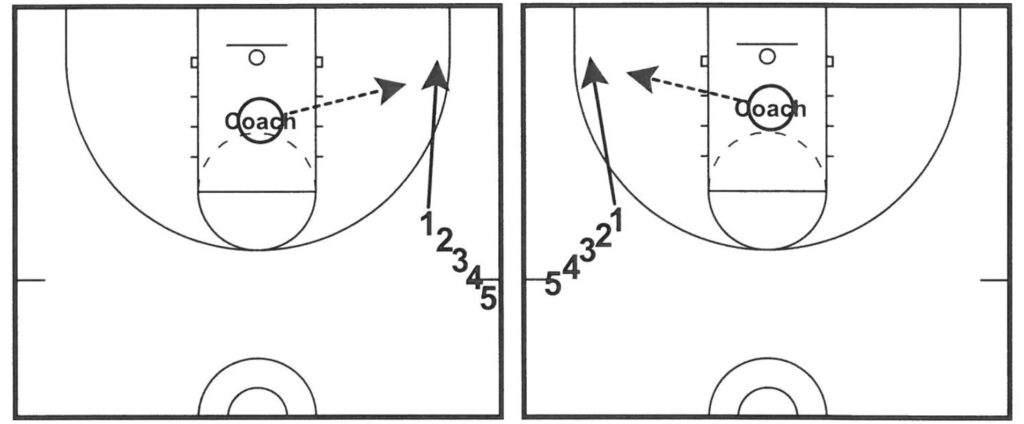
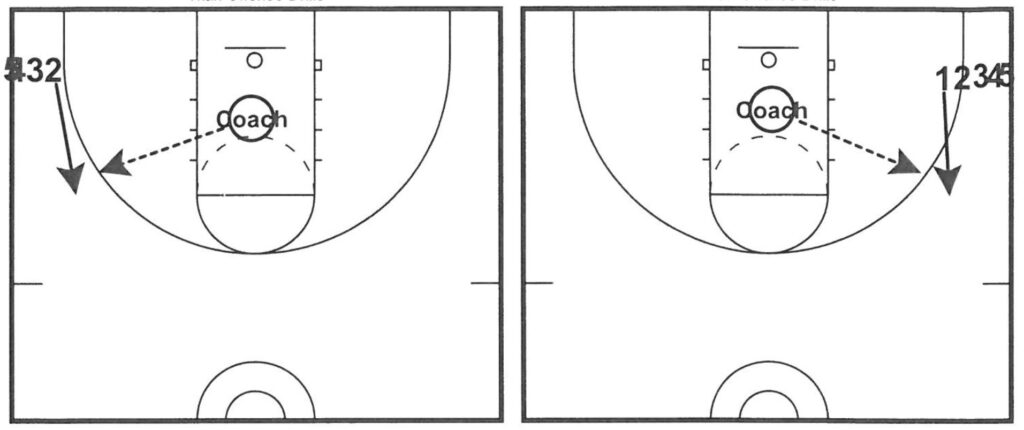
The first layer of these basketball drift and lift drills involves a coach standing in the lane with a line of shooters on the wing. Action for this drill begins with an entry pass to the coach from the wing. The offensive player then drifts from the wing to the corner. The drift motion here isn’t a sprint or a cut.
This drill provides a catch-and-shoot opportunity for the offensive players. Those players with three-point range can attempt their shots as corner threes. Other players can drift to the short corner for their shot attempts. This drill should work from both sides of the floor.
The second layer of these basketball drift and lift drills practices another motion for the read and react offense. This drill starts with a line of offensive players in the corner. Again, the coach stands in the lane and receives an entry pass from an offensive player.
Once the player makes the entry pass, they lift to the next spot along the perimeter. This mimics the circle movement of the read and react offense. Each player performs a catch-and-shoot attempt here, based on their shooting range.
Implementing Read and React
We utilize the Read and React in our program at Gibson Southern in Fort Branch, Indiana. We love the unpredictability and freedom it provides our players while still having certain rules for them to follow. The various layers in these drills are the same as Coach Torbett’s system. They can be easily implemented if you are running the Read and React system.
As all coaches know, it is important to prepare your athletes both mentally and physically for how to react in certain situations when games roll around. These drills simulate those situations in 3 or 4 player groups. We have implemented these drills with female basketball players from 5th grade all the way up to 12 grade.
Kyle Brasher | Gibson Southern High School
Lady Titans Basketball Coach
Be sure to check out that episode for some great content on the journey of Coach Torbett, how Read and React came about, and the philosophy behind the offense.
If you have listened to Steve’s podcasts with Rick Torbett, you will know that Coach Collins utilizes the Read and React offense. But before installing this offensive system for your team, you’ll need to develop the specific skills to help your players leverage scoring opportunities. These Read and React basketball drills, working on Dribble-At and Draft Drives, layer these skills so your players can excel with this system.
Read and React Basketball: Dribble-At Drills
The dribble-at drill develops a specific skill often associated with a read and react offense. It’s a combination of several integral skills. These include passing off the dribble, cutting, and finishing. This drill also provides insight for teams trying to understand the value of spacing the floor.
The first layer for these dribble-at drills starts with the ball at the top of the key. The finisher stands on the wing, guarded by a defender. Player 1 initiates the action of the drill by dribbling at the wing player.
As Player 1 approaches, the Player 2 makes a backdoor cut. Player 1 needs to hit the finisher with a leading bounce pass on the cut. The offensive players in this drill can be instructed to work on different finishes at or near the rim.
This layer of the dribble-at drills can be shifted to other positions in the half court. Moving the starting point for the drill provides the offense with different angles to work from and different finishing spots.
Read and React Basketball: Draft Drives
Another layer of the dribble-at drills incorporates an action known as the “draft” drive. In this action, the player with the ball drives to the basket behind a teammate that is cutting. The cutter takes the first help defender with them with his move. This action is called a “draft” drive because it mimics a race car drafting off another race car, which removes some of the air resistance. Here, the cutter removes some of the defensive resistance a driver might face.
The set up for this layer of the dribble-at drills moves the defender from the wing to the ball. Player 1 starts with the ball at the top of the key, with Player 2 spotted up wide.
The action starts with Player 1 dribbling at the wing. Player 2 still makes a backdoor as the ball approaches, but instead of passing to the cutter, Player 1 follows into the lane for a layup attempt. The defender should provide pressure on the layup attempt from behind. This drill can also shift to different sections in the half court to create different angles for the drive and finish.
Read and React Basketball: Layering Dribble-At Drills and Draft Drives
Bringing the two layers of these dribble-at drills together involves adding a third offensive player to the mix. In this setup, Player 1 starts at the top of the key and dribbles at Player 2 on the wing. Player 2 proceeds with a backdoor cut and Player 3 fills the open spot at the top. This cut-and-fill technique is a stable of the motion offense.
Once the ball is on the wing, Player 1 dribbles at Player 3, who makes a backdoor cut. Player 1 completes a draft drive trailing Player 3 into the lane. Player 3 clears to the corner. This drill can incorporate several different finishes, including layups, jump-stops, or kick-outs.
Implementing Read and React
We utilize the Read and React in our program at Gibson Southern in Fort Branch, Indiana. We love the unpredictability and freedom it provides our players while still having certain rules for them to follow. The various layers in these drills are the same as Coach Torbett’s system. They can be easily implemented if you are running the Read and React system.
As all coaches know, it is important to prepare your athletes both mentally and physically for how to react in certain situations when games roll around. These drills simulate those situations in 3 or 4 player groups. We have implemented these drills with female basketball players from 5th grade all the way up to 12 grade.
Kyle Brasher | Gibson Southern High School
Lady Titans Basketball Coach
Be sure to check out that episode for some great content on the journey of Coach Torbett, how Read and React came about, and the philosophy behind the offense.
If you have listened to Steve’s podcasts with Rick Torbett, you will know that Coach Collins utilizes the Read and React offense. But before installing this offensive system for your team, you’ll need to develop the specific skills to help your players leverage scoring opportunities. These Read and React basketball drills, like the Laker Cut, layer these skills so your players can excel with this system.
We utilize the Read and React in our program at Gibson Southern in Fort Branch, Indiana. We love the unpredictability and freedom it provides our players while still having certain rules for them to follow. The various layers in these drills are the same as Coach Torbett’s system. They can be easily implemented if you are running the Read and React system.
As all coaches know, it is important to prepare your athletes both mentally and physically for how to react in certain situations when games roll around. These drills simulate those situations in 3 or 4 player groups. We have implemented these drills with female basketball players from 5th grade all the way up to 12 grade.
Read and React Basketball Drills: Laker Cut
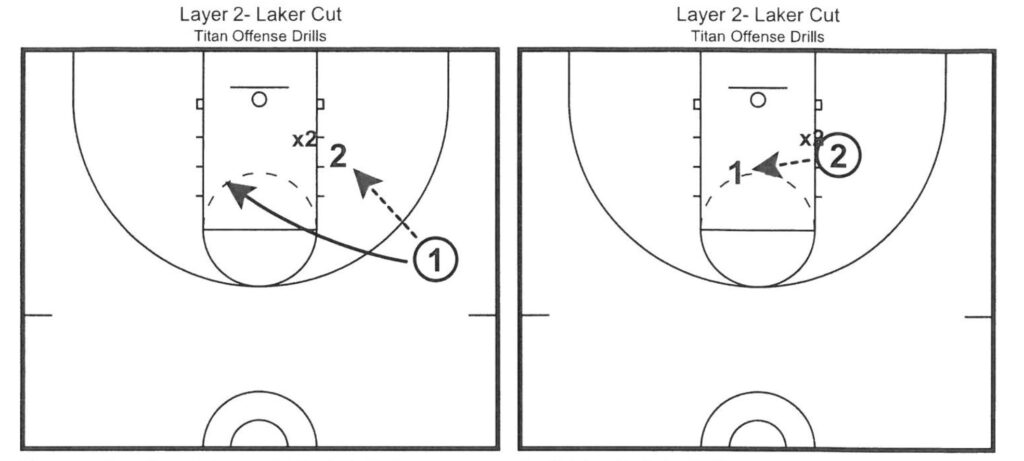
A Laker Cut happens when a player on the wing or in the corner, passes to the low post. Following the pass, that player cuts toward the basketball either above or below their teammate on the block. The post player can then pass it back to the cutter at the basket. This move gets its name from the NBA’s Los Angeles Lakers, which used this action in their sets, particularly during the Showtime Lakers era.
The Laker cut embodies the popular offensive philosophy of always following a pass with a cut. Magic Johnson and Kareem Abdul-Jabbar helped popularize this action with their play in the 1980s. This movement is similar to a UCLA cut by taking advantage of a defender’s tendency to relax once their mark has passed the ball.
This Read and React drill begins with a player on the wing, a player in the post, and a post defender.
The player on the wing enters the ball into the post then completes the Laker cut, this time through the elbow. Your post player then passes to the cutter for a layup attempt.
The player receiving the pass can work on different finishes in the lane. The shots might include a layup, a reverse finish, and a floater.
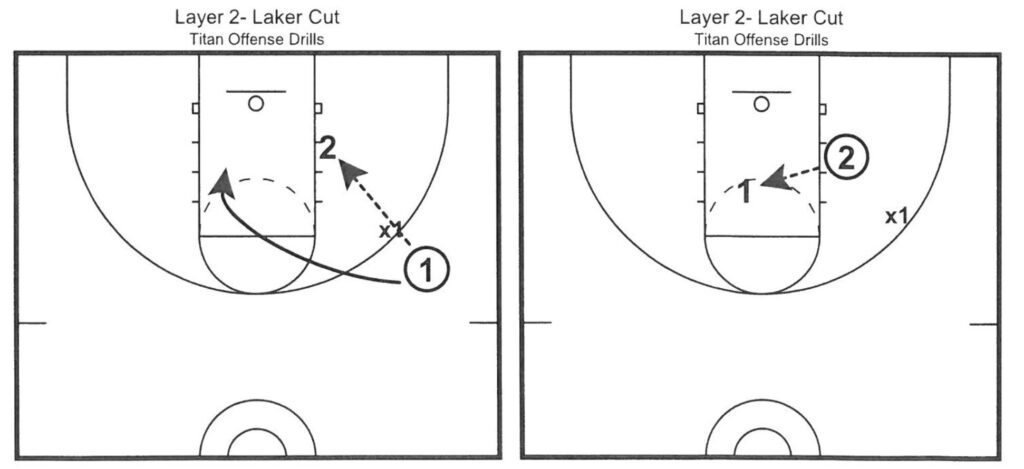
The second variation of this Laker cut drill moves the defense to the wing. Here’s the set up has the defender on the ball initially, with the post player open underneath the basket.
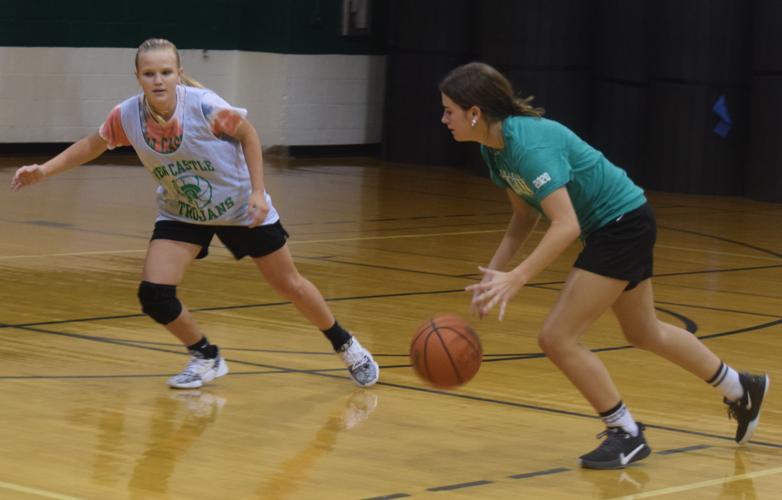
Here, after making the pass, the player on the wing must make the Laker cut with a defender in front of him. The cutter can practice using a jab step for misdirection. Once again, this player can work on different finishes once they’ve received the pass in the lane.
A Laker cut works in the opposite way as a split cut. This happens the wing player passes into the low post then cuts away from the ball to set or receive another screen.
Kyle Brasher | Gibson Southern High School
Lady Titans Basketball Coach
Be sure to check out that episode for some great content on the journey of Coach Torbett, how Read and React came about, and the philosophy behind the offense.
If you have listened to Steve’s podcasts with Rick Torbett, you will know that Coach Collins utilizes the Read and React offense. But before installing this offensive system for your team, you’ll need to develop the specific skills to help your players leverage scoring opportunities. These Read and React basketball drills layer these skills so your players can excel with this system.
We utilize the Read and React in our program at Gibson Southern in Fort Branch, Indiana. We love the unpredictability and freedom it provides our players while still having certain rules for them to follow. The various layers in these drills are the same as Coach Torbett’s system and can be easily implemented if you are running the Read and React system.
As all coaches know, it is important to prepare your athletes both mentally and physically for how to react in certain situations when games roll around and these drills simulate those situations in 3 or 4 player groups. We have implemented these drills with female basketball players from 5th grade all the way up to 12 grade.
Read and React Basketball Drills: Pass and Cut
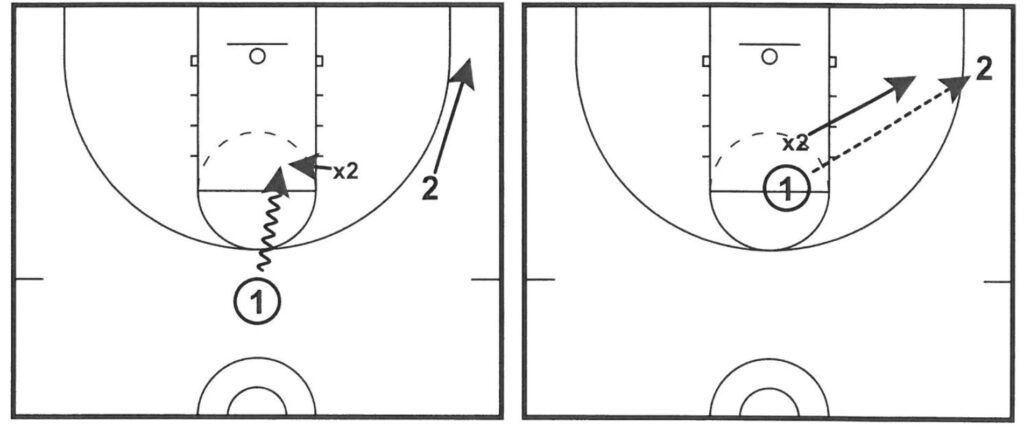
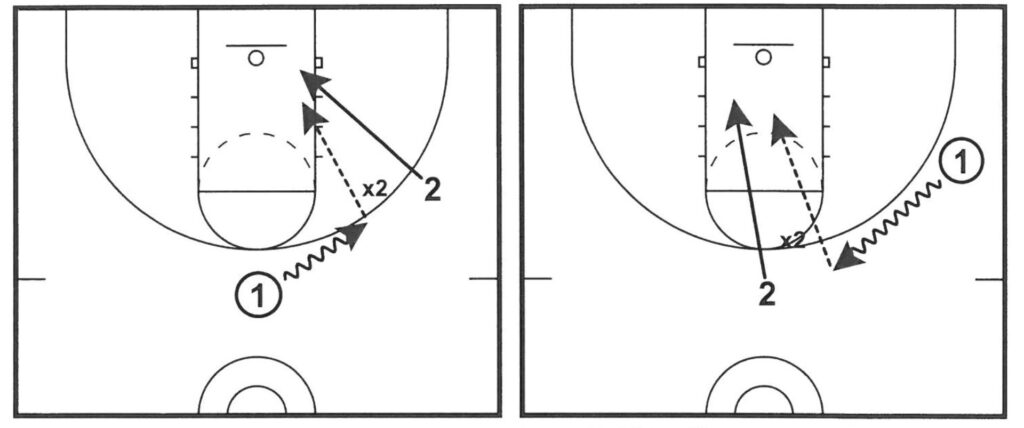
First of the Read and React basketball drills is a basic pass and cut. This drill incorporates three players: a passer, a finisher, and a defender. The move amounts to a UCLA cut which can be incorporated into a number of different offensive sets.
The ball starts at the top of the key, where the finisher passes to the wing. After making the pass, the finisher makes the UCLA cut in front of the defender. As the finisher makes the cut, it’s important that they’re looking for the ball with their hand up.
The passer waits until the finisher breaks the “read line” (the three-point line in the Read and React system) before throwing the pass. This pass should lead the finisher to the hoop, allowing the finisher to just catch and attempt the layup in one move.
The rotation for this drill sees the passer go to defense, the defender go to finisher, and the finisher switch to passer. This drill can be reversed to other portions of the floor, including a cuts from the wings. You can also incorporate different finishes for the layup, like a left or right, jump-stop, or shot fakes.
Read and React Basketball Drills: Fill
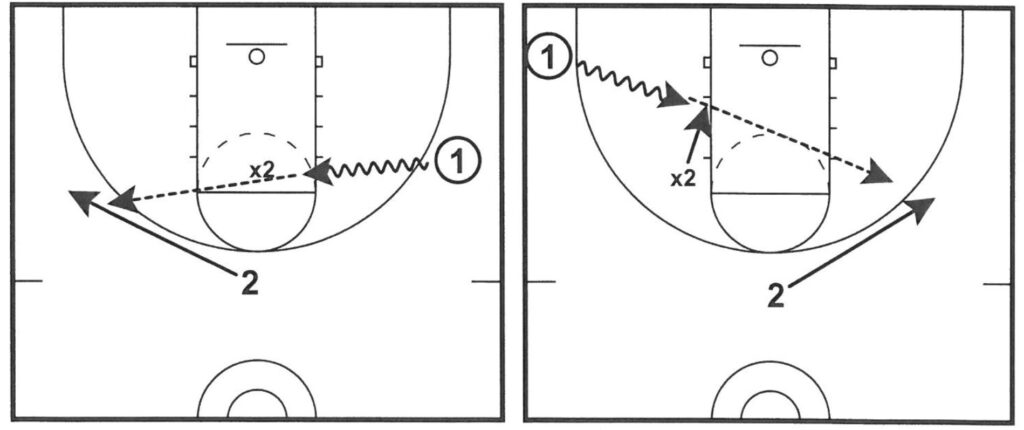
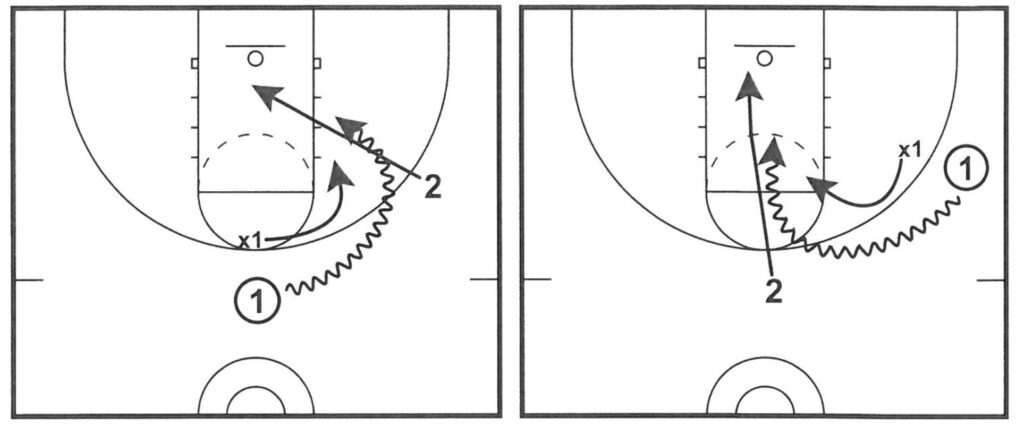
The next sequence in the first layer of Read and React basketball drills involves the Fill. This exercise has the shooter/finisher cut to an open space on the floor to receive the pass. After making the catch, the shooter must read the defense and react before taking the correct shot. This motion is called a Flash in some offense sets.
The drill set up has a passer on one wing and the shooter starting on the opposite wing. The defender starts in help-side position. The shooter cut to the top of the key to receive the pass from the wing and reads the defender on the catch.
If the defender stays back, the shooter can take a catch-and-shoot opportunity if they are within their shooting range. If the defender is aggressive and gets to the Read Line, the shooter should complete a rip-and-go move. This momentum move brings the ball across their body quickly, allowing them to attack the lane and leverage the defenders momentum.
This drill can incorporate different finishes once the shooter is in the lane, including layups, floaters, or jump-stops. The drill can also shift to other spaces on the floor to create different driving lanes.
Read and React Basketball Drills: Backdoor
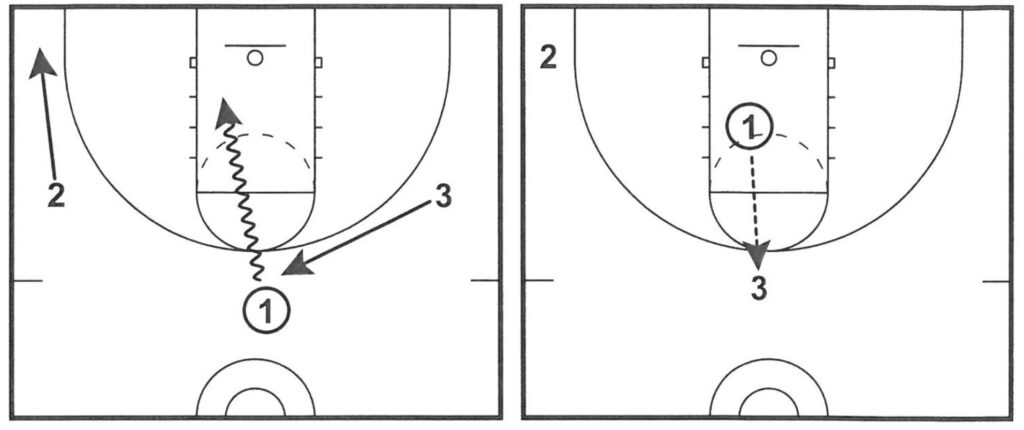
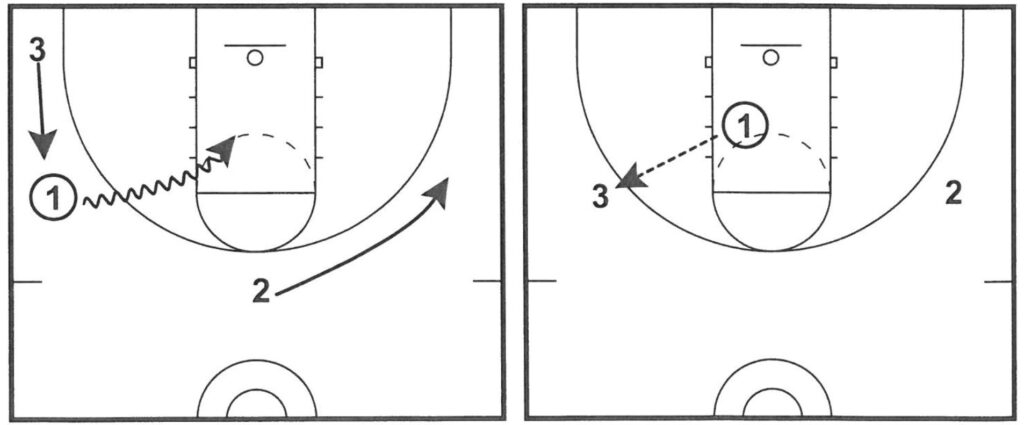
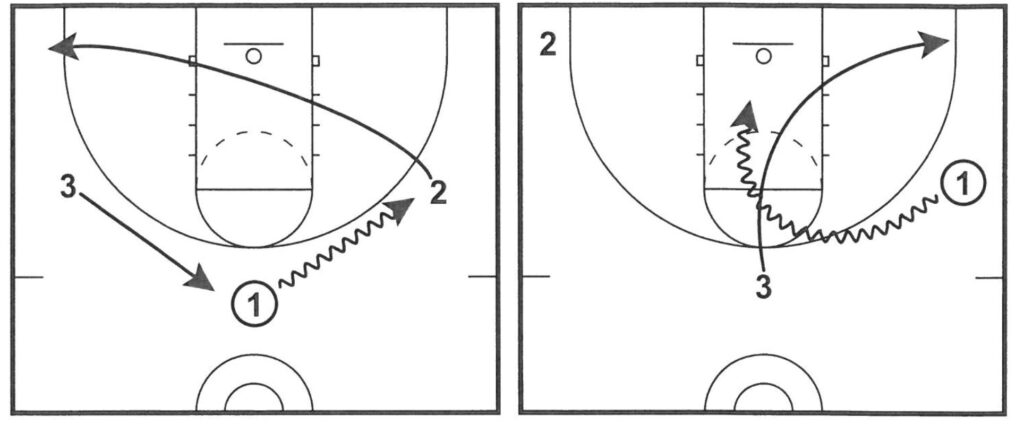
The last sequence for this first layer of Read and React basketball drills incorporates a simple backdoor cut. This move allows the offensive player to leverage an aggressive defense to create scoring opportunities.
This drill begins with the passer at the top of the key and both the shooter and the defender in the corner. The shooter cuts up the floor looking for the pass. The defender denies the wing entry.
Once the defender gets above the Read Line (the three-point line), the shooter makes the backdoor cut. The passer can ball fake to the wing before making the pass on the cut. This should be a leading pass, and likely a bounce pass at that.
This drill, like the others, can incorporate different finishes for the shooter. You can use traditional strong side layups, reverse finishes, jump-stops, jump-stops with a shot fake and finish, or finish through a contact pad. This drill can also be run from a variety of positions on the floor.
Kyle Brasher | Gibson Southern High School
Lady Titans Basketball Coach
Be sure to check out that episode for some great content on the journey of Coach Torbett, how Read and React came about, and the philosophy behind the offense.
The Read and React is a great basketball offense. The only issue I have come across in our time running it is it can be difficult to get points quickly out of it. I did some research and playing with the Read and React and utilized the principles of this basketball offense to create some set plays out of it, including one with a UCLA cut.
These should offer good opportunities to score quickly out of the look while the opposing team thinks you’re still just running your offense. Even if you don’t run Read and React, these looks could still be utilized as great set play options to get good movement and looks at the basket.
Read and React Basketball: UCLA Cut
Another look that has action happening on both sides of the court to keep everyone busy and involved. This read and react set incorporates some basketball staples like pick and roll action and a few UCLA screens.
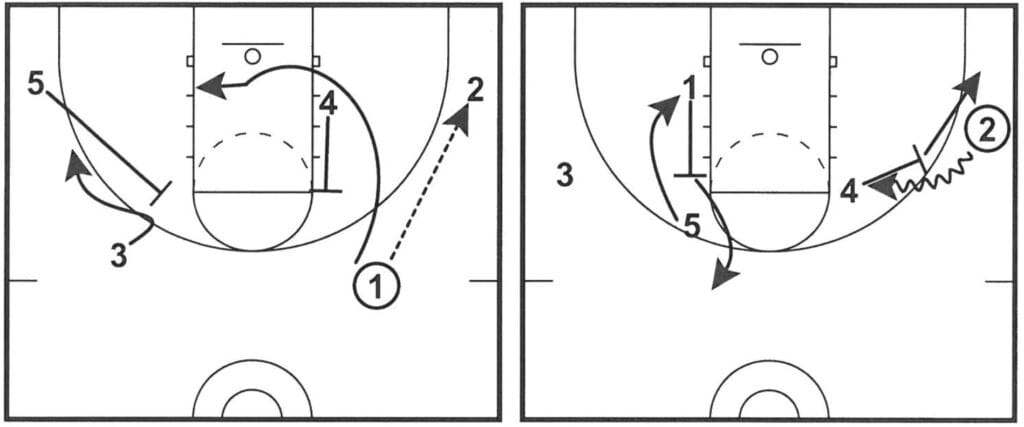
This set beings in a 4-out, 1-in alignment. Player 1 passed to the corner, then makes a UCLA cut off a back screen from Player 4. 1 should cut with his hand up, looking for a pass from 2. While this action takes place, Player 5 sets a pin screen for Player 3. If 1 isn’t open on the UCLA cut, 2 can look to skip the ball to 3 for an open look.
This read and react set continues when 4 sets a ball screen for 2. 4 fades to the corner while 2 attacks the lane. While the strong side pick and roll happens, 1 sets a back screen for 5.
Player 2 should be a solid ball handler and decision maker, considering he’s the focal point of this set. As he attacks the lane, 2 should read the defense and react accordingly.
Player 2’s options include driving to the rim for a layup attempt or hitting 5 on the left block. Player 4’s on the wing and Player 3 should cut to the opposite corner. 1 clears to be an outlet if the defense covers each option.
This play is easily reversible for a right-handed drive.
The Read and React is a great basketball offensive system. The only issue I have come across in our time running it is it can be difficult to get points quickly out of it. I did some research and playing with the Read and React and utilized the principles of this basketball offense to create some set plays out of it.
These should offer good opportunities to score quickly out of the look while the opposing team thinks you’re still just running your offense. Even if you don’t run Read and React, these looks could still be utilized as great set play options to get good movement and looks at the basket.
Read and React Basketball Offense: 5-Out Post Look
If you have a very good post player or just someone that is good at finishing around the rim, this is a good look for them. It starts with a dribble-at to initiate the offense to clear out the right side a little bit. We have action happening on the weak side to keep everyone busy and hopefully get a good look for the 5 in the paint.
This read and react play begins with your basketball team using a 5-out set. The point guard dribble hard at the wing toward Player 4, who cuts toward the basket. 4’s cut finishes in the opposite corner. As Player 1 fills the wing, Players 5 and 3 rotate up one spot along the perimeter.
From there, Player 1 makes a pass to Player 2 in the corner. Player 1 then cuts, calling for the ball as he does so. Players 5, 3, and 4 all rotate to fill the open spaces on the perimeter. Player 1 gets into the paint but stops his cut under the basket.
1 reverses his course and sets a back screen for Player 5 on the wing. Player 5 makes his cut toward the basket. At this point, Player 2 can either hit 5 with a pass on the cut or wait for 5 to post up on the block.
On the weak side of this read and react play, the Player 4 sets a flare screen for Player 3 then cuts to the strong-side elbow. If Player 5’s cut was covered, Player 2 can throw a skip pass to Player 3. He can also clear the ball to Player 1 or hit Player 4 on the elbow. If Player 4 gets the ball, this set creates a high-low opportunity with Player 5.
The Read and React is a great basketball offensive system. The only issue I have come across in our time running it is it can be difficult to get points quickly out of it. I did some research and playing with the Read and React and utilized the principles of this basketball offense to create some set plays out of it.
These should offer good opportunities to score quickly out of the look while the opposing team thinks you’re still just running your offense. Even if you don’t run Read and React, these looks could still be utilized as great set play options to get good movement and looks at the basket.
Read and React Basketball Offense: Pin Screens
This is a VERY quick set, especially if you need a quick 2-point basket. The player on the left wing will receive a pin screen and they’ll curl to the block. For this play to be most effective, the player setting the pin screen on the left wing needs to be a knockdown shooter.
The initial action of this read and react basketball offense set play involves your two bigs setting pin screens for your wings. Of these two bigs, Player 4 should be a better outside shooter than Player 5. When setting these screens, Player 4’s back should face the corner while Player 5’s back faces the sideline.
As the screens are set, Player 2 curls toward the basket. Player 3 fades to the corner. The first look for your point guard should be for the layup. If not, the second read is for the shooter in the corner.
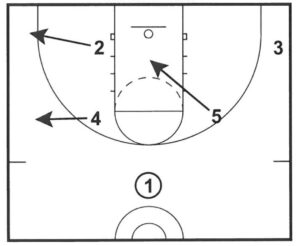
The second phase of this read and react basketball set involves a series of cuts for the offense. If neither Player 2 nor Player 3 are open on the pin screens, Player 4 flares to the wing. Player 2 cuts to the corner, and Player 5 cuts to the basket.
Another option here would be a high-low action with Players 4 and 5. In that option, Player 2 and Player 5 make still make their cuts, but Player 4 remains at the elbow. Player 1 makes an entry pass to 4 and clears to the opposite wing.
Player 4 would then look down low for Player 5, who has ideally sealed his defender when he made his cut.
Getting good looks at the basket remains the primary focus of most offenses. Although there’s value in developing intricate offensive sets, sometimes in a close basketball game, getting a quick hitter releases the pressure and allows your team to thrive. A good basketball playbook features a number of options across a variety of situations, and having a consistent quick hitter is an absolute must. Sometimes, getting your best basketball players going downhill toward the basket with a pistol action helps create easy looks.
This is especially true as a season winds down or teams begin their postseason tournaments. You’re team’s already been well-scouted at this point, and you may have matched up with your opponents more than once. So it’s important to keep your opponents on their toes with a fresh playbook. The tricky part remains how to add to our repertoire without providing an extra burden on our players.
Enter the Basketball Quick Hitter series. These simple sets afford any offense release valves that players learn in a matter of minutes.
The basketball pistol play refers to an early offense action between the point guard and a wing player, with a post player at the top of the arc. The two main Pistol options to start a play are a dribble handoff and a pick and roll. In the Pistol action, the offense attempts to catch the defense before it sets in hopes to find optimal mismatches or blown coverage by a lack of defensive rotation, which makes it one of the best basketball quick hitters.
The sequence of this play begins with your point guard hitting ahead quickly to the wing. From there, Player 1 follows his pass and sprints into a dribble handoff with Player 2. As this pistol action develops, Player 4 sets a screen for Player 3 on the weak side. 4 rolls to the basket while 3 slips to the corner.
Player 1 needs to sprint up the basketball court into this pistol action. Completing the dribble handoff creates the quick-hitter here, because 1 is now going downhill to the basket at full speed.
If the defense covers this initial pistol action, the secondary scoring option unfolds for your basketball team. Player 2 cuts off a flare screen from Player 5. Player 1 on the wing has two options at this point: a pass to Player 2, who will have either a shot or a drive.
After setting the flare screen, Player 5 dives toward the hoop, drawing the defense down with him. While all that action is going on, 4 and 3 can screen for each other on the weak side to keep the defense honest.
Getting good looks at the basket remains the primary focus of most offenses. Although there’s value in developing intricate offensive sets, sometimes in a close basketball game, getting a quick hitter releases the pressure and allows your team to thrive. A good basketball playbook features a number of options across a variety of situations, and having a consistent quick hitter is an absolute must. Sometimes, a simple quick backdoor cut provides all the offense you need.
This is especially true as a season winds down or teams begin their postseason tournaments. You’re team’s already been well-scouted at this point, and you may have matched up with your opponents more than once. So it’s important to keep your opponents on their toes with a fresh playbook. The tricky part remains how to add to our repertoire without providing an extra burden on our players.
Enter the Basketball Quick Hitter series. These simple sets afford any offense release valves that players learn in a matter of minutes.
Basketball Quick Hitter: Quick Backdoor Cut
This quick hitter generates a great, quick backdoor cut opportunity for your offense. The play requires precise timing to ensure maximum efficiency. You’ll want to design this play with the player you want shooting the ball on the left wing.
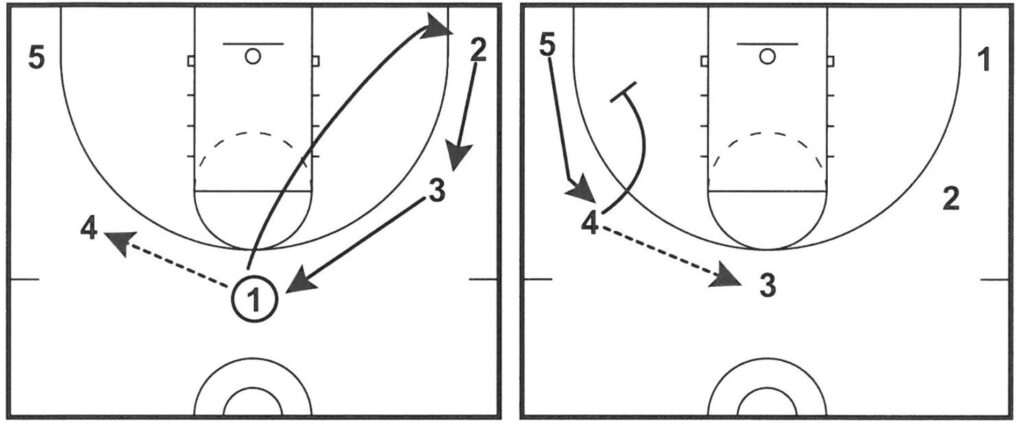
The play opens with a fairly traditional set up, with both bigs starting down low and the shooters occupying the wings. The point guard brings up the ball, and as he crosses half court, the action of this quick hitter begins. The wings exchange positions on the floor, with Player 3 starting the movement and Player 2 waiting until 3 passes the right elbow. Player 3 initiating the movement draws the eyes of the defense away from Player 2.
Once the wings have exchanged, the bigs cut up to the elbows. The point guard, Player 1, can lead the defense to the left with his dribble before an entry bounce pass to Player 5 at the elbow. Player 3 clears from the wing and floats to the weak side corner at this point.
This is where the quick-hitting element of this quick backdoor cut takes place. As Player 5 receives the ball at the elbow, Player 2 starts his quick backdoor cut. Player 2 can set up his defender with fake or hard step toward the top of the key before his backdoor cut. 5 looks for 2 on the cut. 5 should use his peripheral vision to read the play.
As the pass happens, Player 4 sets a flare screen for Player 1, who cuts to the left wing. Should the defense cover Player 2’s cut, 5 should look to skip the ball to 1 on the wing. This secondary action keeps multiple actions occupying the defense.
Getting good looks at the basket remains the primary focus of most offenses. Although there’s value in developing intricate offensive sets, sometimes in a close basketball game, getting a quick hitter releases the pressure and allows your team to thrive. A good basketball playbook features a number of options across a variety of situations, and having a consistent quick hitter is an absolute must.
This is especially true as a season winds down or teams begin their postseason tournaments. You’re team’s already been well-scouted at this point, and you may have matched up with your opponents more than once. So it’s important to keep your opponents on their toes with a fresh playbook. The tricky part remains how to add to our repertoire without providing an extra burden on our players.
Enter the Basketball Quick Hitter series. These simple sets afford any offense release valves that players learn in a matter of minutes.
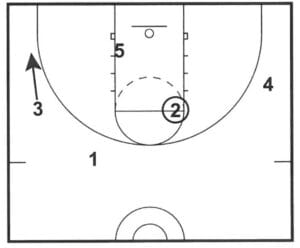
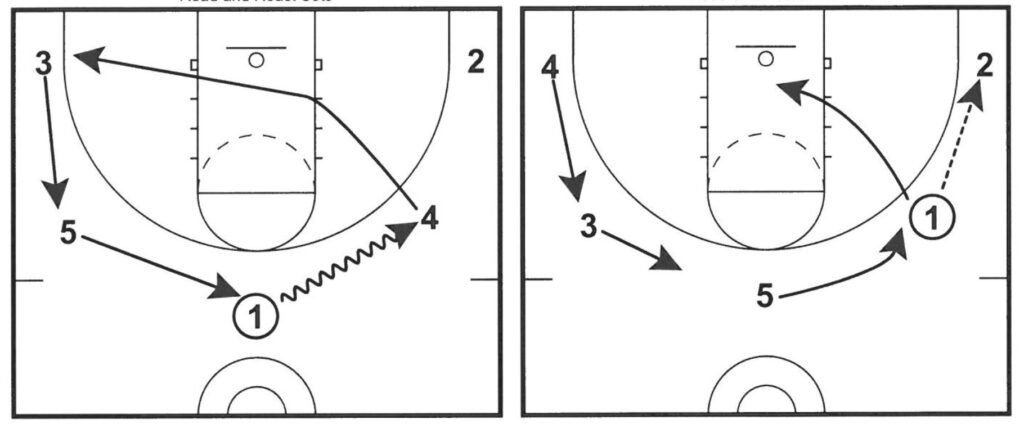
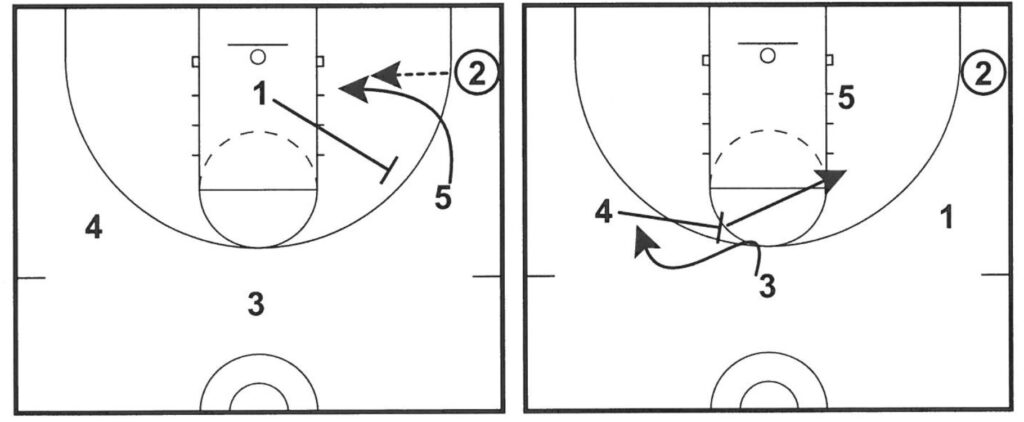
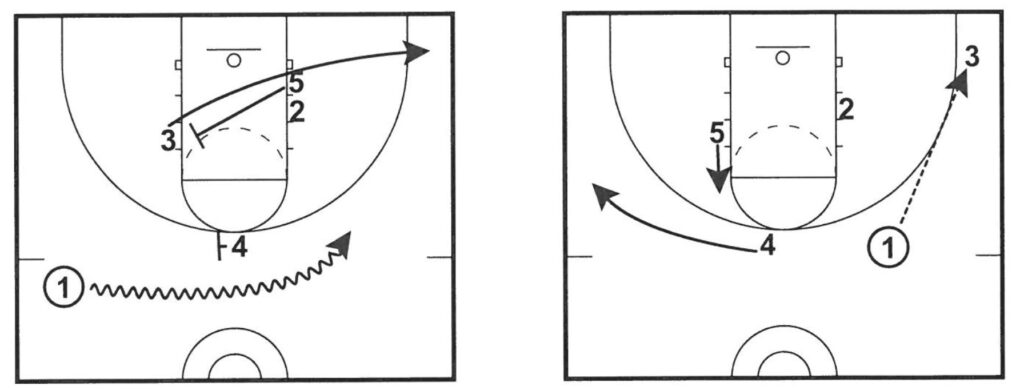
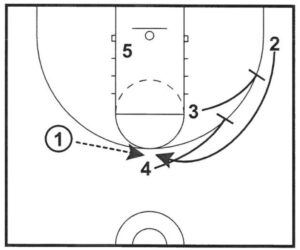
The play begins with your point guard coming up the left side of the basketball court, and Player 5, the quick hitter target, on the opposite block. 1 uses a high-ball screen from Player 4. As that happens, 5 comes across to screen for Player 3.
After the ball screen, 4 pauses at the top of the key. 1 begins a dribble penetration and looks for Player 3, who cut to the right corner. Player 5 acts like he’s setting a cross-screen near the elbow as Player 4 clears to the wing. 1 makes the pass to 3 in the corner.
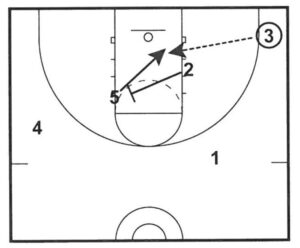
From there, Player 2 sets a cross screen for Player 5. Player 3 looks for 5 as he cuts to the hoop. It’s important that Player 5 cuts to the rim and not the opposite block since this is a basketball quick hitter.
If 2 sets a solid cross screen, 5 should be open for a clean touch down low and a layup. Player 3’s pass must hit 5 in the hands to minimize the time needed to get the shot up.
If you have a left-handed post player, you can reverse this play. The important part of this play is you want to have the player that screens across for the post (2 in this play) to be a major scoring threat. You want the defense to respect this player and not cheat off onto your post.
At some point in your career, if not your season, a situation will arise where you are down three points with two free throws on tap. Or, you could be down two points with one free throw. In these situations, you’ll need a missed free throw play for a chance to extend or win the game.
The question is: Are you ready for this situation? Is this a situation you have worked on in practice? While this does not need to be a huge part of your practice planning, it is something that should find a place. This is especially true as you head into your postseason tournament.
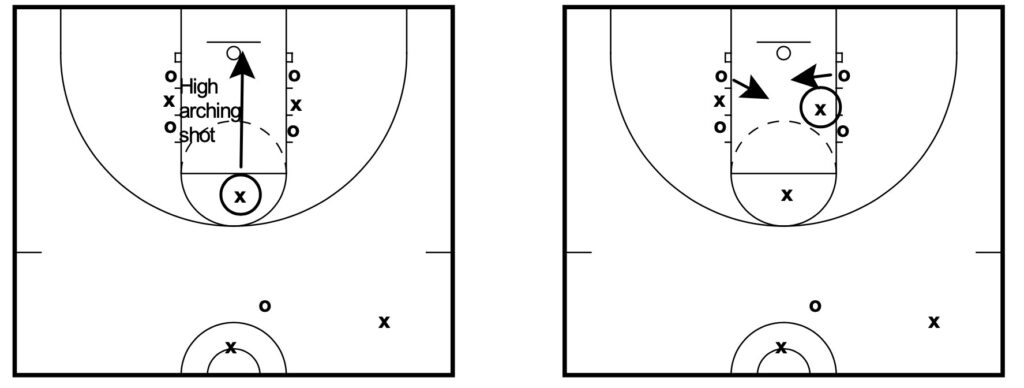
Below is a play that we implement each season called Desperado. In it, we work on a missed free throw play to give us a chance to tie or maybe even win the game! This is not something we work on a ton, but we will sprinkle it in at times throughout the season to ensure we are ready for this situation.
Missed Free Throw Play: Desperado
Situation: A free throw shooter MUST miss a free throw at end of a game.
Process:
Run this on side of shooter’s arm (R handed shooter= R side, L handed shooter= L side).
Shooter must line their shooting hand up with the vertical side of the backboard square.
Shooter will shoot a high a high arching shot to ball banks off backboard and onto top of rim. This will cause a long rebound for offensive rebounder on 2nd block.
If down 2, rebounder gets it and attempts a shot quickly.
If down 3, rebounder either boards and passes out or tips it out to shooter for 3.
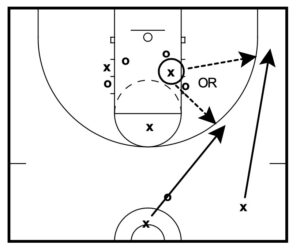
Shooter will go to top of key and 1 guard at top will go to ball side corner while other will got to ball side wing.
The two players at the top need to start moving on the flight of the ball but need to be sure not to cross the top of the key extended until ball is released to avoid a violation. Once ball is released, these players must sprint to their spots.
We like to overload the rebounding side to give us multiple looks for a shot.
In addition to running this play in a situation, you need to find time to allow all of your players to work on missing a free throw in this way. In addition to practicing missing the free throw, practice players grabbing the rebounding for a quick putback or receiving a tip back for a 3 point shot. Just make sure you are prepared for all situations!
Kyle Brasher Gibson Southern High School
Social Studies Teacher
Lady Titans Basketball Coach
The Box Set offense in basketball stands out as a popular offense because it is purposefully designed to get easy buckets. This offense requires precise movement and timing, but when properly executed, the box set leads to scoring opportunities. These sets incorporate both on-ball and off-ball screens, and can be deployed against both man-to-man and zone defenses. This box set uses a UCLA cut for a quick-hitting first action.
Some of the most famous coaches throughout the history of basketball, including Chuck Daly, Mike Krzyzewski, and Dean Smith, used variations of the box set offense at different points in their careers. Box allows the ball to flow into the hands of your best playmakers in sports on the floor where they will be successful.
Box Set Offense: UCLA Cut
Unlike the Box Set Isolation play, this set uses multiple actions to create good shots. This set, like the others in the Box Set Series, begins with the same alignment. This helps prevent opposing defenses from immediately recognizing the play. Having the same set up also makes scouting your team more difficult.
This box set is designed purposefully as a quick-hitter with the initial UCLA cut. If the opposing defense covers up that cut, the second action of this play creates a pick-and-roll opportunity on the strong side. It also adds a weak side stagger screen to a potential jump shot. This play is great if you want to isolate a post defender on a ball screen and/or if you have a player that is great coming off a ball screen. This play is very effective because it keeps both sides of the floor busy to really allow that ball screen to get as open of a look as possible, either on the drive or roll.
Box Set UCLA Progression
This set starts with the same alignment as the Box Set Three-Pointer play, with your team’s two big men occupying the elbows. Your wing players, 2 and 3, start on the low blocks.
The play begins with both Player 2 and Player 3 popping to the wings. The point guard passes to the open wing. Depending upon the defensive coverage, Player 1 can pass to either wing. Another variation to this play could have Players 2 and 3 cut to the opposite wings from the low blocks.
The Box Set UCLA cut comes following the first pass. If Player 1 passes to Player 2, he cuts off an elbow screen from Player 4. 2 immediately looks at the cutter for this quick-hitter opportunity.
If the defense covers this box set’s UCLA cut, then Player immediately moves into a ball screen on the wing for Player 2. As that’s happening on one side, Player 1 uses stagger screens on the opposite wing as well.
Player 2 can attack the lane, hit Player 4 on the roll, or look to kick the Player 1 on the weak side wing. Another layer for this could see either 3 or 5 slip the screen and cut.
This play works in either direction. All the box set offense plays can easily be flipped to either side of the court and with them all starting out of the same base look. It makes scouting your set plays that much harder.
The Box Set offense in basketball stands out as a popular offense because it is purposefully designed to get easy buckets. This offense requires precise movement and timing, but when properly executed, the box set leads to scoring opportunities. These sets incorporate both on-ball and off-ball screens, and can be deployed against both man-to-man and zone defenses. The box set can also create solid low-post looks.
Some of the most famous coaches throughout the history of basketball, including Chuck Daly, Mike Krzyzewski, and Dean Smith, used variations of the box set offense at different points in their careers. Box allows the ball to flow into the hands of your best playmakers in sports on the floor where they will be successful.
Box Set Offense: Low-Post Look
Unlike the Box Set Isolation play, this set sports multiple actions to create good shots. Ideally, this set begins with the same alignment as other Box Set plays in your playbook. This helps prevent opposing defenses from immediately recognizing the play. Having the same set up also makes scouting your team more difficult.
This box set is designed purposefully to get an open low-post look for your best post player. If the opposing defense covers up that shot, the second action of this play creates an open look for your team’s best shooter. It’s imperative to stress the importance of cutting hard for both the post and the guard in this set.
Box Set Low-Post Progression
This box set play begins with the same alignment as the Box Set Three-Pointer play, with your team’s two big men occupying the elbows. Your wing players, 2 and 3, start on the low blocks.
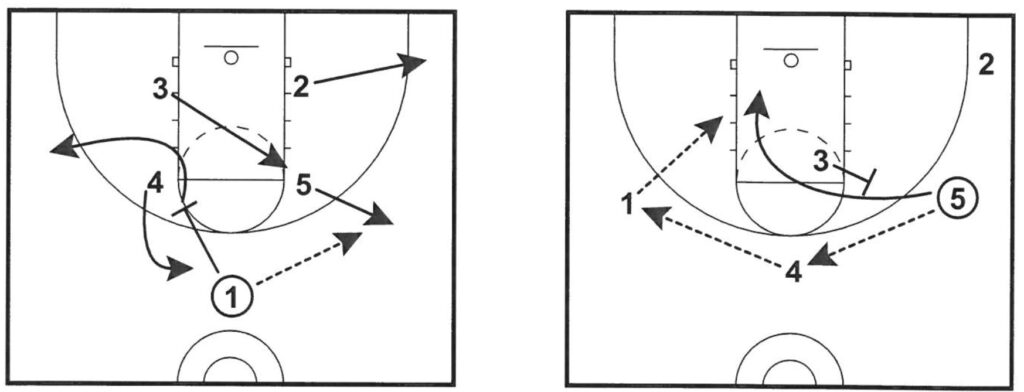
The play starts with a series of cuts. Player 5 pops from the right elbow to the left wing and receives the initiating pass from Player 1. The point guard then cuts down to set a screen for Player 4, who curls to the top of the key. Following the screen, Player 1 cuts to the weak side wing. As this action unfolds, Player 2 cuts to the strong-side corner, and Player 3 moves from the left block to the right elbow.
The next action involves 5 reversing the ball. Player 4 receives the centering pass and reverses to Player 1 on the wing. As those passes occur, Player 3 sets a back-screen for Player 5 at the elbow. Player 5 uses that screen and cuts down the lane. Player 1 can either hit Player 5 on the cut to the basket, or once 5 establishes himself on the low-post.
The second action for this box set low-post play creates an opportunity for your team’s best shooter.
If Player 1 can’t get Player 5 the ball, the next movement begins. Player 3 and Player 4 set stagger screens on the weak side for Player 2. The shooter cuts up from the corner, curling along the three-point line.
In this box set, Player 1 can ball-fake to the low-post before passing to the shooter. Player 2 uses the stagger screens and receives the pass at the top of the key. He can either take that shot, or attack the lane. A hard dribble drive could draw Player 5’s defender, leaving the low-post open for a drop off pass.
The Box Set offense in basketball stands out as a popular offense because it is purposefully designed to get easy buckets. This offense requires precise movement and timing, but when properly executed, the box set leads to scoring opportunities. These sets incorporate both on-ball and off-ball screens, and can be deployed against both man-to-man and zone defenses. The box set can also create certain three-pointer opportunities.
Some of the most famous coaches throughout the history of basketball, including Chuck Daly, Mike Krzyzewski, and Dean Smith, used variations of the box set offense at different points in their careers. Box allows the ball to flow into the hands of your best playmakers in sports on the floor where they will be successful.
Box Set Offense: Three-Pointer
Unlike the Box Set Isolation play, this set is designed purposefully to get an open look at a three-pointer for your team’s best shooter. Ideally, this set begins with the same alignment as other Box Set plays in your playbook. This helps prevent opposing defenses from immediately recognizing the play. Having the same set up also makes scouting your team more difficult.
This box set three-pointer generates a wipe open look for your team’s best shooter when executed correctly. The most important part of this set is that the screeners must be shoulder-to-shoulder on both screens. If that happens, your shooter will be open a lot.
Box Set Three-Pointer Progression
This box set begins with your two bigs, players 4 and 5, occupying the elbows. Your two wings, players 2 and 3, start off on the low blocks.
The point guard dribbles up and the box set three-pointer play starts with player 3 popping to the wing. Player 1 passes 3 the ball and cuts to the opposite wing. As the pass takes place, 2 fills the strong-side low block vacated by 3.
Once 3 has the ball on the wing, player 5 sprints across and stands shoulder-to-shoulder with player 4 at the elbow, free throw line extended.
3 uses the double ball screen and puts pressure on the lane, with 1 spread out wide for a potential kick out. 3 can attack the basket at this point if the defense overplayed on the wing.
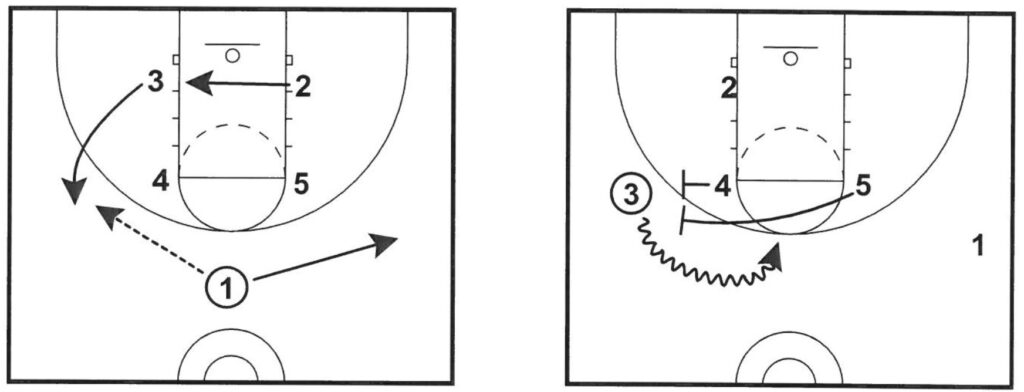
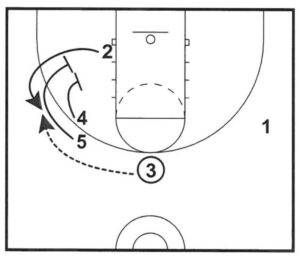
The box set three-pointer play’s progression continues with players 4 and 5 pivoting to set a second screen.
4 and 5 stay shoulder-to-shoulder and drop to set another double screen, this time for player 2, ideally your team’s best shooter. The key to this second screen is setting it well below the three-point line to give your shooter space behind the arc.
Player 2 uses the double screen and curls up the floor. The shooter must have his hands ready to receive. This is a catch-and-shoot opportunity.
Player 3 drives toward the land, but picks up his dribble and reverses his stance. He hits player 2 coming up following the off-ball screen.
If players 4 and 5 set their screen properly, this box set should get your best shooter a wide open look at a three-pointer. Player 1 can drop for an offensive rebound opportunity. Player 3 remains high as an outlet to reset the offense if the defense covers the shot.
The Box Set offense in basketball remains one of the more popular offenses because it is purposefully designed to get easy buckets. This offense requires precise movement and timing, but when properly executed, the box set leads to scoring opportunities. These sets incorporate both on-ball and off-ball screens, and can be deployed against both man-to-man and zone defenses. The box set can also create certain isolation opportunities.
Some of the most famous coaches throughout the history of basketball, including Chuck Daly, Mike Krzyzewski, and Dean Smith, used variations of the box set offense at different points in their careers. Box allows the ball to flow into the hands of your best playmakers in sports on the floor where they will be successful.
Box Set Offense: Isolation
Unlike the Box Set Backdoor play, this set is designed purposefully to get an isolation opportunity for your team’s best attacker. Ideally, this set begins with the same alignment as other Box Set plays in your playbook. This helps prevent opposing defenses from immediately recognizing the play. Having the same set up also makes scouting your team more difficult.
This is a great box set isolation play to get your best penetrator a cleared side of a court. The key to this play is the player that gets the ball for the isolation must make a quick move. We have always coached our players up to do a quick jab to the middle of the court and go towards the baseline side. If you have a left handed player, this play could easily be flipped to the other side.
Box Set Isolation Progression
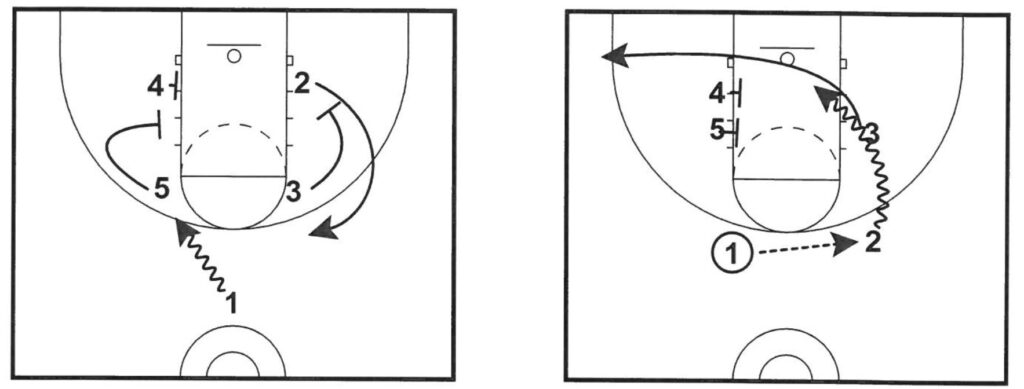
This box set isolation play begins with the two bigs, players 4 and 5, on the left box and elbow. 2 and 3 complete the box set on the opposite side.
The point guard, player 1 in this figure, dribbles hard toward the left, stopping at the three-point line elbow-extended. 1 picks up his dribble and looks to pass.
As that action happens, player 3 sets a down screen for player 2, who is the team’s best isolation player. 2 uses the down screen and pops up to the three-point line on the weak side of the floor.
As 2 pops up to the top, player 5 slides down beside player 4 in order to set up a double-screen along the baseline.
This box set isolation play continues as player 2 cuts to the right wing.
After setting the down screen, 3 then cuts to the strong side corner. 3 uses the double-screen set by players 4 and 5 along the baseline to draw the defense.
1 can ball fake to the corner before finding 2 with a pass on the right wing. From there, 1 holds his position to flood the left side, leaving 2 to operate along the right with this opportunity.
The box set isolation design creates an open side of the floor for your team’s best attacker to create off the dribble. 2 should look to penetrate hard, knowing he has a drop off on the opposite block as well as an outlet in the weak side corner. As player 2 begins his drive, the point guard can float toward to right wing to provide his teammate with a safety valve.
The Box Set offense in basketball remains one of the more popular offenses because it is purposefully designed to get easy buckets. This offense requires precise movement and timing, but when properly executed, the box set leads to scoring opportunities. These sets incorporate both on-ball and off-ball screens, and can be deployed against both man-to-man and zone defenses.
Some of the most famous coaches throughout the history of basketball, including Chuck Daly, Mike Krzyzewski, and Dean Smith, used variations of the box set offense at different points in their careers. Box allows the ball to flow into the hands of your best playmakers in sports on the floor where they will be successful.
Box Set Offense: Backdoor Lay-Up
This play out of the box set offense is designed purposefully to create a quick and east backdoor lay-up opportunity. When facing a man-to-man defense, this set can be used once or twice a game, depending upon how disciplined the opposing defense is. The key to running this play is misdirection.
This box set offensive play begins with the two bigs, 4 and 5, on the left box and elbow. 2 and 3 complete the box set on the opposite side.
The point guard initiates the play with a hard dribble drive toward the left elbow. As he makes that move, 4 slides down to create a double screen for 3, who races to the string-side corner. As 3 makes his cut, he yells “Ball!”
While this action takes place, 2 steps back to the three-point line. 1 picks up his dribble and does a ball fake to the corner. With all eyes and flow heading toward the left, 2 executes a backdoor cut at that point. 1 hits 2 with a bounce pass as he cuts down the lane.
Box Set Offense Progression
If 2’s cut gets covered up by the defense, the progression out of this box set offense remains simple.
First, 2 must clear to the right side corner. Then, 4 sets a screen for 5, who curls into the lane. If neither of those players is open on their cuts, 3 must sprint up from the left corner to take a handoff from 1.
This variation allows the offense to flow into another set if need be, or create a scramble situation if 3 can attack an open lane.
The box set offense stands out as an adaptable set for almost any team. These plays can be quick-hitters, or designed to generate open three-point looks.
One of the benefits of using the box set offense can make scouting difficult for opposing teams. Using the same starting look with the set keeps the defense from immediately knowing the progression of the play, even if they’ve scouted well. Check back for more on the box set series.
We also know that you can’t just waltz into a gym and tell your players to shoot some shots and call it a day. You can’t just yell “GAME SPEED” and expect them to always push themselves; you need to develop drills and put them in situations where players will compete against each other. Coach has you covered here with his 3-2-1 basketball shooting drill.
For Free Basketball drills, videos, practice plans and much more CLICK HERE
Basketball Shooting Drill
Do you have a kid(s) or a team that just loves to shoot? If you’re reading this either yes is your answer… or the answer is no it is because YOU love to shoot! Everybody in the game now knows how important shooting is; we’re entering a new “space and pace” era of basketball where the trend is to be able to attack the rim and finish or kick to an open shooter. 1-5 players today are expected to be able to hit open 15+ footers.
There always seems to be 5 spots around the perimeter that you can expect to shoot from: corner 3s (the big NBA shot), wings and top of the key. Coach has these covered with this basketball shooting drill.
Three makes (any amount of shots) all the way around for 15 makes. Then, the shooter has to hit two consecutive from those same 5 spots. This will amount to 10 makes. The following time through, the shooter has to make 1 from all the spots. Without missing. That’s 5 straight, 1 from each of the 5 spots.
Reps and Focus
How does this help? Of course, it allows you to get up (probably) a lot of shots in a short amount of time. It forces a shooter to focus, to forget about the last miss, build that mental toughness that is required to win games and compete in life.
This drill is not an easy drill to just start off your players with unless you want them to see how much they need to improve! I wouldn’t, obviously, use this as a team drill but it can be great for individual workouts. Players will get fatigued, salty, and frustrated at times; that’s why a coach should love it!
Modifying the Drill
If you like the concept of this drill but aren’t there yet, you can surely modify it. You can modify the distance to develop range and/or confidence in a shooter.
If you have a big, why not go short corners, elbows, and FT line? Those are shots bigs often get in most offensive systems or against zones.
Shooters aren’t good enough (yet)? No need to change any of the first 3 makes from each spot. I don’t think you should change the two in a row either, but the final 5 makes? If your shooter isn’t at that spot yet, why not give them a “2nd opportunity.” IE: Shooter makes 1st 3 from corner, moves to wing and misses. Give the shooter another opportunity to make the 3; if they make it. Move on. Miss? Start over.
Overall, another great drill with so much individual focus to build range, confidence, perseverance, and that gritty knockdown mentality that shooters need to excel in the game before, now, and as long as it is played.
For Free Basketball drills, videos, practice plans and much more CLICK HERE

 The last sequence for this set leaves the decision-making to Player 2. After using the ball screen, Player 2 can attack the rim looking for a shot. Another option is kicking back to Player 4 in the corner or short corner.
 First of the Read and React basketball drills is a basic pass and cut. This drill incorporates three players: a passer, a finisher, and a defender. The move amounts to a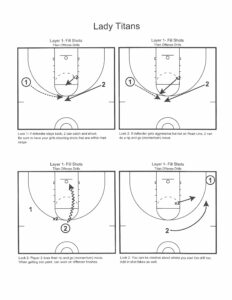
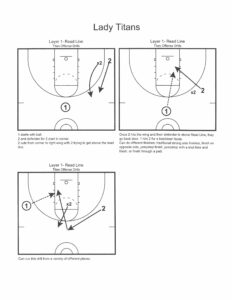 The last sequence for this first layer of Read and React basketball drills incorporates a simple
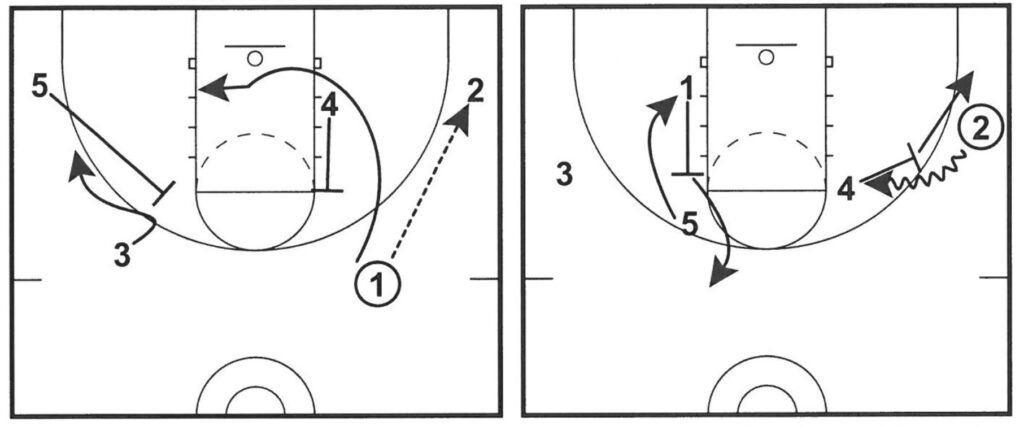
 Player 2 should be a solid ball handler and decision maker, considering he’s the focal point of this set. As he attacks the lane, 2 should read the defense and react accordingly.
 The second phase of this read and react basketball set involves a series of cuts for the offense. If neither Player 2 nor Player 3 are open on the pin screens, Player 4 flares to the wing. Player 2 cuts to the corner, and Player 5 cuts to the basket.
 From there, Player 2 sets a cross screen for Player 5. Player 3 looks for 5 as he cuts to the hoop. It’s important that Player 5 cuts to the rim and not the opposite block since this is a basketball quick hitter.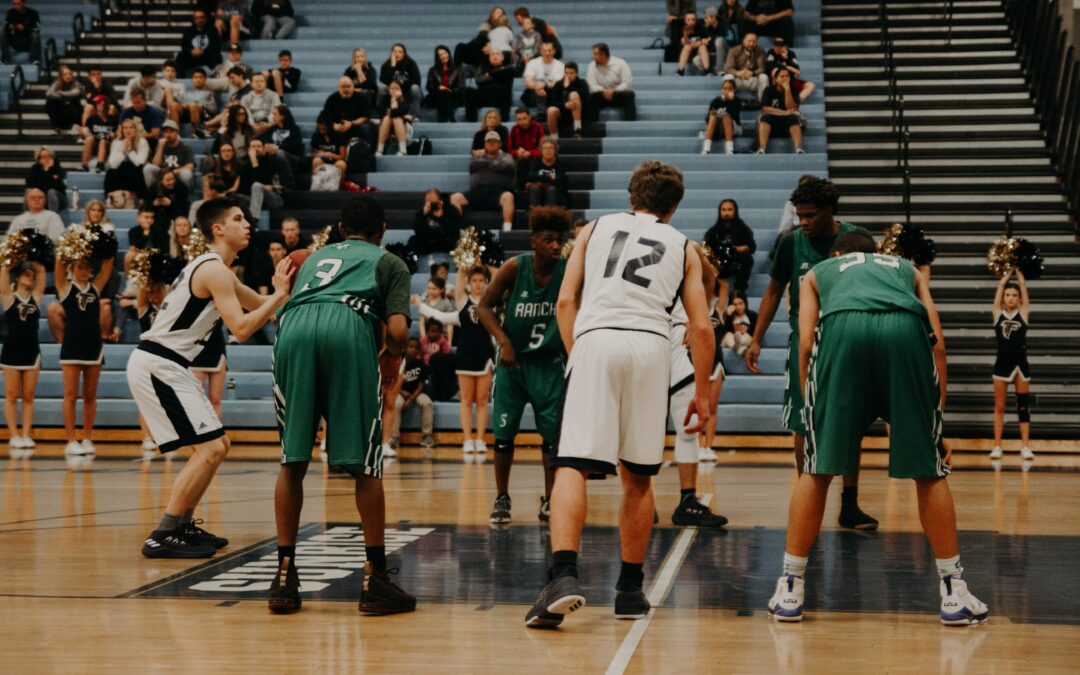
 If the defense covers this box set’s UCLA cut, then Player immediately moves into a ball screen on the wing for Player 2. As that’s happening on one side, Player 1 uses stagger screens on the opposite wing as well.
 The second action for this box set low-post play creates an opportunity for your team’s best shooter.
 The box set three-pointer play’s progression continues with players 4 and 5 pivoting to set a second screen.
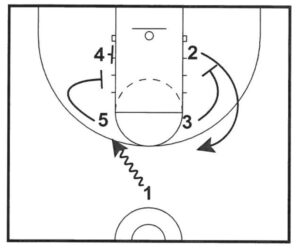 This box set isolation play begins with the two bigs, players 4 and 5, on the left box and elbow. 2 and 3 complete the box set on the opposite side.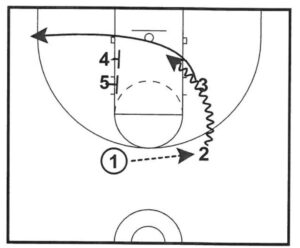
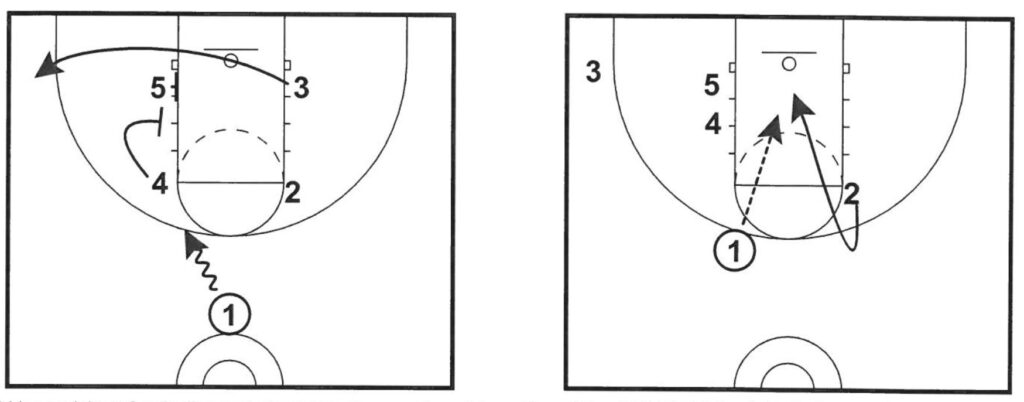
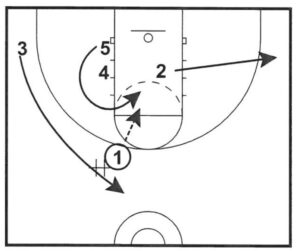 If 2’s cut gets covered up by the defense, the progression out of this box set offense remains simple.